



Catalog: KA1514C
Size
Price
Status
Qty.
96well
$470.00
2 weeks
0
Add to cart


Collected
Collect
Main Information
Reactivity
Human, Mouse
Applications
ELISA
Conjugate/Modification
phosphate
Detailed Information
Storage
2-8°C/6 months,Ship by ice bag
Modification
phosphate
Detection Method
Colorimetric
Related Products
Primary Antibodies
FoxO4 Rabbit pAb
YT1765
More→
Primary Antibodies
FoxO4 Rabbit pAb
YT1764
More→
Primary Antibodies
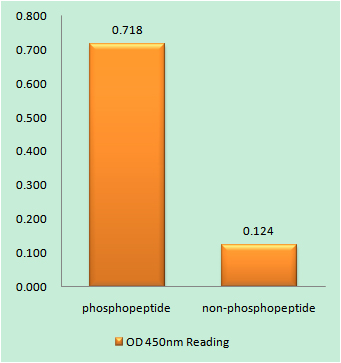
FoxO4 (Phospho Ser262) Rabbit pAb
YP0770
More→
Primary Antibodies
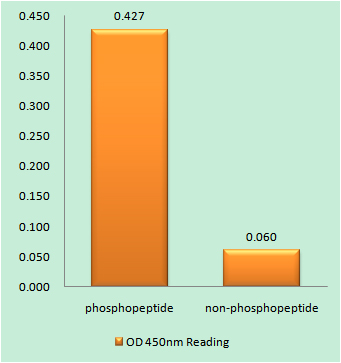
FoxO4 (Phospho Thr451) Rabbit pAb
YP0382
More→
Primary Antibodies
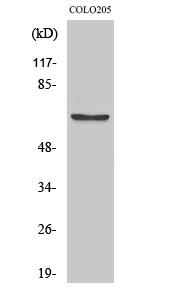
FoxO4 (Phospho Ser197) Rabbit pAb
YP0116
More→
Primary Antibodies
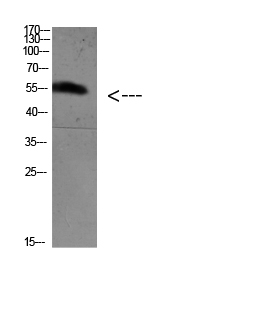
FoxO4 (Acetyl Lys189) Rabbit pAb
YK0078
More→
ELISA Kits
Total AFX Cell-Based Colorimetric ELISA Kit
KA4380C
More→
ELISA Kits
Total FoxO4 Cell-Based Colorimetric ELISA Kit
KA3005C
More→
ELISA Kits
FoxO4 (Phospho Ser262) Cell-Based Colorimetric ELISA Kit
KA1684C
More→
ELISA Kits
FoxO4 (Phospho Thr451) Cell-Based Colorimetric ELISA Kit
KA1514C
More→
ELISA Kits
FoxO4 (Phospho Ser197) Cell-Based Colorimetric ELISA Kit
KA1011C
More→
Antigen&Target Information
Gene Name:
FOXO4 AFX AFX1 MLLT7
show all
Other Name:
FOXO4 ;
AFX ;
AFX1 ;
MLLT7 ;
Forkhead box protein O4 ;
Fork head domain transcription factor AFX1
AFX ;
AFX1 ;
MLLT7 ;
Forkhead box protein O4 ;
Fork head domain transcription factor AFX1
show all
Background:
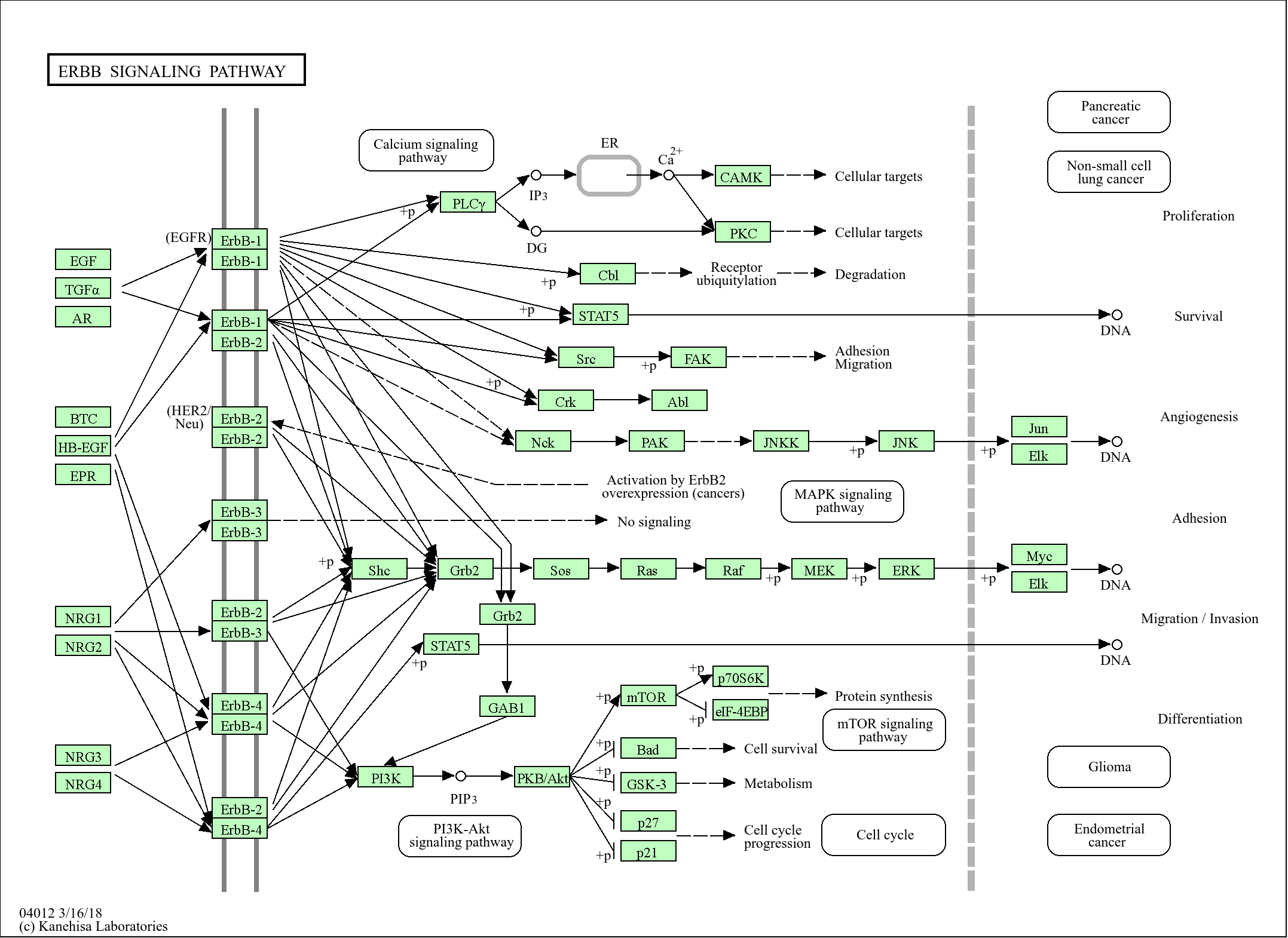
disease:A chromosomal aberration involving FOXO4 is found in acute leukemias. Translocation t (X;11) (q13;q23) with MLL/HRX. The result is a rogue activator protein. ,function:Transcription factor involved in the regulation of the insulin signaling pathway. Binds to insulin-response elements (IREs) and can activate transcription of IGFBP1. Down-regulates expression of HIF1A and suppresses hypoxia-induced transcriptional activation of HIF1A-modulated genes. Also involved in negative regulation of the cell cycle. ,pharmaceutical:A constitutively active FOXO4 mutant where phosphorylation sites Thr-32 , Ser-187 and Ser-262 have been mutated to alanine may have therapeutic potential in ERBB2/HER2-overexpressing cancers as it inhibits ERBB2-mediated cell survival , transformation and tumorigenicity. ,PTM:Acetylation by CBP , which is induced by peroxidase stress , inhibits transcriptional activity. Deacetylation by SIRT1 is NAD-dependent and stimulates transcriptional activity. ,PTM:Phosphorylation by PKB/AKT1 inhibits transcriptional activity and is responsible for cytoplasmic localization. ,similarity:Contains 1 fork-head DNA-binding domain. ,subcellular location:When phosphorylated , translocated from nucleus to cytoplasm. Dephosphorylation triggers nuclear translocation. ,subunit:Interacts with CBP , MYOCD , SIRT1 , SRF and YWHAZ. Acetylated by CBP and deacetylated by SIRT1. Binding of YWHAZ inhibits DNA-binding. ,tissue specificity:Heart , brain , placenta , lung , liver , skeletal muscle , kidney and pancreas. Isoform zeta is most abundant in the liver , kidney , and pancreas. ,
show all
Function:
cell cycle checkpoint , DNA damage checkpoint , G1 phase of mitotic cell cycle , mitotic cell cycle , transcription ,transcription , DNA-dependent , regulation of transcription , DNA-dependent , transcription from RNA polymerase II promoter , response to DNA damage stimulus , cell cycle , cell cycle arrest , mitotic cell cycle checkpoint , mitotic cell cycle G2/M transition DNA damage checkpoint , cell surface receptor linked signal transduction , enzyme linked receptor protein signaling pathway , transmembrane receptor protein tyrosine kinase signaling pathway , intracellular signaling cascade , regulation of mitotic cell cycle , muscle organ development , negative regulation of cell proliferation , insulin receptor signaling pathway , response to endogenous stimulus , response to hormone stimulus , positive regulation of biosynthetic process , response to organic substance , positive regulation of macromolecule biosynthetic process ,positive regulation of macromolecule metabolic process , positive regulation of gene expression , negative regulation of angiogenesis , cell cycle process , cell cycle phase , positive regulation of cellular biosynthetic process , DNA integrity checkpoint , G2/M transition DNA damage checkpoint , G2/M transition checkpoint , RNA biosynthetic process , response to insulin stimulus , cellular response to insulin stimulus , cellular response to hormone stimulus , cellular response to stress , regulation of cell proliferation , DNA damage response , signal transduction , response to peptide hormone stimulus , regulation of transcription , negative regulation of cell differentiation , regulation of angiogenesis , positive regulation of nucleobase , nucleoside , nucleotide and nucleic acid metabolic process , positive regulation of transcription , regulation of muscle cell differentiation , negative regulation of muscle cell differentiation , regulation of smooth muscle cell differentiation , negative regulation of smooth muscle cell differentiation , positive regulation of nitrogen compound metabolic process , regulation of RNA metabolic process , G1 phase , interphase , interphase of mitotic cell cycle , regulation of cell cycle ,
show all
Cellular Localization:
Cytoplasm. Nucleus. When phosphorylated , translocated from nucleus to cytoplasm. Dephosphorylation triggers nuclear translocation. Monoubiquitination increases nuclear localization. When deubiquitinated , translocated from nucleus to cytoplasm.
show all
Signaling Pathway
Reference Citation({{totalcount}})
Catalog: KA1514C
Size
Price
Status
Qty.
96well
$470.00
2 weeks
0
Add to cart
Collected
Collect
Recently Viewed Products
Clear allPRODUCTS
CUSTOMIZED
ABOUT US



Toggle night Mode
{{pinfoXq.title || ''}}
Catalog: {{pinfoXq.catalog || ''}}
Filter:
All
{{item.name}}
{{pinfo.title}}
-{{pinfo.catalog}}
Main Information
Target
{{pinfo.target}}
Reactivity
{{pinfo.react}}
Applications
{{pinfo.applicat}}
Conjugate/Modification
{{pinfo.coupling}}/{{pinfo.modific}}
MW (kDa)
{{pinfo.mwcalc}}
Host Species
{{pinfo.hostspec}}
Isotype
{{pinfo.isotype}}
Product {{index}}/{{pcount}}
Prev
Next
{{pvTitle}}
Scroll wheel zooms the picture
{{pvDescr}}