





Catalog: YP1397
Size
Price
Status
Qty.
200μL
$600.00
3 weeks
0
100μL
$340.00
3 weeks
0
50μL
$190.00
3 weeks
0
Add to cart


Collected
Collect
Main Information
Target
MCM2 Phospho Ser139
Host Species
Rabbit
Reactivity
Human, Mouse, Rat
Applications
WB, IHC
MW
120kD (Observed)
Conjugate/Modification
phosphate
Detailed Information
Recommended Dilution Ratio
WB 1:500-2000; IHC 1:50-300
Formulation
Liquid in PBS containing 50% glycerol, 0.5% BSA and 0.02% sodium azide.
Specificity
This antibody detects endogenous levels of Human Mouse Rat MCM2 (phospho-Ser139) .The name of modified sites may be influenced by many factors, such as species (the modified site was not originally found in human samples) and the change of protein sequence (the previous protein sequence is incomplete, and the protein sequence may be prolonged with the development of protein sequencing technology). When naming, we will use the "numbers" in historical reference to keep the sites consistent with the reports. The antibody binds to the following modification sequence (lowercase letters are modification sites):YDsDE
Purification
The antibody was affinity-purified from rabbit serum by affinity-chromatography using specific immunogen.
Storage
-15°C to -25°C/1 year (Do not lower than -25°C)
Concentration
1 mg/ml
MW(Observed)
120kD
Modification
phosphate
Clonality
Polyclonal
Isotype
IgG
Related Products
Secondary Antibodies
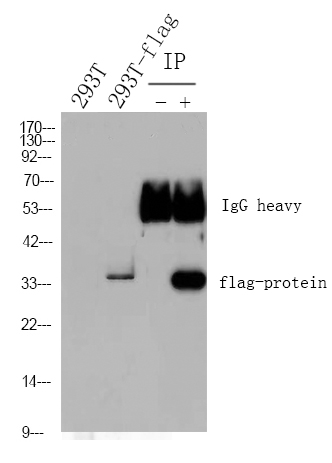
Goat Anti Mouse IgG(H+L) (HRP)
RS0001
More→
Secondary Antibodies
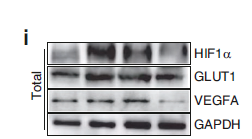
Goat Anti Rabbit IgG(H+L) (HRP)
RS0002
More→
Primary Antibodies
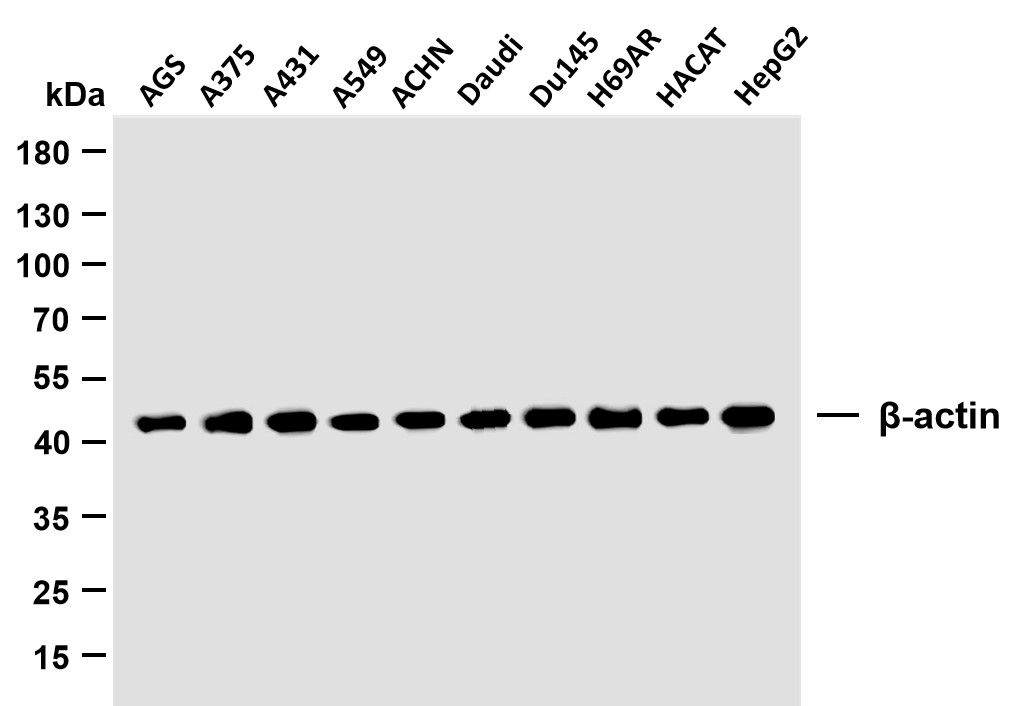
β-actin (PTR2364) Mouse mAb
YM3028
More→
Primary Antibodies
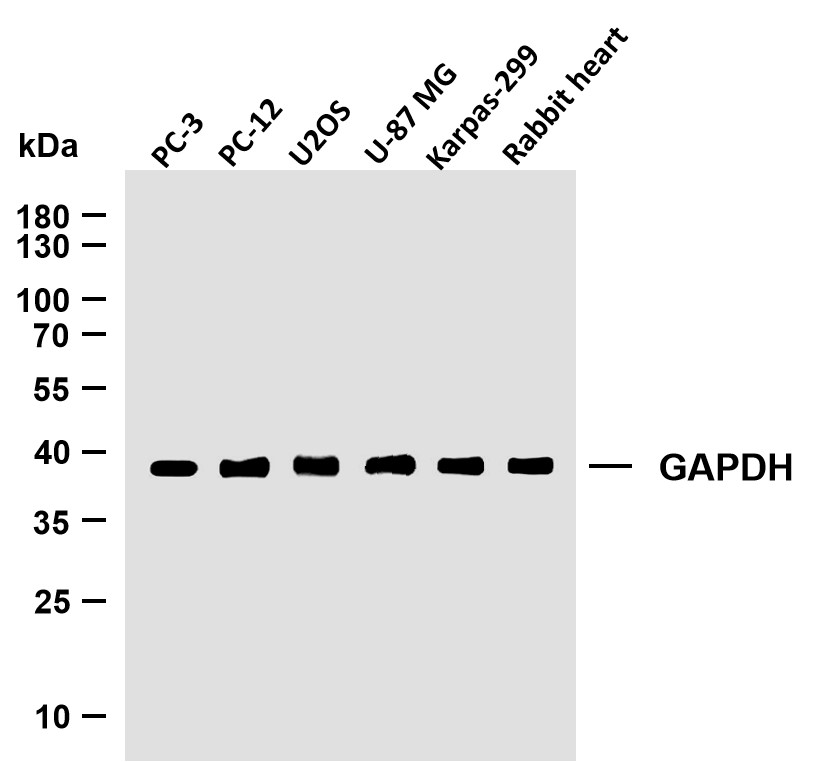
GAPDH (PTR2304) Mouse mAb
YM3029
More→
Antigen&Target Information
Immunogen:
Synthesized phosho peptide around human MCM2 (Ser139)
show all
Specificity:
This antibody detects endogenous levels of Human Mouse Rat MCM2 (phospho-Ser139) .The name of modified sites may be influenced by many factors, such as species (the modified site was not originally found in human samples) and the change of protein sequence (the previous protein sequence is incomplete, and the protein sequence may be prolonged with the development of protein sequencing technology). When naming, we will use the "numbers" in historical reference to keep the sites consistent with the reports. The antibody binds to the following modification sequence (lowercase letters are modification sites):YDsDE
show all
Gene Name:
MCM2 BM28 CCNL1 CDCL1 KIAA0030
show all
Protein Name:
MCM2 (Ser139)
show all
Other Name:
MCM2 ;
BM28 ;
CCNL1 ;
CDCL1 ;
KIAA0030 ;
DNA replication licensing factor MCM2 ;
Minichromosome maintenance protein 2 homolog ;
Nuclear protein BM28
BM28 ;
CCNL1 ;
CDCL1 ;
KIAA0030 ;
DNA replication licensing factor MCM2 ;
Minichromosome maintenance protein 2 homolog ;
Nuclear protein BM28
show all
Background:
The protein encoded by this gene is one of the highly conserved mini-chromosome maintenance proteins (MCM) that are involved in the initiation of eukaryotic genome replication. The hexameric protein complex formed by MCM proteins is a key component of the pre-replication complex (pre_RC) and may be involved in the formation of replication forks and in the recruitment of other DNA replication related proteins. This protein forms a complex with MCM4 , 6 , and 7 , and has been shown to regulate the helicase activity of the complex. This protein is phosphorylated , and thus regulated by , protein kinases CDC2 and CDC7. Multiple alternatively spliced transcript variants have been found , but the full-length nature of some variants has not been defined. [provided by RefSeq , Oct 2012] ,
show all
Function:
Function:Acts as a factor that allows the DNA to undergo a single round of replication per cell cycle. Required for the entry in S phase and for cell division. ,PTM:Phosphorylated on Ser-108 by ATR in proliferating cells. Ser-108 proliferation is increased by genotoxic agents. Ser-40 is mediated by the CDC7-DBF4 and CDC7-DBF4B complexes , while Ser-53 phosphorylation is only mediated by the CDC7-DBF4 complex. ,sequence Caution:Translation N-terminally shortened. ,similarity:Belongs to the MCM family. ,similarity:Contains 1 MCM domain. ,subunit:Interacts with DBF4 (By similarity) . Interacts with MYST2. May interact with MCM10. ,
show all
Cellular Localization:
Nucleus . Chromosome . Associated with chromatin before the formation of nuclei and detaches from it as DNA replication progresses. .
show all
Tissue Expression:
Research Areas:
>>DNA replication ;
>>Cell cycle
>>Cell cycle
show all
Signaling Pathway
Reference Citation({{totalcount}})
Catalog: YP1397
Size
Price
Status
Qty.
200μL
$600.00
3 weeks
0
100μL
$340.00
3 weeks
0
50μL
$190.00
3 weeks
0
Add to cart
Collected
Collect
Recently Viewed Products
Clear allPRODUCTS
CUSTOMIZED
ABOUT US



Toggle night Mode
{{pinfoXq.title || ''}}
Catalog: {{pinfoXq.catalog || ''}}
Filter:
All
{{item.name}}
{{pinfo.title}}
-{{pinfo.catalog}}
Main Information
Target
{{pinfo.target}}
Reactivity
{{pinfo.react}}
Applications
{{pinfo.applicat}}
Conjugate/Modification
{{pinfo.coupling}}/{{pinfo.modific}}
MW (kDa)
{{pinfo.mwcalc}}
Host Species
{{pinfo.hostspec}}
Isotype
{{pinfo.isotype}}
Product {{index}}/{{pcount}}
Prev
Next
{{pvTitle}}
Scroll wheel zooms the picture
{{pvDescr}}