





Catalog: YP1331
Size
Price
Status
Qty.
200μL
$600.00
3 weeks
0
100μL
$340.00
3 weeks
0
50μL
$190.00
3 weeks
0
Add to cart


Collected
Collect
Main Information
Target
EphA2 Phospho Tyr772
Host Species
Rabbit
Reactivity
Human, Mouse, Rat
Applications
WB
MW
105kD (Observed)
Conjugate/Modification
phosphate
Detailed Information
Recommended Dilution Ratio
WB 1:1000-2000
Formulation
Liquid in PBS containing 50% glycerol, 0.5% BSA and 0.02% sodium azide.
Specificity
This antibody detects endogenous levels of Human EphA2 (phospho-Tyr772)
Purification
The antibody was affinity-purified from rabbit serum by affinity-chromatography using specific immunogen.
Storage
-15°C to -25°C/1 year (Do not lower than -25°C)
Concentration
1 mg/ml
MW(Observed)
105kD
Modification
phosphate
Clonality
Polyclonal
Isotype
IgG
Related Products
Secondary Antibodies
Goat Anti Mouse IgG(H+L) (HRP)
RS0001
More→
Secondary Antibodies
Goat Anti Rabbit IgG(H+L) (HRP)
RS0002
More→
Primary Antibodies
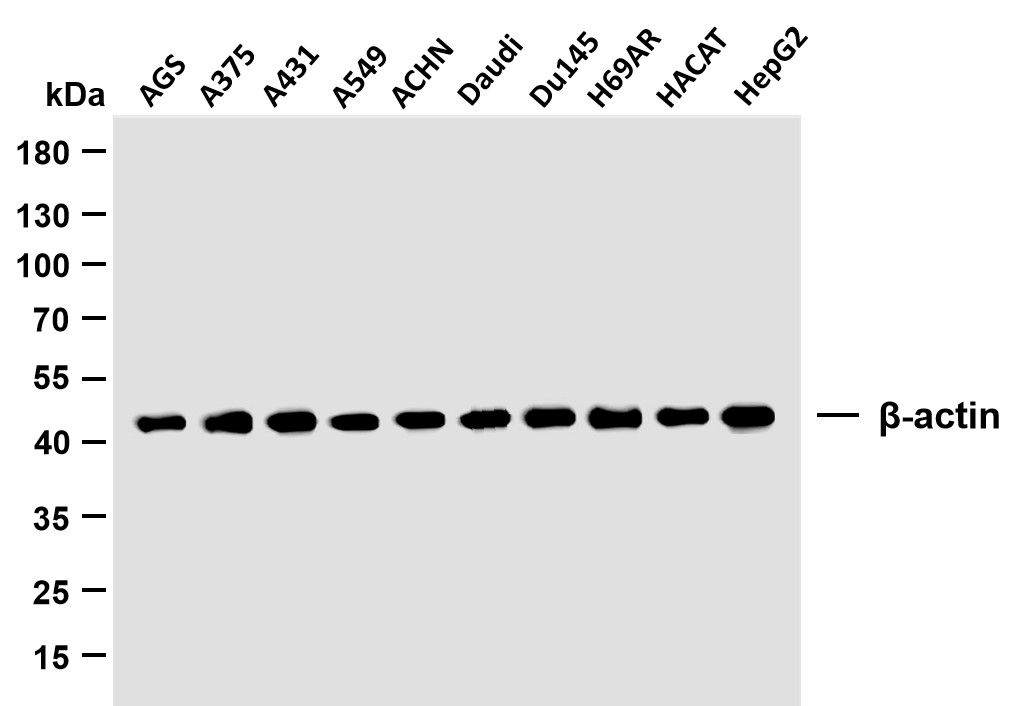
β-actin (PTR2364) Mouse mAb
YM3028
More→
Primary Antibodies
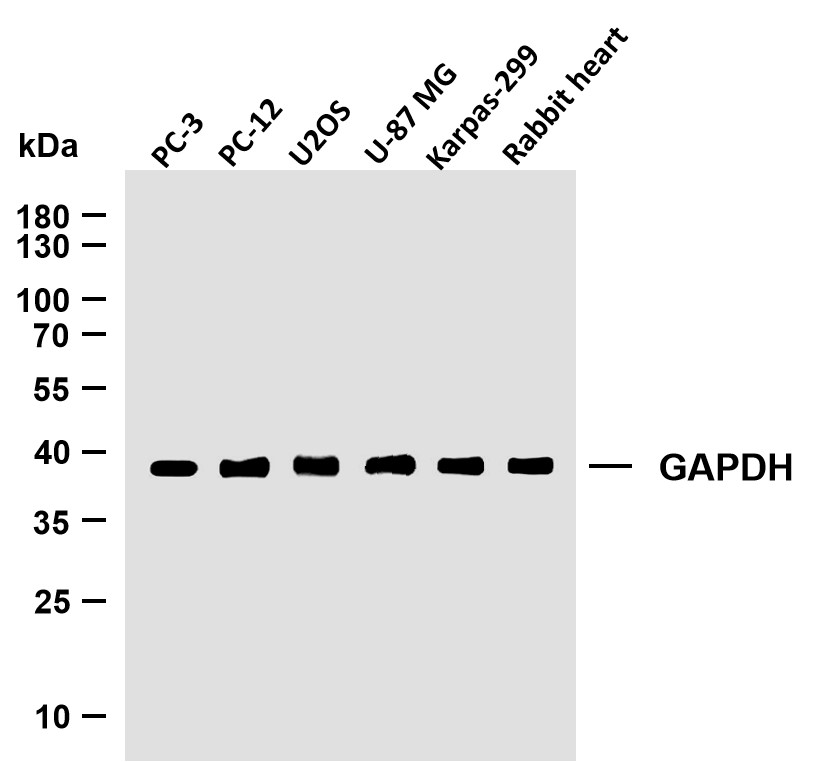
GAPDH (PTR2304) Mouse mAb
YM3029
More→
Antigen&Target Information
Immunogen:
Synthesized phosho peptide around human EphA2 (Tyr772)
show all
Specificity:
This antibody detects endogenous levels of Human EphA2 (phospho-Tyr772)
show all
Gene Name:
EPHA2 ECK
show all
Protein Name:
EphA2 (Tyr772)
show all
Other Name:
EPHA2 ;
ECK ;
Ephrin type-A receptor 2 ;
Epithelial cell kinase ;
Tyrosine-protein kinase receptor ECK
ECK ;
Ephrin type-A receptor 2 ;
Epithelial cell kinase ;
Tyrosine-protein kinase receptor ECK
show all
Background:
This gene belongs to the ephrin receptor subfamily of the protein-tyrosine kinase family. EPH and EPH-related receptors have been implicated in mediating developmental events , particularly in the nervous system. Receptors in the EPH subfamily typically have a single kinase domain and an extracellular region containing a Cys-rich domain and 2 fibronectin type III repeats. The ephrin receptors are divided into 2 groups based on the similarity of their extracellular domain sequences and their affinities for binding ephrin-A and ephrin-B ligands. This gene encodes a protein that binds ephrin-A ligands. Mutations in this gene are the cause of certain genetically-related cataract disorders.[provided by RefSeq , May 2010] ,
show all
Function:
Catalytic activity:ATP + a [protein]-L-tyrosine = ADP + a [protein]-L-tyrosine phosphate. ,Function:Receptor for members of the ephrin-A family. Binds to ephrin-A1 , -A3 , -A4 and -A5. ,similarity:Belongs to the protein kinase superfamily. Tyr protein kinase family. Ephrin receptor subfamily. ,similarity:Contains 1 protein kinase domain. ,similarity:Contains 1 SAM (sterile alpha motif) domain. ,similarity:Contains 2 fibronectin type-III domains. ,subunit:Interacts with SLA (By similarity) . Interacts with INPPL1/SHIP2. ,tissue specificity:Expressed most highly in tissues that contain a high proportion of epithelial cells , e.g. , skin , intestine , lung , and ovary. ,
show all
Cellular Localization:
Cell membrane ; Single-pass type I membrane protein . Cell projection , ruffle membrane ; Single-pass type I membrane protein . Cell projection , lamellipodium membrane ; Single-pass type I membrane protein . Cell junction , focal adhesion . Present at regions of cell-cell contacts but also at the leading edge of migrating cells (PubMed:19573808 , PubMed:20861311) . Relocates from the plasma membrane to the cytoplasmic and perinuclear regions in cancer cells (PubMed:18794797) . .
show all
Tissue Expression:
Research Areas:
>>MAPK signaling pathway ;
>>Ras signaling pathway ;
>>Rap1 signaling pathway ;
>>PI3K-Akt signaling pathway ;
>>Axon guidance
>>Ras signaling pathway ;
>>Rap1 signaling pathway ;
>>PI3K-Akt signaling pathway ;
>>Axon guidance
show all
Signaling Pathway
Environmental Information Processing >> Signal transduction >> MAPK signaling pathway
Environmental Information Processing >> Signal transduction >> Ras signaling pathway
Environmental Information Processing >> Signal transduction >> Rap1 signaling pathway
Environmental Information Processing >> Signal transduction >> PI3K-Akt signaling pathway
Reference Citation({{totalcount}})
Catalog: YP1331
Size
Price
Status
Qty.
200μL
$600.00
3 weeks
0
100μL
$340.00
3 weeks
0
50μL
$190.00
3 weeks
0
Add to cart
Collected
Collect
Recently Viewed Products
Clear allPRODUCTS
CUSTOMIZED
ABOUT US



Toggle night Mode
{{pinfoXq.title || ''}}
Catalog: {{pinfoXq.catalog || ''}}
Filter:
All
{{item.name}}
{{pinfo.title}}
-{{pinfo.catalog}}
Main Information
Target
{{pinfo.target}}
Reactivity
{{pinfo.react}}
Applications
{{pinfo.applicat}}
Conjugate/Modification
{{pinfo.coupling}}/{{pinfo.modific}}
MW (kDa)
{{pinfo.mwcalc}}
Host Species
{{pinfo.hostspec}}
Isotype
{{pinfo.isotype}}
Product {{index}}/{{pcount}}
Prev
Next
{{pvTitle}}
Scroll wheel zooms the picture
{{pvDescr}}