


Catalog: YP1024
Size
Price
Status
Qty.
200μL
$600.00
3 weeks
0
100μL
$340.00
3 weeks
0
50μL
$190.00
3 weeks
0
Add to cart


Collected
Collect
Main Information
Target
Presenilin 2 Phospho Ser330
Host Species
Rabbit
Reactivity
Human, Mouse, Rat
Applications
WB, IHC, IF, ELISA
MW
50kD (Observed)
Conjugate/Modification
phosphate
Detailed Information
Recommended Dilution Ratio
WB 1:500-1:2000; IHC 1:100-1:300; ELISA 1:5000; IF 1:50-200
Formulation
Liquid in PBS containing 50% glycerol, 0.5% BSA and 0.02% sodium azide.
Specificity
Phospho-Presenilin 2 (S330) Polyclonal Antibody detects endogenous levels of Presenilin 2 protein only when phosphorylated at S330.The name of modified sites may be influenced by many factors, such as species (the modified site was not originally found in human samples) and the change of protein sequence (the previous protein sequence is incomplete, and the protein sequence may be prolonged with the development of protein sequencing technology). When naming, we will use the "numbers" in historical reference to keep the sites consistent with the reports. The antibody binds to the following modification sequence (lowercase letters are modification sites):YDsFG
Purification
The antibody was affinity-purified from rabbit antiserum by affinity-chromatography using epitope-specific immunogen.
Storage
-15°C to -25°C/1 year (Do not lower than -25°C)
Concentration
1 mg/ml
MW(Observed)
50kD
Modification
phosphate
Clonality
Polyclonal
Isotype
IgG
Related Products
Secondary Antibodies
Goat Anti Mouse IgG(H+L) (HRP)
RS0001
More→
Secondary Antibodies
Goat Anti Rabbit IgG(H+L) (HRP)
RS0002
More→
Primary Antibodies
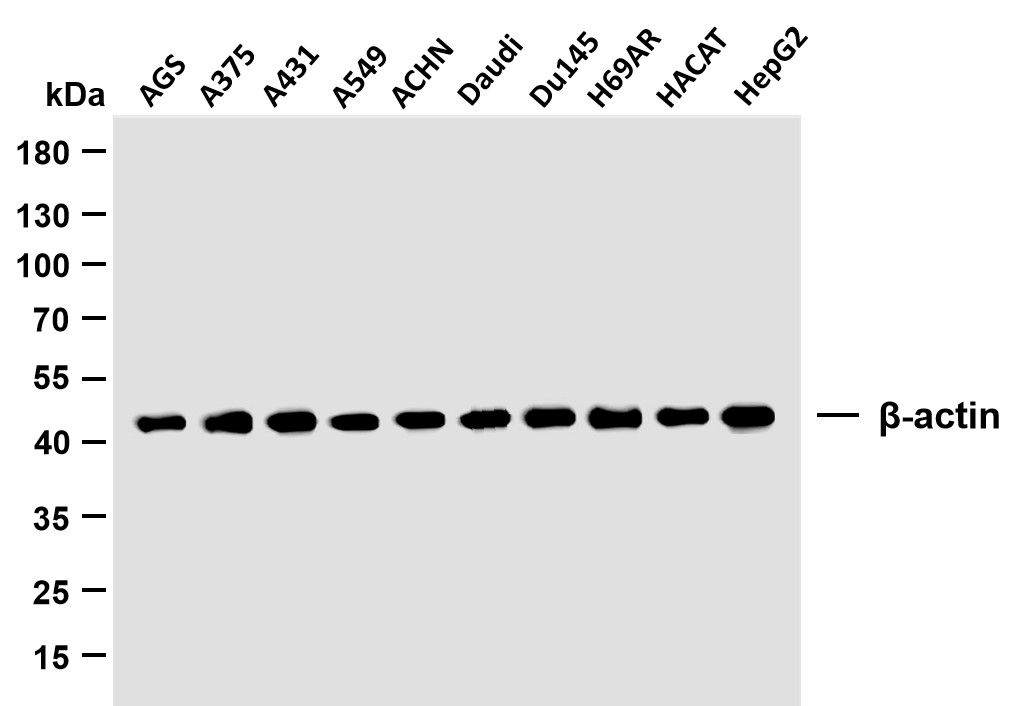
β-actin (PTR2364) Mouse mAb
YM3028
More→
Primary Antibodies
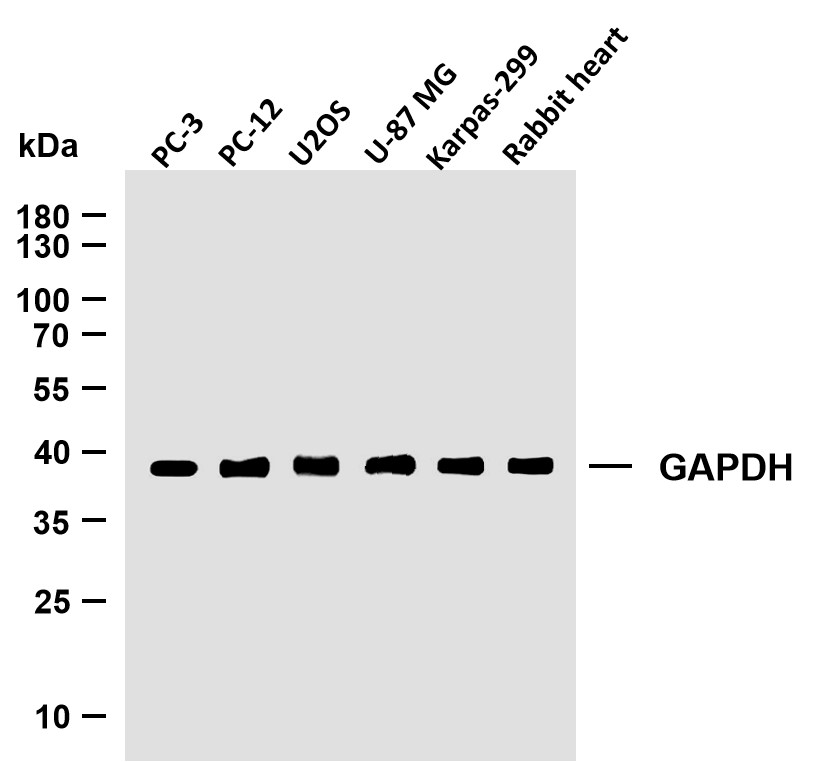
GAPDH (PTR2304) Mouse mAb
YM3029
More→
Antigen&Target Information
Immunogen:
The antiserum was produced against synthesized peptide derived from human Presenilin 2 around the phosphorylation site of Ser330. AA range:296-345
show all
Specificity:
Phospho-Presenilin 2 (S330) Polyclonal Antibody detects endogenous levels of Presenilin 2 protein only when phosphorylated at S330.The name of modified sites may be influenced by many factors, such as species (the modified site was not originally found in human samples) and the change of protein sequence (the previous protein sequence is incomplete, and the protein sequence may be prolonged with the development of protein sequencing technology). When naming, we will use the "numbers" in historical reference to keep the sites consistent with the reports. The antibody binds to the following modification sequence (lowercase letters are modification sites):YDsFG
show all
Gene Name:
PSEN2 AD4 PS2 PSNL2 STM2
show all
Protein Name:
Presenilin-2
show all
Other Name:
PSEN2 ;
AD4 ;
PS2 ;
PSNL2 ;
STM2 ;
Presenilin-2 ;
PS-2 ;
AD3LP ;
AD5 ;
E5-1 ;
STM-2 ;
[Cleaved into: Presenilin-2 NTF subunit ;
Presenilin-2 CTF subunit]
AD4 ;
PS2 ;
PSNL2 ;
STM2 ;
Presenilin-2 ;
PS-2 ;
AD3LP ;
AD5 ;
E5-1 ;
STM-2 ;
[Cleaved into: Presenilin-2 NTF subunit ;
Presenilin-2 CTF subunit]
show all
Database Link:
Background:
Alzheimer's disease (AD) patients with an inherited form of the disease carry mutations in the presenilin proteins (PSEN1 or PSEN2) or the amyloid precursor protein (APP) . These disease-linked mutations result in increased production of the longer form of amyloid-beta (main component of amyloid deposits found in AD brains) . Presenilins are postulated to regulate APP processing through their effects on gamma-secretase , an enzyme that cleaves APP. Also , it is thought that the presenilins are involved in the cleavage of the Notch receptor such that , they either directly regulate gamma-secretase activity , or themselves act are protease enzymes. Two alternatively spliced transcript variants encoding different isoforms of PSEN2 have been identified. [provided by RefSeq , Jul 2008] ,
show all
Function:
Disease:Defects in PSEN2 are the cause of Alzheimer disease type 4 (AD4) [MIM:606889]. AD is an autosomal dominant Alzheimer disease. Alzheimer disease is a neurodegenerative disorder characterized by progressive dementia , loss of cognitive abilities , and deposition of fibrillar amyloid proteins as intraneuronal neurofibrillary tangles , extracellular amyloid plaques and vascular amyloid deposits. The major constituent of these plaques is the neurotoxic amyloid-beta-APP 40-42 peptide (s) , derived proteolytically from the transmembrane precursor protein APP by sequential secretase processing. The cytotoxic C-terminal fragments (CTFs) and the caspase-cleaved products such as C31 derived from APP , are also implicated in neuronal death. ,Disease:Three causative genes have been identified that when mutated lead to presenile Alzheimer Disease: APP (amyloid precursor protein gene) , PSEN1 and PSEN2. These three genes account for half of the families with autosomal dominant presenile AD , which represent approximately 10% of the whole AD population. In addition , apolipoprotein E has been identified as a risk-modifying locus. ,Domain:The PAL motif is required for normal active site conformation. ,Function:Probable catalytic subunit of the gamma-secretase complex , an endoprotease complex that catalyzes the intramembrane cleavage of integral membrane proteins such as Notch receptors and APP (beta-amyloid precursor protein) . Requires the other members of the gamma-secretase complex to have a protease activity. May play a role in intracellular signaling and gene expression or in linking chromatin to the nuclear membrane. May function in the cytoplasmic partitioning of proteins. ,online information:Presenilins mutations ,PTM:Heterogeneous proteolytic processing generates N-terminal and C-terminal fragments. ,PTM:Phosphorylated on serine residues. ,similarity:Belongs to the peptidase A22A family. ,subunit:Interacts with DOCK3 (By similarity) . Homodimer. Component of the gamma-secretase complex , a complex composed of a presenilin homodimer (PSEN1 or PSEN2) , nicastrin (NCSTN) , APH1 (APH1A or APH1B) and PEN2. Such minimal complex is sufficient for secretase activity , although other components may exist. Interacts with HERPUD1 , FLNA , FLNB and PARL. ,tissue specificity:Isoform 1 is seen in the placenta , skeletal muscle and heart while isoform 2 is seen in the heart , brain , placenta , liver , skeletal muscle and kidney. ,
show all
Cellular Localization:
Endoplasmic reticulum membrane ; Multi-pass membrane protein . Golgi apparatus membrane ; Multi-pass membrane protein .
show all
Tissue Expression:
Research Areas:
>>Notch signaling pathway ;
>>Neurotrophin signaling pathway ;
>>Alzheimer disease ;
>>Pathways of neurodegeneration - multiple diseases
>>Neurotrophin signaling pathway ;
>>Alzheimer disease ;
>>Pathways of neurodegeneration - multiple diseases
show all
Signaling Pathway
Organismal Systems >> Nervous system >> Neurotrophin signaling pathway
Human Diseases >> Neurodegenerative disease >> Alzheimer disease
Human Diseases >> Neurodegenerative disease >> Pathways of neurodegeneration - multiple diseases
Environmental Information Processing >> Signal transduction >> Notch signaling pathway
Reference Citation({{totalcount}})
Catalog: YP1024
Size
Price
Status
Qty.
200μL
$600.00
3 weeks
0
100μL
$340.00
3 weeks
0
50μL
$190.00
3 weeks
0
Add to cart
Collected
Collect
Recently Viewed Products
Clear allPRODUCTS
CUSTOMIZED
ABOUT US



Toggle night Mode
{{pinfoXq.title || ''}}
Catalog: {{pinfoXq.catalog || ''}}
Filter:
All
{{item.name}}
{{pinfo.title}}
-{{pinfo.catalog}}
Main Information
Target
{{pinfo.target}}
Reactivity
{{pinfo.react}}
Applications
{{pinfo.applicat}}
Conjugate/Modification
{{pinfo.coupling}}/{{pinfo.modific}}
MW (kDa)
{{pinfo.mwcalc}}
Host Species
{{pinfo.hostspec}}
Isotype
{{pinfo.isotype}}
Product {{index}}/{{pcount}}
Prev
Next
{{pvTitle}}
Scroll wheel zooms the picture
{{pvDescr}}