






Catalog: YP0125
Size
Price
Status
Qty.
200μL
$600.00
3 weeks
0
100μL
$340.00
3 weeks
0
50μL
$190.00
3 weeks
0
Add to cart


Collected
Collect
Main Information
Target
HDAC4 Phospho Ser632
Host Species
Rabbit
Reactivity
Human, Mouse, Rat
Applications
WB, ELISA
MW
119kD (Observed)
Conjugate/Modification
phosphate
Detailed Information
Recommended Dilution Ratio
WB 1:500-1:2000; ELISA 1:20000; Not yet tested in other applications.
Formulation
Liquid in PBS containing 50% glycerol, 0.5% BSA and 0.02% sodium azide.
Specificity
Phospho-HDAC4 (S632) Polyclonal Antibody detects endogenous levels of HDAC4 protein only when phosphorylated at S632.The name of modified sites may be influenced by many factors, such as species (the modified site was not originally found in human samples) and the change of protein sequence (the previous protein sequence is incomplete, and the protein sequence may be prolonged with the development of protein sequencing technology). When naming, we will use the "numbers" in historical reference to keep the sites consistent with the reports. The antibody binds to the following modification sequence (lowercase letters are modification sites):AQsSP
Purification
The antibody was affinity-purified from rabbit antiserum by affinity-chromatography using epitope-specific immunogen.
Storage
-15°C to -25°C/1 year (Do not lower than -25°C)
Concentration
1 mg/ml
MW(Observed)
119kD
Modification
phosphate
Clonality
Polyclonal
Isotype
IgG
Related Products
Secondary Antibodies
Goat Anti Mouse IgG(H+L) (HRP)
RS0001
More→
Secondary Antibodies
Goat Anti Rabbit IgG(H+L) (HRP)
RS0002
More→
Primary Antibodies
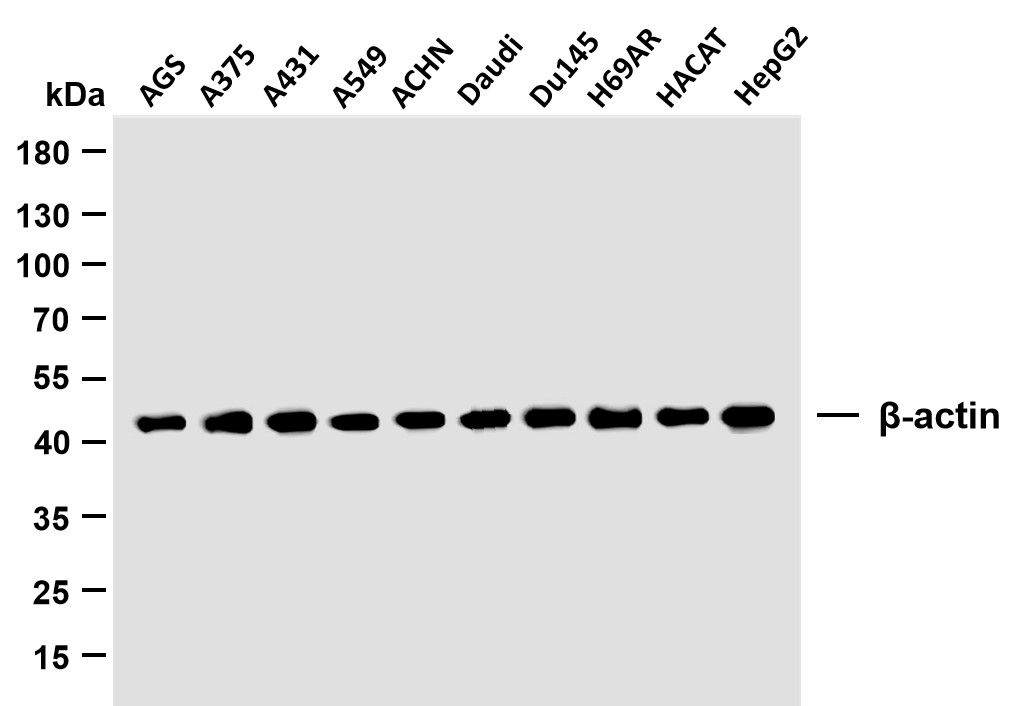
β-actin (PTR2364) Mouse mAb
YM3028
More→
Primary Antibodies
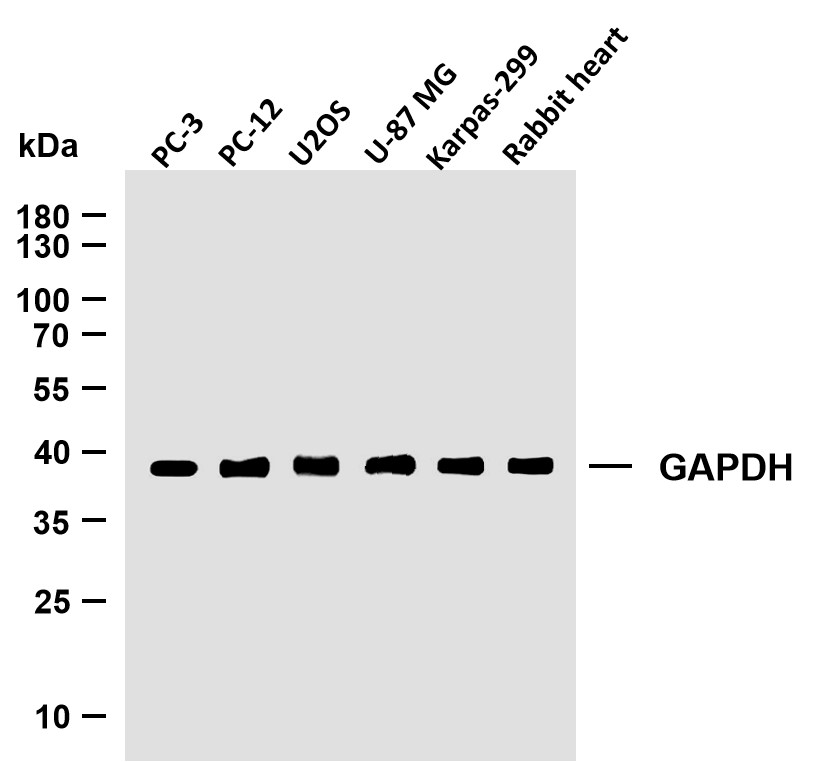
GAPDH (PTR2304) Mouse mAb
YM3029
More→
Antigen&Target Information
Immunogen:
The antiserum was produced against synthesized peptide derived from human HDAC4 around the phosphorylation site of Ser632. AA range:598-647
show all
Specificity:
Phospho-HDAC4 (S632) Polyclonal Antibody detects endogenous levels of HDAC4 protein only when phosphorylated at S632.The name of modified sites may be influenced by many factors, such as species (the modified site was not originally found in human samples) and the change of protein sequence (the previous protein sequence is incomplete, and the protein sequence may be prolonged with the development of protein sequencing technology). When naming, we will use the "numbers" in historical reference to keep the sites consistent with the reports. The antibody binds to the following modification sequence (lowercase letters are modification sites):AQsSP
show all
Gene Name:
HDAC4
show all
Protein Name:
Histone deacetylase 4
show all
Other Name:
HDAC4 ;
KIAA0288 ;
Histone deacetylase 4 ;
HD4
KIAA0288 ;
Histone deacetylase 4 ;
HD4
show all
Database Link:
Background:
Histones play a critical role in transcriptional regulation , cell cycle progression , and developmental events. Histone acetylation/deacetylation alters chromosome structure and affects transcription factor access to DNA. The protein encoded by this gene belongs to class II of the histone deacetylase/acuc/apha family. It possesses histone deacetylase activity and represses transcription when tethered to a promoter. This protein does not bind DNA directly , but through transcription factors MEF2C and MEF2D. It seems to interact in a multiprotein complex with RbAp48 and HDAC3. [provided by RefSeq , Jul 2008] ,
show all
Function:
Catalytic activity:Hydrolysis of an N (6) -acetyl-lysine residue of a histone to yield a deacetylated histone. ,Domain:The nuclear export sequence mediates the shuttling between the nucleus and the cytoplasm. ,Function:Responsible for the deacetylation of lysine residues on the N-terminal part of the core histones (H2A , H2B , H3 and H4) . Histone deacetylation gives a tag for epigenetic repression and plays an important role in transcriptional regulation , cell cycle progression and developmental events. Histone deacetylases act via the formation of large multiprotein complexes. Involved in muscle maturation via its interaction with the myocyte enhancer factors such as MEF2A , MEF2C and MEF2D. ,PTM:Phosphorylated by CaMK4 at Ser-246 , Ser-467 and Ser-632. Phosphorylation at other residues is required for the interaction with 14-3-3. ,PTM:Sumoylation on Lys-559 is promoted by the E3 SUMO-protein ligase RANBP2 , and prevented by phosphorylation by CaMK4. ,similarity:Belongs to the histone deacetylase family. Type 2 subfamily. ,subcellular location:Shuttles between the nucleus and the cytoplasm. Upon muscle cells differentiation , it accumulates in the nuclei of myotubes , suggesting a positive role of nuclear HDAC4 in muscle differentiation. The export to cytoplasm depends on the interaction with a 14-3-3 chaperone protein and is due to its phosphorylation at Ser-246 , Ser-467 and Ser-632 by CaMK4. The nuclear localization probably depends on sumoylation. ,subunit:Interacts with HDAC7 (By similarity) . Homodimer. Homodimerization via its N-terminal domain. Interacts with MEF2C , AHRR , and NR2C1. Interacts with a 14-3-3 chaperone protein in a phosphorylation dependent manner. Interacts with BTBD14B (By similarity) . Interacts with KDM5B. ,tissue specificity:Ubiquitous. ,
show all
Cellular Localization:
Nucleus. Cytoplasm. Shuttles between the nucleus and the cytoplasm. Upon muscle cells differentiation , it accumulates in the nuclei of myotubes , suggesting a positive role of nuclear HDAC4 in muscle differentiation. The export to cytoplasm depends on the interaction with a 14-3-3 chaperone protein and is due to its phosphorylation at Ser-246 , Ser-467 and Ser-632 by CaMK4 and SIK1. The nuclear localization probably depends on sumoylation. Interaction with SIK3 leads to HDAC4 retention in the cytoplasm (By similarity) . .
show all
Tissue Expression:
show all
Research Areas:
>>Apelin signaling pathway ;
>>Neutrophil extracellular trap formation ;
>>Alcoholism ;
>>Viral carcinogenesis ;
>>MicroRNAs in cancer
>>Neutrophil extracellular trap formation ;
>>Alcoholism ;
>>Viral carcinogenesis ;
>>MicroRNAs in cancer
show all
Signaling Pathway
Reference Citation({{totalcount}})
Catalog: YP0125
Size
Price
Status
Qty.
200μL
$600.00
3 weeks
0
100μL
$340.00
3 weeks
0
50μL
$190.00
3 weeks
0
Add to cart
Collected
Collect
Recently Viewed Products
Clear allPRODUCTS
CUSTOMIZED
ABOUT US



Toggle night Mode
{{pinfoXq.title || ''}}
Catalog: {{pinfoXq.catalog || ''}}
Filter:
All
{{item.name}}
{{pinfo.title}}
-{{pinfo.catalog}}
Main Information
Target
{{pinfo.target}}
Reactivity
{{pinfo.react}}
Applications
{{pinfo.applicat}}
Conjugate/Modification
{{pinfo.coupling}}/{{pinfo.modific}}
MW (kDa)
{{pinfo.mwcalc}}
Host Species
{{pinfo.hostspec}}
Isotype
{{pinfo.isotype}}
Product {{index}}/{{pcount}}
Prev
Next
{{pvTitle}}
Scroll wheel zooms the picture
{{pvDescr}}