



Catalog: YN0437
Size
Price
Status
Qty.
200μL
$450.00
In stock
0
100μL
$280.00
In stock
0
40μL
$150.00
In stock
0
Add to cart


Collected
Collect
Main Information
Target
SCNNA
Host Species
Rabbit
Reactivity
Human, Mouse, Rat
Applications
WB, ELISA
MW
73kD (Observed)
Conjugate/Modification
Unmodified
Detailed Information
Recommended Dilution Ratio
WB 1:500-2000; ELISA 1:5000-20000
Formulation
Liquid in PBS containing 50% glycerol,0.5% BSA and 0.02% sodium azide.
Specificity
SCNNA Polyclonal Antibody detects endogenous levels of protein.
Purification
The antibody was affinity-purified from rabbit antiserum by affinity-chromatography using epitope-specific immunogen.
Storage
-15°C to -25°C/1 year(Do not lower than -25°C)
Concentration
1 mg/ml
MW(Observed)
73kD
Modification
Unmodified
Clonality
Polyclonal
Isotype
IgG
Related Products
Secondary Antibodies
Goat Anti Mouse IgG(H+L) (HRP)
RS0001
More→
Secondary Antibodies
Goat Anti Rabbit IgG(H+L) (HRP)
RS0002
More→
Primary Antibodies
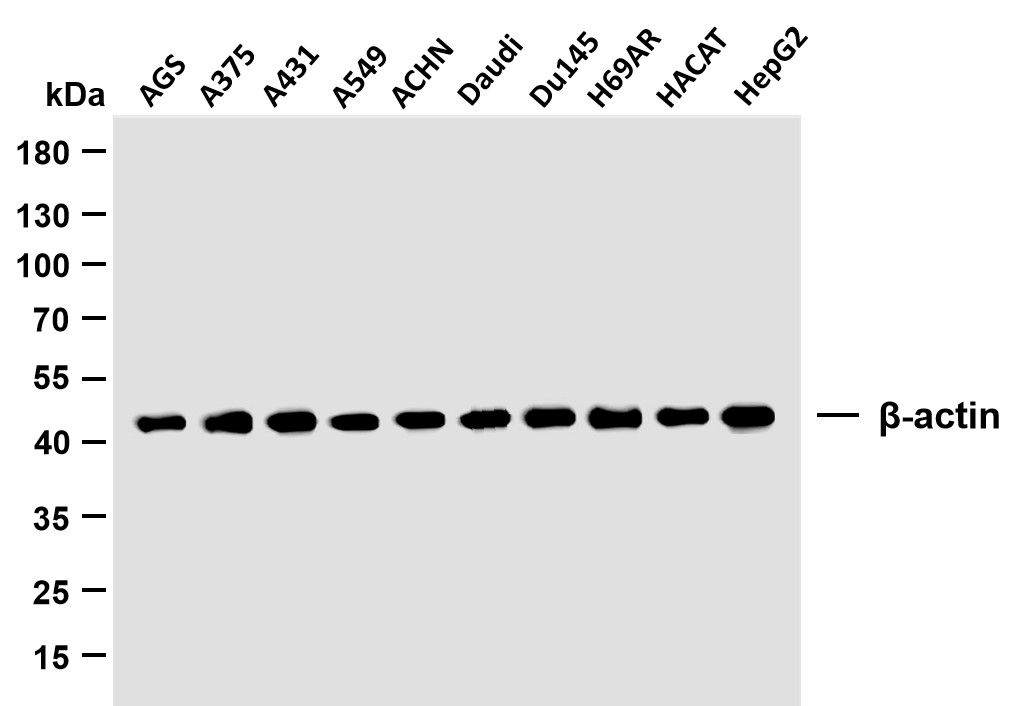
β-actin (PTR2364) Mouse mAb
YM3028
More→
Primary Antibodies
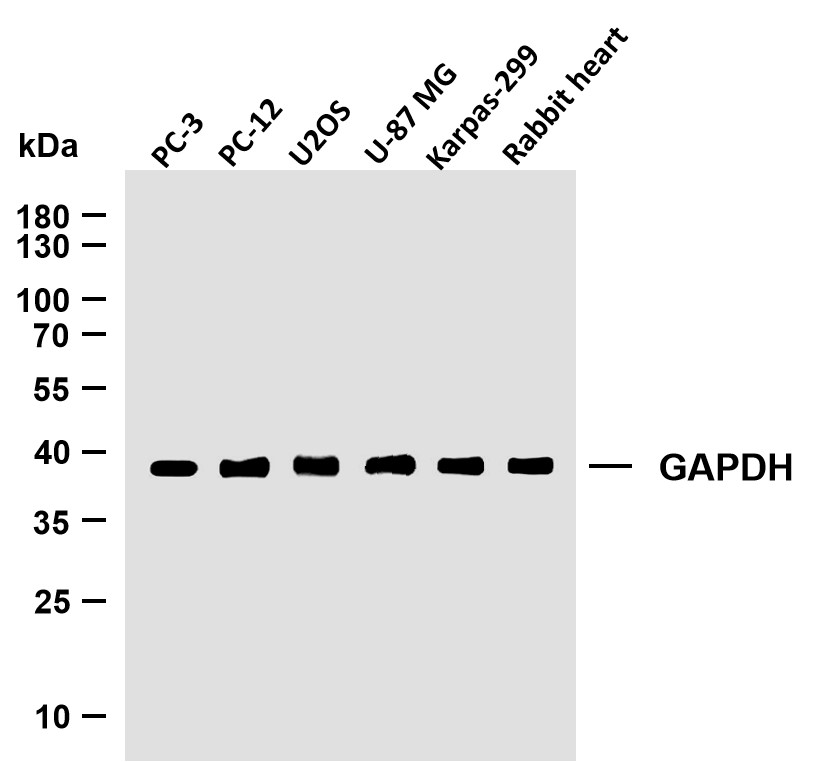
GAPDH (PTR2304) Mouse mAb
YM3029
More→
Antigen&Target Information
Immunogen:
Synthesized peptide derived from human protein . at AA range: 320-400
show all
Specificity:
SCNNA Polyclonal Antibody detects endogenous levels of protein.
show all
Gene Name:
SCNN1A SCNN1
show all
Protein Name:
Amiloride-sensitive sodium channel subunit alpha (Alpha-NaCH) (Epithelial Na(+) channel subunit alpha) (Alpha-ENaC) (ENaCA) (Nonvoltage-gated sodium channel 1 subunit alpha) (SCNEA)
show all
Background:
Nonvoltage-gated, amiloride-sensitive, sodium channels control fluid and electrolyte transport across epithelia in many organs. These channels are heteromeric complexes consisting of 3 subunits: alpha, beta, and gamma. This gene encodes the alpha subunit, and mutations in this gene have been associated with pseudohypoaldosteronism type 1 (PHA1), a rare salt wasting disease resulting from target organ unresponsiveness to mineralocorticoids. Alternatively spliced transcript variants encoding different isoforms have been described for this gene. [provided by RefSeq, Apr 2009],
show all
Function:
Disease:Defects in SCNN1A are a cause of autosomal recessive pseudohypoaldosteronism type 1 (PHA1) [MIM:264350]. PHA1 is a rare salt wasting disease resulting from target organ unresponsiveness to mineralocorticoids. There are 2 forms of PHA1: the autosomal recessive form that is severe, and the dominant form which is more milder and due to defects in mineralocorticoid receptor. Autosomal recessive PHA1 is characterized by an often fulminant presentation in the neonatal period with dehydration, hyponatraemia, hyperkalaemia, metabolic acidosis, failure to thrive and weight loss.,Function:Sodium permeable non-voltage-sensitive ion channel inhibited by the diuretic amiloride. Mediates the electrodiffusion of the luminal sodium (and water, which follows osmotically) through the apical membrane of epithelial cells. Controls the reabsorption of sodium in kidney, colon, lung and sweat glands. Also plays a role in taste perception.,induction:By aldosterone.,PTM:Ubiquitinated; this targets individual subunits for endocytosis and proteasome-mediated degradation.,similarity:Belongs to the amiloride-sensitive sodium channel family.,subcellular location:Apical membrane of epithelial cells.,subunit:Heterotetramer of two alpha, one beta and one gamma subunit. A delta subunit can replace the alpha subunit. Interacts with the WW domains of NEDD4, NEDD4L, WWP1 and WWP2.,tissue specificity:Highly expressed in kidney and lung. Detected at intermediate levels in pancreas and liver, and at low levels in heart and placenta. Isoform 1 and isoform 2 predominate in all tissues. Expression of isoform 3, isoform 4 and isoform 5 is very low or not detectable, except in lung and heart.,
show all
Cellular Localization:
Apical cell membrane ; Multi-pass membrane protein . Cell projection, cilium . Cytoplasmic granule . Cytoplasm . Cytoplasmic vesicle, secretory vesicle, acrosome . Cell projection, cilium, flagellum . In the oviduct and bronchus, located on cilia in multi-ciliated cells. In endometrial non-ciliated epithelial cells, restricted to apical surfaces. In epidermis, located nearly uniformly in the cytoplasm in a granular distribution (PubMed:28130590). In sebaceous glands, observed only in the cytoplasmic space in between the lipid vesicles (PubMed:28130590). In eccrine sweat glands, mainly located at the apical surface of the cells facing the lumen (PubMed:28130590). In skin, in arrector pili muscle cells and in adipocytes, located in the cytoplasm and colocalized with actin fibers (PubMed:28130590). In spermatogonia, spermatocytes and round spermatids, located in the cytoplasm (By similarity). Prior to spermiation, location shifts from the cytoplasm to the spermatid tail (By similarity). In spermatozoa, localizes at the acrosome and the central region of the sperm flagellum (By similarity). .
show all
Research Areas:
>>Taste transduction ;
>>Aldosterone-regulated sodium reabsorption
>>Aldosterone-regulated sodium reabsorption
show all
Reference Citation({{totalcount}})
Catalog: YN0437
Size
Price
Status
Qty.
200μL
$450.00
In stock
0
100μL
$280.00
In stock
0
40μL
$150.00
In stock
0
Add to cart
Collected
Collect
Recently Viewed Products
Clear allPRODUCTS
CUSTOMIZED
ABOUT US



Toggle night Mode
{{pinfoXq.title || ''}}
Catalog: {{pinfoXq.catalog || ''}}
Filter:
All
{{item.name}}
{{pinfo.title}}
-{{pinfo.catalog}}
Main Information
Target
{{pinfo.target}}
Reactivity
{{pinfo.react}}
Applications
{{pinfo.applicat}}
Conjugate/Modification
{{pinfo.coupling}}/{{pinfo.modific}}
MW (kDa)
{{pinfo.mwcalc}}
Host Species
{{pinfo.hostspec}}
Isotype
{{pinfo.isotype}}
Product {{index}}/{{pcount}}
Prev
Next
{{pvTitle}}
Scroll wheel zooms the picture
{{pvDescr}}