


Catalog: YK0044
Size
Price
Status
Qty.
200μL
$600.00
In stock
0
100μL
$340.00
In stock
0
50μL
$190.00
In stock
0
Add to cart


Collected
Collect
Main Information
Target
p57 Acetyl Lys278
Host Species
Rabbit
Reactivity
Human, Mouse, Rat
Applications
WB, ELISA
MW
33kD (Observed)
Conjugate/Modification
Acetyl
Detailed Information
Recommended Dilution Ratio
WB 1:500-1:2000; ELISA 1:20000; Not yet tested in other applications.
Formulation
Liquid in PBS containing 50% glycerol, 0.5% BSA and 0.02% sodium azide.
Specificity
Acetyl-p57 (K278) Polyclonal Antibody detects endogenous levels of p57 protein only when acetylated at K278.The name of modified sites may be influenced by many factors, such as species (the modified site was not originally found in human samples) and the change of protein sequence (the previous protein sequence is incomplete, and the protein sequence may be prolonged with the development of protein sequencing technology). When naming, we will use the "numbers" in historical reference to keep the sites consistent with the reports. The antibody binds to the following modification sequence (lowercase letters are modification sites):FAkRK
Purification
The antibody was affinity-purified from rabbit antiserum by affinity-chromatography using epitope-specific immunogen.
Storage
-15°C to -25°C/1 year(Do not lower than -25°C)
Concentration
1 mg/ml
MW(Observed)
33kD
Modification
Acetyl
Clonality
Polyclonal
Isotype
IgG
Related Products
Secondary Antibodies
Goat Anti Mouse IgG(H+L) (HRP)
RS0001
More→
Secondary Antibodies
Goat Anti Rabbit IgG(H+L) (HRP)
RS0002
More→
Primary Antibodies
β-actin (PTR2364) Mouse mAb
YM3028
More→
Primary Antibodies
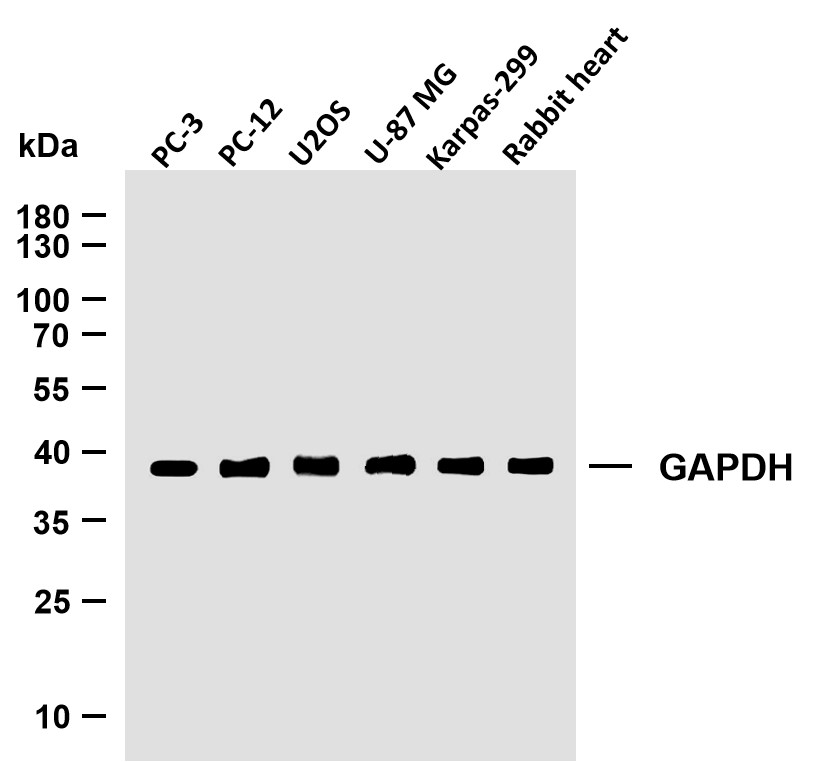
GAPDH (PTR2304) Mouse mAb
YM3029
More→
Antigen&Target Information
Immunogen:
The antiserum was produced against synthesized Acetyl-peptide derived from human p57Kip2 around the Acetylation site of Lys278. AA range:241-290
show all
Specificity:
Acetyl-p57 (K278) Polyclonal Antibody detects endogenous levels of p57 protein only when acetylated at K278.The name of modified sites may be influenced by many factors, such as species (the modified site was not originally found in human samples) and the change of protein sequence (the previous protein sequence is incomplete, and the protein sequence may be prolonged with the development of protein sequencing technology). When naming, we will use the "numbers" in historical reference to keep the sites consistent with the reports. The antibody binds to the following modification sequence (lowercase letters are modification sites):FAkRK
show all
Gene Name:
CDKN1C
show all
Protein Name:
Cyclin-dependent kinase inhibitor 1C
show all
Other Name:
CDKN1C ;
KIP2 ;
Cyclin-dependent kinase inhibitor 1C ;
Cyclin-dependent kinase inhibitor p57 ;
p57Kip2
KIP2 ;
Cyclin-dependent kinase inhibitor 1C ;
Cyclin-dependent kinase inhibitor p57 ;
p57Kip2
show all
Background:
This gene is imprinted, with preferential expression of the maternal allele. The encoded protein is a tight-binding, strong inhibitor of several G1 cyclin/Cdk complexes and a negative regulator of cell proliferation. Mutations in this gene are implicated in sporadic cancers and Beckwith-Wiedemann syndorome, suggesting that this gene is a tumor suppressor candidate. Three transcript variants encoding two different isoforms have been found for this gene. [provided by RefSeq, Oct 2010],
show all
Function:
Disease:Defects in CDKN1C are a cause of Beckwith-Wiedemann syndrome (BWS) [MIM:130650]. BWS is a genetically heterogeneous disorder characterized by anterior abdominal wall defects including exomphalos (omphalocele), pre- and postnatal overgrowth, and macroglossia. Additional less frequent complications include specific developmental defects and a predisposition to embryonal tumors.,Disease:Defects in CDKN1C are involved in tumor formation.,Function:Potent tight-binding inhibitor of several G1 cyclin/CDK complexes (cyclin E-CDK2, cyclin D2-CDK4, and cyclin A-CDK2) and, to lesser extent, of the mitotic cyclin B-CDC2. Negative regulator of cell proliferation. May play a role in maintenance of the non-proliferative state throughout life.,similarity:Belongs to the CDI family.,tissue specificity:Expressed in the heart, brain, lung, skeletal muscle, kidney, pancreas and testis. High levels are seen in the placenta while low levels are seen in the liver.,
show all
Cellular Localization:
Nucleus .
show all
Tissue Expression:
Research Areas:
>>Cell cycle
show all
Signaling Pathway
Reference Citation({{totalcount}})
Catalog: YK0044
Size
Price
Status
Qty.
200μL
$600.00
In stock
0
100μL
$340.00
In stock
0
50μL
$190.00
In stock
0
Add to cart
Collected
Collect
Recently Viewed Products
Clear allPRODUCTS
CUSTOMIZED
ABOUT US



Toggle night Mode
{{pinfoXq.title || ''}}
Catalog: {{pinfoXq.catalog || ''}}
Filter:
All
{{item.name}}
{{pinfo.title}}
-{{pinfo.catalog}}
Main Information
Target
{{pinfo.target}}
Reactivity
{{pinfo.react}}
Applications
{{pinfo.applicat}}
Conjugate/Modification
{{pinfo.coupling}}/{{pinfo.modific}}
MW (kDa)
{{pinfo.mwcalc}}
Host Species
{{pinfo.hostspec}}
Isotype
{{pinfo.isotype}}
Product {{index}}/{{pcount}}
Prev
Next
{{pvTitle}}
Scroll wheel zooms the picture
{{pvDescr}}