





Catalog: YP0642
Size
Price
Status
Qty.
200μL
$600.00
In stock
0
100μL
$340.00
In stock
0
50μL
$190.00
In stock
0
Add to cart


Collected
Collect
Main Information
Target
Arrestin 1 Phospho Ser412
Host Species
Rabbit
Reactivity
Human, Monkey
Applications
WB, IHC, IF, ELISA
MW
47kD (Observed)
Conjugate/Modification
Phospho
Detailed Information
Recommended Dilution Ratio
WB 1:500-1:2000; IHC 1:100-1:300; ELISA 1:10000; IF 1:50-200
Formulation
Liquid in PBS containing 50% glycerol, 0.5% BSA and 0.02% sodium azide.
Specificity
Phospho-Arrestin-β-1 (S412) Polyclonal Antibody detects endogenous levels of Arrestin-β-1 protein only when phosphorylated at S412.The name of modified sites may be influenced by many factors, such as species (the modified site was not originally found in human samples) and the change of protein sequence (the previous protein sequence is incomplete, and the protein sequence may be prolonged with the development of protein sequencing technology). When naming, we will use the "numbers" in historical reference to keep the sites consistent with the reports. The antibody binds to the following modification sequence (lowercase letters are modification sites):TGsPQ
Purification
The antibody was affinity-purified from rabbit antiserum by affinity-chromatography using epitope-specific immunogen.
Storage
-15°C to -25°C/1 year(Do not lower than -25°C)
Concentration
1 mg/ml
MW(Observed)
47kD
Modification
Phospho
Clonality
Polyclonal
Isotype
IgG
Related Products
Secondary Antibodies
Goat Anti Mouse IgG(H+L) (HRP)
RS0001
More→
Secondary Antibodies
Goat Anti Rabbit IgG(H+L) (HRP)
RS0002
More→
Primary Antibodies
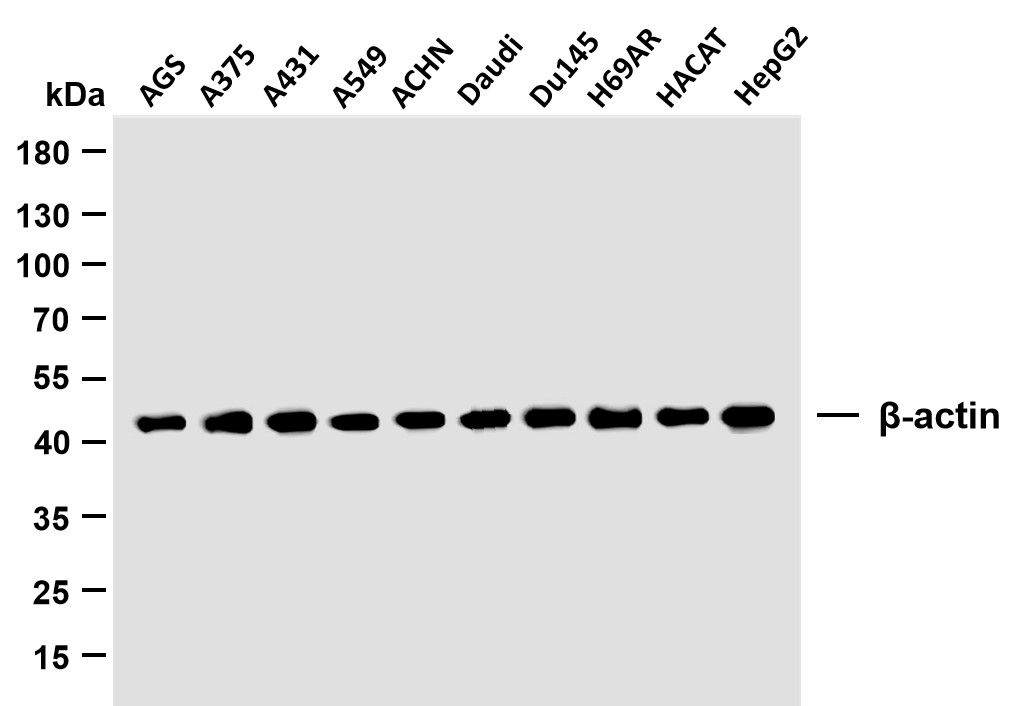
β-actin (PTR2364) Mouse mAb
YM3028
More→
Primary Antibodies
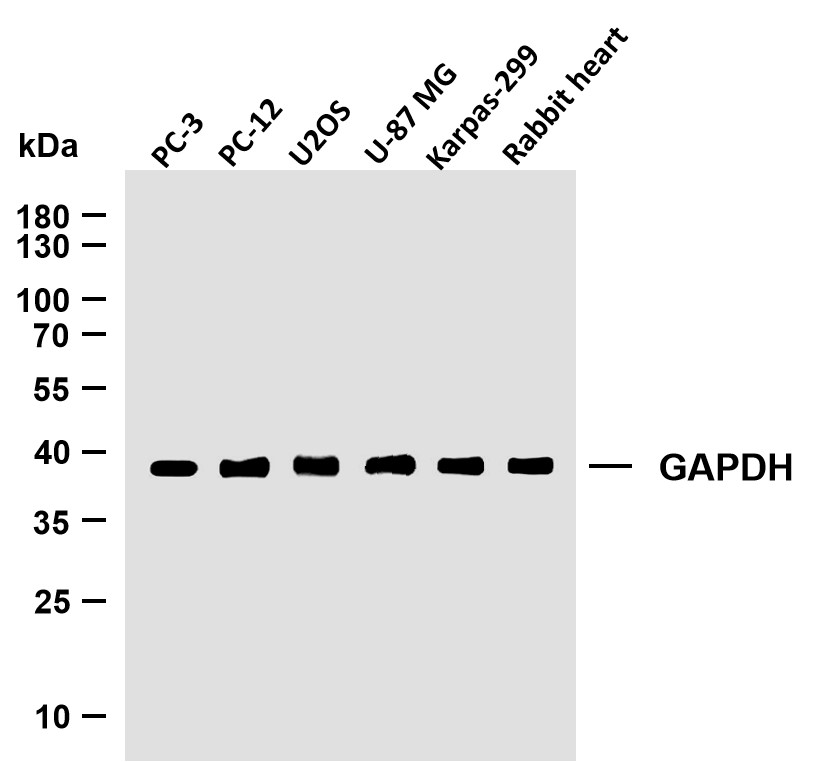
GAPDH (PTR2304) Mouse mAb
YM3029
More→
Antigen&Target Information
Immunogen:
The antiserum was produced against synthesized peptide derived from human Arrestin 1 around the phosphorylation site of Ser412. AA range:369-418
show all
Specificity:
Phospho-Arrestin-β-1 (S412) Polyclonal Antibody detects endogenous levels of Arrestin-β-1 protein only when phosphorylated at S412.The name of modified sites may be influenced by many factors, such as species (the modified site was not originally found in human samples) and the change of protein sequence (the previous protein sequence is incomplete, and the protein sequence may be prolonged with the development of protein sequencing technology). When naming, we will use the "numbers" in historical reference to keep the sites consistent with the reports. The antibody binds to the following modification sequence (lowercase letters are modification sites):TGsPQ
show all
Gene Name:
ARRB1
show all
Protein Name:
Beta-arrestin-1
show all
Other Name:
ARRB1 ;
ARR1 ;
Beta-arrestin-1 ;
Arrestin beta-1
ARR1 ;
Beta-arrestin-1 ;
Arrestin beta-1
show all
Background:
Members of arrestin/beta-arrestin protein family are thought to participate in agonist-mediated desensitization of G-protein-coupled receptors and cause specific dampening of cellular responses to stimuli such as hormones, neurotransmitters, or sensory signals. Arrestin beta 1 is a cytosolic protein and acts as a cofactor in the beta-adrenergic receptor kinase (BARK) mediated desensitization of beta-adrenergic receptors. Besides the central nervous system, it is expressed at high levels in peripheral blood leukocytes, and thus the BARK/beta-arrestin system is believed to play a major role in regulating receptor-mediated immune functions. Alternatively spliced transcripts encoding different isoforms of arrestin beta 1 have been described. [provided by RefSeq, Jan 2011],
show all
Function:
Function:Regulates beta-adrenergic receptor function. Beta-arrestins seem to bind phosphorylated beta-adrenergic receptors, thereby causing a significant impairment of their capacity to activate G(S) proteins.,online information:Arrestin entry,similarity:Belongs to the arrestin family.,
show all
Cellular Localization:
Cytoplasm. Nucleus. Cell membrane. Membrane, clathrin-coated pit . Cell projection, pseudopodium . Cytoplasmic vesicle. Translocates to the plasma membrane and colocalizes with antagonist-stimulated GPCRs. The monomeric form is predominantly located in the nucleus. The oligomeric form is located in the cytoplasm. Translocates to the nucleus upon stimulation of OPRD1 (By similarity). .
show all
Tissue Expression:
show all
Research Areas:
>>MAPK signaling pathway ;
>>Chemokine signaling pathway ;
>>Endocytosis ;
>>Hedgehog signaling pathway ;
>>Dopaminergic synapse ;
>>Olfactory transduction ;
>>Relaxin signaling pathway ;
>>Parathyroid hormone synthesis, secretion and action ;
>>GnRH secretion ;
>>Morphine addiction ;
>>Chemical carcinogenesis - receptor activation
>>Chemokine signaling pathway ;
>>Endocytosis ;
>>Hedgehog signaling pathway ;
>>Dopaminergic synapse ;
>>Olfactory transduction ;
>>Relaxin signaling pathway ;
>>Parathyroid hormone synthesis, secretion and action ;
>>GnRH secretion ;
>>Morphine addiction ;
>>Chemical carcinogenesis - receptor activation
show all
Signaling Pathway
Organismal Systems >> Immune system >> Chemokine signaling pathway
Organismal Systems >> Endocrine system >> Relaxin signaling pathway
Organismal Systems >> Nervous system >> Dopaminergic synapse
Environmental Information Processing >> Signal transduction >> MAPK signaling pathway
Environmental Information Processing >> Signal transduction >> Hedgehog signaling pathway
Reference Citation({{totalcount}})
Catalog: YP0642
Size
Price
Status
Qty.
200μL
$600.00
In stock
0
100μL
$340.00
In stock
0
50μL
$190.00
In stock
0
Add to cart
Collected
Collect
Recently Viewed Products
Clear allPRODUCTS
CUSTOMIZED
ABOUT US



Toggle night Mode
{{pinfoXq.title || ''}}
Catalog: {{pinfoXq.catalog || ''}}
Filter:
All
{{item.name}}
{{pinfo.title}}
-{{pinfo.catalog}}
Main Information
Target
{{pinfo.target}}
Reactivity
{{pinfo.react}}
Applications
{{pinfo.applicat}}
Conjugate/Modification
{{pinfo.coupling}}/{{pinfo.modific}}
MW (kDa)
{{pinfo.mwcalc}}
Host Species
{{pinfo.hostspec}}
Isotype
{{pinfo.isotype}}
Product {{index}}/{{pcount}}
Prev
Next
{{pvTitle}}
Scroll wheel zooms the picture
{{pvDescr}}