


Catalog: YP0518
Size
Price
Status
Qty.
200μL
$600.00
In stock
0
100μL
$340.00
In stock
0
50μL
$190.00
In stock
0
Add to cart


Collected
Collect
Main Information
Target
FGF Receptor 1 Phospho Tyr154
Host Species
Rabbit
Reactivity
Human, Mouse, Rat
Applications
WB, IF, ELISA
MW
120kD (Calculated)
full length 120-140kD,FOP-FGFR1 90kD (Observed)
Conjugate/Modification
Phospho
Detailed Information
Recommended Dilution Ratio
WB 1:500-1:2000; IF 1:200-1:1000; ELISA 1:40000; Not yet tested in other applications.
Formulation
Liquid in PBS containing 50% glycerol, 0.5% BSA and 0.02% sodium azide.
Specificity
Phospho-Flg (Y154) Polyclonal Antibody detects endogenous levels of Flg protein only when phosphorylated at Y154.The name of modified sites may be influenced by many factors, such as species (the modified site was not originally found in human samples) and the change of protein sequence (the previous protein sequence is incomplete, and the protein sequence may be prolonged with the development of protein sequencing technology). When naming, we will use the "numbers" in historical reference to keep the sites consistent with the reports. The antibody binds to the following modification sequence (lowercase letters are modification sites):APyWT
Purification
The antibody was affinity-purified from rabbit antiserum by affinity-chromatography using epitope-specific immunogen.
Storage
-15°C to -25°C/1 year(Do not lower than -25°C)
Concentration
1 mg/ml
MW(Calculated)
120kD
MW(Observed)
full length 120-140kD,FOP-FGFR1 90kD
Modification
Phospho
Clonality
Polyclonal
Isotype
IgG
Related Products
Secondary Antibodies
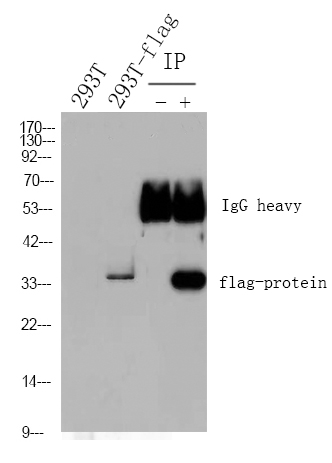
Goat Anti Mouse IgG(H+L) (HRP)
RS0001
More→
Secondary Antibodies
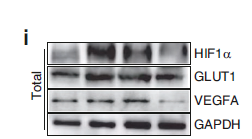
Goat Anti Rabbit IgG(H+L) (HRP)
RS0002
More→
Primary Antibodies
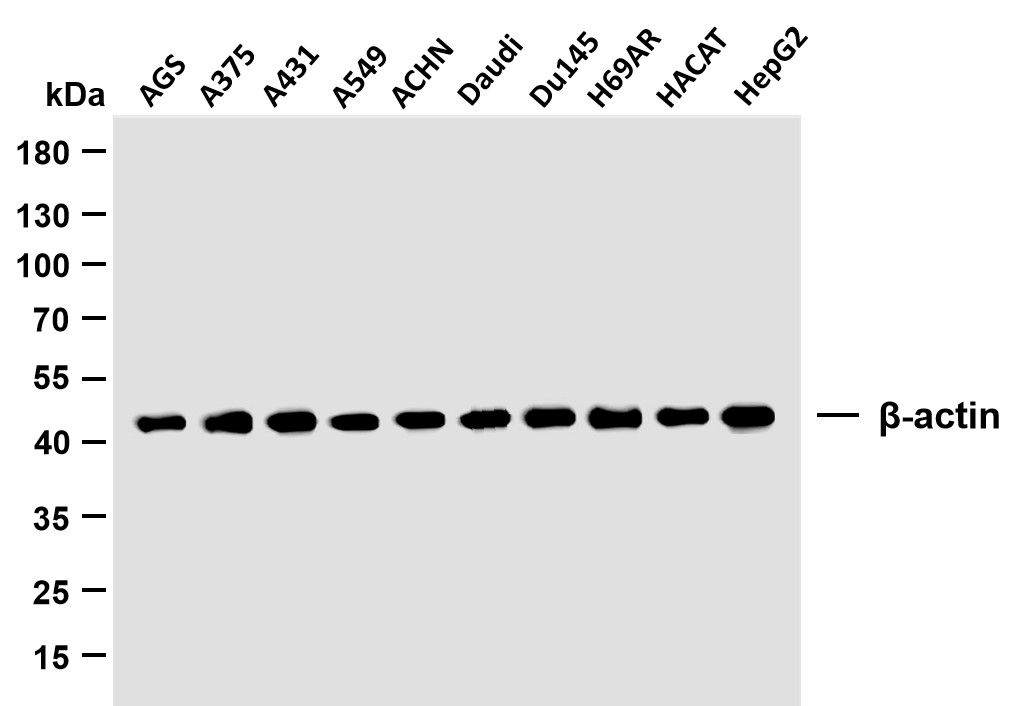
β-actin (PTR2364) Mouse mAb
YM3028
More→
Primary Antibodies
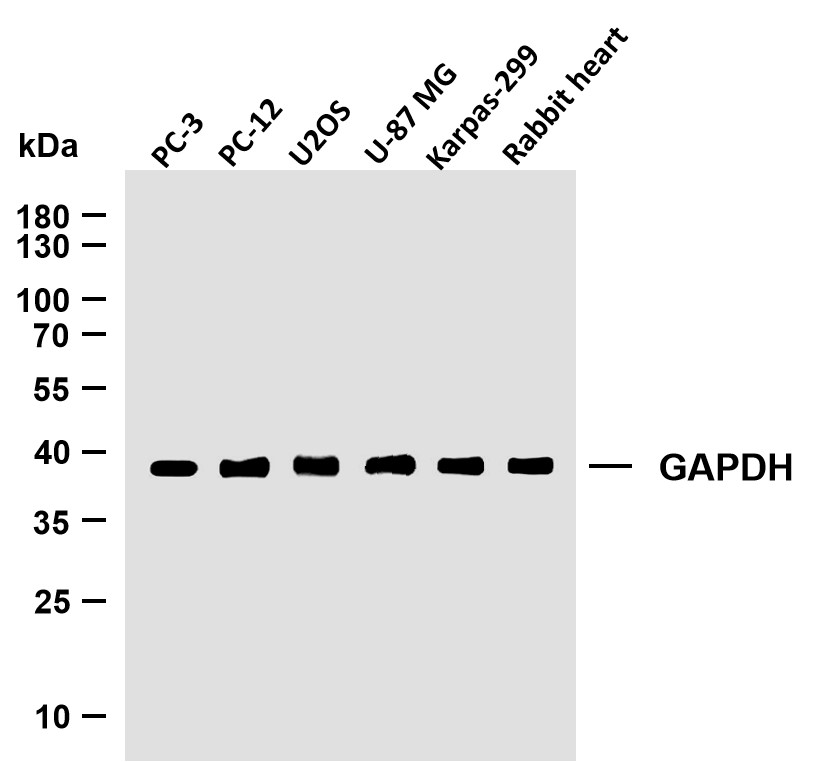
GAPDH (PTR2304) Mouse mAb
YM3029
More→
Antigen&Target Information
Immunogen:
The antiserum was produced against synthesized peptide derived from human FGFR1 around the phosphorylation site of Tyr154. AA range:121-170
show all
Specificity:
Phospho-Flg (Y154) Polyclonal Antibody detects endogenous levels of Flg protein only when phosphorylated at Y154.The name of modified sites may be influenced by many factors, such as species (the modified site was not originally found in human samples) and the change of protein sequence (the previous protein sequence is incomplete, and the protein sequence may be prolonged with the development of protein sequencing technology). When naming, we will use the "numbers" in historical reference to keep the sites consistent with the reports. The antibody binds to the following modification sequence (lowercase letters are modification sites):APyWT
show all
Gene Name:
FGFR1 BFGFR CEK FGFBR FLG FLT2 HBGFR
show all
Protein Name:
Fibroblast growth factor receptor 1
show all
Other Name:
FGFR1 ;
BFGFR ;
CEK ;
FGFBR ;
FLG ;
FLT2 ;
HBGFR ;
Fibroblast growth factor receptor 1 ;
FGFR-1 ;
Basic fibroblast growth factor receptor 1 ;
BFGFR ;
bFGF-R-1 ;
Fms-like tyrosine kinase 2 ;
FLT-2 ;
N-sam ;
Proto-oncogene c-Fgr ;
CD antigen CD331
BFGFR ;
CEK ;
FGFBR ;
FLG ;
FLT2 ;
HBGFR ;
Fibroblast growth factor receptor 1 ;
FGFR-1 ;
Basic fibroblast growth factor receptor 1 ;
BFGFR ;
bFGF-R-1 ;
Fms-like tyrosine kinase 2 ;
FLT-2 ;
N-sam ;
Proto-oncogene c-Fgr ;
CD antigen CD331
show all
Database Link:
Background:
The protein encoded by this gene is a member of the fibroblast growth factor receptor (FGFR) family, where amino acid sequence is highly conserved between members and throughout evolution. FGFR family members differ from one another in their ligand affinities and tissue distribution. A full-length representative protein consists of an extracellular region, composed of three immunoglobulin-like domains, a single hydrophobic membrane-spanning segment and a cytoplasmic tyrosine kinase domain. The extracellular portion of the protein interacts with fibroblast growth factors, setting in motion a cascade of downstream signals, ultimately influencing mitogenesis and differentiation. This particular family member binds both acidic and basic fibroblast growth factors and is involved in limb induction. Mutations in this gene have been associated with Pfeiffer syndrome, Jackson-Weiss syndrome, Antley-Bixler syndrome, osteoglophonic dysplasia, and autosomal dominant Kallmann syndrome 2. Chromosomal aberrations involving this gene are associated with stem cell myeloproliferative disorder and stem cell leukemia lymphoma syndrome. Alternatively spliced variants which encode different protein isoforms have been described; however, not all variants have been fully characterized. [provided by RefSeq, Jul 2008]
show all
Function:
Receptor for basic fibroblast growth factor. Receptor for FGF23 in the presence of KL (By similarity). A shorter form of the receptor could be a receptor for FGF1 (aFGF).
show all
Cellular Localization:
Cell membrane; Single-pass type I membrane protein. Nucleus. Cytoplasm, cytosol. Cytoplasmic vesicle. After ligand binding, both receptor and ligand are rapidly internalized. Can translocate to the nucleus after internalization, or by translocation from the endoplasmic reticulum or Golgi apparatus to the cytosol, and from there to the nucleus.
show all
Tissue Expression:
Research Areas:
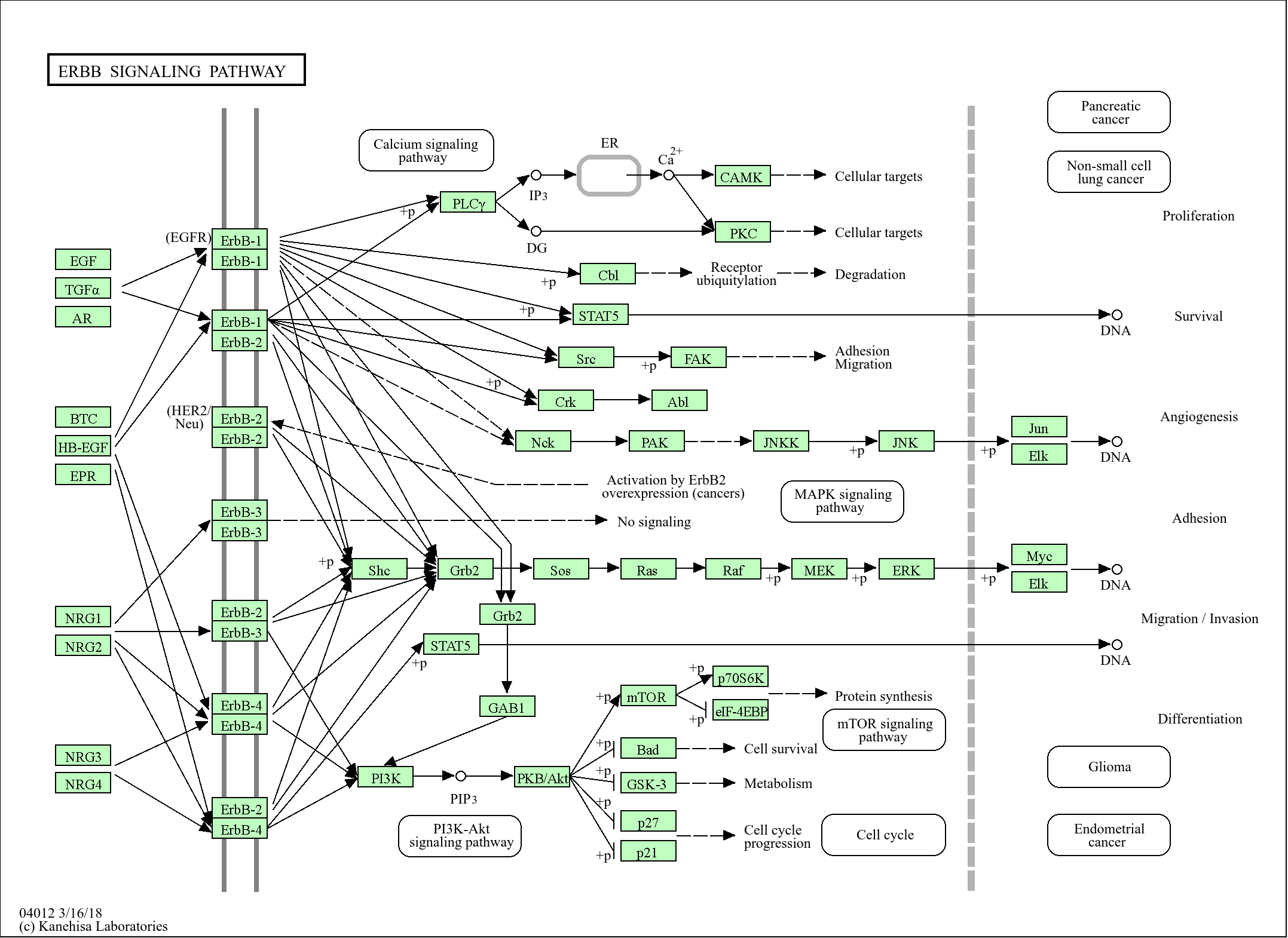
>>MAPK signaling pathway ;
>>Ras signaling pathway ;
>>Rap1 signaling pathway ;
>>Calcium signaling pathway ;
>>PI3K-Akt signaling pathway ;
>>Adherens junction ;
>>Signaling pathways regulating pluripotency of stem cells ;
>>Thermogenesis ;
>>Regulation of actin cytoskeleton ;
>>Parathyroid hormone synthesis, secretion and action ;
>>Pathways in cancer ;
>>Proteoglycans in cancer ;
>>Prostate cancer ;
>>Melanoma ;
>>Breast cancer ;
>>Central carbon metabolism in cancer
>>Ras signaling pathway ;
>>Rap1 signaling pathway ;
>>Calcium signaling pathway ;
>>PI3K-Akt signaling pathway ;
>>Adherens junction ;
>>Signaling pathways regulating pluripotency of stem cells ;
>>Thermogenesis ;
>>Regulation of actin cytoskeleton ;
>>Parathyroid hormone synthesis, secretion and action ;
>>Pathways in cancer ;
>>Proteoglycans in cancer ;
>>Prostate cancer ;
>>Melanoma ;
>>Breast cancer ;
>>Central carbon metabolism in cancer
show all
Signaling Pathway
Cellular Processes >> Cellular community - eukaryotes >> Adherens junction
Cellular Processes >> Cellular community - eukaryotes >> Signaling pathways regulating pluripotency of stem cells
Cellular Processes >> Cell motility >> Regulation of actin cytoskeleton
Human Diseases >> Cancer: overview >> Pathways in cancer
Human Diseases >> Cancer: overview >> Central carbon metabolism in cancer
Human Diseases >> Cancer: specific types >> Melanoma
Human Diseases >> Cancer: specific types >> Prostate cancer
Human Diseases >> Cancer: specific types >> Breast cancer
Environmental Information Processing >> Signal transduction >> MAPK signaling pathway
Environmental Information Processing >> Signal transduction >> Ras signaling pathway
Environmental Information Processing >> Signal transduction >> Rap1 signaling pathway
Environmental Information Processing >> Signal transduction >> Calcium signaling pathway
Environmental Information Processing >> Signal transduction >> PI3K-Akt signaling pathway
Reference Citation({{totalcount}})
Catalog: YP0518
Size
Price
Status
Qty.
200μL
$600.00
In stock
0
100μL
$340.00
In stock
0
50μL
$190.00
In stock
0
Add to cart
Collected
Collect
Recently Viewed Products
Clear allPRODUCTS
CUSTOMIZED
ABOUT US



Toggle night Mode
{{pinfoXq.title || ''}}
Catalog: {{pinfoXq.catalog || ''}}
Filter:
All
{{item.name}}
{{pinfo.title}}
-{{pinfo.catalog}}
Main Information
Target
{{pinfo.target}}
Reactivity
{{pinfo.react}}
Applications
{{pinfo.applicat}}
Conjugate/Modification
{{pinfo.coupling}}/{{pinfo.modific}}
MW (kDa)
{{pinfo.mwcalc}}
Host Species
{{pinfo.hostspec}}
Isotype
{{pinfo.isotype}}
Product {{index}}/{{pcount}}
Prev
Next
{{pvTitle}}
Scroll wheel zooms the picture
{{pvDescr}}