





Catalog: YP1804
Size
Price
Status
Qty.
200μL
$936.00
3 weeks
0
100μL
$560.00
3 weeks
0
50μL
$300.00
3 weeks
0
Add to cart


Collected
Collect
Main Information
Target
FoxO3a Phospho Ser644
Host Species
Rabbit
Reactivity
Human, Mouse
Applications
WB, IHC
MW
71kD (Observed)
Conjugate/Modification
phosphate
Detailed Information
Recommended Dilution Ratio
WB 1:500-2000; IHC 1:50-200
Formulation
Liquid in PBS containing 50% glycerol, and 0.02% sodium azide.
Specificity
This antibody detects endogenous levels of FoxO3a (Phospho Ser644) Rabbit pAb at Human, Mouse.The name of modified sites may be influenced by many factors, such as species (the modified site was not originally found in human samples) and the change of protein sequence (the previous protein sequence is incomplete, and the protein sequence may be prolonged with the development of protein sequencing technology). When naming, we will use the "numbers" in historical reference to keep the sites consistent with the reports. The antibody binds to the following modification sequence (lowercase letters are modification sites):FDsLI
Purification
The antibody was affinity-purified from rabbit serum by affinity-chromatography using specific immunogen.
Storage
-15°C to -25°C/1 year (Do not lower than -25°C)
Concentration
1 mg/ml
MW(Observed)
71kD
Modification
phosphate
Clonality
Polyclonal
Related Products
Secondary Antibodies
Goat Anti Mouse IgG(H+L) (HRP)
RS0001
More→
Secondary Antibodies
Goat Anti Rabbit IgG(H+L) (HRP)
RS0002
More→
Primary Antibodies
β-actin (PTR2364) Mouse mAb
YM3028
More→
Antigen&Target Information
Immunogen:
Synthesized peptide derived from human FoxO3a (Phospho Ser644)
show all
Specificity:
This antibody detects endogenous levels of FoxO3a (Phospho Ser644) Rabbit pAb at Human, Mouse.The name of modified sites may be influenced by many factors, such as species (the modified site was not originally found in human samples) and the change of protein sequence (the previous protein sequence is incomplete, and the protein sequence may be prolonged with the development of protein sequencing technology). When naming, we will use the "numbers" in historical reference to keep the sites consistent with the reports. The antibody binds to the following modification sequence (lowercase letters are modification sites):FDsLI
show all
Gene Name:
FOXO3 FKHRL1 FOXO3A
show all
Protein Name:
Forkhead box protein O3 (AF6q21 protein) (Forkhead in rhabdomyosarcoma-like 1)
show all
Other Name:
Forkhead box protein O3 ;
AF6q21 protein ;
Forkhead in rhabdomyosarcoma-like 1 ;
AF6q21 protein ;
Forkhead in rhabdomyosarcoma-like 1 ;
show all
Background:
This gene belongs to the forkhead family of transcription factors which are characterized by a distinct forkhead domain. This gene likely functions as a trigger for apoptosis through expression of genes necessary for cell death. Translocation of this gene with the MLL gene is associated with secondary acute leukemia. Alternatively spliced transcript variants encoding the same protein have been observed. [provided by RefSeq , Jul 2008] ,
show all
Function:
Disease:A chromosomal aberration involving FOXO3 is found in secondary acute leukemias. Translocation t (6;11) (q21;q23) with MLL/HRX. ,Function:Transcriptional activator which triggers apoptosis in the absence of survival factors , including neuronal cell death upon oxidative stress. Recognizes and binds to the DNA sequence 5'-[AG]TAAA[TC]A-3'. ,PTM:In the presence of survival factors such as IGF-1 , phosphorylated on Thr-32 and Ser-253 by AKT1/PKB. This phosphorylated form then interacts with 14-3-3 proteins and is retained in the cytoplasm. Survival factor withdrawal induces dephosphorylation and promotes translocation to the nucleus where the dephosphorylated protein induces transcription of target genes and triggers apoptosis. Although AKT1/PKB doesn't appear to phosphorylate Ser-315 directly , it may activate other kinases that trigger phosphorylation at this residue. Phosphorylated by STK4 on Ser-209 upon oxidative stress , which leads to dissociation from YWHAB/14-3-3-beta and nuclear translocation. ,similarity:Contains 1 fork-head DNA-binding domain. ,subcellular location:Translocates to the nucleus upon oxidative stress and in the absence of survival factors. ,subunit:Interacts with YWHAB/14-3-3-beta and YWHAZ/14-3-3-zeta , which are required for cytosolic sequestration. Upon oxidative stress , interacts with STK4 , which disrupts interaction with YWHAB/14-3-3-beta and leads to nuclear translocation. ,tissue specificity:Ubiquitous. ,
show all
Cellular Localization:
Cytoplasm , cytosol . Nucleus . Mitochondrion matrix . Mitochondrion outer membrane ; Peripheral membrane protein ; Cytoplasmic side . Retention in the cytoplasm contributes to its inactivation (PubMed:10102273 , PubMed:15084260 , PubMed:16751106) . Translocates to the nucleus upon oxidative stress and in the absence of survival factors (PubMed:10102273 , PubMed:16751106) . Translocates from the cytosol to the nucleus following dephosphorylation in response to autophagy-inducing stimuli (By similarity) . Translocates in a AMPK-dependent manner into the mitochondrion in response to metabolic stress (PubMed:23283301 , PubMed:29445193) . Serum deprivation increases localization to the nucleus , leading to activate expression of SOX9 and subsequent chondrogenesis (By similarity) . .
show all
Tissue Expression:
show all
Research Areas:
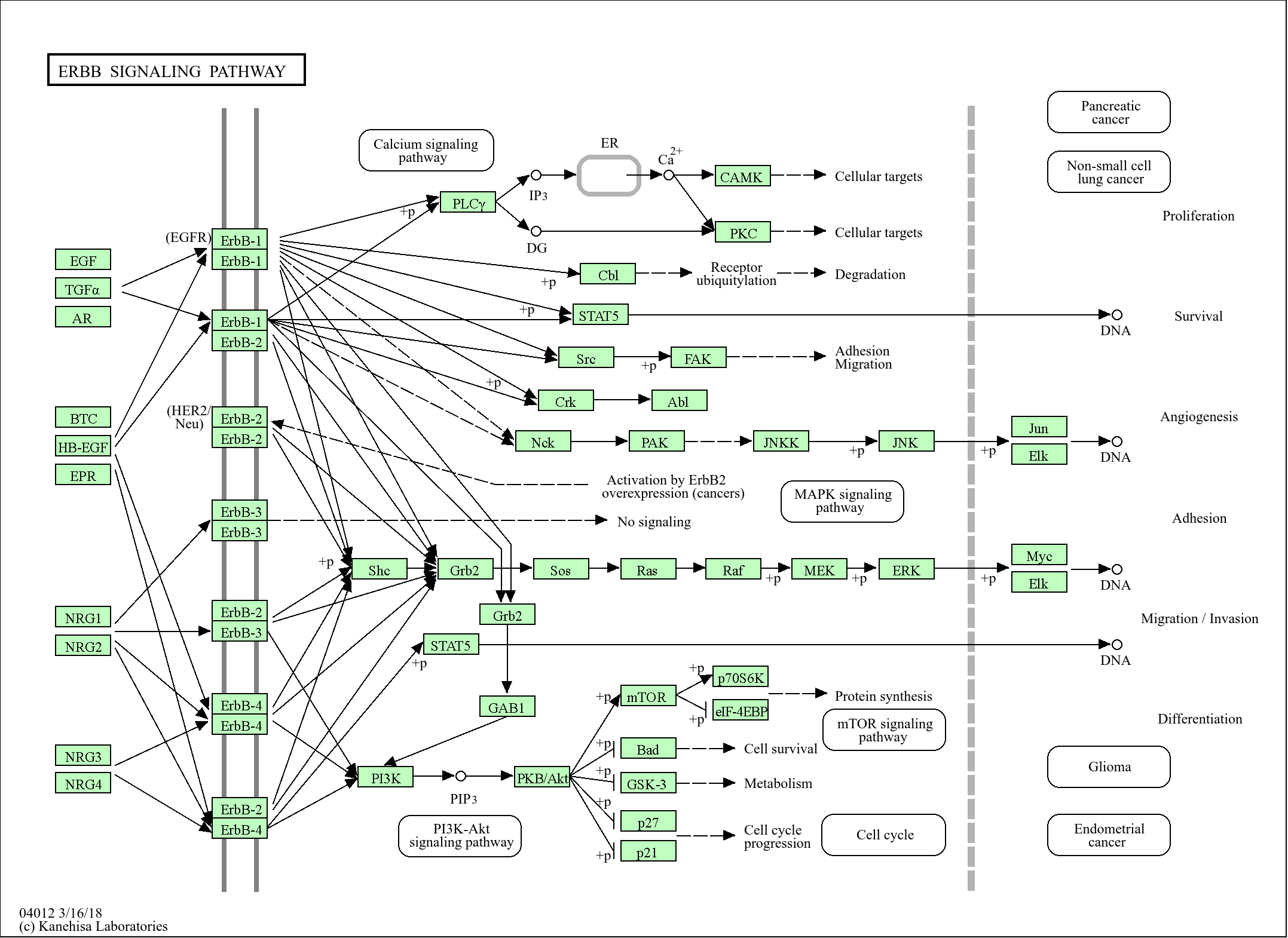
>>EGFR tyrosine kinase inhibitor resistance ;
>>Chemokine signaling pathway ;
>>FoxO signaling pathway ;
>>Mitophagy - animal ;
>>PI3K-Akt signaling pathway ;
>>AMPK signaling pathway ;
>>Longevity regulating pathway ;
>>Longevity regulating pathway - multiple species ;
>>Cellular senescence ;
>>Neurotrophin signaling pathway ;
>>Prolactin signaling pathway ;
>>Alcoholic liver disease ;
>>Shigellosis ;
>>Chemical carcinogenesis - reactive oxygen species ;
>>Endometrial cancer ;
>>Non-small cell lung cancer
>>Chemokine signaling pathway ;
>>FoxO signaling pathway ;
>>Mitophagy - animal ;
>>PI3K-Akt signaling pathway ;
>>AMPK signaling pathway ;
>>Longevity regulating pathway ;
>>Longevity regulating pathway - multiple species ;
>>Cellular senescence ;
>>Neurotrophin signaling pathway ;
>>Prolactin signaling pathway ;
>>Alcoholic liver disease ;
>>Shigellosis ;
>>Chemical carcinogenesis - reactive oxygen species ;
>>Endometrial cancer ;
>>Non-small cell lung cancer
show all
Signaling Pathway
Cellular Processes >> Transport and catabolism >> Mitophagy - animal
Cellular Processes >> Cell growth and death >> Cellular senescence
Organismal Systems >> Immune system >> Chemokine signaling pathway
Organismal Systems >> Endocrine system >> Prolactin signaling pathway
Organismal Systems >> Nervous system >> Neurotrophin signaling pathway
Organismal Systems >> Aging >> Longevity regulating pathway
Organismal Systems >> Aging >> Longevity regulating pathway - multiple species
Human Diseases >> Cancer: specific types >> Endometrial cancer
Human Diseases >> Cancer: specific types >> Non-small cell lung cancer
Environmental Information Processing >> Signal transduction >> FoxO signaling pathway
Environmental Information Processing >> Signal transduction >> PI3K-Akt signaling pathway
Environmental Information Processing >> Signal transduction >> AMPK signaling pathway
Reference Citation({{totalcount}})
Catalog: YP1804
Size
Price
Status
Qty.
200μL
$936.00
3 weeks
0
100μL
$560.00
3 weeks
0
50μL
$300.00
3 weeks
0
Add to cart
Collected
Collect
Recently Viewed Products
Clear allPRODUCTS
CUSTOMIZED
ABOUT US



Toggle night Mode
{{pinfoXq.title || ''}}
Catalog: {{pinfoXq.catalog || ''}}
Filter:
All
{{item.name}}
{{pinfo.title}}
-{{pinfo.catalog}}
Main Information
Target
{{pinfo.target}}
Reactivity
{{pinfo.react}}
Applications
{{pinfo.applicat}}
Conjugate/Modification
{{pinfo.coupling}}/{{pinfo.modific}}
MW (kDa)
{{pinfo.mwcalc}}
Host Species
{{pinfo.hostspec}}
Isotype
{{pinfo.isotype}}
Product {{index}}/{{pcount}}
Prev
Next
{{pvTitle}}
Scroll wheel zooms the picture
{{pvDescr}}