


Catalog: YP1691
Size
Price
Status
Qty.
200μL
$600.00
3 weeks
0
100μL
$340.00
3 weeks
0
50μL
$190.00
3 weeks
0
Add to cart


Collected
Collect
Main Information
Target
Raptor Phospho Ser863
Host Species
Rabbit
Reactivity
Human, Mouse, Rat
Applications
WB
MW
150kD (Observed)
Conjugate/Modification
phosphate
Detailed Information
Recommended Dilution Ratio
WB 1:500-2000
Formulation
Liquid in PBS containing 50% glycerol, 0.5% BSA and 0.02% sodium azide.
Specificity
This antibody detects endogenous levels of Raptor (Phospho-Ser863) at Human, Mouse,Rat.The name of modified sites may be influenced by many factors, such as species (the modified site was not originally found in human samples) and the change of protein sequence (the previous protein sequence is incomplete, and the protein sequence may be prolonged with the development of protein sequencing technology). When naming, we will use the "numbers" in historical reference to keep the sites consistent with the reports. The antibody binds to the following modification sequence (lowercase letters are modification sites):PAsPT
Purification
The antibody was affinity-purified from rabbit serum by affinity-chromatography using specific immunogen.
Storage
-15°C to -25°C/1 year (Do not lower than -25°C)
Concentration
1 mg/ml
MW(Observed)
150kD
Modification
phosphate
Clonality
Polyclonal
Isotype
IgG
Related Products
Secondary Antibodies
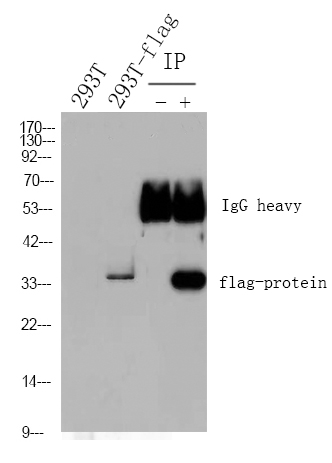
Goat Anti Mouse IgG(H+L) (HRP)
RS0001
More→
Secondary Antibodies
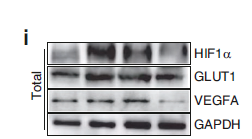
Goat Anti Rabbit IgG(H+L) (HRP)
RS0002
More→
Primary Antibodies
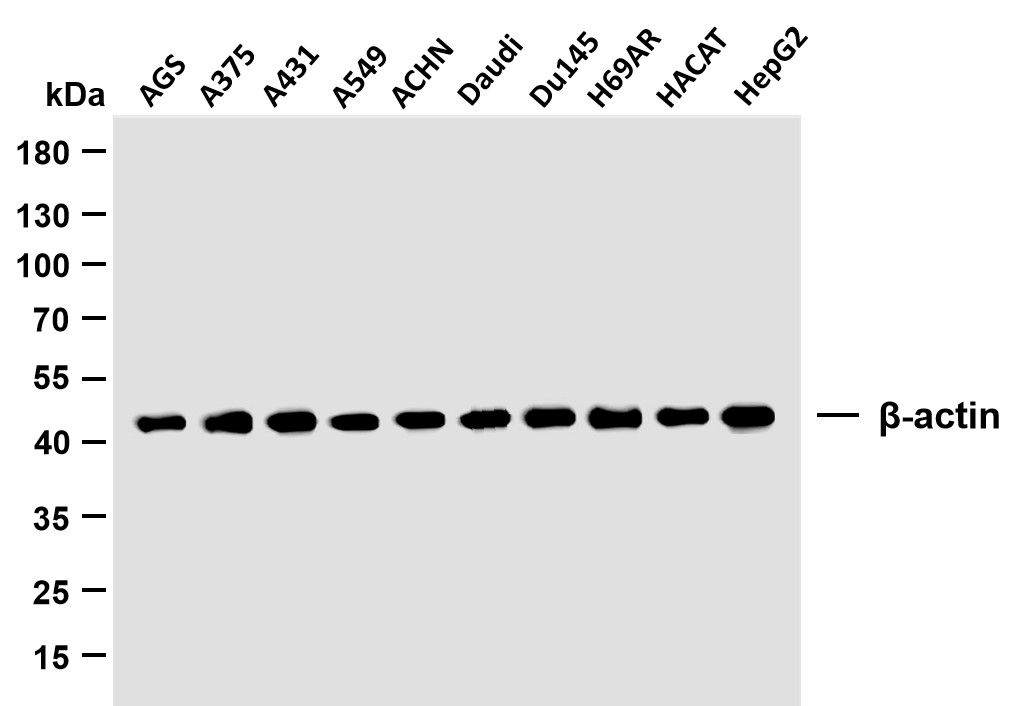
β-actin (PTR2364) Mouse mAb
YM3028
More→
Primary Antibodies
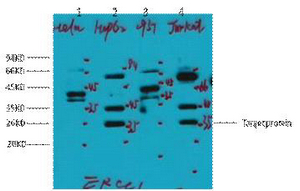
ERCC1 (1B10) Mouse mAb
YM3078
More→
Antigen&Target Information
Immunogen:
Synthesized peptide derived from human Raptor (Phospho-Ser863)
show all
Specificity:
This antibody detects endogenous levels of Raptor (Phospho-Ser863) at Human, Mouse,Rat.The name of modified sites may be influenced by many factors, such as species (the modified site was not originally found in human samples) and the change of protein sequence (the previous protein sequence is incomplete, and the protein sequence may be prolonged with the development of protein sequencing technology). When naming, we will use the "numbers" in historical reference to keep the sites consistent with the reports. The antibody binds to the following modification sequence (lowercase letters are modification sites):PAsPT
show all
Gene Name:
RPTOR KIAA1303 RAPTOR
show all
Protein Name:
Raptor (Phospho-Ser863)
show all
Other Name:
Regulatory-associated protein of mTOR ;
Raptor ;
p150 target of rapamycin ;
TOR ;
-scaffold protein ;
Raptor ;
p150 target of rapamycin ;
TOR ;
-scaffold protein ;
show all
Background:
This gene encodes a component of a signaling pathway that regulates cell growth in response to nutrient and insulin levels. The encoded protein forms a stoichiometric complex with the mTOR kinase , and also associates with eukaryotic initiation factor 4E-binding protein-1 and ribosomal protein S6 kinase. The protein positively regulates the downstream effector ribosomal protein S6 kinase , and negatively regulates the mTOR kinase. Multiple transcript variants encoding different isoforms have been found for this gene. [provided by RefSeq , Sep 2009] ,
show all
Function:
Function:Participates in the FRAP1 pathway and associates in a near stoichiometric ratio with FRAP1 to form a nutrient-sensitive complex (NSC) . Plays a pivotal role as a scaffold protein in the FRAP1-signaling pathway and this interaction is essential for the catalyzed phosphorylation of EIF4EBP1. Has a positive role in nutrient-stimulated signaling to the downstream effector RPS6KB1. Under nutrient-deprived conditions , serves as a negative regulator of FRAP1 kinase activity. Regulation of the interaction with FRAP1 is a critical mechanism by which cells coordinate the rate of cell growth and maintenance of cell size with different environmental conditions. ,miscellaneous:Rapamycin destabilizes the interaction with FRAP1 regardless of nutrient availability , and its potency for dissociation is increased under nutrient-rich conditions. This action uncouples FRAP1 from its substrates , and inhibits FRAP1 signaling without altering its intrinsic catalytic activity. ,similarity:Belongs to the WD repeat RAPTOR family. ,similarity:Contains 7 WD repeats. ,subunit:Binds directly 4EBP1 and RPS6KB1 independently of its association with FRAP1. Binds preferentially to poorly or non-phosphorylated form of EIF4EBP1 , and this binding is critical to the ability of FRAP1 to catalyze phosphorylation. Complex with FRAP1 physically interacts under both leucine-rich and -poor conditions and therefore in at least two nutrient-determined states with different stability. ,tissue specificity:Highly expressed in skeletal muscle , and in a lesser extent in brain , lung , small intestine , kidney and placenta. ,
show all
Cellular Localization:
Cytoplasm. Lysosome. Cytoplasmic granule . Targeting to lysosomes depends on amino acid availability. In arsenite-stressed cells , accumulates in stress granules when associated with SPAG5 and association with lysosomes is drastically decreased.
show all
Tissue Expression:
Research Areas:
>>Autophagy - other ;
>>Autophagy - animal ;
>>mTOR signaling pathway ;
>>PI3K-Akt signaling pathway ;
>>AMPK signaling pathway ;
>>Longevity regulating pathway ;
>>Longevity regulating pathway - multiple species ;
>>Thermogenesis ;
>>Insulin signaling pathway ;
>>Shigellosis ;
>>MicroRNAs in cancer
>>Autophagy - animal ;
>>mTOR signaling pathway ;
>>PI3K-Akt signaling pathway ;
>>AMPK signaling pathway ;
>>Longevity regulating pathway ;
>>Longevity regulating pathway - multiple species ;
>>Thermogenesis ;
>>Insulin signaling pathway ;
>>Shigellosis ;
>>MicroRNAs in cancer
show all
Signaling Pathway
Cellular Processes >> Transport and catabolism >> Autophagy - animal
Organismal Systems >> Endocrine system >> Insulin signaling pathway
Organismal Systems >> Aging >> Longevity regulating pathway
Organismal Systems >> Aging >> Longevity regulating pathway - multiple species
Human Diseases >> Cancer: overview >> MicroRNAs in cancer
Environmental Information Processing >> Signal transduction >> PI3K-Akt signaling pathway
Environmental Information Processing >> Signal transduction >> AMPK signaling pathway
Environmental Information Processing >> Signal transduction >> mTOR signaling pathway
Reference Citation({{totalcount}})
Catalog: YP1691
Size
Price
Status
Qty.
200μL
$600.00
3 weeks
0
100μL
$340.00
3 weeks
0
50μL
$190.00
3 weeks
0
Add to cart
Collected
Collect
Recently Viewed Products
Clear allPRODUCTS
CUSTOMIZED
ABOUT US



Toggle night Mode
{{pinfoXq.title || ''}}
Catalog: {{pinfoXq.catalog || ''}}
Filter:
All
{{item.name}}
{{pinfo.title}}
-{{pinfo.catalog}}
Main Information
Target
{{pinfo.target}}
Reactivity
{{pinfo.react}}
Applications
{{pinfo.applicat}}
Conjugate/Modification
{{pinfo.coupling}}/{{pinfo.modific}}
MW (kDa)
{{pinfo.mwcalc}}
Host Species
{{pinfo.hostspec}}
Isotype
{{pinfo.isotype}}
Product {{index}}/{{pcount}}
Prev
Next
{{pvTitle}}
Scroll wheel zooms the picture
{{pvDescr}}