





Catalog: YP1576
Size
Price
Status
Qty.
200μL
$600.00
3 weeks
0
100μL
$340.00
3 weeks
0
50μL
$190.00
3 weeks
0
Add to cart


Collected
Collect
Main Information
Target
PPAR α Phospho Ser21
Host Species
Rabbit
Reactivity
Human, Mouse, Rat
Applications
WB, IHC
MW
52kD (Observed)
Conjugate/Modification
phosphate
Detailed Information
Recommended Dilution Ratio
WB 1:500-2000; IHC 1:50-300
Formulation
Liquid in PBS containing 50% glycerol, 0.5% BSA and 0.02% sodium azide.
Specificity
This antibody detects endogenous levels of Human PPAR α (Phospho Ser21).The name of modified sites may be influenced by many factors, such as species (the modified site was not originally found in human samples) and the change of protein sequence (the previous protein sequence is incomplete, and the protein sequence may be prolonged with the development of protein sequencing technology). When naming, we will use the "numbers" in historical reference to keep the sites consistent with the reports. The antibody binds to the following modification sequence (lowercase letters are modification sites):LEsPL
Purification
The antibody was affinity-purified from rabbit serum by affinity-chromatography using specific immunogen.
Storage
-15°C to -25°C/1 year (Do not lower than -25°C)
Concentration
1 mg/ml
MW(Observed)
52kD
Modification
phosphate
Clonality
Polyclonal
Isotype
IgG
Related Products
Secondary Antibodies
Goat Anti Mouse IgG(H+L) (HRP)
RS0001
More→
Secondary Antibodies
Goat Anti Rabbit IgG(H+L) (HRP)
RS0002
More→
Primary Antibodies
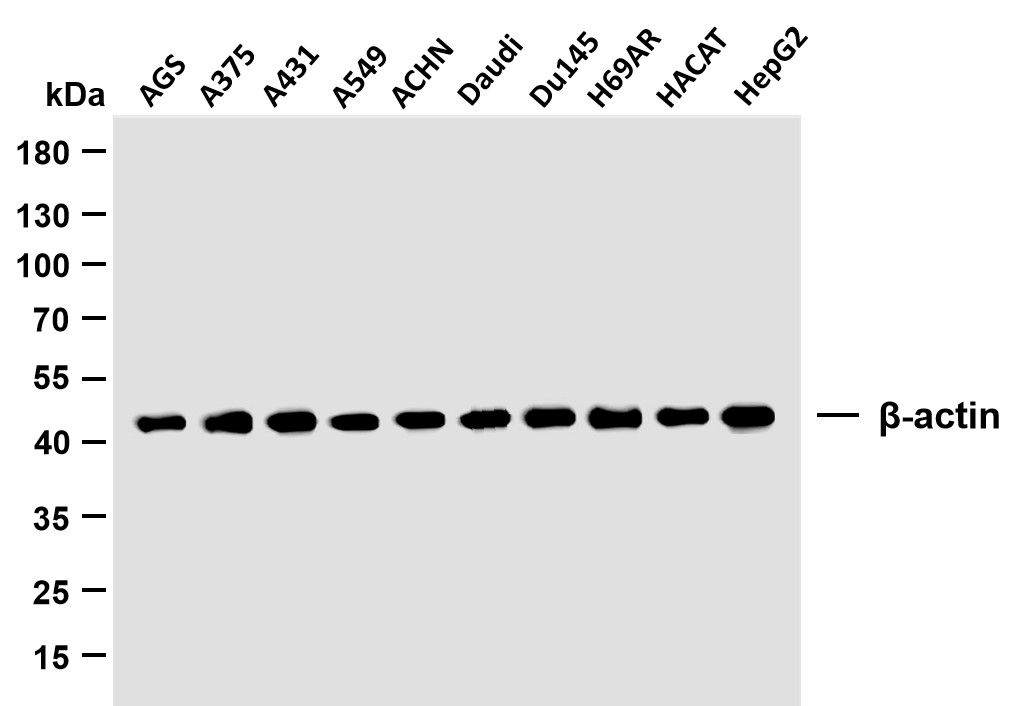
β-actin (PTR2364) Mouse mAb
YM3028
More→
Antigen&Target Information
Immunogen:
Synthesized peptide derived from human PPAR α (Phospho Ser21)
show all
Specificity:
This antibody detects endogenous levels of Human PPAR α (Phospho Ser21).The name of modified sites may be influenced by many factors, such as species (the modified site was not originally found in human samples) and the change of protein sequence (the previous protein sequence is incomplete, and the protein sequence may be prolonged with the development of protein sequencing technology). When naming, we will use the "numbers" in historical reference to keep the sites consistent with the reports. The antibody binds to the following modification sequence (lowercase letters are modification sites):LEsPL
show all
Gene Name:
PPARA NR1C1 PPAR
show all
Protein Name:
PPAR α (Phospho Ser21)
show all
Other Name:
PPARA ;
NR1C1 ;
PPAR ;
Peroxisome proliferator-activated receptor alpha ;
PPAR-alpha ;
Nuclear receptor subfamily 1 group C member 1
NR1C1 ;
PPAR ;
Peroxisome proliferator-activated receptor alpha ;
PPAR-alpha ;
Nuclear receptor subfamily 1 group C member 1
show all
Database Link:
Background:
function:Receptor that binds peroxisome proliferators such as hypolipidemic drugs and fatty acids. Once activated by a ligand , the receptor binds to a promoter element in the gene for acyl-CoA oxidase and activates its transcription. It therefore controls the peroxisomal beta-oxidation pathway of fatty acids. ,online information:Peroxisome proliferator-activated receptor entry ,similarity:Belongs to the nuclear hormone receptor family. NR1 subfamily. ,similarity:Contains 1 nuclear receptor DNA-binding domain. ,subunit:Heterodimer with the retinoid X receptor. Interacts with NCOA3 and NCOA6 coactivators , leading to a strong increase of transcription of target genes. Also interacts with PPARBP coactivator in vitro. Interacts with AKAP13. ,tissue specificity:Skeletal muscle , liver , heart and kidney. ,
show all
Function:
negative regulation of transcription from RNA polymerase II promoter , response to hypoxia , circulatory system process , transcription , transcription , DNA-dependent , regulation of transcription , DNA-dependent , regulation of transcription from RNA polymerase II promoter , transcription from RNA polymerase II promoter , fatty acid metabolic process , lipid transport , ectoderm development , blood circulation , regulation of blood pressure , epidermis development , response to wounding , response to endogenous stimulus , response to hormone stimulus , negative regulation of biosynthetic process , positive regulation of biosynthetic process , regulation of catabolic process , positive regulation of catabolic process , response to extracellular stimulus , response to organic substance , regulation of specific transcription from RNA polymerase II promoter , negative regulation of specific transcription from RNA polymerase II promoter , positive regulation of macromolecule biosynthetic process , negative regulation of macromolecule biosynthetic process , regulation of cellular ketone metabolic process , positive regulation of macromolecule metabolic process , negative regulation of macromolecule metabolic process , positive regulation of gene expression , negative regulation of gene expression , regulation of foam cell differentiation , negative regulation of foam cell differentiation , regulation of receptor biosynthetic process , negative regulation of receptor biosynthetic process ,lipid localization , regulation of lipid storage , regulation of cholesterol storage , negative regulation of cholesterol storage , negative regulation of lipid storage , regulation of sequestering of triglyceride , negative regulation of sequestering of triglyceride , monocarboxylic acid transport , organic acid transport , fatty acid transport , negative regulation of transcription , regulation of lipid metabolic process , regulation of fatty acid metabolic process , negative regulation of cellular biosynthetic process , positive regulation of cellular biosynthetic process , regulation of cellular catabolic process , positive regulation of cellular catabolic process , response to nutrient levels , regulation of fatty acid beta-oxidation , positive regulation of fatty acid beta-oxidation , regulation of response to food , negative regulation of response to food , regulation of appetite , negative regulation of appetite , regulation of response to external stimulus ,negative regulation of response to external stimulus , regulation of response to extracellular stimulus , negative regulation of response to extracellular stimulus , regulation of response to nutrient levels , negative regulation of response to nutrient levels , negative regulation of gene-specific transcription , regulation of gene-specific transcription ,RNA biosynthetic process , response to insulin stimulus , wound healing , lipoprotein metabolic process , response to peptide hormone stimulus , regulation of transcription , negative regulation of cell differentiation , negative regulation of blood pressure , positive regulation of lipid metabolic process , negative regulation of transcription , DNA-dependent ,positive regulation of transcription , DNA-dependent , positive regulation of fatty acid metabolic process , negative regulation of nucleobase , nucleoside , nucleotide and nucleic acid metabolic process , positive regulation of nucleobase , nucleoside , nucleotide and nucleic acid metabolic process , positive regulation of transcription , positive regulation of transcription from RNA polymerase II promoter , regulation of fatty acid oxidation , positive regulation of fatty acid oxidation , carboxylic acid transport , negative regulation of response to stimulus , regulation of lipid catabolic process ,positive regulation of lipid catabolic process , negative regulation of nitrogen compound metabolic process , positive regulation of nitrogen compound metabolic process , regulation of RNA metabolic process , negative regulation of RNA metabolic process , positive regulation of RNA metabolic process , response to oxygen levels ,
show all
Cellular Localization:
Nucleus.
show all
Tissue Expression:
Research Areas:
>>PPAR signaling pathway ;
>>cAMP signaling pathway ;
>>Adipocytokine signaling pathway ;
>>Glucagon signaling pathway ;
>>Insulin resistance ;
>>Non-alcoholic fatty liver disease ;
>>Alcoholic liver disease ;
>>Hepatitis C ;
>>Chemical carcinogenesis - receptor activation ;
>>Diabetic cardiomyopathy
>>cAMP signaling pathway ;
>>Adipocytokine signaling pathway ;
>>Glucagon signaling pathway ;
>>Insulin resistance ;
>>Non-alcoholic fatty liver disease ;
>>Alcoholic liver disease ;
>>Hepatitis C ;
>>Chemical carcinogenesis - receptor activation ;
>>Diabetic cardiomyopathy
show all
Signaling Pathway
Reference Citation({{totalcount}})
Catalog: YP1576
Size
Price
Status
Qty.
200μL
$600.00
3 weeks
0
100μL
$340.00
3 weeks
0
50μL
$190.00
3 weeks
0
Add to cart
Collected
Collect
Recently Viewed Products
Clear allPRODUCTS
CUSTOMIZED
ABOUT US



Toggle night Mode
{{pinfoXq.title || ''}}
Catalog: {{pinfoXq.catalog || ''}}
Filter:
All
{{item.name}}
{{pinfo.title}}
-{{pinfo.catalog}}
Main Information
Target
{{pinfo.target}}
Reactivity
{{pinfo.react}}
Applications
{{pinfo.applicat}}
Conjugate/Modification
{{pinfo.coupling}}/{{pinfo.modific}}
MW (kDa)
{{pinfo.mwcalc}}
Host Species
{{pinfo.hostspec}}
Isotype
{{pinfo.isotype}}
Product {{index}}/{{pcount}}
Prev
Next
{{pvTitle}}
Scroll wheel zooms the picture
{{pvDescr}}