


Catalog: YP1441
Size
Price
Status
Qty.
200μL
$600.00
3 weeks
0
100μL
$340.00
3 weeks
0
50μL
$190.00
3 weeks
0
Add to cart


Collected
Collect
Main Information
Target
PKCα/β II Phospho Thr638/641
Host Species
Rabbit
Reactivity
Human, Mouse
Applications
WB, IHC
MW
76kD (Observed)
Conjugate/Modification
phosphate
Detailed Information
Recommended Dilution Ratio
WB 1:500-2000; IHC 1:50-300
Formulation
Liquid in PBS containing 50% glycerol, 0.5% BSA and 0.02% sodium azide.
Specificity
This antibody detects endogenous levels of PKCα/β II only when phosphorylated at Thr638/641.This antibody does not recognize phosphorylated at other sites.
Purification
The antibody was affinity-purified from rabbit serum by affinity-chromatography using specific immunogen.
Storage
-15°C to -25°C/1 year (Do not lower than -25°C)
Concentration
1 mg/ml
MW(Observed)
76kD
Modification
phosphate
Clonality
Polyclonal
Isotype
IgG
Related Products
Primary Antibodies
PKC α Rabbit pAb
YT3754
More→
Primary Antibodies
PKC α (Phospho Thr638) Rabbit pAb
YP0703
More→
Primary Antibodies
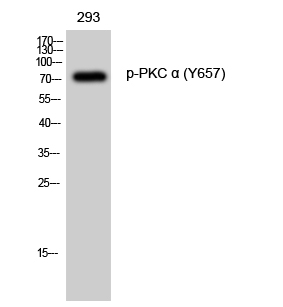
PKC α (Phospho Tyr657) Rabbit pAb
YP0339
More→
ELISA Kits
Total PKC α Cell-Based Colorimetric ELISA Kit
KA4236C
More→
ELISA Kits
PKC α (Phospho Tyr657) Cell-Based Colorimetric ELISA Kit
KA1408C
More→
ELISA Kits
PKC α (Phospho Thr638) Cell-Based Colorimetric ELISA Kit
KA1385C
More→
Antigen&Target Information
Immunogen:
Synthesized phosho peptide around human PKCα (Thr638 and 641)
show all
Specificity:
This antibody detects endogenous levels of PKCα/β II only when phosphorylated at Thr638/641.This antibody does not recognize phosphorylated at other sites.
show all
Protein Name:
PKCα/β II (Thr638/641)
show all
Other Name:
Protein kinase C alpha type ;
PKC-A ;
PKC-alpha ;
PKC-A ;
PKC-alpha ;
show all
Background:
Protein kinase C (PKC) is a family of serine- and threonine-specific protein kinases that can be activated by calcium and the second messenger diacylglycerol. PKC family members phosphorylate a wide variety of protein targets and are known to be involved in diverse cellular signaling pathways. PKC family members also serve as major receptors for phorbol esters , a class of tumor promoters. Each member of the PKC family has a specific expression profile and is believed to play a distinct role in cells. The protein encoded by this gene is one of the PKC family members. This kinase has been reported to play roles in many different cellular processes , such as cell adhesion , cell transformation , cell cycle checkpoint , and cell volume control. Knockout studies in mice suggest that this kinase may be a fundamental regulator of cardiac contractility and Ca (2+) handling in myocytes. [provided by RefSeq , Jul 2
show all
Function:
Catalytic activity:ATP + a protein = ADP + a phosphoprotein. ,cofactor:Binds 3 calcium ions per subunit. The ions are bound to the C2 domain. ,Function:PKC is activated by diacylglycerol which in turn phosphorylates a range of cellular proteins. PKC also serves as the receptor for phorbol esters , a class of tumor promoters. ,Function:This is a calcium-activated , phospholipid-dependent , serine- and threonine-specific enzyme. May play a role in cell motility by phosphorylating CSPG4. ,similarity:Belongs to the protein kinase superfamily. ,similarity:Belongs to the protein kinase superfamily. AGC Ser/Thr protein kinase family. PKC subfamily. ,similarity:Contains 1 AGC-kinase C-terminal domain. ,similarity:Contains 1 C2 domain. ,similarity:Contains 1 protein kinase domain. ,similarity:Contains 2 phorbol-ester/DAG-type zinc fingers. ,subunit:Interacts with ADAP1/CENTA1 , CSPG4 and PRKCABP. Binds to SDPR in the presence of phosphatidylserine. ,
show all
Cellular Localization:
Cytoplasm . Cell membrane ; Peripheral membrane protein . Mitochondrion membrane ; Peripheral membrane protein . Nucleus .
show all
Tissue Expression:
Research Areas:
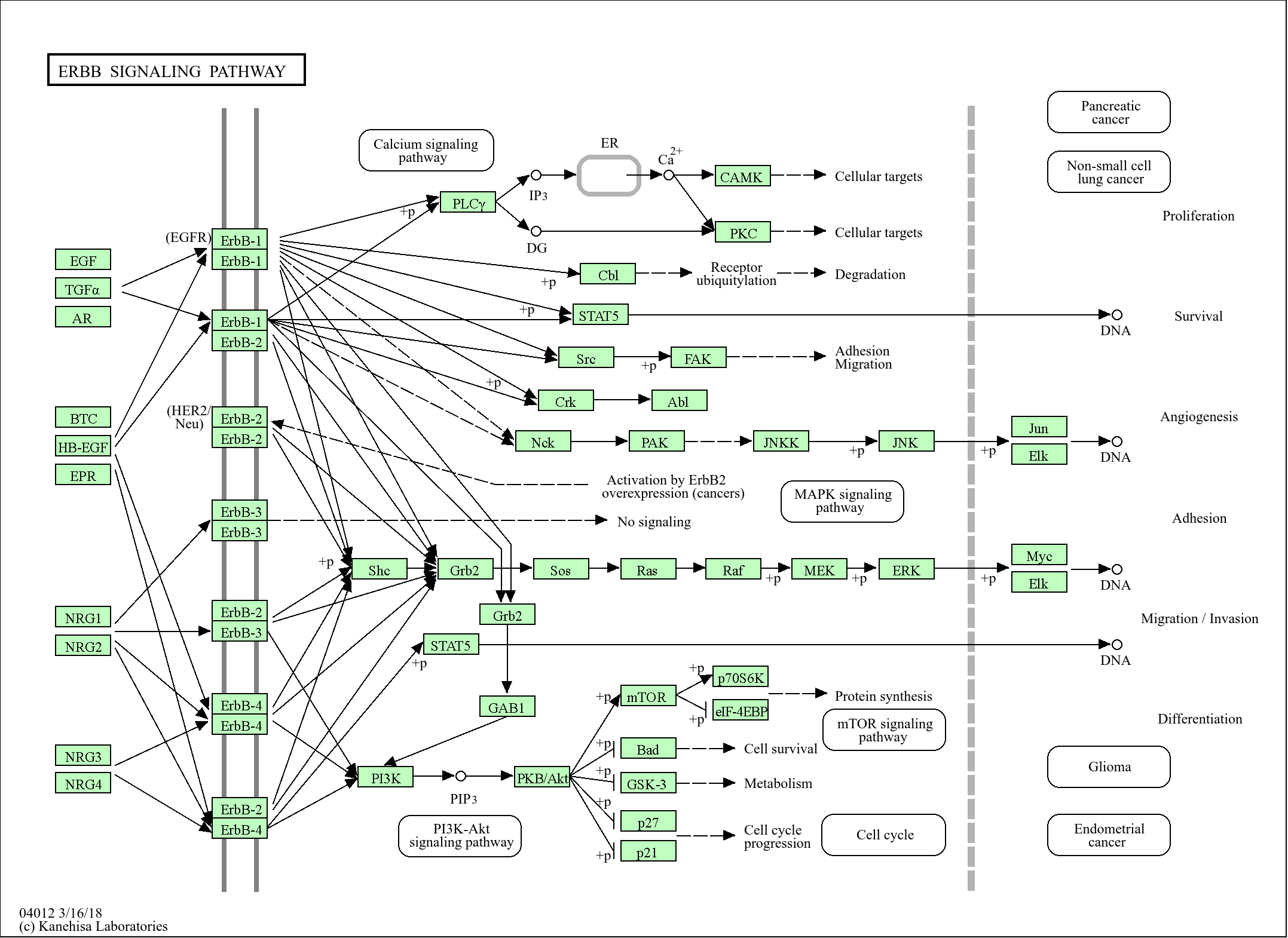
>>EGFR tyrosine kinase inhibitor resistance ;
>>MAPK signaling pathway ;
>>ErbB signaling pathway ;
>>Ras signaling pathway ;
>>Rap1 signaling pathway ;
>>Calcium signaling pathway ;
>>HIF-1 signaling pathway ;
>>Phosphatidylinositol signaling system ;
>>Sphingolipid signaling pathway ;
>>Phospholipase D signaling pathway ;
>>mTOR signaling pathway ;
>>PI3K-Akt signaling pathway ;
>>Adrenergic signaling in cardiomyocytes ;
>>Vascular smooth muscle contraction ;
>>Wnt signaling pathway ;
>>Axon guidance ;
>>VEGF signaling pathway ;
>>Focal adhesion ;
>>Gap junction ;
>>Neutrophil extracellular trap formation ;
>>Natural killer cell mediated cytotoxicity ;
>>Fc epsilon RI signaling pathway ;
>>Fc gamma R-mediated phagocytosis ;
>>Leukocyte transendothelial migration ;
>>Circadian entrainment ;
>>Long-term potentiation ;
>>Retrograde endocannabinoid signaling ;
>>Glutamatergic synapse ;
>>Cholinergic synapse ;
>>Serotonergic synapse ;
>>GABAergic synapse ;
>>Dopaminergic synapse ;
>>Long-term depression ;
>>Inflammatory mediator regulation of TRP channels ;
>>Insulin secretion ;
>>GnRH signaling pathway ;
>>Melanogenesis ;
>>Thyroid hormone synthesis ;
>>Thyroid hormone signaling pathway ;
>>Oxytocin signaling pathway ;
>>Aldosterone synthesis and secretion ;
>>Relaxin signaling pathway ;
>>Parathyroid hormone synthesis , secretion and action ;
>>GnRH secretion ;
>>AGE-RAGE signaling pathway in diabetic complications ;
>>Growth hormone synthesis , secretion and action ;
>>Aldosterone-regulated sodium reabsorption ;
>>Endocrine and other factor-regulated calcium reabsorption ;
>>Salivary secretion ;
>>Gastric acid secretion ;
>>Pancreatic secretion ;
>>Spinocerebellar ataxia ;
>>Pathways of neurodegeneration - multiple diseases ;
>>Amphetamine addiction ;
>>Morphine addiction ;
>>Vibrio cholerae infection ;
>>African trypanosomiasis ;
>>Amoebiasis ;
>>Hepatitis B ;
>>Human cytomegalovirus infection ;
>>Influenza A ;
>>Human immunodeficiency virus 1 infection ;
>>Coronavirus disease - COVID-19 ;
>>Pathways in cancer ;
>>Proteoglycans in cancer ;
>>MicroRNAs in cancer ;
>>Chemical carcinogenesis - receptor activation ;
>>Glioma ;
>>Non-small cell lung cancer ;
>>Hepatocellular carcinoma ;
>>Choline metabolism in cancer ;
>>Diabetic cardiomyopathy ;
>>Lipid and atherosclerosis
>>MAPK signaling pathway ;
>>ErbB signaling pathway ;
>>Ras signaling pathway ;
>>Rap1 signaling pathway ;
>>Calcium signaling pathway ;
>>HIF-1 signaling pathway ;
>>Phosphatidylinositol signaling system ;
>>Sphingolipid signaling pathway ;
>>Phospholipase D signaling pathway ;
>>mTOR signaling pathway ;
>>PI3K-Akt signaling pathway ;
>>Adrenergic signaling in cardiomyocytes ;
>>Vascular smooth muscle contraction ;
>>Wnt signaling pathway ;
>>Axon guidance ;
>>VEGF signaling pathway ;
>>Focal adhesion ;
>>Gap junction ;
>>Neutrophil extracellular trap formation ;
>>Natural killer cell mediated cytotoxicity ;
>>Fc epsilon RI signaling pathway ;
>>Fc gamma R-mediated phagocytosis ;
>>Leukocyte transendothelial migration ;
>>Circadian entrainment ;
>>Long-term potentiation ;
>>Retrograde endocannabinoid signaling ;
>>Glutamatergic synapse ;
>>Cholinergic synapse ;
>>Serotonergic synapse ;
>>GABAergic synapse ;
>>Dopaminergic synapse ;
>>Long-term depression ;
>>Inflammatory mediator regulation of TRP channels ;
>>Insulin secretion ;
>>GnRH signaling pathway ;
>>Melanogenesis ;
>>Thyroid hormone synthesis ;
>>Thyroid hormone signaling pathway ;
>>Oxytocin signaling pathway ;
>>Aldosterone synthesis and secretion ;
>>Relaxin signaling pathway ;
>>Parathyroid hormone synthesis , secretion and action ;
>>GnRH secretion ;
>>AGE-RAGE signaling pathway in diabetic complications ;
>>Growth hormone synthesis , secretion and action ;
>>Aldosterone-regulated sodium reabsorption ;
>>Endocrine and other factor-regulated calcium reabsorption ;
>>Salivary secretion ;
>>Gastric acid secretion ;
>>Pancreatic secretion ;
>>Spinocerebellar ataxia ;
>>Pathways of neurodegeneration - multiple diseases ;
>>Amphetamine addiction ;
>>Morphine addiction ;
>>Vibrio cholerae infection ;
>>African trypanosomiasis ;
>>Amoebiasis ;
>>Hepatitis B ;
>>Human cytomegalovirus infection ;
>>Influenza A ;
>>Human immunodeficiency virus 1 infection ;
>>Coronavirus disease - COVID-19 ;
>>Pathways in cancer ;
>>Proteoglycans in cancer ;
>>MicroRNAs in cancer ;
>>Chemical carcinogenesis - receptor activation ;
>>Glioma ;
>>Non-small cell lung cancer ;
>>Hepatocellular carcinoma ;
>>Choline metabolism in cancer ;
>>Diabetic cardiomyopathy ;
>>Lipid and atherosclerosis
show all
Signaling Pathway
Cellular Processes >> Cellular community - eukaryotes >> Focal adhesion
Cellular Processes >> Cellular community - eukaryotes >> Gap junction
Organismal Systems >> Immune system >> Neutrophil extracellular trap formation
Organismal Systems >> Immune system >> Natural killer cell mediated cytotoxicity
Organismal Systems >> Immune system >> Fc epsilon RI signaling pathway
Organismal Systems >> Immune system >> Fc gamma R-mediated phagocytosis
Organismal Systems >> Immune system >> Leukocyte transendothelial migration
Organismal Systems >> Endocrine system >> Insulin secretion
Organismal Systems >> Endocrine system >> GnRH signaling pathway
Organismal Systems >> Endocrine system >> Oxytocin signaling pathway
Organismal Systems >> Endocrine system >> Relaxin signaling pathway
Organismal Systems >> Endocrine system >> Growth hormone synthesis, secretion and action
Organismal Systems >> Endocrine system >> Thyroid hormone signaling pathway
Organismal Systems >> Endocrine system >> Aldosterone synthesis and secretion
Organismal Systems >> Circulatory system >> Adrenergic signaling in cardiomyocytes
Organismal Systems >> Circulatory system >> Vascular smooth muscle contraction
Organismal Systems >> Nervous system >> Glutamatergic synapse
Organismal Systems >> Nervous system >> Cholinergic synapse
Organismal Systems >> Nervous system >> Dopaminergic synapse
Organismal Systems >> Sensory system >> Inflammatory mediator regulation of TRP channels
Human Diseases >> Cancer: overview >> Pathways in cancer
Human Diseases >> Cancer: overview >> MicroRNAs in cancer
Human Diseases >> Cancer: specific types >> Hepatocellular carcinoma
Human Diseases >> Cancer: specific types >> Glioma
Human Diseases >> Cancer: specific types >> Non-small cell lung cancer
Human Diseases >> Neurodegenerative disease >> Spinocerebellar ataxia
Human Diseases >> Neurodegenerative disease >> Pathways of neurodegeneration - multiple diseases
Environmental Information Processing >> Signal transduction >> MAPK signaling pathway
Environmental Information Processing >> Signal transduction >> ErbB signaling pathway
Environmental Information Processing >> Signal transduction >> Ras signaling pathway
Environmental Information Processing >> Signal transduction >> Rap1 signaling pathway
Environmental Information Processing >> Signal transduction >> Wnt signaling pathway
Environmental Information Processing >> Signal transduction >> VEGF signaling pathway
Environmental Information Processing >> Signal transduction >> HIF-1 signaling pathway
Environmental Information Processing >> Signal transduction >> Calcium signaling pathway
Environmental Information Processing >> Signal transduction >> Phospholipase D signaling pathway
Environmental Information Processing >> Signal transduction >> Sphingolipid signaling pathway
Environmental Information Processing >> Signal transduction >> PI3K-Akt signaling pathway
Environmental Information Processing >> Signal transduction >> mTOR signaling pathway
Reference Citation({{totalcount}})
Catalog: YP1441
Size
Price
Status
Qty.
200μL
$600.00
3 weeks
0
100μL
$340.00
3 weeks
0
50μL
$190.00
3 weeks
0
Add to cart
Collected
Collect
Recently Viewed Products
Clear allPRODUCTS
CUSTOMIZED
ABOUT US



Toggle night Mode
{{pinfoXq.title || ''}}
Catalog: {{pinfoXq.catalog || ''}}
Filter:
All
{{item.name}}
{{pinfo.title}}
-{{pinfo.catalog}}
Main Information
Target
{{pinfo.target}}
Reactivity
{{pinfo.react}}
Applications
{{pinfo.applicat}}
Conjugate/Modification
{{pinfo.coupling}}/{{pinfo.modific}}
MW (kDa)
{{pinfo.mwcalc}}
Host Species
{{pinfo.hostspec}}
Isotype
{{pinfo.isotype}}
Product {{index}}/{{pcount}}
Prev
Next
{{pvTitle}}
Scroll wheel zooms the picture
{{pvDescr}}