


Catalog: YP1394
Size
Price
Status
Qty.
200μL
$600.00
3 weeks
0
100μL
$340.00
3 weeks
0
50μL
$190.00
3 weeks
0
Add to cart


Collected
Collect
Main Information
Target
Mcl-1 Phospho Ser159/Thr163
Host Species
Rabbit
Reactivity
Human, Mouse, Rat
Applications
WB, IHC
MW
40kD in human,39kD in mouse and rat (Observed)
Conjugate/Modification
phosphate
Detailed Information
Recommended Dilution Ratio
WB 1:500-2000; IHC 1:50-300
Formulation
Liquid in PBS containing 50% glycerol, 0.5% BSA and 0.02% sodium azide.
Specificity
This antibody detects endogenous levels of Mcl-1 only when phosphorylated at Ser159 or Thr163,and dually phosphorylated at two sites.
Purification
The antibody was affinity-purified from rabbit serum by affinity-chromatography using specific immunogen.
Storage
-15°C to -25°C/1 year (Do not lower than -25°C)
Concentration
1 mg/ml
MW(Observed)
40kD in human,39kD in mouse and rat
Modification
phosphate
Clonality
Polyclonal
Isotype
IgG
Related Products
Secondary Antibodies
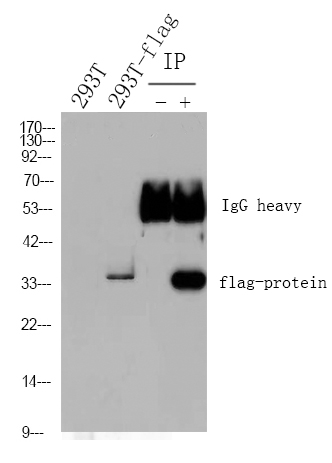
Goat Anti Mouse IgG(H+L) (HRP)
RS0001
More→
Secondary Antibodies
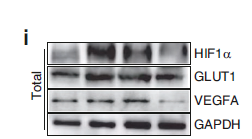
Goat Anti Rabbit IgG(H+L) (HRP)
RS0002
More→
Primary Antibodies
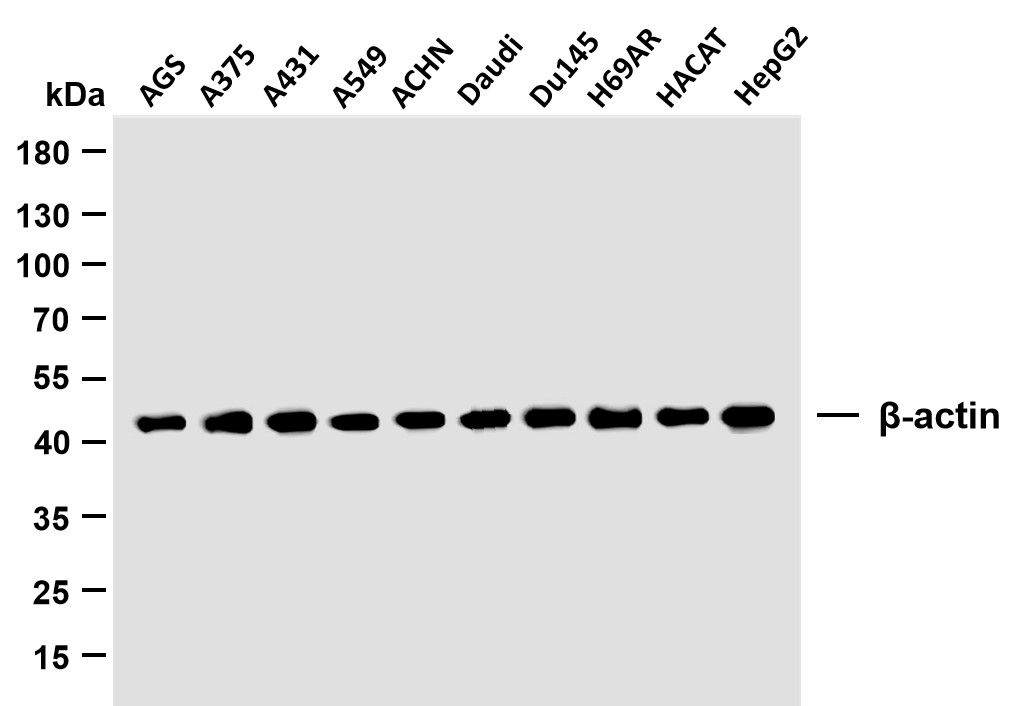
β-actin (PTR2364) Mouse mAb
YM3028
More→
Primary Antibodies
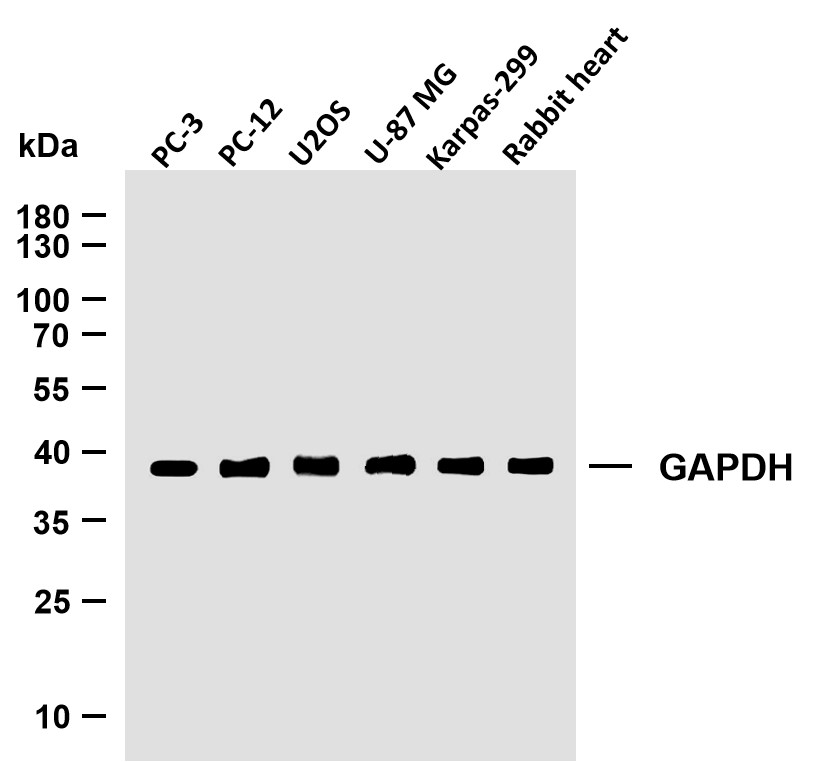
GAPDH (PTR2304) Mouse mAb
YM3029
More→
Antigen&Target Information
Immunogen:
Synthesized phosho peptide around human Mcl-1 (Ser159 and Thr163)
show all
Specificity:
This antibody detects endogenous levels of Mcl-1 only when phosphorylated at Ser159 or Thr163,and dually phosphorylated at two sites.
show all
Gene Name:
MCL1 BCL2L3
show all
Protein Name:
Mcl-1 (Ser159/Thr163)
show all
Other Name:
Induced myeloid leukemia cell differentiation protein Mcl-1 ;
Bcl-2-like protein 3 ;
Bcl2-L-3 ;
Bcl-2-related protein EAT/mcl1 ;
mcl1/EAT ;
Bcl-2-like protein 3 ;
Bcl2-L-3 ;
Bcl-2-related protein EAT/mcl1 ;
mcl1/EAT ;
show all
Database Link:
Background:
This gene encodes an anti-apoptotic protein , which is a member of the Bcl-2 family. Alternative splicing results in multiple transcript variants. The longest gene product (isoform 1) enhances cell survival by inhibiting apoptosis while the alternatively spliced shorter gene products (isoform 2 and isoform 3) promote apoptosis and are death-inducing. [provided by RefSeq , Oct 2010] ,
show all
Function:
Function:Involved in the regulation of apoptosis versus cell survival , and in the maintenance of viability but not of proliferation. Mediates its effects by interactions with a number of other regulators of apoptosis. Isoform 1 inhibits apoptosis while isoform 2 promotes it. ,induction:Expression increases early during phorbol-ester induced differentiation along the monocyte/macrophage pathway in myeloid leukemia cell lines ML-1. Rapidly up-regulated by CSF2 in ML-1 cells. Up-regulated by heat-shock induced differentiation. Expression increases early during retinoic acid-induced differentiation. ,PTM:Cleaved by CASP3 during apoptosis. In intact cells cleavage occurs preferentially after Asp-127 , yielding a pro-apoptotic 28 kDa C-terminal fragment. ,PTM:Phosphorylated on Thr-163. Treatment with taxol or okadaic acid induces phosphorylation on additional sites. ,PTM:Rapidly degraded in the absence of phosphorylation on Thr-163 in the PEST region. ,similarity:Belongs to the Bcl-2 family. ,subcellular location:Cytoplasmic , associated with mitochondria. ,subunit:Interacts with BAD , BOK , BIK and BFM (By similarity) . Interacts with PMAIP1. Isoform 1 interacts with BAX , BAK1 , TPT1 and BCL2L11. Heterodimer of isoform 1 and isoform 2. Homodimers of isoform 1 or isoform 2 are not detected. Isoform 2 does not interact with pro-apoptototic BCL2-related proteins. ,
show all
Cellular Localization:
Membrane ; Single-pass membrane protein . Cytoplasm. Mitochondrion. Nucleus , nucleoplasm. Cytoplasmic , associated with mitochondria.
show all
Tissue Expression:
Research Areas:
>>PI3K-Akt signaling pathway ;
>>Apoptosis ;
>>JAK-STAT signaling pathway ;
>>MicroRNAs in cancer
>>Apoptosis ;
>>JAK-STAT signaling pathway ;
>>MicroRNAs in cancer
show all
Signaling Pathway
Reference Citation({{totalcount}})
Catalog: YP1394
Size
Price
Status
Qty.
200μL
$600.00
3 weeks
0
100μL
$340.00
3 weeks
0
50μL
$190.00
3 weeks
0
Add to cart
Collected
Collect
Recently Viewed Products
Clear allPRODUCTS
CUSTOMIZED
ABOUT US



Toggle night Mode
{{pinfoXq.title || ''}}
Catalog: {{pinfoXq.catalog || ''}}
Filter:
All
{{item.name}}
{{pinfo.title}}
-{{pinfo.catalog}}
Main Information
Target
{{pinfo.target}}
Reactivity
{{pinfo.react}}
Applications
{{pinfo.applicat}}
Conjugate/Modification
{{pinfo.coupling}}/{{pinfo.modific}}
MW (kDa)
{{pinfo.mwcalc}}
Host Species
{{pinfo.hostspec}}
Isotype
{{pinfo.isotype}}
Product {{index}}/{{pcount}}
Prev
Next
{{pvTitle}}
Scroll wheel zooms the picture
{{pvDescr}}