



Catalog: YP1284
Size
Price
Status
Qty.
200μL
$600.00
3 weeks
0
100μL
$340.00
3 weeks
0
50μL
$190.00
3 weeks
0
Add to cart


Collected
Collect
Main Information
Target
CAD Phospho Ser1859
Host Species
Rabbit
Reactivity
Human, Mouse, Rat
Applications
WB
MW
250kD (Observed)
Conjugate/Modification
phosphate
Detailed Information
Recommended Dilution Ratio
WB 1:1000-2000
Formulation
Liquid in PBS containing 50% glycerol, 0.5% BSA and 0.02% sodium azide.
Specificity
This antibody detects endogenous levels of Human Mouse Rat CAD (phospho-Ser1859)
Purification
The antibody was affinity-purified from rabbit serum by affinity-chromatography using specific immunogen.
Storage
-15°C to -25°C/1 year (Do not lower than -25°C)
Concentration
1 mg/ml
MW(Observed)
250kD
Modification
phosphate
Clonality
Polyclonal
Isotype
IgG
Related Products
Secondary Antibodies
Goat Anti Mouse IgG(H+L) (HRP)
RS0001
More→
Secondary Antibodies
Goat Anti Rabbit IgG(H+L) (HRP)
RS0002
More→
Primary Antibodies
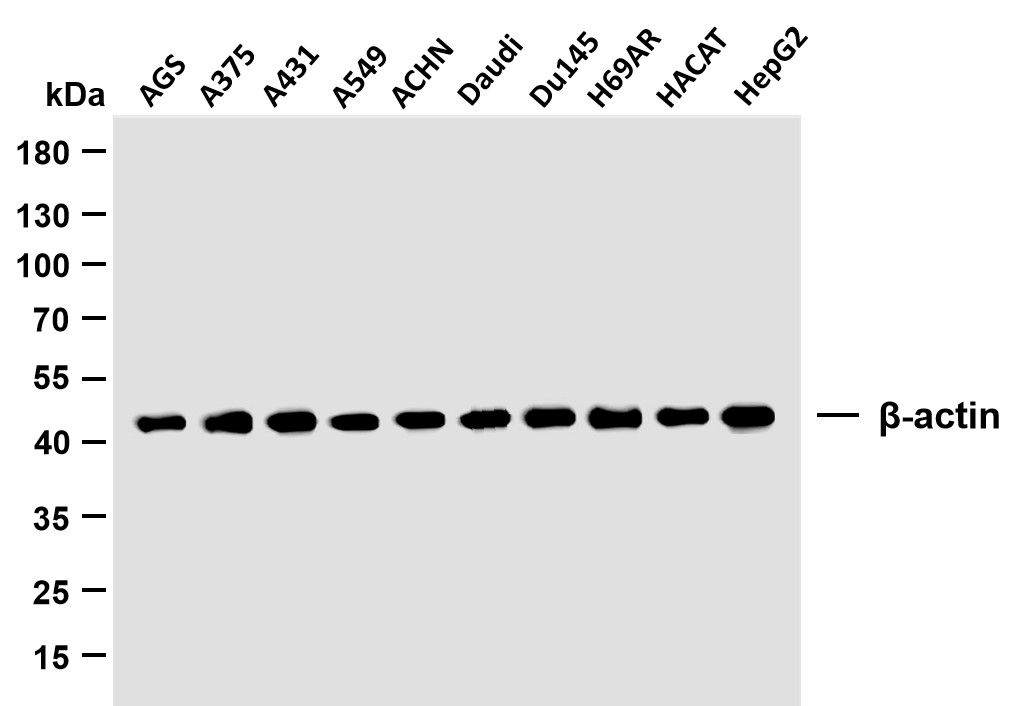
β-actin (PTR2364) Mouse mAb
YM3028
More→
Primary Antibodies
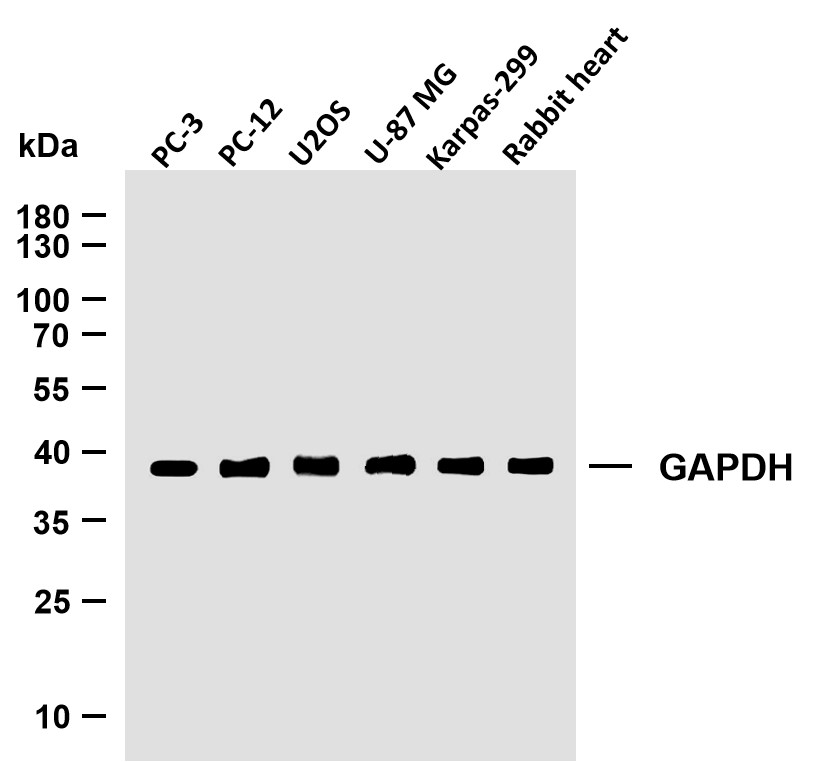
GAPDH (PTR2304) Mouse mAb
YM3029
More→
Antigen&Target Information
Immunogen:
Synthesized phosho peptide around human CAD (Ser1859)
show all
Specificity:
This antibody detects endogenous levels of Human Mouse Rat CAD (phospho-Ser1859)
show all
Gene Name:
CAD
show all
Protein Name:
CAD (Ser1859)
show all
Other Name:
CAD protein [Includes: Glutamine-dependent carbamoyl-phosphate synthase ;
Aspartate carbamoyltransferase ;
Dihydroorotase ;
]
Aspartate carbamoyltransferase ;
Dihydroorotase ;
]
show all
Background:
The de novo synthesis of pyrimidine nucleotides is required for mammalian cells to proliferate. This gene encodes a trifunctional protein which is associated with the enzymatic activities of the first 3 enzymes in the 6-step pathway of pyrimidine biosynthesis: carbamoylphosphate synthetase (CPS II) , aspartate transcarbamoylase , and dihydroorotase. This protein is regulated by the mitogen-activated protein kinase (MAPK) cascade , which indicates a direct link between activation of the MAPK cascade and de novo biosynthesis of pyrimidine nucleotides. Alternative splicing results in multiple transcript variants encoding different isoforms. [provided by RefSeq , Apr 2015] ,
show all
Function:
Catalytic activity: (S) -dihydroorotate + H (2) O = N-carbamoyl-L-aspartate. ,Catalytic activity:2 ATP + L-glutamine + HCO (3) (-) + H (2) O = 2 ADP + phosphate + L-glutamate + carbamoyl phosphate. ,Catalytic activity:Carbamoyl phosphate + L-aspartate = phosphate + N-carbamoyl-L-aspartate. ,cofactor:Binds 1 zinc ion per subunit (for dihydroorotase activity) . ,enzyme regulation:Allosterically regulated and controlled by phosphorylation. 5-phosphoribose 1-diphosphate is an activator while UMP is an inhibitor of the CPSase reaction. ,Function:This protein is a "fusion" protein encoding four enzymatic activities of the pyrimidine pathway (GATase , CPSase , ATCase and DHOase) . ,miscellaneous:GATase (glutamine amidotransferase) and CPSase (carbamoyl phosphate synthase) form together the glutamine-dependent CPSase (GD-CPSase) (EC 6.3.5.5) . ,online information:Aspartate carbamoyltransferase entry ,pathway:Pyrimidine metabolism; UMP biosynthesis via de novo pathway; UMP from HCO (3) (-) : step 1/6. ,pathway:Pyrimidine metabolism; UMP biosynthesis via de novo pathway; UMP from HCO (3) (-) : step 2/6. ,pathway:Pyrimidine metabolism; UMP biosynthesis via de novo pathway; UMP from HCO (3) (-) : step 3/6. ,similarity:Belongs to the ATCase/OTCase family. ,similarity:Contains 1 glutamine amidotransferase type-1 domain. ,similarity:Contains 2 ATP-grasp domains. ,similarity:In the central section; belongs to the DHOase family. ,subunit:Homohexamer. ,
show all
Cellular Localization:
Cytoplasm . Nucleus . Cytosolic and unphosphorylated in resting cells , translocates to the nucleus in response to EGF stimulation , nuclear import promotes optimal cell growth.
show all
Tissue Expression:
show all
Research Areas:
>>Pyrimidine metabolism ;
>>Alanine , aspartate and glutamate metabolism ;
>>Metabolic pathways ;
>>Biosynthesis of cofactors
>>Alanine , aspartate and glutamate metabolism ;
>>Metabolic pathways ;
>>Biosynthesis of cofactors
show all
Reference Citation({{totalcount}})
Catalog: YP1284
Size
Price
Status
Qty.
200μL
$600.00
3 weeks
0
100μL
$340.00
3 weeks
0
50μL
$190.00
3 weeks
0
Add to cart
Collected
Collect
Recently Viewed Products
Clear allPRODUCTS
CUSTOMIZED
ABOUT US



Toggle night Mode
{{pinfoXq.title || ''}}
Catalog: {{pinfoXq.catalog || ''}}
Filter:
All
{{item.name}}
{{pinfo.title}}
-{{pinfo.catalog}}
Main Information
Target
{{pinfo.target}}
Reactivity
{{pinfo.react}}
Applications
{{pinfo.applicat}}
Conjugate/Modification
{{pinfo.coupling}}/{{pinfo.modific}}
MW (kDa)
{{pinfo.mwcalc}}
Host Species
{{pinfo.hostspec}}
Isotype
{{pinfo.isotype}}
Product {{index}}/{{pcount}}
Prev
Next
{{pvTitle}}
Scroll wheel zooms the picture
{{pvDescr}}