



Catalog: YP1280
Size
Price
Status
Qty.
200μL
$600.00
3 weeks
0
100μL
$340.00
3 weeks
0
50μL
$190.00
3 weeks
0
Add to cart


Collected
Collect
Main Information
Target
ABL1 Phospho Thr735
Host Species
Rabbit
Reactivity
Human, Mouse, Rat
Applications
WB
MW
123kD (Calculated)
140(200kD BCR-ABL complex) (Observed)
Conjugate/Modification
phosphate
Detailed Information
Recommended Dilution Ratio
WB 1:1000-2000
Formulation
Liquid in PBS containing 50% glycerol, 0.5% BSA and 0.02% sodium azide.
Specificity
This antibody detects endogenous levels of Human ABL1 (phospho-Thr735)
Purification
The antibody was affinity-purified from rabbit serum by affinity-chromatography using specific immunogen.
Storage
-15°C to -25°C/1 year (Do not lower than -25°C)
Concentration
1 mg/ml
MW(Calculated)
123kD
MW(Observed)
140(200kD BCR-ABL complex)
Modification
phosphate
Clonality
Polyclonal
Isotype
IgG
Related Products
Secondary Antibodies
Goat Anti Mouse IgG(H+L) (HRP)
RS0001
More→
Secondary Antibodies
Goat Anti Rabbit IgG(H+L) (HRP)
RS0002
More→
Primary Antibodies
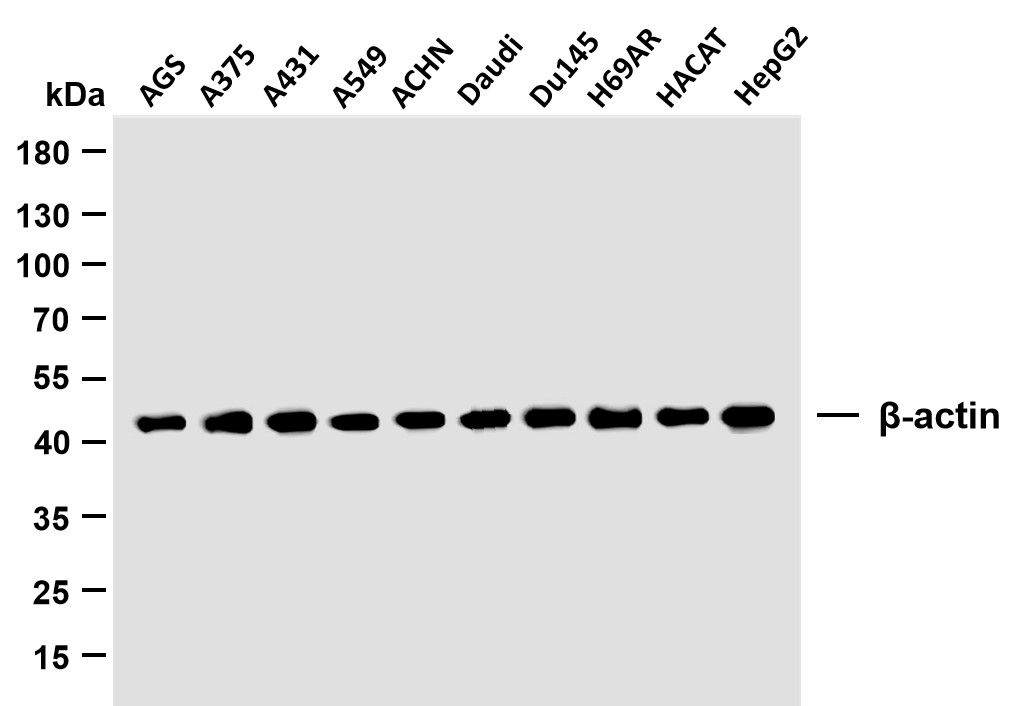
β-actin (PTR2364) Mouse mAb
YM3028
More→
Primary Antibodies
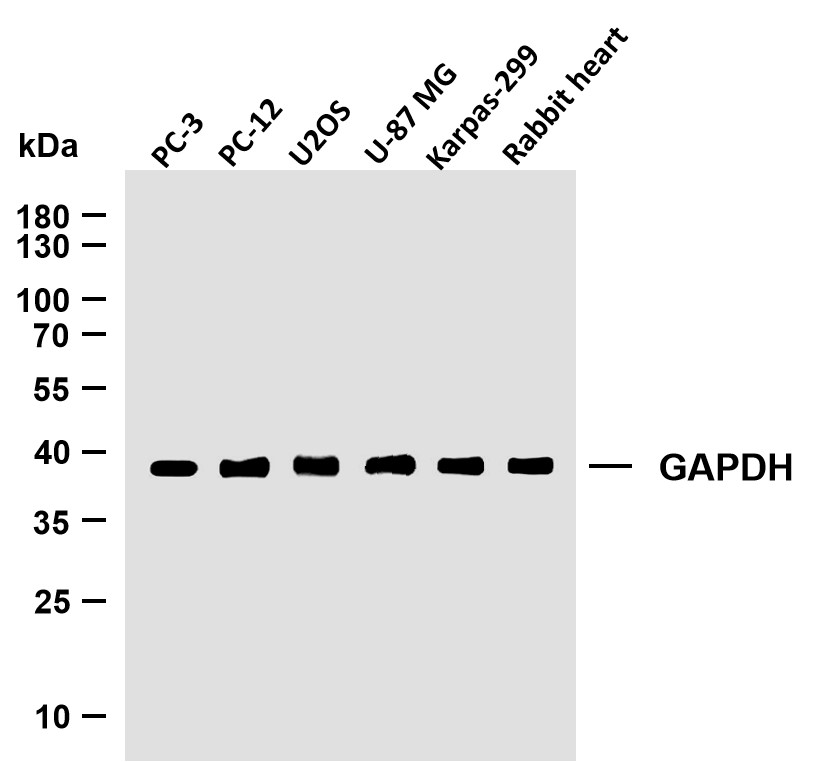
GAPDH (PTR2304) Mouse mAb
YM3029
More→
Antigen&Target Information
Immunogen:
Synthesized phosho peptide around human c-Abl (Thr735)
show all
Specificity:
This antibody detects endogenous levels of Human ABL1 (phospho-Thr735)
show all
Gene Name:
ABL1 ABL JTK7
show all
Protein Name:
c-Abl (Thr735)
show all
Other Name:
c-Abl ;
ABL1 ;
ABL ;
JTK7 ;
Tyrosine-protein kinase ABL1 ;
Abelson murine leukemia viral oncogene homolog 1 ;
Abelson tyrosine-protein kinase 1 ;
Proto-oncogene c-Abl ;
p150 ;
ABL1 ;
ABL ;
JTK7 ;
Tyrosine-protein kinase ABL1 ;
Abelson murine leukemia viral oncogene homolog 1 ;
Abelson tyrosine-protein kinase 1 ;
Proto-oncogene c-Abl ;
p150 ;
show all
Background:
This gene is a protooncogene that encodes a protein tyrosine kinase involved in a variety of cellular processes , including cell division , adhesion , differentiation , and response to stress. The activity of the protein is negatively regulated by its SH3 domain , whereby deletion of the region encoding this domain results in an oncogene. The ubiquitously expressed protein has DNA-binding activity that is regulated by CDC2-mediated phosphorylation , suggesting a cell cycle function. This gene has been found fused to a variety of translocation partner genes in various leukemias , most notably the t (9;22) translocation that results in a fusion with the 5' end of the breakpoint cluster region gene (BCR; MIM:151410) . Alternative splicing of this gene results in two transcript variants , which contain alternative first exons that are spliced to the remaining common exons. [pr
show all
Function:
Catalytic activity:ATP + a [protein]-L-tyrosine = ADP + a [protein]-L-tyrosine phosphate. ,cofactor:Magnesium or manganese. ,Disease:A chromosomal aberration involving ABL1 is a cause of chronic myeloid leukemia (CML) [MIM:608232]. Translocation t (9;22) (q34;q11) with BCR. The translocation produces a BCR-ABL found also in acute myeloid leukemia (AML) and acute lymphoblastic leukemia (ALL) . ,enzyme regulation:Stabilized in the inactive form by an association between the SH3 domain and the SH2-TK linker region , interactions of the amino-terminal cap , and contributions from an amino-terminal myristoyl group and phospholipids. Activated by autophosphorylation as well as by SRC-family kinase-mediated phosphorylation. Activated by RIN1 binding to the SH2 and SH3 domains. Inhibited by imatinib mesylate (Gleevec) which is used for the treatment of chronic myeloid leukemia (CML) . ,Function:Regulates cytoskeleton remodeling during cell differentiation , cell division and cell adhesion. Localizes to dynamic actin structures , and phosphorylates CRK and CRKL , DOK1 , and other proteins controlling cytoskeleton dynamics. Regulates DNA repair potentially by activating the proapoptotic pathway when the DNA damage is too severe to be repaired. ,online information:Abl entry ,PTM:Phosphorylated by PRKDC (By similarity) . DNA damage-induced activation of c-Abl requires the function of ATM and Ser-446 phosphorylation. Isoform IB is myristoylated on Gly-2. Phosphorylation on Thr-735 is required for binding 14-3-3 proteins for cytoplasmic translocation. ,similarity:Belongs to the protein kinase superfamily. Tyr protein kinase family. ,similarity:Belongs to the protein kinase superfamily. Tyr protein kinase family. ABL subfamily. ,similarity:Contains 1 protein kinase domain. ,similarity:Contains 1 SH2 domain. ,similarity:Contains 1 SH3 domain. ,subcellular location:The myristoylated c-ABL protein is reported to be nuclear. Sequestered into the cytoplasm through interaction with 14-3-3 proteins. ,subunit:Interacts with SORBS1 following insulin stimulation. Found in a trimolecular complex containing CDK5 and CABLES1. Interacts with CABLES1 and PSTPIP1. Interacts with ZDHHC16 (By similarity) . Interacts with INPPL1/SHIP2. Interacts with the 14-3-3 proteins , YWHAB , YWHAE , YWHAG , YWHAH , SFN AND YWHAZ; the interaction with 14-3-3 proteins requires phosphorylation on Thr-735 and , sequesters ABL1 into the cytoplasm. ,tissue specificity:Widely expressed. ,
show all
Cellular Localization:
Cytoplasm > cytoskeleton. Nucleus. Sequestered into the cytoplasm through interaction with 14-3-3 proteins and Nucleus membrane. The myristoylated c-ABL protein is reported to be nuclear.
show all
Tissue Expression:
show all
Research Areas:
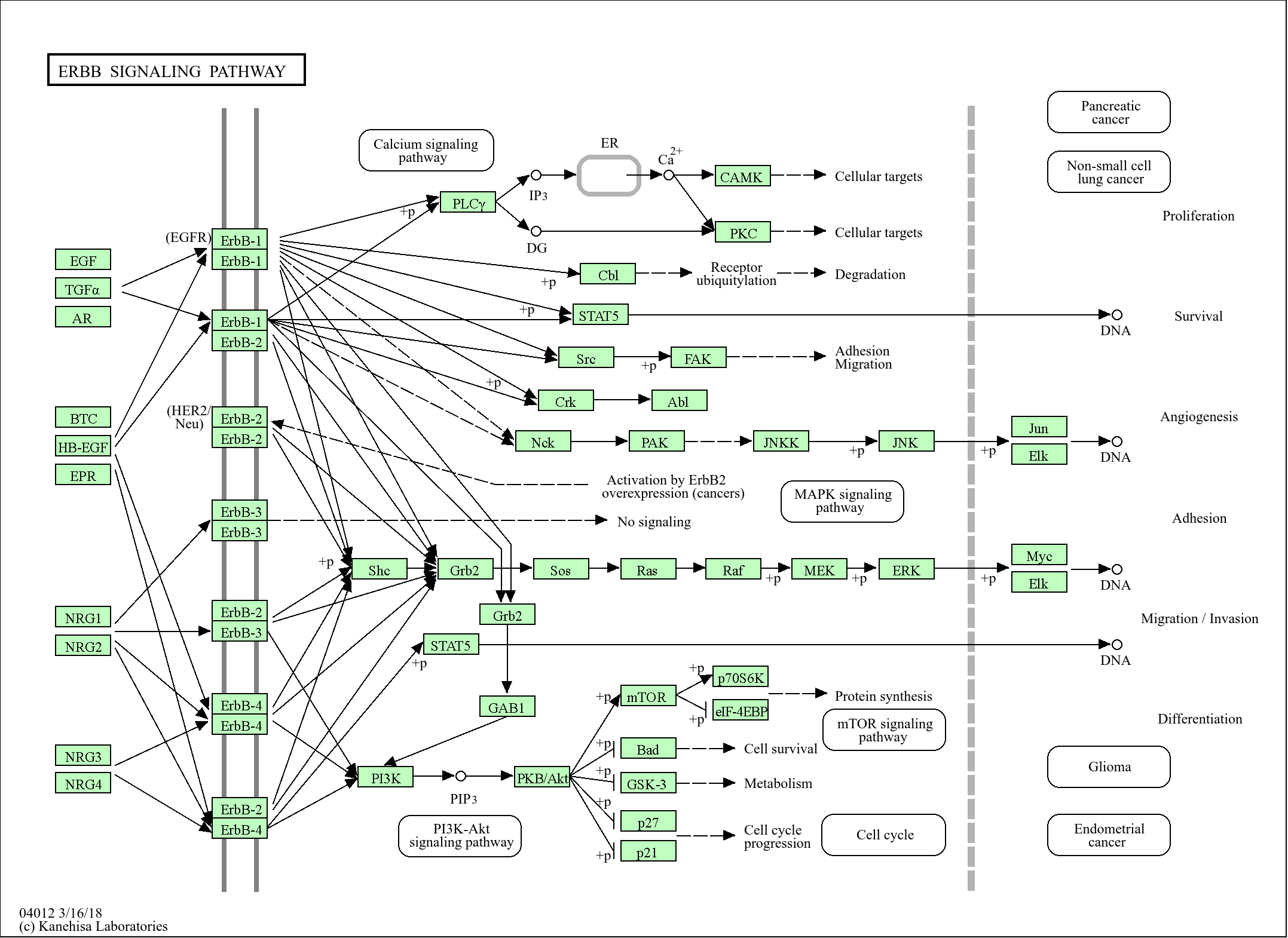
>>ErbB signaling pathway ;
>>Ras signaling pathway ;
>>Cell cycle ;
>>Axon guidance ;
>>Neurotrophin signaling pathway ;
>>Pathogenic Escherichia coli infection ;
>>Pathways in cancer ;
>>MicroRNAs in cancer ;
>>Chemical carcinogenesis - reactive oxygen species ;
>>Chronic myeloid leukemia ;
>>Viral myocarditis
>>Ras signaling pathway ;
>>Cell cycle ;
>>Axon guidance ;
>>Neurotrophin signaling pathway ;
>>Pathogenic Escherichia coli infection ;
>>Pathways in cancer ;
>>MicroRNAs in cancer ;
>>Chemical carcinogenesis - reactive oxygen species ;
>>Chronic myeloid leukemia ;
>>Viral myocarditis
show all
Signaling Pathway
Cellular Processes >> Cell growth and death >> Cell cycle
Organismal Systems >> Nervous system >> Neurotrophin signaling pathway
Human Diseases >> Cancer: overview >> Pathways in cancer
Human Diseases >> Cancer: overview >> MicroRNAs in cancer
Human Diseases >> Cancer: specific types >> Chronic myeloid leukemia
Environmental Information Processing >> Signal transduction >> ErbB signaling pathway
Environmental Information Processing >> Signal transduction >> Ras signaling pathway
Reference Citation({{totalcount}})
Catalog: YP1280
Size
Price
Status
Qty.
200μL
$600.00
3 weeks
0
100μL
$340.00
3 weeks
0
50μL
$190.00
3 weeks
0
Add to cart
Collected
Collect
Recently Viewed Products
Clear allPRODUCTS
CUSTOMIZED
ABOUT US



Toggle night Mode
{{pinfoXq.title || ''}}
Catalog: {{pinfoXq.catalog || ''}}
Filter:
All
{{item.name}}
{{pinfo.title}}
-{{pinfo.catalog}}
Main Information
Target
{{pinfo.target}}
Reactivity
{{pinfo.react}}
Applications
{{pinfo.applicat}}
Conjugate/Modification
{{pinfo.coupling}}/{{pinfo.modific}}
MW (kDa)
{{pinfo.mwcalc}}
Host Species
{{pinfo.hostspec}}
Isotype
{{pinfo.isotype}}
Product {{index}}/{{pcount}}
Prev
Next
{{pvTitle}}
Scroll wheel zooms the picture
{{pvDescr}}