






Catalog: YP1291
Size
Price
Status
Qty.
200μL
$600.00
3 weeks
0
100μL
$340.00
3 weeks
0
50μL
$190.00
3 weeks
0
Add to cart


Collected
Collect
Main Information
Target
Cbl Phospho Tyr731
Host Species
Rabbit
Reactivity
Human, Mouse, Rat
Applications
WB
MW
100kD (Observed)
Conjugate/Modification
phosphate
Detailed Information
Recommended Dilution Ratio
WB 1:1000-2000
Formulation
Liquid in PBS containing 50% glycerol, 0.5% BSA and 0.02% sodium azide.
Specificity
This antibody detects endogenous levels of Human c-Cbl (phospho-Tyr731).The name of modified sites may be influenced by many factors, such as species (the modified site was not originally found in human samples) and the change of protein sequence (the previous protein sequence is incomplete, and the protein sequence may be prolonged with the development of protein sequencing technology). When naming, we will use the "numbers" in historical reference to keep the sites consistent with the reports. The antibody binds to the following modification sequence (lowercase letters are modification sites):CTyEA
Purification
The antibody was affinity-purified from rabbit serum by affinity-chromatography using specific immunogen.
Storage
-15°C to -25°C/1 year (Do not lower than -25°C)
Concentration
1 mg/ml
MW(Observed)
100kD
Modification
phosphate
Clonality
Polyclonal
Isotype
IgG
Related Products
Secondary Antibodies
Goat Anti Mouse IgG(H+L) (HRP)
RS0001
More→
Secondary Antibodies
Goat Anti Rabbit IgG(H+L) (HRP)
RS0002
More→
Primary Antibodies
β-actin (PTR2364) Mouse mAb
YM3028
More→
Primary Antibodies
GAPDH (PTR2304) Mouse mAb
YM3029
More→
Antigen&Target Information
Immunogen:
Synthesized phosho peptide around human c-Cbl (Tyr731)
show all
Specificity:
This antibody detects endogenous levels of Human c-Cbl (phospho-Tyr731).The name of modified sites may be influenced by many factors, such as species (the modified site was not originally found in human samples) and the change of protein sequence (the previous protein sequence is incomplete, and the protein sequence may be prolonged with the development of protein sequencing technology). When naming, we will use the "numbers" in historical reference to keep the sites consistent with the reports. The antibody binds to the following modification sequence (lowercase letters are modification sites):CTyEA
show all
Gene Name:
CBL CBL2 RNF55
show all
Protein Name:
c-Cbl (Tyr731)
show all
Other Name:
E3 ubiquitin-protein ligase CBL ;
Casitas B-lineage lymphoma proto-oncogene ;
Proto-oncogene c-Cbl ;
RING finger protein 55 ;
Signal transduction protein CBL ;
Casitas B-lineage lymphoma proto-oncogene ;
Proto-oncogene c-Cbl ;
RING finger protein 55 ;
Signal transduction protein CBL ;
show all
Background:
Cbl proto-oncogene (CBL) Homo sapiens This gene is a proto-oncogene that encodes a RING finger E3 ubiquitin ligase. The encoded protein is one of the enzymes required for targeting substrates for degradation by the proteasome. This protein mediates the transfer of ubiquitin from ubiquitin conjugating enzymes (E2) to specific substrates. This protein also contains an N-terminal phosphotyrosine binding domain that allows it to interact with numerous tyrosine-phosphorylated substrates and target them for proteasome degradation. As such it functions as a negative regulator of many signal transduction pathways. This gene has been found to be mutated or translocated in many cancers including acute myeloid leukaemia , and expansion of CGG repeats in the 5' UTR has been associated with Jacobsen syndrome. Mutations in this gene are also the cause of Noonan syndrome-like disorder. [provided by RefSeq , Jul 2016] ,
show all
Function:
Disease:Can be converted to an oncogenic protein by deletions or mutations that disturb its ability to down-regulate RTKs. ,Domain:The N-terminus is composed of the phosphotyrosine binding (PTB) domain , a short linker region and the RING-type zinc finger. The PTB domain , which is also called TKB (tyrosine kinase binding) domain , is composed of three different subdomains: a four-helix bundle (4H) , a calcium-binding EF hand and a divergent SH2 domain. ,Domain:The RING-type zinc finger domain mediates binding to an E2 ubiquitin-conjugating enzyme. ,Function:Participates in signal transduction in hematopoietic cells. Adapter protein that functions as a negative regulator of many signaling pathways that start from receptors at the cell surface. Acts as an E3 ubiquitin-protein ligase , which accepts ubiquitin from specific E2 ubiquitin-conjugating enzymes , and then transfers it to substrates promoting their degradation by the proteasome. Recognizes activated receptor tyrosine kinases , including PDGFA , EGF and CSF1 , and terminates signaling. ,miscellaneous:This protein has one functional calcium-binding site. ,pathway:Protein modification; protein ubiquitination. ,PTM:Phosphorylated on tyrosine residues by EGFR , SYK , FYN and ZAP70 (By similarity) . Phosphorylated on tyrosine residues by INSR. ,similarity:Contains 1 CBL N-terminal domain. ,similarity:Contains 1 RING-type zinc finger. ,similarity:Contains 1 SH2 domain. ,similarity:Contains 1 UBA domain. ,similarity:Contains 2 EF-hand-like domains. ,subunit:Associates with NCK via its SH3 domain. The phosphorylated C-terminus interacts with CD2AP via its second SH3 domain. Binds to UBE2L3. Interacts with adapters SLA , SLA2 and with the phosphorylated C-terminus of SH2B2. Interacts with EGFR , SYK and ZAP70 via the highly conserved Cbl-N region. Also interacts with SORBS1 and INPPL1/SHIP2. Interacts with phosphorylated LAT2. May interact with CBLB. ,
show all
Cellular Localization:
Cytoplasm. Cell membrane. Cell projection , cilium . Golgi apparatus . Colocalizes with FGFR2 in lipid rafts at the cell membrane.
show all
Tissue Expression:
show all
Research Areas:
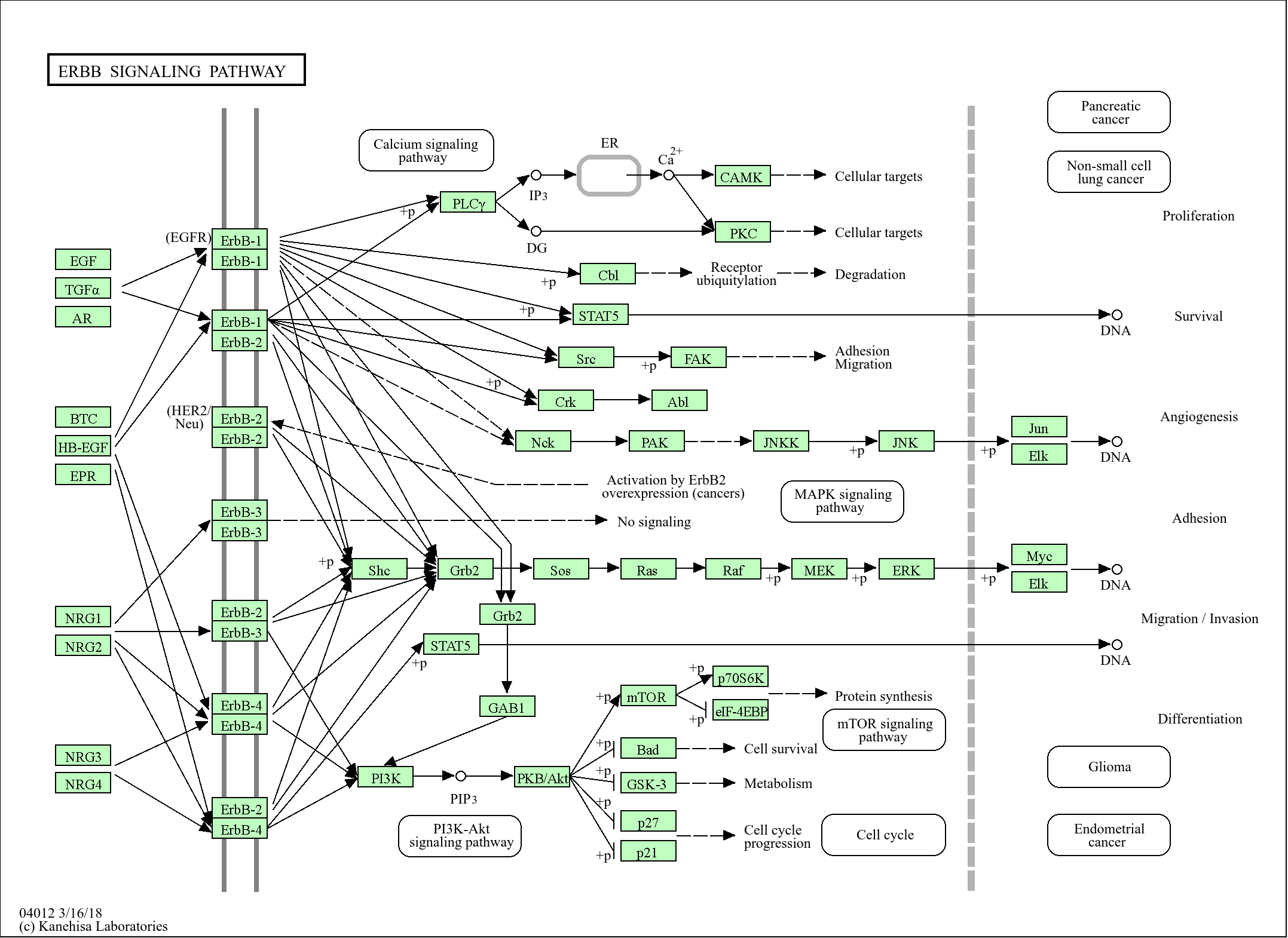
>>ErbB signaling pathway ;
>>Ubiquitin mediated proteolysis ;
>>Endocytosis ;
>>Insulin signaling pathway ;
>>Bacterial invasion of epithelial cells ;
>>Pathways in cancer ;
>>Proteoglycans in cancer ;
>>Chronic myeloid leukemia
>>Ubiquitin mediated proteolysis ;
>>Endocytosis ;
>>Insulin signaling pathway ;
>>Bacterial invasion of epithelial cells ;
>>Pathways in cancer ;
>>Proteoglycans in cancer ;
>>Chronic myeloid leukemia
show all
Signaling Pathway
Organismal Systems >> Endocrine system >> Insulin signaling pathway
Human Diseases >> Cancer: overview >> Pathways in cancer
Human Diseases >> Cancer: specific types >> Chronic myeloid leukemia
Environmental Information Processing >> Signal transduction >> ErbB signaling pathway
Genetic Information Processing >> Folding, sorting and degradation >> Ubiquitin mediated proteolysis
Reference Citation({{totalcount}})
Catalog: YP1291
Size
Price
Status
Qty.
200μL
$600.00
3 weeks
0
100μL
$340.00
3 weeks
0
50μL
$190.00
3 weeks
0
Add to cart
Collected
Collect
Recently Viewed Products
Clear allPRODUCTS
CUSTOMIZED
ABOUT US



Toggle night Mode
{{pinfoXq.title || ''}}
Catalog: {{pinfoXq.catalog || ''}}
Filter:
All
{{item.name}}
{{pinfo.title}}
-{{pinfo.catalog}}
Main Information
Target
{{pinfo.target}}
Reactivity
{{pinfo.react}}
Applications
{{pinfo.applicat}}
Conjugate/Modification
{{pinfo.coupling}}/{{pinfo.modific}}
MW (kDa)
{{pinfo.mwcalc}}
Host Species
{{pinfo.hostspec}}
Isotype
{{pinfo.isotype}}
Product {{index}}/{{pcount}}
Prev
Next
{{pvTitle}}
Scroll wheel zooms the picture
{{pvDescr}}