


Catalog: YP1241
Size
Price
Status
Qty.
200μL
$600.00
3 weeks
0
100μL
$340.00
3 weeks
0
50μL
$190.00
3 weeks
0
Add to cart


Collected
Collect
Main Information
Target
CFTR Phospho Ser737
Host Species
Rabbit
Reactivity
Human, Mouse, Rat
Applications
WB, IHC, IF
MW
166kD (Observed)
Conjugate/Modification
phosphate
Detailed Information
Recommended Dilution Ratio
IHC 1:50-200; WB 1:500-2000; IF 1:50-200
Formulation
Liquid in PBS containing 50% glycerol, 0.5% BSA and 0.02% sodium azide.
Specificity
This antibody detects endogenous phospho levels of CFTR (Phospho-Ser737) at Human:S737, Mouse:S732, Rat:S732.The name of modified sites may be influenced by many factors, such as species (the modified site was not originally found in human samples) and the change of protein sequence (the previous protein sequence is incomplete, and the protein sequence may be prolonged with the development of protein sequencing technology). When naming, we will use the "numbers" in historical reference to keep the sites consistent with the reports. The antibody binds to the following modification sequence (lowercase letters are modification sites):RLsLV
Purification
The antibody was affinity-purified from rabbit serum by affinity-chromatography using specific immunogen.
Storage
-15°C to -25°C/1 year (Do not lower than -25°C)
Concentration
1 mg/ml
MW(Observed)
166kD
Modification
phosphate
Clonality
Polyclonal
Isotype
IgG
Related Products
Secondary Antibodies
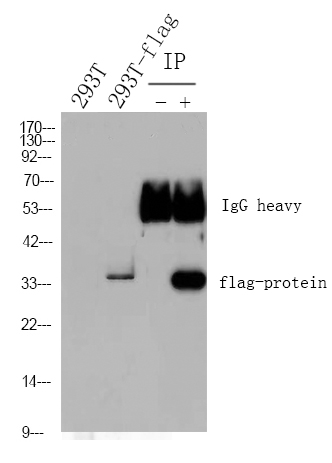
Goat Anti Mouse IgG(H+L) (HRP)
RS0001
More→
Secondary Antibodies
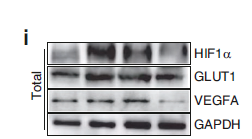
Goat Anti Rabbit IgG(H+L) (HRP)
RS0002
More→
Primary Antibodies
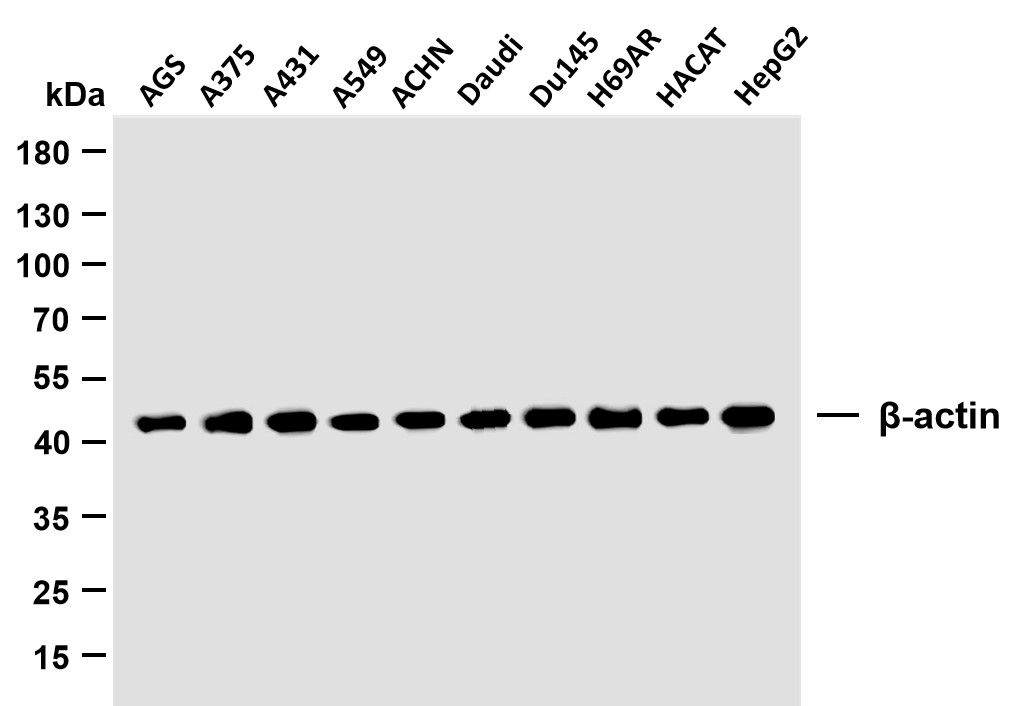
β-actin (PTR2364) Mouse mAb
YM3028
More→
Primary Antibodies
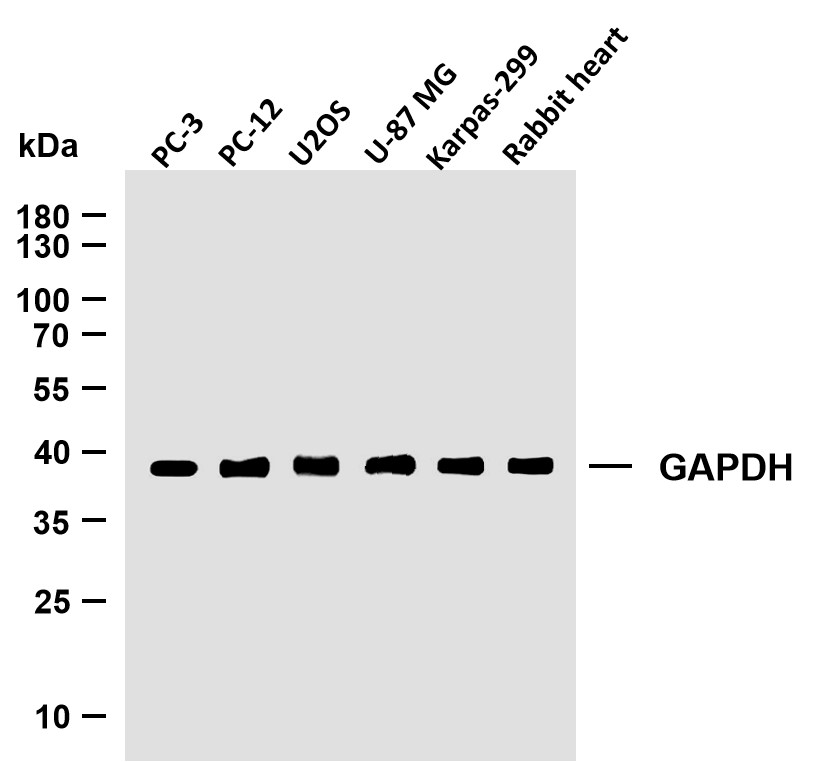
GAPDH (PTR2304) Mouse mAb
YM3029
More→
Antigen&Target Information
Immunogen:
Synthesized peptide derived from human CFTR (Phospho-Ser737)
show all
Specificity:
This antibody detects endogenous phospho levels of CFTR (Phospho-Ser737) at Human:S737, Mouse:S732, Rat:S732.The name of modified sites may be influenced by many factors, such as species (the modified site was not originally found in human samples) and the change of protein sequence (the previous protein sequence is incomplete, and the protein sequence may be prolonged with the development of protein sequencing technology). When naming, we will use the "numbers" in historical reference to keep the sites consistent with the reports. The antibody binds to the following modification sequence (lowercase letters are modification sites):RLsLV
show all
Gene Name:
CFTR ABCC7
show all
Protein Name:
CFTR (Phospho-Ser737)
show all
Other Name:
Cystic fibrosis transmembrane conductance regulator ;
CFTR ;
ATP-binding cassette sub-family C member 7 ;
Channel conductance-controlling ATPase ;
cAMP-dependent chloride channel ;
CFTR ;
ATP-binding cassette sub-family C member 7 ;
Channel conductance-controlling ATPase ;
cAMP-dependent chloride channel ;
show all
Database Link:
Background:
This gene encodes a member of the ATP-binding cassette (ABC) transporter superfamily. ABC proteins transport various molecules across extra- and intra-cellular membranes. ABC genes are divided into seven distinct subfamilies (ABC1 , MDR/TAP , MRP , ALD , OABP , GCN20 , White) . This protein is a member of the MRP subfamily that is involved in multi-drug resistance. The encoded protein functions as a chloride channel and controls the regulation of other transport pathways. Mutations in this gene are associated with the autosomal recessive disorders cystic fibrosis and congenital bilateral aplasia of the vas deferens. Alternatively spliced transcript variants have been described , many of which result from mutations in this gene. [provided by RefSeq , Jul 2008] ,
show all
Function:
Catalytic activity:ATP + H (2) O = ADP + phosphate. ,Disease:Defects in CFTR are the cause of congenital bilateral absence of the vas deferens (CBAVD) [MIM:277180]. CBAVD is an important cause of sterility in men and could represent an incomplete form of cystic fibrosis , as the majority of men suffering from cystic fibrosis lack the vas deferens. ,Disease:Defects in CFTR are the cause of cystic fibrosis (CF) [MIM:219700]; also known as mucoviscidosis. CF is the most common genetic disease in the Caucasian population , with a prevalence of about 1 in 2'000 live births. Inheritance is autosomal recessive. CF is a common generalized disorder of exocrine gland function which impairs clearance of secretions in a variety of organs. It is characterized by the triad of chronic bronchopulmonary disease (with recurrent respiratory infections) , pancreatic insufficiency (which leads to malabsorption and growth retardation) and elevated sweat electrolytes. ,Domain:The PDZ-binding motif mediates interactions with GOPC and with the SLC4A7 , SLC9A3R1/EBP50 complex. ,Function:Involved in the transport of chloride ions. May regulate bicarbonate secretion and salvage in epithelial cells by regulating the SLC4A7 transporter. ,online information:CFTR entry ,online information:Cystic fibrosis mutation db ,PTM:Phosphorylated; activates the channel. It is not clear whether PKC phosphorylation itself activates the channel or permits activation by phosphorylation at PKA sites. ,similarity:Belongs to the ABC transporter family. ,similarity:Belongs to the ABC transporter family. CFTR transporter (TC 3.A.1.202) subfamily. ,similarity:Contains 2 ABC transmembrane type-1 domains. ,similarity:Contains 2 ABC transporter domains. ,subunit:Interacts with SHANK2 (By similarity) . Interacts with SLC9A3R1 , MYO6 and GOPC. Interacts with SLC4A7 through SLC9A3R1. ,tissue specificity:Found on the surface of the epithelial cells that line the lungs and other organs. ,
show all
Cellular Localization:
Apical cell membrane ; Multi-pass membrane protein . Early endosome membrane ; Multi-pass membrane protein . Cell membrane ; Multi-pass membrane protein . Recycling endosome membrane ; Multi-pass membrane protein . Endoplasmic reticulum membrane ; Multi-pass membrane protein . Nucleus . The channel is internalized from the cell surface into an endosomal recycling compartment , from where it is recycled to the cell membrane (PubMed:17462998 , PubMed:19398555 , PubMed:20008117) . In the oviduct and bronchus , detected on the apical side of epithelial cells , but not associated with cilia (PubMed:22207244) . In Sertoli cells , a processed product is detected in the nucleus (By similarity) . ER stress induces GORASP2-mediated unconventional (ER/Golgi-independent) trafficking of core-glycosylated CFTR to cell membrane (PubMed:21884936) . .
show all
Research Areas:
>>ABC transporters ;
>>cAMP signaling pathway ;
>>AMPK signaling pathway ;
>>Tight junction ;
>>Gastric acid secretion ;
>>Pancreatic secretion ;
>>Bile secretion ;
>>Vibrio cholerae infection
>>cAMP signaling pathway ;
>>AMPK signaling pathway ;
>>Tight junction ;
>>Gastric acid secretion ;
>>Pancreatic secretion ;
>>Bile secretion ;
>>Vibrio cholerae infection
show all
Signaling Pathway
Reference Citation({{totalcount}})
Catalog: YP1241
Size
Price
Status
Qty.
200μL
$600.00
3 weeks
0
100μL
$340.00
3 weeks
0
50μL
$190.00
3 weeks
0
Add to cart
Collected
Collect
Recently Viewed Products
Clear allPRODUCTS
CUSTOMIZED
ABOUT US



Toggle night Mode
{{pinfoXq.title || ''}}
Catalog: {{pinfoXq.catalog || ''}}
Filter:
All
{{item.name}}
{{pinfo.title}}
-{{pinfo.catalog}}
Main Information
Target
{{pinfo.target}}
Reactivity
{{pinfo.react}}
Applications
{{pinfo.applicat}}
Conjugate/Modification
{{pinfo.coupling}}/{{pinfo.modific}}
MW (kDa)
{{pinfo.mwcalc}}
Host Species
{{pinfo.hostspec}}
Isotype
{{pinfo.isotype}}
Product {{index}}/{{pcount}}
Prev
Next
{{pvTitle}}
Scroll wheel zooms the picture
{{pvDescr}}