





Catalog: YP1226
Size
Price
Status
Qty.
200μL
$936.00
3 weeks
0
100μL
$560.00
3 weeks
0
50μL
$300.00
3 weeks
0
Add to cart


Collected
Collect
Main Information
Target
Na+/K+-ATPase α1 Phospho Tyr260
Host Species
Rabbit
Reactivity
Human, Mouse, Rat
Applications
WB, IHC
MW
115kD (Observed)
Conjugate/Modification
phosphate
Detailed Information
Recommended Dilution Ratio
WB 1:500-2000; IHC 1:50-300
Formulation
Liquid in PBS containing 50% glycerol, 0.5% BSA and 0.02% sodium azide.
Specificity
This antibody detects endogenous levels of Na+/K+-ATPase α1 (Phospho-Tyr260).The name of modified sites may be influenced by many factors, such as species (the modified site was not originally found in human samples) and the change of protein sequence (the previous protein sequence is incomplete, and the protein sequence may be prolonged with the development of protein sequencing technology). When naming, we will use the "numbers" in historical reference to keep the sites consistent with the reports. The antibody binds to the following modification sequence (lowercase letters are modification sites):VVyTG
Purification
The antibody was affinity-purified from rabbit antiserum by affinity-chromatography using epitope-specific immunogen.
Storage
-15°C to -25°C/1 year (Do not lower than -25°C)
Concentration
1 mg/ml
MW(Observed)
115kD
Modification
phosphate
Clonality
Polyclonal
Isotype
IgG
Related Products
Secondary Antibodies
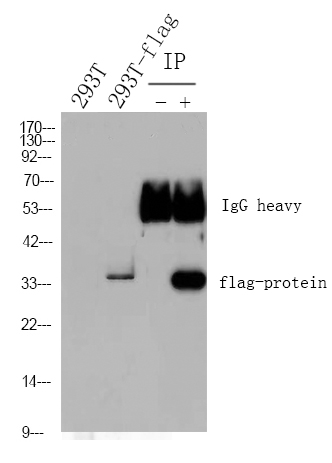
Goat Anti Mouse IgG(H+L) (HRP)
RS0001
More→
Secondary Antibodies
Goat Anti Rabbit IgG(H+L) (HRP)
RS0002
More→
Primary Antibodies
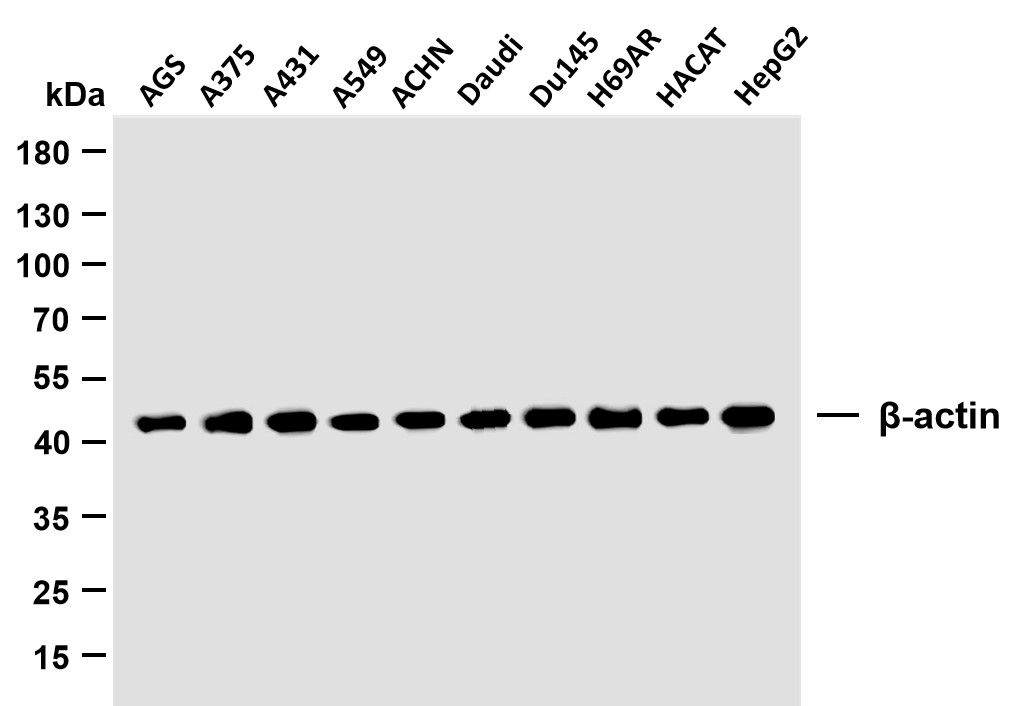
β-actin (PTR2364) Mouse mAb
YM3028
More→
Primary Antibodies
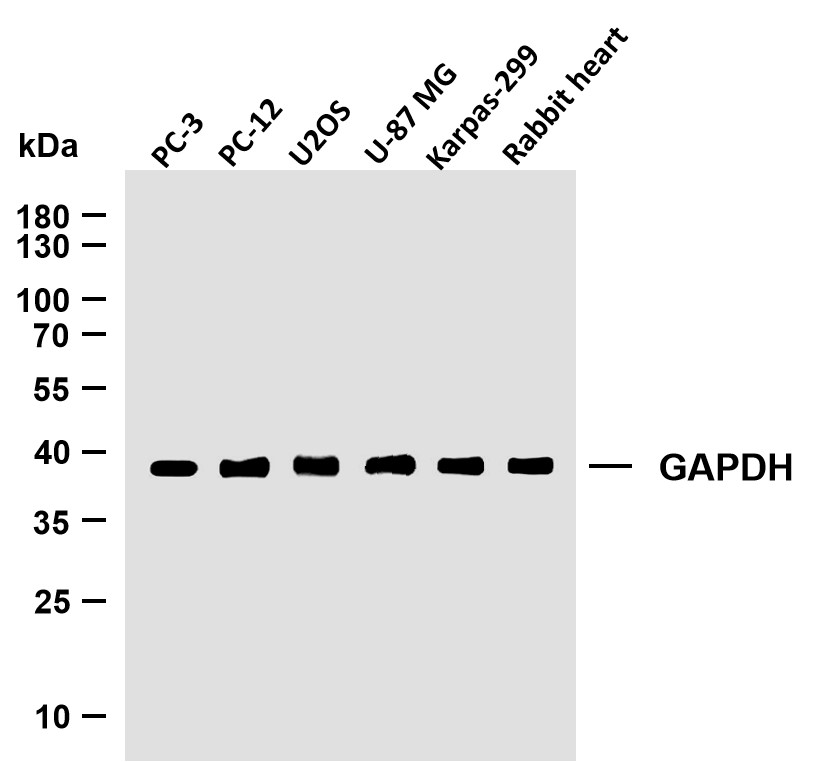
GAPDH (PTR2304) Mouse mAb
YM3029
More→
Antigen&Target Information
Immunogen:
Synthesized phospho derived from human Na+/K+-ATPase α1 (Phospho-Tyr260) Polyclonal
show all
Specificity:
This antibody detects endogenous levels of Na+/K+-ATPase α1 (Phospho-Tyr260).The name of modified sites may be influenced by many factors, such as species (the modified site was not originally found in human samples) and the change of protein sequence (the previous protein sequence is incomplete, and the protein sequence may be prolonged with the development of protein sequencing technology). When naming, we will use the "numbers" in historical reference to keep the sites consistent with the reports. The antibody binds to the following modification sequence (lowercase letters are modification sites):VVyTG
show all
Gene Name:
ATP1A1
show all
Protein Name:
Sodium/potassium-transporting ATPase subunit alpha-1 (Na (+) /K (+) ATPase alpha-1 subunit) (Sodium pump subunit alpha-1)
show all
Other Name:
Sodium/potassium-transporting ATPase subunit alpha-1 ;
Na ;
+ ;
/K ;
+ ;
ATPase alpha-1 subunit ;
Sodium pump subunit alpha-1 ;
Na ;
+ ;
/K ;
+ ;
ATPase alpha-1 subunit ;
Sodium pump subunit alpha-1 ;
show all
Database Link:
Background:
The protein encoded by this gene belongs to the family of P-type cation transport ATPases , and to the subfamily of Na+/K+ -ATPases. Na+/K+ -ATPase is an integral membrane protein responsible for establishing and maintaining the electrochemical gradients of Na and K ions across the plasma membrane. These gradients are essential for osmoregulation , for sodium-coupled transport of a variety of organic and inorganic molecules , and for electrical excitability of nerve and muscle. This enzyme is composed of two subunits , a large catalytic subunit (alpha) and a smaller glycoprotein subunit (beta) . The catalytic subunit of Na+/K+ -ATPase is encoded by multiple genes. This gene encodes an alpha 1 subunit. Multiple transcript variants encoding different isoforms have been found for this gene. [provided by RefSeq , May 2009] ,
show all
Function:
Catalytic activity:ATP + H (2) O + Na (+) (In) + K (+) (Out) = ADP + phosphate + Na (+) (Out) + K (+) (In) . ,Function:This is the catalytic component of the active enzyme , which catalyzes the hydrolysis of ATP coupled with the exchange of sodium and potassium ions across the plasma membrane. This action creates the electrochemical gradient of sodium and potassium ions , providing the energy for active transport of various nutrients. ,PTM:Phosphorylation on Tyr-10 modulates pumping activity. ,similarity:Belongs to the cation transport ATPase (P-type) family. ,similarity:Belongs to the cation transport ATPase (P-type) family. Type IIC subfamily. ,subcellular location:Identified by mass spectrometry in melanosome fractions from stage I to stage IV. ,subunit:Composed of three subunits: alpha (catalytic) , beta and gamma. Binds the HLA class II histocompatibility antigen , DR1. ,
show all
Cellular Localization:
Basolateral cell membrane ; Multi-pass membrane protein . Cell membrane , sarcolemma ; Multi-pass membrane protein . Cell projection , axon . Melanosome . Identified by mass spectrometry in melanosome fractions from stage I to stage IV. .
show all
Tissue Expression:
Research Areas:
>>cGMP-PKG signaling pathway ;
>>cAMP signaling pathway ;
>>Cardiac muscle contraction ;
>>Adrenergic signaling in cardiomyocytes ;
>>Insulin secretion ;
>>Thyroid hormone synthesis ;
>>Thyroid hormone signaling pathway ;
>>Aldosterone synthesis and secretion ;
>>Aldosterone-regulated sodium reabsorption ;
>>Endocrine and other factor-regulated calcium reabsorption ;
>>Proximal tubule bicarbonate reclamation ;
>>Salivary secretion ;
>>Gastric acid secretion ;
>>Pancreatic secretion ;
>>Carbohydrate digestion and absorption ;
>>Protein digestion and absorption ;
>>Bile secretion ;
>>Mineral absorption
>>cAMP signaling pathway ;
>>Cardiac muscle contraction ;
>>Adrenergic signaling in cardiomyocytes ;
>>Insulin secretion ;
>>Thyroid hormone synthesis ;
>>Thyroid hormone signaling pathway ;
>>Aldosterone synthesis and secretion ;
>>Aldosterone-regulated sodium reabsorption ;
>>Endocrine and other factor-regulated calcium reabsorption ;
>>Proximal tubule bicarbonate reclamation ;
>>Salivary secretion ;
>>Gastric acid secretion ;
>>Pancreatic secretion ;
>>Carbohydrate digestion and absorption ;
>>Protein digestion and absorption ;
>>Bile secretion ;
>>Mineral absorption
show all
Signaling Pathway
Organismal Systems >> Endocrine system >> Insulin secretion
Organismal Systems >> Endocrine system >> Thyroid hormone signaling pathway
Organismal Systems >> Endocrine system >> Aldosterone synthesis and secretion
Organismal Systems >> Circulatory system >> Cardiac muscle contraction
Organismal Systems >> Circulatory system >> Adrenergic signaling in cardiomyocytes
Environmental Information Processing >> Signal transduction >> cAMP signaling pathway
Environmental Information Processing >> Signal transduction >> cGMP-PKG signaling pathway
Reference Citation({{totalcount}})
Catalog: YP1226
Size
Price
Status
Qty.
200μL
$936.00
3 weeks
0
100μL
$560.00
3 weeks
0
50μL
$300.00
3 weeks
0
Add to cart
Collected
Collect
Recently Viewed Products
Clear allPRODUCTS
CUSTOMIZED
ABOUT US



Toggle night Mode
{{pinfoXq.title || ''}}
Catalog: {{pinfoXq.catalog || ''}}
Filter:
All
{{item.name}}
{{pinfo.title}}
-{{pinfo.catalog}}
Main Information
Target
{{pinfo.target}}
Reactivity
{{pinfo.react}}
Applications
{{pinfo.applicat}}
Conjugate/Modification
{{pinfo.coupling}}/{{pinfo.modific}}
MW (kDa)
{{pinfo.mwcalc}}
Host Species
{{pinfo.hostspec}}
Isotype
{{pinfo.isotype}}
Product {{index}}/{{pcount}}
Prev
Next
{{pvTitle}}
Scroll wheel zooms the picture
{{pvDescr}}