


Catalog: YP1103
Size
Price
Status
Qty.
200μL
$600.00
3 weeks
0
100μL
$340.00
3 weeks
0
50μL
$190.00
3 weeks
0
Add to cart


Collected
Collect
Main Information
Target
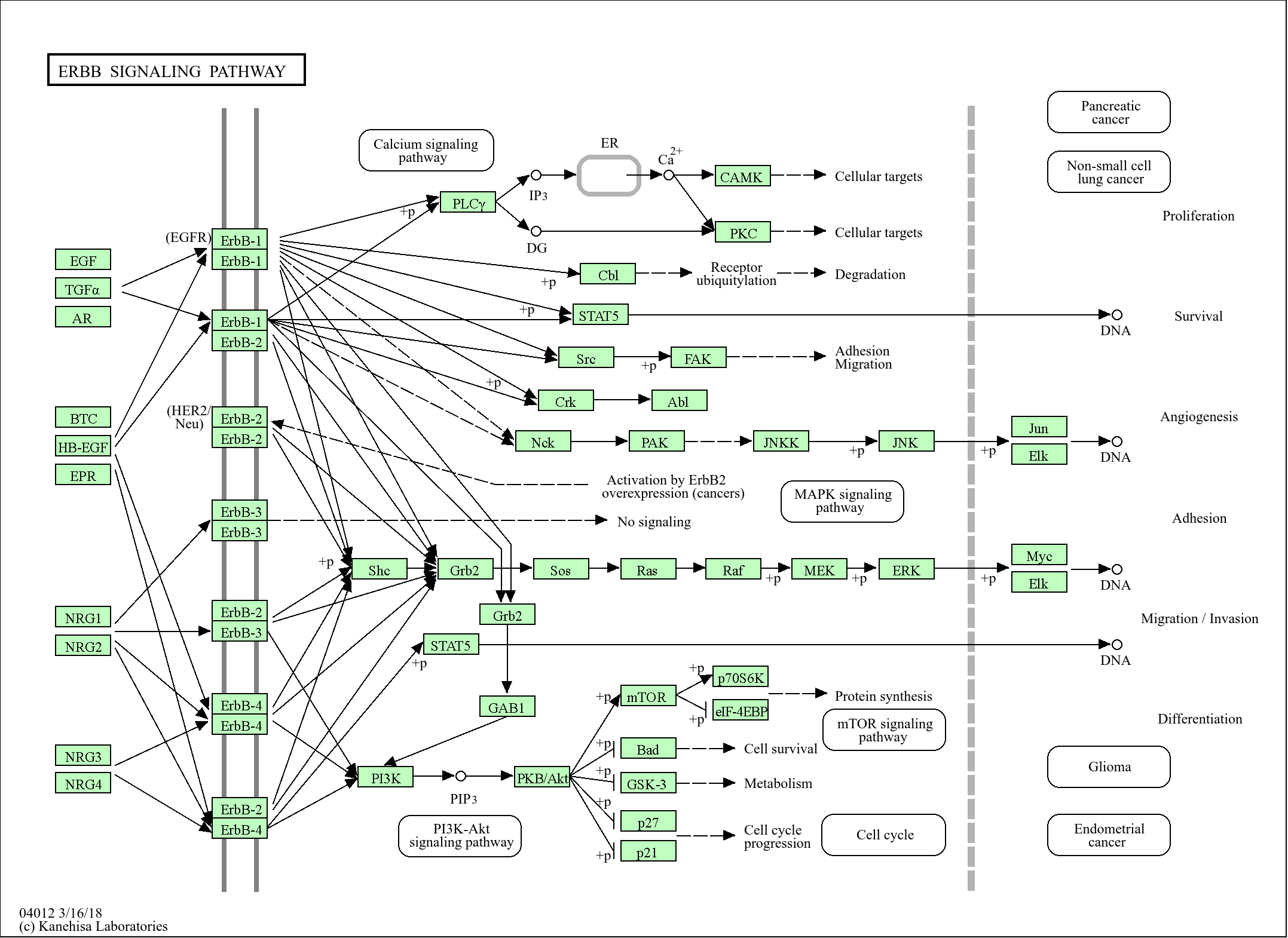
NACA Phospho Ser43
Host Species
Rabbit
Reactivity
Human, Mouse, Rat
Applications
IHC, IF, ELISA
MW
23kD (Calculated)
Conjugate/Modification
phosphate
Detailed Information
Recommended Dilution Ratio
IHC 1:100-1:300; ELISA 1:5000; IF 1:50-200
Formulation
Liquid in PBS containing 50% glycerol, 0.5% BSA and 0.02% sodium azide.
Specificity
Phospho-NACA (S43) Polyclonal Antibody detects endogenous levels of NACA protein only when phosphorylated at S43.The name of modified sites may be influenced by many factors, such as species (the modified site was not originally found in human samples) and the change of protein sequence (the previous protein sequence is incomplete, and the protein sequence may be prolonged with the development of protein sequencing technology). When naming, we will use the "numbers" in historical reference to keep the sites consistent with the reports. The antibody binds to the following modification sequence (lowercase letters are modification sites):QDsTQ
Purification
The antibody was affinity-purified from rabbit antiserum by affinity-chromatography using epitope-specific immunogen.
Storage
-15°C to -25°C/1 year (Do not lower than -25°C)
Concentration
1 mg/ml
MW(Calculated)
23kD
Modification
phosphate
Clonality
Polyclonal
Isotype
IgG
Related Products
Secondary Antibodies
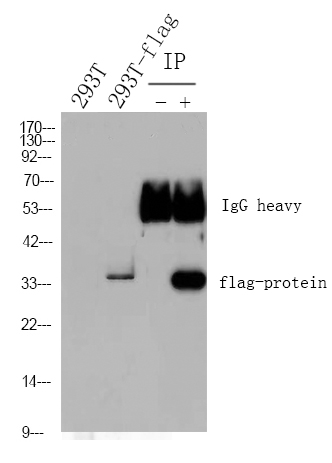
Goat Anti Mouse IgG(H+L) (HRP)
RS0001
More→
Secondary Antibodies
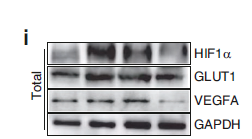
Goat Anti Rabbit IgG(H+L) (HRP)
RS0002
More→
Primary Antibodies
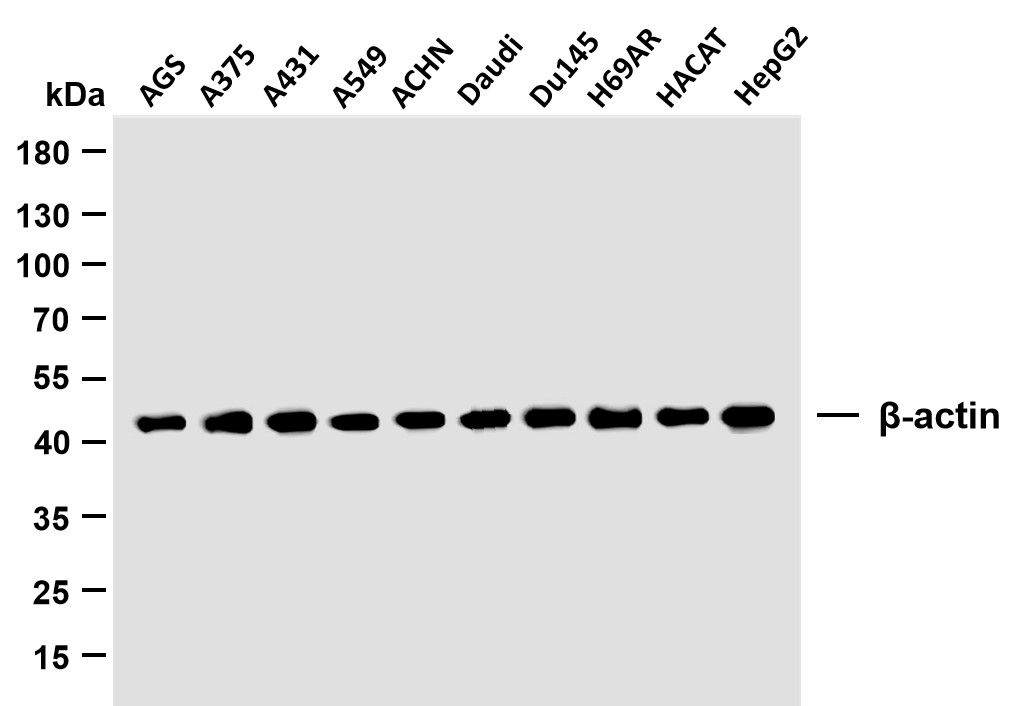
β-actin (PTR2364) Mouse mAb
YM3028
More→
Primary Antibodies
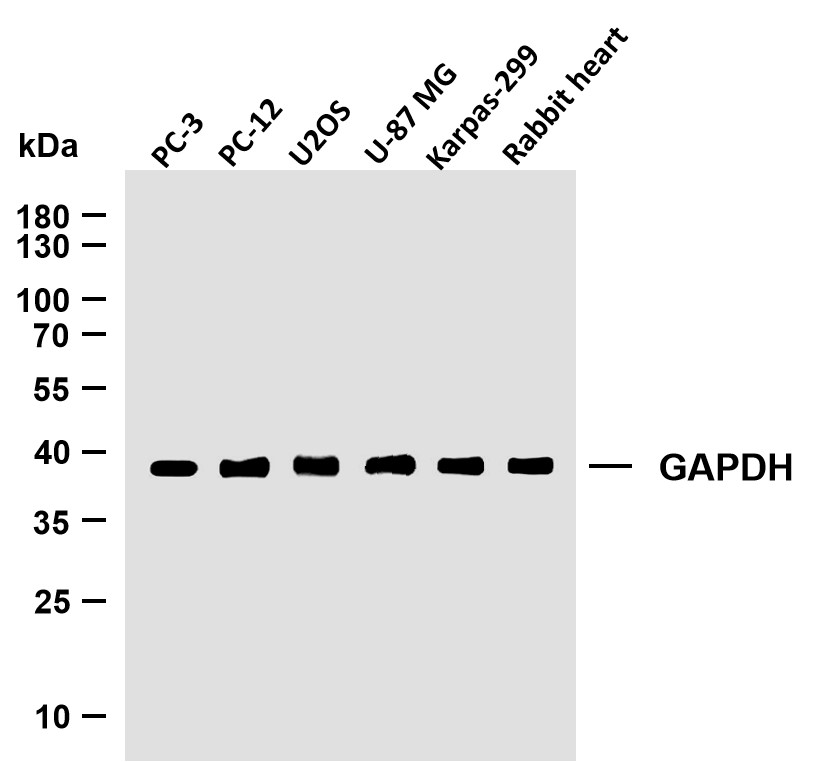
GAPDH (PTR2304) Mouse mAb
YM3029
More→
Antigen&Target Information
Immunogen:
The antiserum was produced against synthesized peptide derived from human NACA around the phosphorylation site of Ser43. AA range:9-58
show all
Specificity:
Phospho-NACA (S43) Polyclonal Antibody detects endogenous levels of NACA protein only when phosphorylated at S43.The name of modified sites may be influenced by many factors, such as species (the modified site was not originally found in human samples) and the change of protein sequence (the previous protein sequence is incomplete, and the protein sequence may be prolonged with the development of protein sequencing technology). When naming, we will use the "numbers" in historical reference to keep the sites consistent with the reports. The antibody binds to the following modification sequence (lowercase letters are modification sites):QDsTQ
show all
Gene Name:
NACA HSD48
show all
Protein Name:
Nascent polypeptide-associated complex subunit alpha
show all
Other Name:
NACA ;
HSD48 ;
Nascent polypeptide-associated complex subunit alpha ;
NAC-alpha ;
Alpha-NAC ;
allergen Hom s 2
HSD48 ;
Nascent polypeptide-associated complex subunit alpha ;
NAC-alpha ;
Alpha-NAC ;
allergen Hom s 2
show all
Background:
This gene encodes a protein that associates with basic transcription factor 3 (BTF3) to form the nascent polypeptide-associated complex (NAC) . This complex binds to nascent proteins that lack a signal peptide motif as they emerge from the ribosome , blocking interaction with the signal recognition particle (SRP) and preventing mistranslocation to the endoplasmic reticulum. This protein is an IgE autoantigen in atopic dermatitis patients. Alternative splicing results in multiple transcript variants , but the full length nature of some of these variants , including those encoding very large proteins , has not been determined. There are multiple pseudogenes of this gene on different chromosomes. [provided by RefSeq , Feb 2016] ,
show all
Function:
allergen:Causes an allergic reaction in human. Binds to IgE from atopic dermatitis (AD) patients. Identified as an IgE autoantigen in atopic dermatitis (AD) patients with severe skin manifestations. ,Function:Prevents inappropriate targeting of non-secretory polypeptides to the endoplasmic reticulum (ER) . Binds to nascent polypeptide chains as they emerge from the ribosome and blocks their interaction with the signal recognition particle (SRP) , which normally targets nascent secretory peptides to the ER. Also reduces the inherent affinity of ribosomes for protein translocation sites in the ER membrane (M sites) . May act as a specific coactivator for JUN , binding to DNA and stabilizing the interaction of JUN homodimers with target gene promoters. ,PTM:Phosphorylation of Ser-43 by ILK during cell adhesion may promote nuclear localization. Phosphorylation of Thr-159 by GSK3B may promote proteasome mediated degradation (By similarity) . Phosphorylated upon DNA damage , probably by ATM or ATR. ,similarity:Belongs to the NAC-alpha family. ,similarity:Contains 1 NAC-A/B (NAC-alpha/beta) domain. ,similarity:Contains 1 UBA domain. ,subcellular location:Predominantly cytoplasmic. Also found in nucleus. ,subunit:Interacts with TBP and JUN (By similarity) . Part of the nascent polypeptide-associated complex (NAC) , consisting of NACA and BTF3. NAC associates with ribosomes through the BTF3 subunit. Both subunits can contact nascent polypeptide chains. Interacts with ASFV protein H339R. ,tissue specificity:Ubiquitously expressed. ,
show all
Cellular Localization:
Cytoplasm . Nucleus . The heterodimer is located mainly in the cytosol , and the homodimer in the nucleus. .
show all
Tissue Expression:
show all
Research Areas:
>>Parathyroid hormone synthesis , secretion and action
show all
Reference Citation({{totalcount}})
Catalog: YP1103
Size
Price
Status
Qty.
200μL
$600.00
3 weeks
0
100μL
$340.00
3 weeks
0
50μL
$190.00
3 weeks
0
Add to cart
Collected
Collect
Recently Viewed Products
Clear allPRODUCTS
CUSTOMIZED
ABOUT US



Toggle night Mode
{{pinfoXq.title || ''}}
Catalog: {{pinfoXq.catalog || ''}}
Filter:
All
{{item.name}}
{{pinfo.title}}
-{{pinfo.catalog}}
Main Information
Target
{{pinfo.target}}
Reactivity
{{pinfo.react}}
Applications
{{pinfo.applicat}}
Conjugate/Modification
{{pinfo.coupling}}/{{pinfo.modific}}
MW (kDa)
{{pinfo.mwcalc}}
Host Species
{{pinfo.hostspec}}
Isotype
{{pinfo.isotype}}
Product {{index}}/{{pcount}}
Prev
Next
{{pvTitle}}
Scroll wheel zooms the picture
{{pvDescr}}