






Catalog: YP0861
Size
Price
Status
Qty.
200μL
$600.00
3 weeks
0
100μL
$340.00
3 weeks
0
50μL
$190.00
3 weeks
0
Add to cart


Collected
Collect
Main Information
Target
c-Myc Phospho Ser62
Host Species
Rabbit
Reactivity
Human, Mouse, Rat
Applications
WB, IHC, IF, ELISA
MW
50kD,(also ~60kD in some samples) (Observed)
Conjugate/Modification
phosphate
Detailed Information
Recommended Dilution Ratio
WB 1:500-1:2000; IHC 1:100-1:300; IF 1:200-1:1000; ELISA 1:40000; Not yet tested in other applications.
Formulation
Liquid in PBS containing 50% glycerol, 0.5% BSA and 0.02% sodium azide.
Specificity
Phospho-c-Myc (S62) Polyclonal Antibody detects endogenous levels of c-Myc protein only when phosphorylated at S62.The name of modified sites may be influenced by many factors, such as species (the modified site was not originally found in human samples) and the change of protein sequence (the previous protein sequence is incomplete, and the protein sequence may be prolonged with the development of protein sequencing technology). When naming, we will use the "numbers" in historical reference to keep the sites consistent with the reports. The antibody binds to the following modification sequence (lowercase letters are modification sites):PLsPS
Purification
The antibody was affinity-purified from rabbit antiserum by affinity-chromatography using epitope-specific immunogen.
Storage
-15°C to -25°C/1 year (Do not lower than -25°C)
Concentration
1 mg/ml
MW(Observed)
50kD,(also ~60kD in some samples)
Modification
phosphate
Clonality
Polyclonal
Isotype
IgG
Related Products
Secondary Antibodies
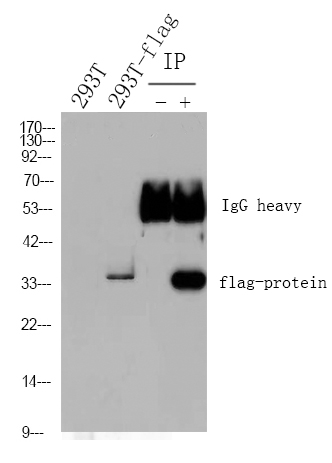
Goat Anti Mouse IgG(H+L) (HRP)
RS0001
More→
Secondary Antibodies
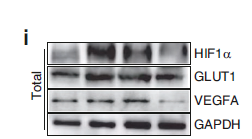
Goat Anti Rabbit IgG(H+L) (HRP)
RS0002
More→
Primary Antibodies
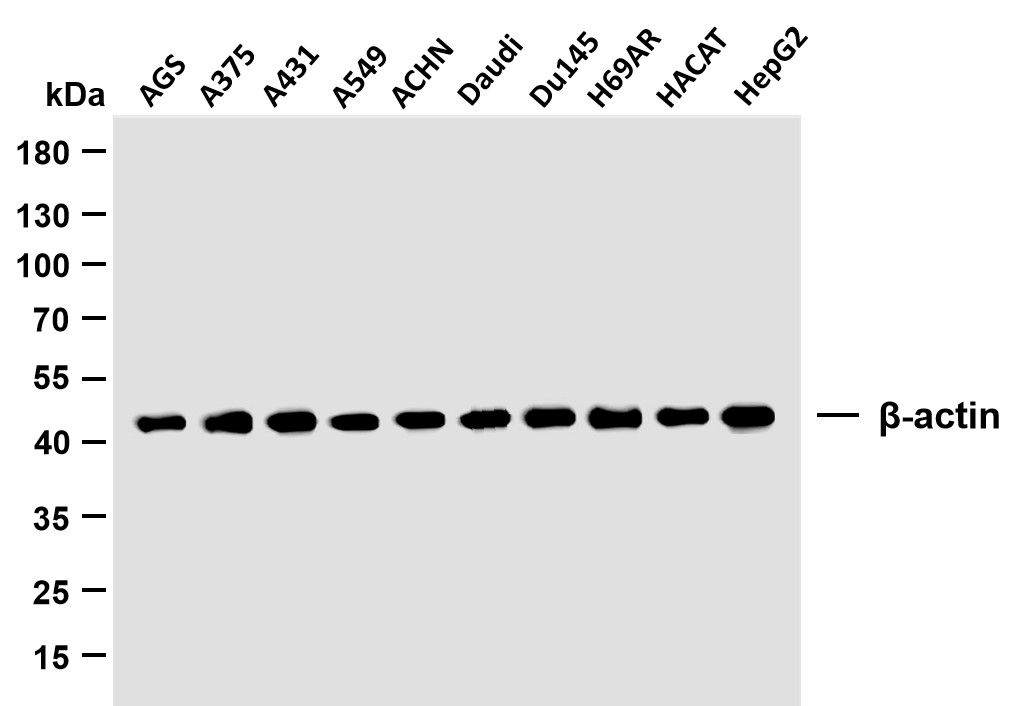
β-actin (PTR2364) Mouse mAb
YM3028
More→
Primary Antibodies
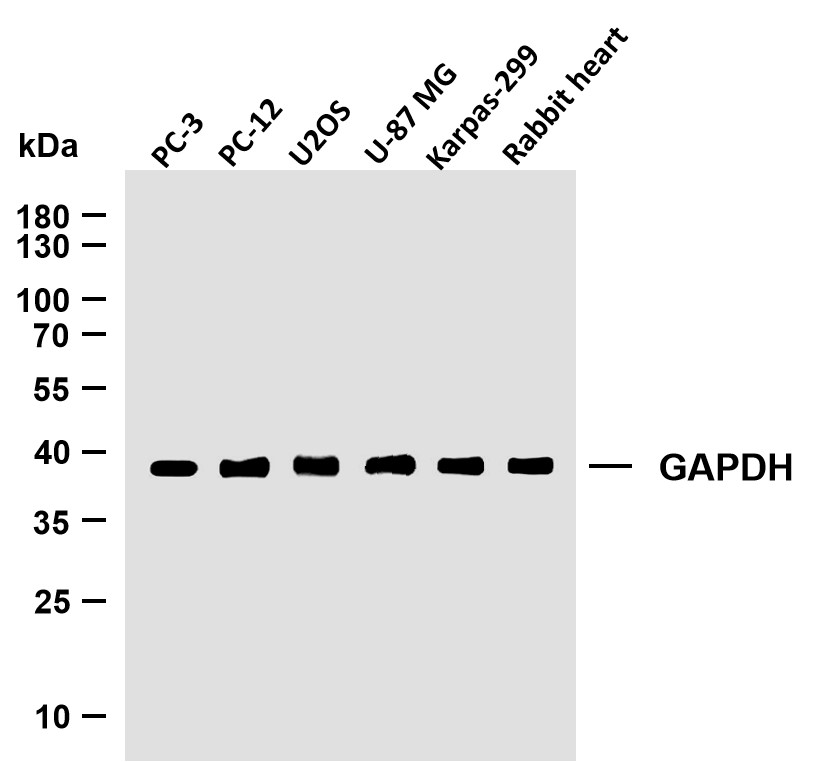
GAPDH (PTR2304) Mouse mAb
YM3029
More→
Antigen&Target Information
Immunogen:
The antiserum was produced against synthesized peptide derived from human Myc around the phosphorylation site of Ser62. AA range:31-80
show all
Specificity:
Phospho-c-Myc (S62) Polyclonal Antibody detects endogenous levels of c-Myc protein only when phosphorylated at S62.The name of modified sites may be influenced by many factors, such as species (the modified site was not originally found in human samples) and the change of protein sequence (the previous protein sequence is incomplete, and the protein sequence may be prolonged with the development of protein sequencing technology). When naming, we will use the "numbers" in historical reference to keep the sites consistent with the reports. The antibody binds to the following modification sequence (lowercase letters are modification sites):PLsPS
show all
Gene Name:
MYC BHLHE39
show all
Protein Name:
Myc proto-oncogene protein
show all
Other Name:
MYC ;
BHLHE39 ;
Myc proto-oncogene protein ;
Class E basic helix-loop-helix protein 39 ;
bHLHe39 ;
Proto-oncogene c-Myc ;
Transcription factor p64
BHLHE39 ;
Myc proto-oncogene protein ;
Class E basic helix-loop-helix protein 39 ;
bHLHe39 ;
Proto-oncogene c-Myc ;
Transcription factor p64
show all
Database Link:
Background:
The protein encoded by this gene is a multifunctional , nuclear phosphoprotein that plays a role in cell cycle progression , apoptosis and cellular transformation. It functions as a transcription factor that regulates transcription of specific target genes. Mutations , overexpression , rearrangement and translocation of this gene have been associated with a variety of hematopoietic tumors , leukemias and lymphomas , including Burkitt lymphoma. There is evidence to show that alternative translation initiations from an upstream , in-frame non-AUG (CUG) and a downstream AUG start site result in the production of two isoforms with distinct N-termini. The synthesis of non-AUG initiated protein is suppressed in Burkitt's lymphomas , suggesting its importance in the normal function of this gene. [provided by RefSeq , Jul 2008] ,
show all
Function:
Disease:A chromosomal aberration involving MYC may be a cause of a form of B-cell chronic lymphocytic leukemia. Translocation t (8;12) (q24;q22) with BTG1. ,Disease:Overexpression of MYC is implicated in the etiology of a variety of hematopoietic tumors. ,Function:Participates in the regulation of gene transcription. Binds DNA both in a non-specific manner and also specifically to recognizes the core sequence 5'-CAC[GA]TG-3'. Seems to activate the transcription of growth-related genes. ,online information:Myc entry ,PTM:Phosphorylated by PRKDC. ,similarity:Contains 1 basic helix-loop-helix (bHLH) domain. ,subunit:Efficient DNA binding requires dimerization with another bHLH protein. Binds DNA as a heterodimer with MAX. Interacts with TAF1C and SPAG9. Interacts with PARP10. Interacts with KDM5A and KDM5B. ,
show all
Cellular Localization:
Nucleus , nucleoplasm . Nucleus , nucleolus .
show all
Tissue Expression:
Research Areas:
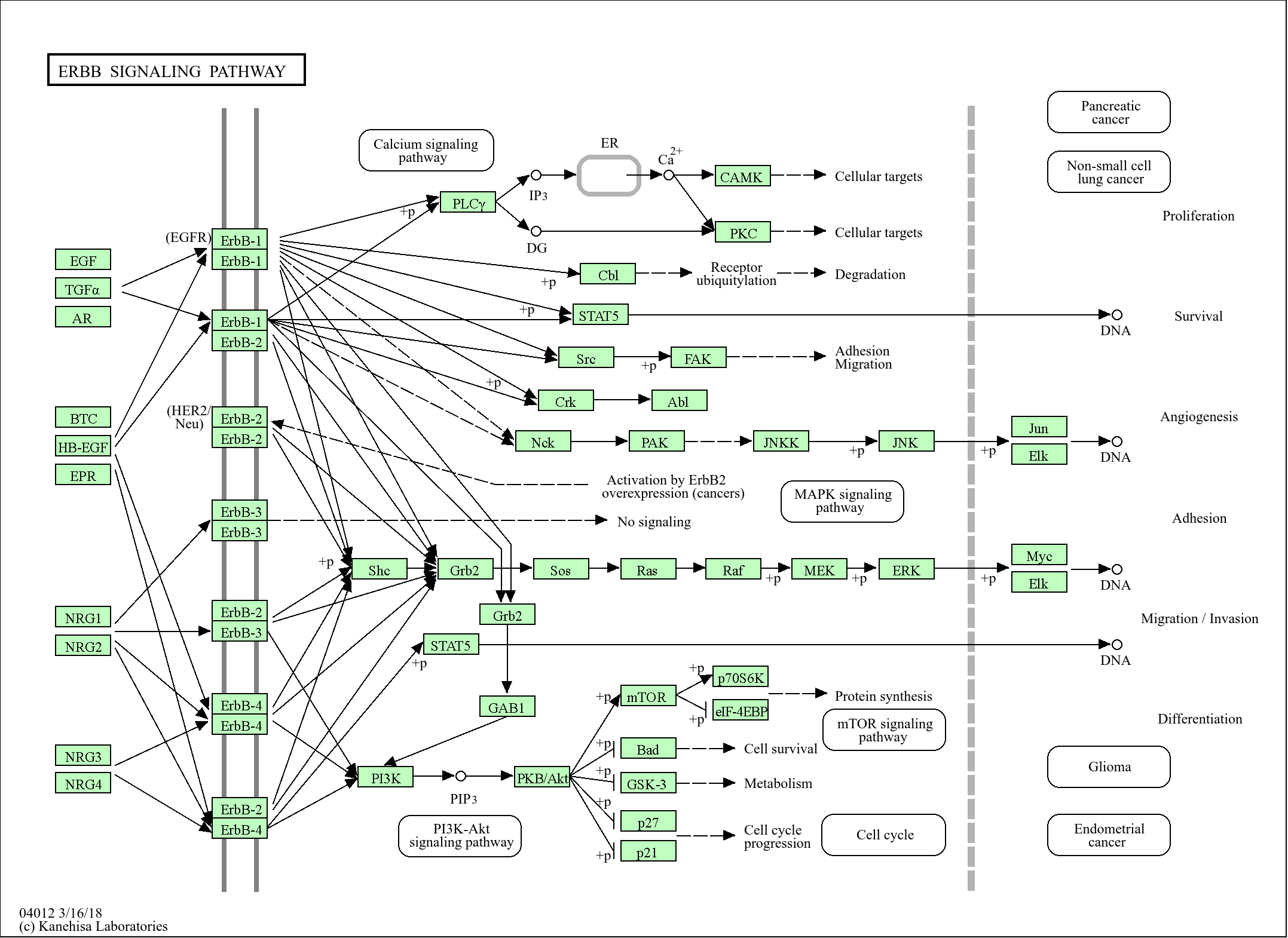
>>MAPK signaling pathway ;
>>ErbB signaling pathway ;
>>Cell cycle ;
>>PI3K-Akt signaling pathway ;
>>Cellular senescence ;
>>Wnt signaling pathway ;
>>TGF-beta signaling pathway ;
>>Hippo signaling pathway ;
>>Signaling pathways regulating pluripotency of stem cells ;
>>JAK-STAT signaling pathway ;
>>Thyroid hormone signaling pathway ;
>>Salmonella infection ;
>>Hepatitis C ;
>>Hepatitis B ;
>>Human cytomegalovirus infection ;
>>Human T-cell leukemia virus 1 infection ;
>>Kaposi sarcoma-associated herpesvirus infection ;
>>Epstein-Barr virus infection ;
>>Pathways in cancer ;
>>Transcriptional misregulation in cancer ;
>>Proteoglycans in cancer ;
>>MicroRNAs in cancer ;
>>Chemical carcinogenesis - receptor activation ;
>>Colorectal cancer ;
>>Endometrial cancer ;
>>Thyroid cancer ;
>>Bladder cancer ;
>>Chronic myeloid leukemia ;
>>Acute myeloid leukemia ;
>>Small cell lung cancer ;
>>Breast cancer ;
>>Hepatocellular carcinoma ;
>>Gastric cancer ;
>>Central carbon metabolism in cancer
>>ErbB signaling pathway ;
>>Cell cycle ;
>>PI3K-Akt signaling pathway ;
>>Cellular senescence ;
>>Wnt signaling pathway ;
>>TGF-beta signaling pathway ;
>>Hippo signaling pathway ;
>>Signaling pathways regulating pluripotency of stem cells ;
>>JAK-STAT signaling pathway ;
>>Thyroid hormone signaling pathway ;
>>Salmonella infection ;
>>Hepatitis C ;
>>Hepatitis B ;
>>Human cytomegalovirus infection ;
>>Human T-cell leukemia virus 1 infection ;
>>Kaposi sarcoma-associated herpesvirus infection ;
>>Epstein-Barr virus infection ;
>>Pathways in cancer ;
>>Transcriptional misregulation in cancer ;
>>Proteoglycans in cancer ;
>>MicroRNAs in cancer ;
>>Chemical carcinogenesis - receptor activation ;
>>Colorectal cancer ;
>>Endometrial cancer ;
>>Thyroid cancer ;
>>Bladder cancer ;
>>Chronic myeloid leukemia ;
>>Acute myeloid leukemia ;
>>Small cell lung cancer ;
>>Breast cancer ;
>>Hepatocellular carcinoma ;
>>Gastric cancer ;
>>Central carbon metabolism in cancer
show all
Signaling Pathway
Cellular Processes >> Cell growth and death >> Cell cycle
Cellular Processes >> Cell growth and death >> Cellular senescence
Cellular Processes >> Cellular community - eukaryotes >> Signaling pathways regulating pluripotency of stem cells
Organismal Systems >> Endocrine system >> Thyroid hormone signaling pathway
Human Diseases >> Cancer: overview >> Pathways in cancer
Human Diseases >> Cancer: overview >> Transcriptional misregulation in cancer
Human Diseases >> Cancer: overview >> MicroRNAs in cancer
Human Diseases >> Cancer: overview >> Central carbon metabolism in cancer
Human Diseases >> Cancer: specific types >> Colorectal cancer
Human Diseases >> Cancer: specific types >> Hepatocellular carcinoma
Human Diseases >> Cancer: specific types >> Gastric cancer
Human Diseases >> Cancer: specific types >> Thyroid cancer
Human Diseases >> Cancer: specific types >> Acute myeloid leukemia
Human Diseases >> Cancer: specific types >> Chronic myeloid leukemia
Human Diseases >> Cancer: specific types >> Bladder cancer
Human Diseases >> Cancer: specific types >> Endometrial cancer
Human Diseases >> Cancer: specific types >> Breast cancer
Human Diseases >> Cancer: specific types >> Small cell lung cancer
Environmental Information Processing >> Signal transduction >> MAPK signaling pathway
Environmental Information Processing >> Signal transduction >> ErbB signaling pathway
Environmental Information Processing >> Signal transduction >> Wnt signaling pathway
Environmental Information Processing >> Signal transduction >> TGF-beta signaling pathway
Environmental Information Processing >> Signal transduction >> Hippo signaling pathway
Environmental Information Processing >> Signal transduction >> JAK-STAT signaling pathway
Environmental Information Processing >> Signal transduction >> PI3K-Akt signaling pathway
Reference Citation({{totalcount}})
Catalog: YP0861
Size
Price
Status
Qty.
200μL
$600.00
3 weeks
0
100μL
$340.00
3 weeks
0
50μL
$190.00
3 weeks
0
Add to cart
Collected
Collect
Recently Viewed Products
Clear allPRODUCTS
CUSTOMIZED
ABOUT US



Toggle night Mode
{{pinfoXq.title || ''}}
Catalog: {{pinfoXq.catalog || ''}}
Filter:
All
{{item.name}}
{{pinfo.title}}
-{{pinfo.catalog}}
Main Information
Target
{{pinfo.target}}
Reactivity
{{pinfo.react}}
Applications
{{pinfo.applicat}}
Conjugate/Modification
{{pinfo.coupling}}/{{pinfo.modific}}
MW (kDa)
{{pinfo.mwcalc}}
Host Species
{{pinfo.hostspec}}
Isotype
{{pinfo.isotype}}
Product {{index}}/{{pcount}}
Prev
Next
{{pvTitle}}
Scroll wheel zooms the picture
{{pvDescr}}