


Catalog: YP0627
Size
Price
Status
Qty.
200μL
$600.00
3 weeks
0
100μL
$340.00
3 weeks
0
50μL
$190.00
3 weeks
0
Add to cart


Collected
Collect
Main Information
Target
Dynamin I Phospho Ser774
Host Species
Rabbit
Reactivity
Human, Mouse, Rat
Applications
WB, IHC, IF, ELISA
MW
97kD (Observed)
Conjugate/Modification
phosphate
Detailed Information
Recommended Dilution Ratio
WB 1:500-1:2000; IHC 1:100-1:300; ELISA 1:5000; IF 1:50-200
Formulation
Liquid in PBS containing 50% glycerol, 0.5% BSA and 0.02% sodium azide.
Specificity
Phospho-Dynamin I (S774) Polyclonal Antibody detects endogenous levels of Dynamin I protein only when phosphorylated at S774.The name of modified sites may be influenced by many factors, such as species (the modified site was not originally found in human samples) and the change of protein sequence (the previous protein sequence is incomplete, and the protein sequence may be prolonged with the development of protein sequencing technology). When naming, we will use the "numbers" in historical reference to keep the sites consistent with the reports. The antibody binds to the following modification sequence (lowercase letters are modification sites):RRsPT
Purification
The antibody was affinity-purified from rabbit antiserum by affinity-chromatography using epitope-specific immunogen.
Storage
-15°C to -25°C/1 year (Do not lower than -25°C)
Concentration
1 mg/ml
MW(Observed)
97kD
Modification
phosphate
Clonality
Polyclonal
Isotype
IgG
Related Products
Secondary Antibodies
Goat Anti Mouse IgG(H+L) (HRP)
RS0001
More→
Secondary Antibodies
Goat Anti Rabbit IgG(H+L) (HRP)
RS0002
More→
Primary Antibodies
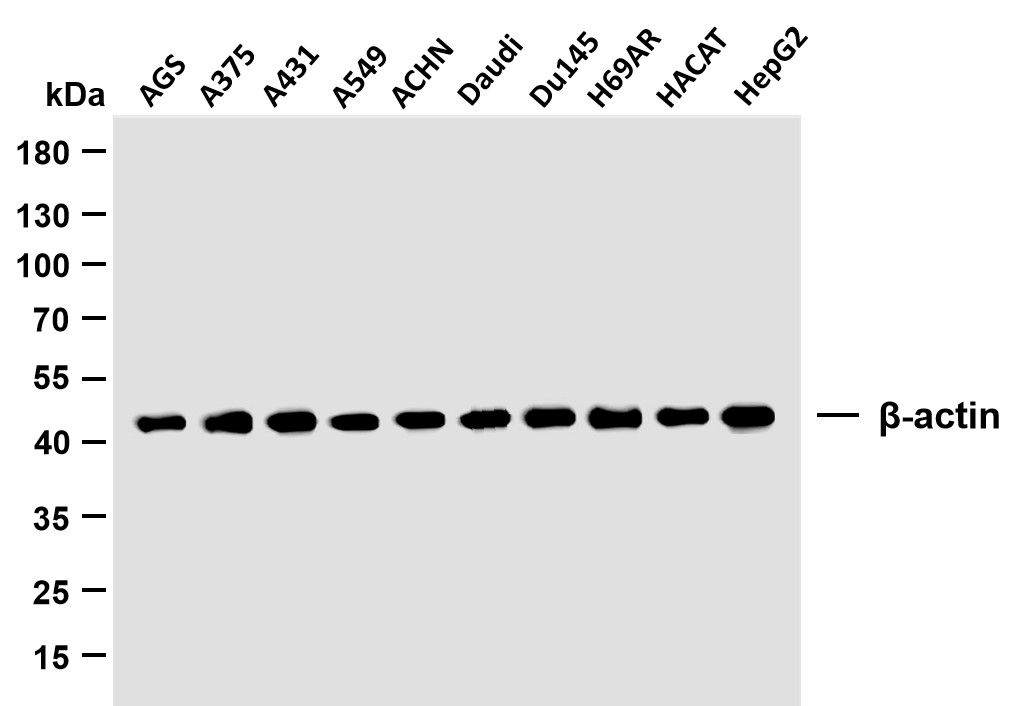
β-actin (PTR2364) Mouse mAb
YM3028
More→
Primary Antibodies
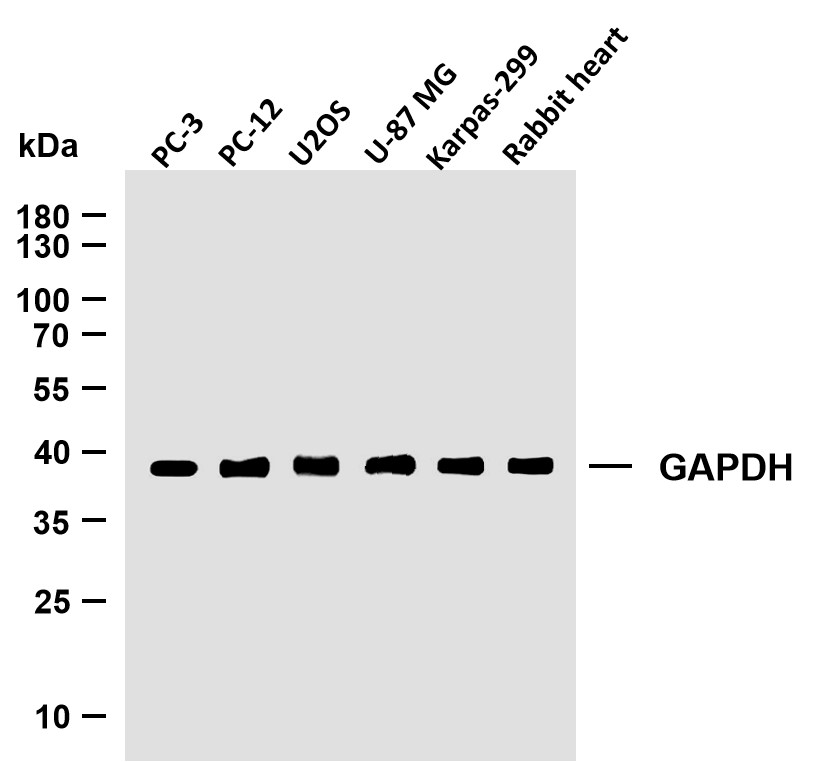
GAPDH (PTR2304) Mouse mAb
YM3029
More→
Antigen&Target Information
Immunogen:
The antiserum was produced against synthesized peptide derived from human Dynamin-1 around the phosphorylation site of Ser774. AA range:740-789
show all
Specificity:
Phospho-Dynamin I (S774) Polyclonal Antibody detects endogenous levels of Dynamin I protein only when phosphorylated at S774.The name of modified sites may be influenced by many factors, such as species (the modified site was not originally found in human samples) and the change of protein sequence (the previous protein sequence is incomplete, and the protein sequence may be prolonged with the development of protein sequencing technology). When naming, we will use the "numbers" in historical reference to keep the sites consistent with the reports. The antibody binds to the following modification sequence (lowercase letters are modification sites):RRsPT
show all
Gene Name:
DNM1
show all
Protein Name:
Dynamin-1
show all
Other Name:
DNM1 ;
DNM ;
Dynamin-1
DNM ;
Dynamin-1
show all
Database Link:
Background:
dynamin 1 (DNM1) Homo sapiens This gene encodes a member of the dynamin subfamily of GTP-binding proteins. The encoded protein possesses unique mechanochemical properties used to tubulate and sever membranes , and is involved in clathrin-mediated endocytosis and other vesicular trafficking processes. Actin and other cytoskeletal proteins act as binding partners for the encoded protein , which can also self-assemble leading to stimulation of GTPase activity. More than sixty highly conserved copies of the 3' region of this gene are found elsewhere in the genome , particularly on chromosomes Y and 15. Alternatively spliced transcript variants encoding different isoforms have been described. [provided by RefSeq , Jul 2008] ,
show all
Function:
Catalytic activity:GTP + H (2) O = GDP + phosphate. ,Function:Microtubule-associated force-producing protein involved in producing microtubule bundles and able to bind and hydrolyze GTP. Most probably involved in vesicular trafficking processes , in particular endocytosis. ,similarity:Belongs to the dynamin family. ,similarity:Contains 1 GED domain. ,similarity:Contains 1 PH domain. ,subcellular location:Microtubule-associated. ,subunit:Interacts with CAV1 and SH3GLB1. Binds SH3GL1 , SH3GL2 and SH3GL3. ,
show all
Cellular Localization:
Cytoplasm . Cytoplasm , cytoskeleton . Microtubule-associated.
show all
Tissue Expression:
show all
Research Areas:
>>Phospholipase D signaling pathway ;
>>Endocytosis ;
>>Synaptic vesicle cycle ;
>>Endocrine and other factor-regulated calcium reabsorption ;
>>Bacterial invasion of epithelial cells
>>Endocytosis ;
>>Synaptic vesicle cycle ;
>>Endocrine and other factor-regulated calcium reabsorption ;
>>Bacterial invasion of epithelial cells
show all
Signaling Pathway
Reference Citation({{totalcount}})
Catalog: YP0627
Size
Price
Status
Qty.
200μL
$600.00
3 weeks
0
100μL
$340.00
3 weeks
0
50μL
$190.00
3 weeks
0
Add to cart
Collected
Collect
Recently Viewed Products
Clear allPRODUCTS
CUSTOMIZED
ABOUT US



Toggle night Mode
{{pinfoXq.title || ''}}
Catalog: {{pinfoXq.catalog || ''}}
Filter:
All
{{item.name}}
{{pinfo.title}}
-{{pinfo.catalog}}
Main Information
Target
{{pinfo.target}}
Reactivity
{{pinfo.react}}
Applications
{{pinfo.applicat}}
Conjugate/Modification
{{pinfo.coupling}}/{{pinfo.modific}}
MW (kDa)
{{pinfo.mwcalc}}
Host Species
{{pinfo.hostspec}}
Isotype
{{pinfo.isotype}}
Product {{index}}/{{pcount}}
Prev
Next
{{pvTitle}}
Scroll wheel zooms the picture
{{pvDescr}}