





Catalog: YP0487
Size
Price
Status
Qty.
200μL
$600.00
3 weeks
0
100μL
$340.00
3 weeks
0
50μL
$190.00
3 weeks
0
Add to cart


Collected
Collect
Main Information
Target
PC-PLD1 Phospho Thr147
Host Species
Rabbit
Reactivity
Human, Mouse, Rat
Applications
WB, IHC, ELISA
MW
120kD (Observed)
Conjugate/Modification
phosphate
Detailed Information
Recommended Dilution Ratio
WB 1:500-2000; IHC 1:50-300; ELISA 1:2000-20000
Formulation
Liquid in PBS containing 50% glycerol, 0.5% BSA and 0.02% sodium azide.
Specificity
Phospho-PC-PLD1 (T147) Polyclonal Antibody detects endogenous levels of PC-PLD1 protein only when phosphorylated at T147.The name of modified sites may be influenced by many factors, such as species (the modified site was not originally found in human samples) and the change of protein sequence (the previous protein sequence is incomplete, and the protein sequence may be prolonged with the development of protein sequencing technology). When naming, we will use the "numbers" in historical reference to keep the sites consistent with the reports. The antibody binds to the following modification sequence (lowercase letters are modification sites):RHtFR
Purification
The antibody was affinity-purified from rabbit antiserum by affinity-chromatography using epitope-specific immunogen.
Storage
-15°C to -25°C/1 year (Do not lower than -25°C)
Concentration
1 mg/ml
MW(Observed)
120kD
Modification
phosphate
Clonality
Polyclonal
Isotype
IgG
Related Products
Primary Antibodies
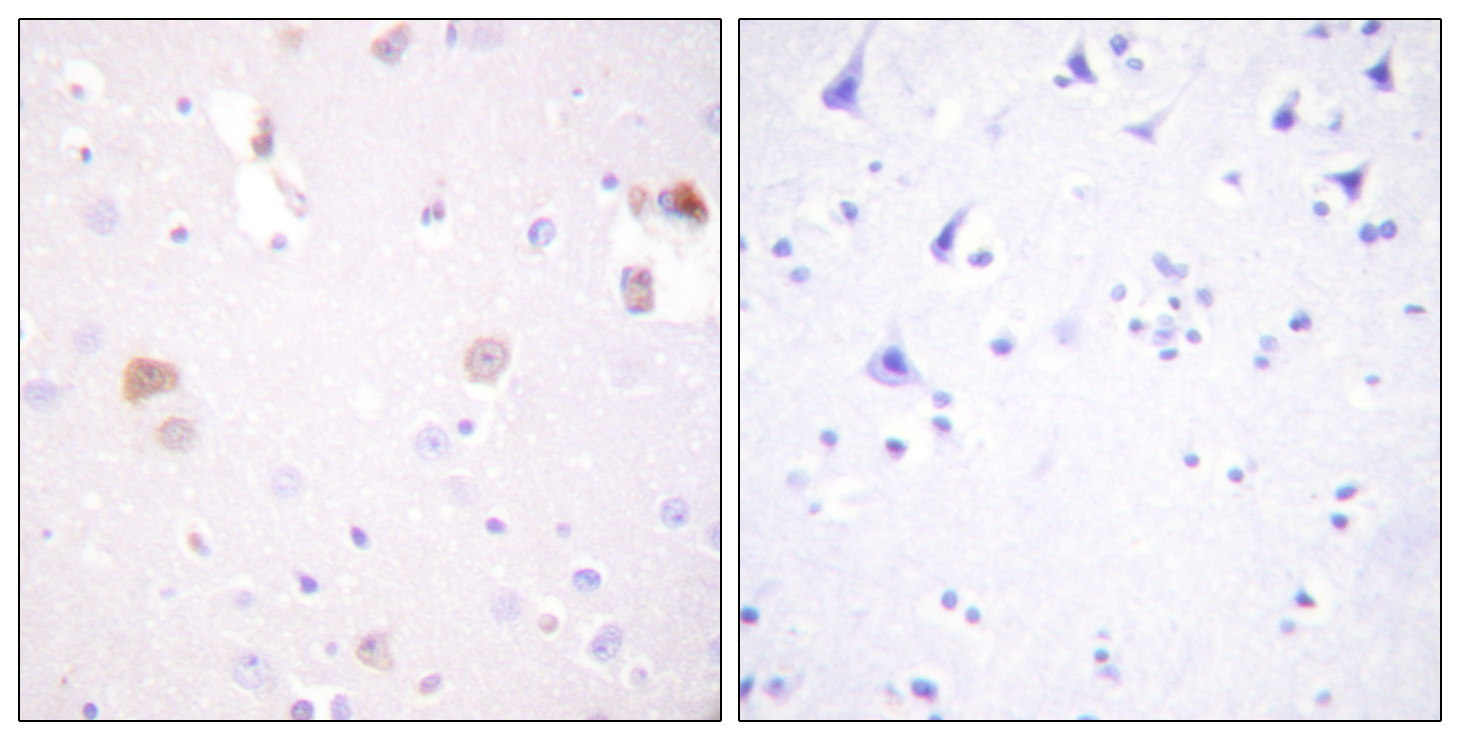
PC-PLD1 Rabbit pAb
YT3618
More→
Primary Antibodies
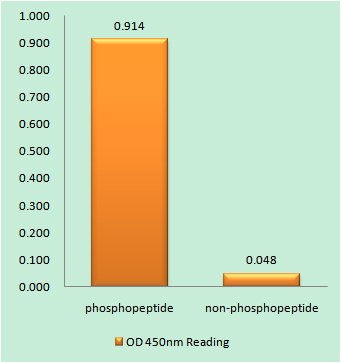
PC-PLD1 (Phospho Ser561) Rabbit pAb
YP1136
More→
Primary Antibodies
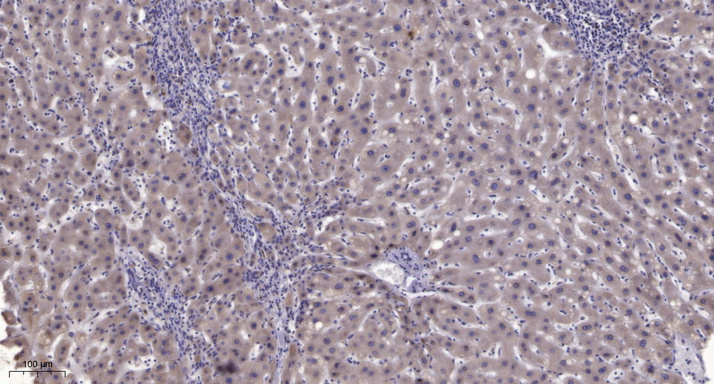
PC-PLD1 (Phospho Thr147) Rabbit pAb
YP0487
More→
Antigen&Target Information
Immunogen:
Synthesized phospho-peptide around the phosphorylation site of human PC-PLD1 (phospho Thr147)
show all
Specificity:
Phospho-PC-PLD1 (T147) Polyclonal Antibody detects endogenous levels of PC-PLD1 protein only when phosphorylated at T147.The name of modified sites may be influenced by many factors, such as species (the modified site was not originally found in human samples) and the change of protein sequence (the previous protein sequence is incomplete, and the protein sequence may be prolonged with the development of protein sequencing technology). When naming, we will use the "numbers" in historical reference to keep the sites consistent with the reports. The antibody binds to the following modification sequence (lowercase letters are modification sites):RHtFR
show all
Gene Name:
PLD1
show all
Protein Name:
Phospholipase D1
show all
Other Name:
PLD1 ;
Phospholipase D1 ;
PLD 1 ;
hPLD1 ;
Choline phosphatase 1 ;
Phosphatidylcholine-hydrolyzing phospholipase D1
Phospholipase D1 ;
PLD 1 ;
hPLD1 ;
Choline phosphatase 1 ;
Phosphatidylcholine-hydrolyzing phospholipase D1
show all
Background:
This gene encodes a phosphatidylcholine-specific phospholipase which catalyzes the hydrolysis of phosphatidylcholine in order to yield phosphatidic acid and choline. The enzyme may play a role in signal transduction and subcellular trafficking. Alternative splicing results in multiple transcript variants with both catalytic and regulatory properties. [provided by RefSeq , Sep 2011] ,
show all
Function:
Catalytic activity:A phosphatidylcholine + H (2) O = choline + a phosphatidate. ,enzyme regulation:Stimulated by phosphatidylinositol 4 ,5-bisphosphate and phosphatidylinositol 3 ,4 ,5-trisphosphate , activated by the phosphokinase C-alpha , by the ADP-ribosylation factor-1 (ARF-1) , and to a lesser extent by GTP-binding proteins: RHO A , RAC-1 and CDC42. Inhibited by oleate. ,Function:Implicated as a critical step in numerous cellular pathways , including signal transduction , membrane trafficking , and the regulation of mitosis. May be involved in the regulation of perinuclear intravesicular membrane traffic. ,online information:Phospholipase D entry ,similarity:Belongs to the phospholipase D family. ,similarity:Contains 1 PH domain. ,similarity:Contains 1 PX (phox homology) domain. ,similarity:Contains 2 PLD phosphodiesterase domains. ,subunit:Interacts with PIP5K1A. ,tissue specificity:Expressed abundantly in the pancreas and heart and at high levels in brain , placenta , spleen , uterus and small intestine. ,
show all
Cellular Localization:
Cytoplasm , perinuclear region . Endoplasmic reticulum membrane ; Lipid-anchor ; Cytoplasmic side . Golgi apparatus membrane ; Lipid-anchor ; Cytoplasmic side . Late endosome membrane ; Lipid-anchor ; Cytoplasmic side .
show all
Tissue Expression:
Research Areas:
>>Glycerophospholipid metabolism ;
>>Ether lipid metabolism ;
>>Metabolic pathways ;
>>Ras signaling pathway ;
>>cAMP signaling pathway ;
>>Sphingolipid signaling pathway ;
>>Phospholipase D signaling pathway ;
>>Endocytosis ;
>>Fc gamma R-mediated phagocytosis ;
>>Glutamatergic synapse ;
>>GnRH signaling pathway ;
>>Parathyroid hormone synthesis , secretion and action ;
>>Pathways in cancer ;
>>Chemical carcinogenesis - reactive oxygen species ;
>>Pancreatic cancer ;
>>Choline metabolism in cancer
>>Ether lipid metabolism ;
>>Metabolic pathways ;
>>Ras signaling pathway ;
>>cAMP signaling pathway ;
>>Sphingolipid signaling pathway ;
>>Phospholipase D signaling pathway ;
>>Endocytosis ;
>>Fc gamma R-mediated phagocytosis ;
>>Glutamatergic synapse ;
>>GnRH signaling pathway ;
>>Parathyroid hormone synthesis , secretion and action ;
>>Pathways in cancer ;
>>Chemical carcinogenesis - reactive oxygen species ;
>>Pancreatic cancer ;
>>Choline metabolism in cancer
show all
Signaling Pathway
Organismal Systems >> Immune system >> Fc gamma R-mediated phagocytosis
Organismal Systems >> Endocrine system >> GnRH signaling pathway
Organismal Systems >> Nervous system >> Glutamatergic synapse
Human Diseases >> Cancer: overview >> Pathways in cancer
Human Diseases >> Cancer: specific types >> Pancreatic cancer
Environmental Information Processing >> Signal transduction >> Ras signaling pathway
Environmental Information Processing >> Signal transduction >> Phospholipase D signaling pathway
Environmental Information Processing >> Signal transduction >> Sphingolipid signaling pathway
Environmental Information Processing >> Signal transduction >> cAMP signaling pathway
Reference Citation({{totalcount}})
Catalog: YP0487
Size
Price
Status
Qty.
200μL
$600.00
3 weeks
0
100μL
$340.00
3 weeks
0
50μL
$190.00
3 weeks
0
Add to cart
Collected
Collect
Recently Viewed Products
Clear allPRODUCTS
CUSTOMIZED
ABOUT US



Toggle night Mode
{{pinfoXq.title || ''}}
Catalog: {{pinfoXq.catalog || ''}}
Filter:
All
{{item.name}}
{{pinfo.title}}
-{{pinfo.catalog}}
Main Information
Target
{{pinfo.target}}
Reactivity
{{pinfo.react}}
Applications
{{pinfo.applicat}}
Conjugate/Modification
{{pinfo.coupling}}/{{pinfo.modific}}
MW (kDa)
{{pinfo.mwcalc}}
Host Species
{{pinfo.hostspec}}
Isotype
{{pinfo.isotype}}
Product {{index}}/{{pcount}}
Prev
Next
{{pvTitle}}
Scroll wheel zooms the picture
{{pvDescr}}