







Catalog: YP0399
Size
Price
Status
Qty.
200μL
$600.00
3 weeks
0
100μL
$340.00
3 weeks
0
50μL
$190.00
3 weeks
0
Add to cart


Collected
Collect
Main Information
Target
STAM2 Phospho Tyr192
Host Species
Rabbit
Reactivity
Human, Mouse
Applications
WB, IHC, IF, ELISA
MW
58kD (Observed)
Conjugate/Modification
phosphate
Detailed Information
Recommended Dilution Ratio
WB 1:500-1:2000; IHC 1:100-1:300; ELISA 1:10000; IF 1:50-200
Formulation
Liquid in PBS containing 50% glycerol, 0.5% BSA and 0.02% sodium azide.
Specificity
Phospho-STAM2 (Y192) Polyclonal Antibody detects endogenous levels of STAM2 protein only when phosphorylated at Y192.The name of modified sites may be influenced by many factors, such as species (the modified site was not originally found in human samples) and the change of protein sequence (the previous protein sequence is incomplete, and the protein sequence may be prolonged with the development of protein sequencing technology). When naming, we will use the "numbers" in historical reference to keep the sites consistent with the reports. The antibody binds to the following modification sequence (lowercase letters are modification sites):SLyPS
Purification
The antibody was affinity-purified from rabbit antiserum by affinity-chromatography using epitope-specific immunogen.
Storage
-15°C to -25°C/1 year (Do not lower than -25°C)
Concentration
1 mg/ml
MW(Observed)
58kD
Modification
phosphate
Clonality
Polyclonal
Isotype
IgG
Related Products
Primary Antibodies
STAM2 Rabbit pAb
YT4435
More→
Primary Antibodies
STAM2 (Phospho Tyr192) Rabbit pAb
YP0399
More→
Secondary Antibodies
Goat Anti Mouse IgG(H+L) (HRP)
RS0001
More→
Secondary Antibodies
Goat Anti Rabbit IgG(H+L) (HRP)
RS0002
More→
Primary Antibodies
β-actin (PTR2364) Mouse mAb
YM3028
More→
Primary Antibodies
GAPDH (PTR2304) Mouse mAb
YM3029
More→
Antigen&Target Information
Immunogen:
The antiserum was produced against synthesized peptide derived from human STAM2 around the phosphorylation site of Tyr192. AA range:161-210
show all
Specificity:
Phospho-STAM2 (Y192) Polyclonal Antibody detects endogenous levels of STAM2 protein only when phosphorylated at Y192.The name of modified sites may be influenced by many factors, such as species (the modified site was not originally found in human samples) and the change of protein sequence (the previous protein sequence is incomplete, and the protein sequence may be prolonged with the development of protein sequencing technology). When naming, we will use the "numbers" in historical reference to keep the sites consistent with the reports. The antibody binds to the following modification sequence (lowercase letters are modification sites):SLyPS
show all
Gene Name:
STAM2
show all
Protein Name:
Signal transducing adapter molecule 2
show all
Other Name:
STAM2 ;
HBP ;
Signal transducing adapter molecule 2 ;
STAM-2 ;
Hrs-binding protein
HBP ;
Signal transducing adapter molecule 2 ;
STAM-2 ;
Hrs-binding protein
show all
Background:
The protein encoded by this gene is closely related to STAM , an adaptor protein involved in the downstream signaling of cytokine receptors , both of which contain a SH3 domain and the immunoreceptor tyrosine-based activation motif (ITAM) . Similar to STAM , this protein acts downstream of JAK kinases , and is phosphorylated in response to cytokine stimulation. This protein and STAM thus are thought to exhibit compensatory effects on the signaling pathway downstream of JAK kinases upon cytokine stimulation. [provided by RefSeq , Jul 2008] ,
show all
Function:
Domain:Contains one Pro-Xaa-Val-Xaa-Leu (PxVxL) motif , which is required for interaction with chromoshadow domains. This motif requires additional residues -7 , -6 , +4 and +5 of the central Val which contact the chromoshadow domain. ,Domain:The SH3 domain mediates the interaction with USP8. ,Domain:The VHS and UIM domains mediate the interaction with ubiquitinated proteins. ,Function:Involved in intracellular signal transduction mediated by cytokines and growth factors. Upon IL-2 and GM-CSL stimulation , it plays a role in signaling leading to DNA synthesis and c-myc induction. May also play a role in T-cell development. Involved in down-regulation of receptor tyrosine kinase via multivesicular body (MVBs) when complexed with HGS (ESCRT-0 complex) . The ESCRT-0 complex binds ubiquitin and acts as sorting machinery that recognizes ubiquitinated receptors and transfers them to further sequential lysosomal sorting/trafficking processes. ,PTM:Phosphorylated in response to IL-2 , GM-CSF , EGF and PDGF. ,similarity:Belongs to the STAM family. ,similarity:Contains 1 ITAM domain. ,similarity:Contains 1 SH3 domain. ,similarity:Contains 1 UIM (ubiquitin-interacting motif) repeat. ,similarity:Contains 1 VHS domain. ,subunit:Component of the ESCRT-0 complex composed of STAM or STAM2 and HGS. Part of a complex at least composed of HSG , STAM2 and EPS15. Interacts with JAK2 and JAK3. Interacts with ubiquitinated proteins and the deubiquitinating enzyme USP8/UBPY (By similarity) . Interacts (via the via the PxVxL motif) with CBX5; the interaction is direct. Interacts with VPS37C. Interacts with ubiquitin; the interaction is direct. ,tissue specificity:Ubiquitously expressed. ,
show all
Cellular Localization:
Cytoplasm . Early endosome membrane ; Peripheral membrane protein ; Cytoplasmic side .
show all
Tissue Expression:
show all
Research Areas:
>>Endocytosis ;
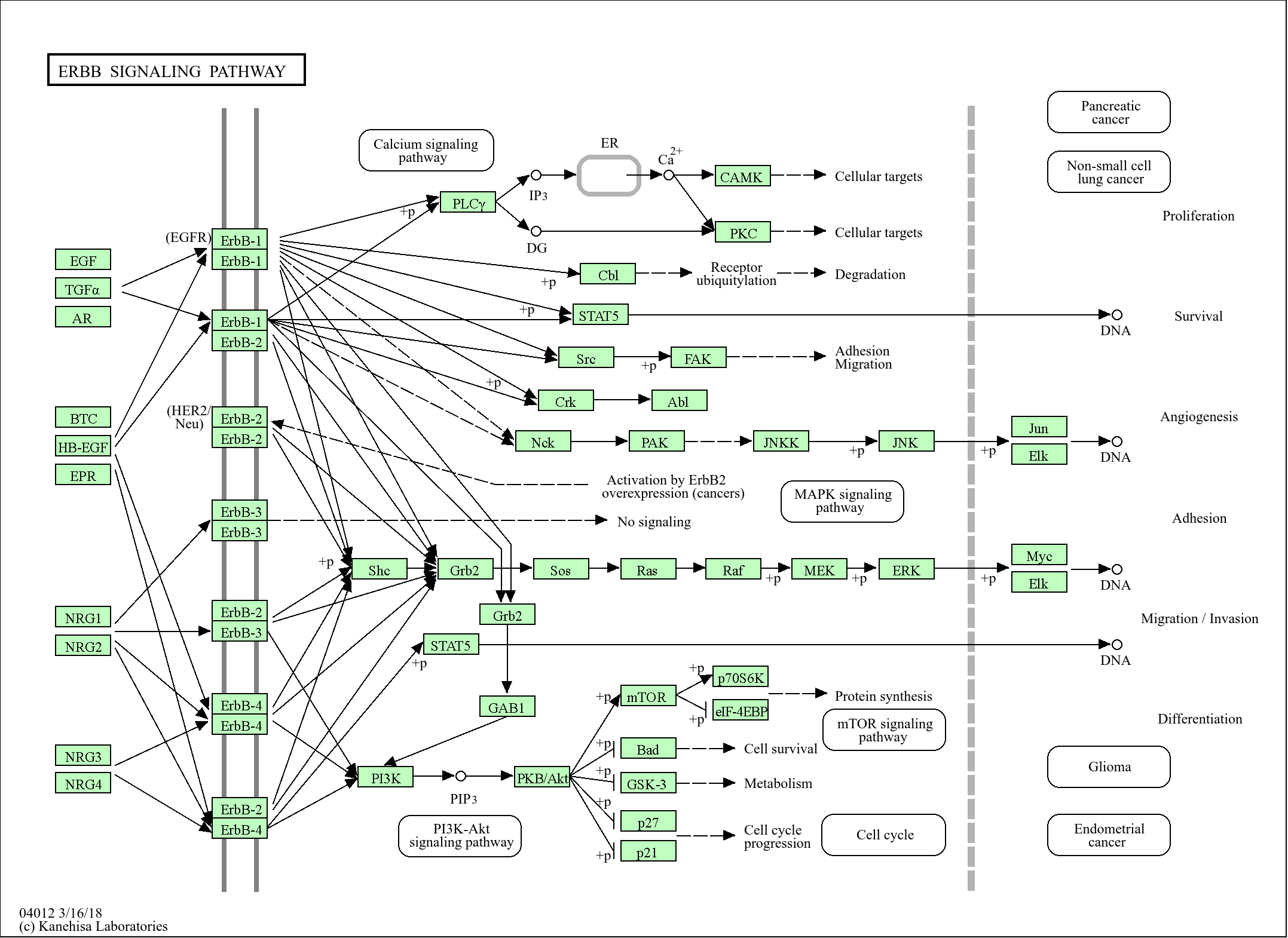
>>JAK-STAT signaling pathway
>>JAK-STAT signaling pathway
show all
Signaling Pathway
Reference Citation({{totalcount}})
Catalog: YP0399
Size
Price
Status
Qty.
200μL
$600.00
3 weeks
0
100μL
$340.00
3 weeks
0
50μL
$190.00
3 weeks
0
Add to cart
Collected
Collect
Recently Viewed Products
Clear allPRODUCTS
CUSTOMIZED
ABOUT US



Toggle night Mode
{{pinfoXq.title || ''}}
Catalog: {{pinfoXq.catalog || ''}}
Filter:
All
{{item.name}}
{{pinfo.title}}
-{{pinfo.catalog}}
Main Information
Target
{{pinfo.target}}
Reactivity
{{pinfo.react}}
Applications
{{pinfo.applicat}}
Conjugate/Modification
{{pinfo.coupling}}/{{pinfo.modific}}
MW (kDa)
{{pinfo.mwcalc}}
Host Species
{{pinfo.hostspec}}
Isotype
{{pinfo.isotype}}
Product {{index}}/{{pcount}}
Prev
Next
{{pvTitle}}
Scroll wheel zooms the picture
{{pvDescr}}