





Catalog: YP0130
Size
Price
Status
Qty.
200μL
$600.00
3 weeks
0
100μL
$340.00
3 weeks
0
50μL
$190.00
3 weeks
0
Add to cart


Collected
Collect
Main Information
Target
Histone H3 Phospho Ser28
Host Species
Rabbit
Reactivity
Human, Mouse, Rat
Applications
WB, ELISA
MW
20kD (Observed)
Conjugate/Modification
phosphate
Detailed Information
Recommended Dilution Ratio
WB 1:500-1:2000; ELISA 1:5000; Not yet tested in other applications.
Formulation
Liquid in PBS containing 50% glycerol, 0.5% BSA and 0.02% sodium azide.
Specificity
Phospho-Histone H3 (S28) Polyclonal Antibody detects endogenous levels of Histone H3 protein only when phosphorylated at S28.The name of modified sites may be influenced by many factors, such as species (the modified site was not originally found in human samples) and the change of protein sequence (the previous protein sequence is incomplete, and the protein sequence may be prolonged with the development of protein sequencing technology). When naming, we will use the "numbers" in historical reference to keep the sites consistent with the reports. The antibody binds to the following modification sequence (lowercase letters are modification sites):RKsAP
Purification
The antibody was affinity-purified from rabbit antiserum by affinity-chromatography using epitope-specific immunogen.
Storage
-15°C to -25°C/1 year (Do not lower than -25°C)
Concentration
1 mg/ml
MW(Observed)
20kD
Modification
phosphate
Clonality
Polyclonal
Isotype
IgG
Related Products
Secondary Antibodies
Goat Anti Mouse IgG(H+L) (HRP)
RS0001
More→
Secondary Antibodies
Goat Anti Rabbit IgG(H+L) (HRP)
RS0002
More→
Primary Antibodies
β-actin (PTR2364) Mouse mAb
YM3028
More→
Primary Antibodies
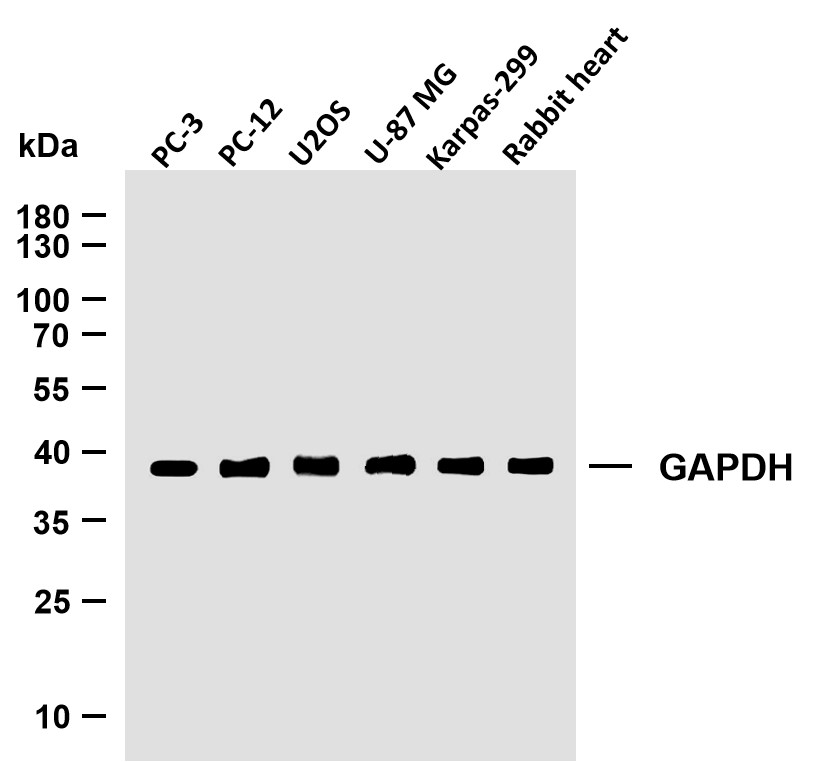
GAPDH (PTR2304) Mouse mAb
YM3029
More→
Antigen&Target Information
Immunogen:
The antiserum was produced against synthesized peptide derived from human Histone H3 around the phosphorylation site of Ser28. AA range:13-62
show all
Specificity:
Phospho-Histone H3 (S28) Polyclonal Antibody detects endogenous levels of Histone H3 protein only when phosphorylated at S28.The name of modified sites may be influenced by many factors, such as species (the modified site was not originally found in human samples) and the change of protein sequence (the previous protein sequence is incomplete, and the protein sequence may be prolonged with the development of protein sequencing technology). When naming, we will use the "numbers" in historical reference to keep the sites consistent with the reports. The antibody binds to the following modification sequence (lowercase letters are modification sites):RKsAP
show all
Gene Name:
HIST1H3A/HIST1H3B/HIST1H3C/HIST1H3D/HIST1H3E/HIST1H3F/HIST1H3G/HIST1H3H/HIST1H3I/HIST1H3J/HIST2H3A/HIST2H3C/HIST2H3D/H3F3A/H3F3B
show all
Protein Name:
Histone H3.1/Histone H3.2/Histone H3.3
show all
Other Name:
HIST1H3A ;
H3FA ;
HIST1H3B ;
H3FL ;
HIST1H3C ;
H3FC ;
HIST1H3D ;
H3FB ;
HIST1H3E ;
H3FD ;
HIST1H3F ;
H3FI ;
HIST1H3G ;
H3FH ;
HIST1H3H ;
H3FK ;
HIST1H3I ;
H3FF ;
HIST1H3J ;
H3FJ ;
Histone H3.1 ;
Histone H3/a ;
Histone H3/b ;
Histone H3/c ;
Histone H3/d ;
Histone H3
H3FA ;
HIST1H3B ;
H3FL ;
HIST1H3C ;
H3FC ;
HIST1H3D ;
H3FB ;
HIST1H3E ;
H3FD ;
HIST1H3F ;
H3FI ;
HIST1H3G ;
H3FH ;
HIST1H3H ;
H3FK ;
HIST1H3I ;
H3FF ;
HIST1H3J ;
H3FJ ;
Histone H3.1 ;
Histone H3/a ;
Histone H3/b ;
Histone H3/c ;
Histone H3/d ;
Histone H3
show all
Database Link:
Background:
Histones are basic nuclear proteins that are responsible for the nucleosome structure of the chromosomal fiber in eukaryotes. This structure consists of approximately 146 bp of DNA wrapped around a nucleosome , an octamer composed of pairs of each of the four core histones (H2A , H2B , H3 , and H4) . The chromatin fiber is further compacted through the interaction of a linker histone , H1 , with the DNA between the nucleosomes to form higher order chromatin structures. This gene is intronless and encodes a replication-dependent histone that is a member of the histone H3 family. Transcripts from this gene lack polyA tails; instead , they contain a palindromic termination element. This gene is found in the large histone gene cluster on chromosome 6p22-p21.3. [provided by RefSeq , Aug 2015] ,
show all
Function:
Caution:Was originally (PubMed:2587222) thought to originate from mouse. ,developmental stage:Expressed during S phase , then expression strongly decreases as cell division slows down during the process of differentiation. ,Function:Core component of nucleosome. Nucleosomes wrap and compact DNA into chromatin , limiting DNA accessibility to the cellular machineries which require DNA as a template. Histones thereby play a central role in transcription regulation , DNA repair , DNA replication and chromosomal stability. DNA accessibility is regulated via a complex set of post-translational modifications of histones , also called histone code , and nucleosome remodeling. ,mass spectrometry:Monoisotopic with N-acetylserine PubMed:16457589 ,miscellaneous:This histone is only present in mammals and is enriched in acetylation of Lys-15 and dimethylation of Lys-10 (H3K9me2) . ,PTM:Acetylation is generally linked to gene activation. Acetylation on Lys-10 (H3K9ac) impairs methylation at Arg-9 (H3R8sme2) . Acetylation on Lys-19 (H3K18ac) and Lys-24 (H3K24ac) favors methylation at Arg-18 (H3R17me) . ,PTM:Asymmetric dimethylation at Arg-18 (H3R17me2a) by CARM1 is linked to gene activation. Symmetric dimethylation at Arg-9 (H3R8sme2) by PRMT5 is linked to gene repression. Asymmetric dimethylation at Arg-3 (H3R2me2a) by PRMT6 is linked to gene repression and is mutually exclusive with H3 Lys-5 methylation (H3K4me2 and H3K4me3) . H3R2me2a is present at the 3' of genes regardless of their transcription state and is enriched on inactive promoters , while it is absent on active promoters. ,PTM:Citrullination at Arg-9 (H3R8ci) and/or Arg-18 (H3R17ci) by PADI4 impairs methylation and represses transcription. ,PTM:Deiminated on Arg-4 in granulocytes upon calcium entry. ,PTM:Methylation at Lys-5 (H3K4me) , Lys-37 (H3K36me) and Lys-80 (H3K79me) are linked to gene activation. Methylation at Lys-5 (H3K4me) facilitates subsequent acetylation of H3 and H4. Methylation at Lys-80 (H3K79me) is associated with DNA double-strand break (DSB) responses and is a specific target for TP53BP1. Methylation at Lys-10 (H3K9me) and Lys-28 (H3K27me) are linked to gene repression. Methylation at Lys-10 (H3K9me) is a specific target for HP1 proteins (CBX1 , CBX3 and CBX5) and prevents subsequent phosphorylation at Ser-11 (H3S10ph) and acetylation of H3 and H4. Methylation at Lys-5 (H3K4me) and Lys-80 (H3K79me) require preliminary monoubiquitination of H2B at 'Lys-120'. Methylation at Lys-10 (H3K9me) and Lys-28 (H3K27me) are enriched in inactive X chromosome chromatin. ,PTM:Monoubiquitination of Lys-120 by RING1 and RNF2/RING2 complex gives a specific tag for epigenetic transcriptional repression and participates in X chromosome inactivation of female mammals. It is involved in the initiation of both imprinted and random X inactivation. Ubiquitinated H2A is enriched in inactive X chromosome chromatin. Ubiquitination of H2A functions downstream of methylation of 'Lys-27' of histone H3. Monoubiquitination of Lys-120 by RNF2/RING2 can also be induced by ultraviolet and may be involved in DNA repair. Following DNA double-strand breaks (DSBs) , it is ubiquitinated through 'Lys-63' linkage of ubiquitin moieties by the E2 ligase UBE2N and the E3 ligases RNF8 and RNF168 , leading to the recruitment of repair proteins to sites of DNA damage. Monoubiquitination and ionizing radiation-induced 'Lys-63'-linked ubiquitination are distinct events. ,PTM:Phosphorylated at Thr-4 (H3T3ph) by GSG2/haspin during prophase and dephosphorylated during anaphase. At centromeres , specifically phosphorylated at Thr-12 (H3T11ph) from prophase to early anaphase , probably by DAPK3 (By similarity) . Phosphorylation at Ser-11 (H3S10ph) by AURKB is crucial for chromosome condensation and cell-cycle progression during mitosis and meiosis. In addition phosphorylation at Ser-11 (H3S10ph) by RPS6KA4 and RPS6KA5 is important during interphase because it enables the transcription of genes following external stimulation , like mitogens , stress , growth factors or UV irradiation and result in the activation of genes , such as c-fos and c-jun. Phosphorylation at Ser-11 , which is linked to gene activation , prevents methylation at Lys-10 (H3K9me) but facilitates acetylation of H3 and H4. Phosphorylation at Ser-11 (H3S10ph) by AURKB mediates the dissociation of HP1 proteins (CBX1 , CBX3 and CBX5) from heterochromatin. Phosphorylation at Ser-11 (H3S10ph) is also an essential regulatory mechanism for neoplastic cell transformation. Phosphorylated at Ser-29 (H3S28ph) by MLTK isoform 1 , RPS6KA5 or AURKB during mitosis or upon ultraviolet B irradiation. ,PTM:Phosphorylated at Thr-4 (H3T3ph) by GSG2/haspin during prophase and dephosphorylated during anaphase. At centromeres , specifically phosphorylated at Thr-12 (H3T11ph) from prophase to early anaphase , probably by DAPK3. Phosphorylation at Ser-11 (H3S10ph) by AURKB is crucial for chromosome condensation and cell-cycle progression during mitosis and meiosis. In addition phosphorylation at Ser-11 (H3S10ph) by RPS6KA4 and RPS6KA5 is important during interphase because it enables the transcription of genes following external stimulation , like mitogens , stress , growth factors or UV irradiation and result in the activation of genes , such as c-fos and c-jun. Phosphorylation at Ser-11 (H3S10ph) , which is linked to gene activation , prevents methylation at Lys-10 (H3K9me) but facilitates acetylation of H3 and H4. Phosphorylation at Ser-11 (H3S10ph) by AURKB mediates the dissociation of HP1 proteins (CBX1 , CBX3 and CBX5) from heterochromatin. Phosphorylation at Ser-11 (H3S10ph) is also an essential regulatory mechanism for neoplastic cell transformation. Phosphorylated at Ser-29 by MLTK isoform 1 , RPS6KA5 or AURKB during mitosis or upon ultraviolet B irradiation. ,PTM:Phosphorylation on Ser-2 is enhanced during mitosis. Phosphorylation on Ser-2 by RPS6KA5/MSK1 directly represses transcription. Acetylation of H3 inhibits Ser-2 phosphorylation by RPS6KA5/MSK1. ,PTM:Symmetric dimethylation on Arg-4 by the PRDM1/PRMT5 complex may play a crucial role in the germ-cell lineage. ,PTM:The chromatin-associated form is phosphorylated on Thr-121 during mitosis. ,PTM:Ubiquitinated by the CUL4-DDB-RBX1 complex in response to ultraviolet irradiation. This may weaken the interaction between histones and DNA and facilitate DNA accessibility to repair proteins. ,similarity:Belongs to the histone H2A family. ,similarity:Belongs to the histone H3 family. ,subunit:The nucleosome is a histone octamer containing two molecules each of H2A , H2B , H3 and H4 assembled in one H3-H4 heterotetramer and two H2A-H2B heterodimers. The octamer wraps approximately 147 bp of DNA. ,subunit:The nucleosome is a histone octamer containing two molecules each of H2A , H2B , H3 and H4 assembled in one H3-H4 heterotetramer and two H2A-H2B heterodimers. The octamer wraps approximately 147 bp of DNA. During nucleosome assembly the chaperone ASF1A interacts with the histone H3-H4 heterodimer. ,
show all
Cellular Localization:
Nucleus. Chromosome.
show all
Tissue Expression:
Research Areas:
>>Neutrophil extracellular trap formation ;
>>Alcoholism ;
>>Shigellosis ;
>>Transcriptional misregulation in cancer ;
>>Systemic lupus erythematosus
>>Alcoholism ;
>>Shigellosis ;
>>Transcriptional misregulation in cancer ;
>>Systemic lupus erythematosus
show all
Signaling Pathway
Reference Citation({{totalcount}})
Catalog: YP0130
Size
Price
Status
Qty.
200μL
$600.00
3 weeks
0
100μL
$340.00
3 weeks
0
50μL
$190.00
3 weeks
0
Add to cart
Collected
Collect
Recently Viewed Products
Clear allPRODUCTS
CUSTOMIZED
ABOUT US



Toggle night Mode
{{pinfoXq.title || ''}}
Catalog: {{pinfoXq.catalog || ''}}
Filter:
All
{{item.name}}
{{pinfo.title}}
-{{pinfo.catalog}}
Main Information
Target
{{pinfo.target}}
Reactivity
{{pinfo.react}}
Applications
{{pinfo.applicat}}
Conjugate/Modification
{{pinfo.coupling}}/{{pinfo.modific}}
MW (kDa)
{{pinfo.mwcalc}}
Host Species
{{pinfo.hostspec}}
Isotype
{{pinfo.isotype}}
Product {{index}}/{{pcount}}
Prev
Next
{{pvTitle}}
Scroll wheel zooms the picture
{{pvDescr}}