





Catalog: YP0117
Size
Price
Status
Qty.
200μL
$600.00
3 weeks
0
100μL
$340.00
3 weeks
0
50μL
$190.00
3 weeks
0
Add to cart


Collected
Collect
Main Information
Target
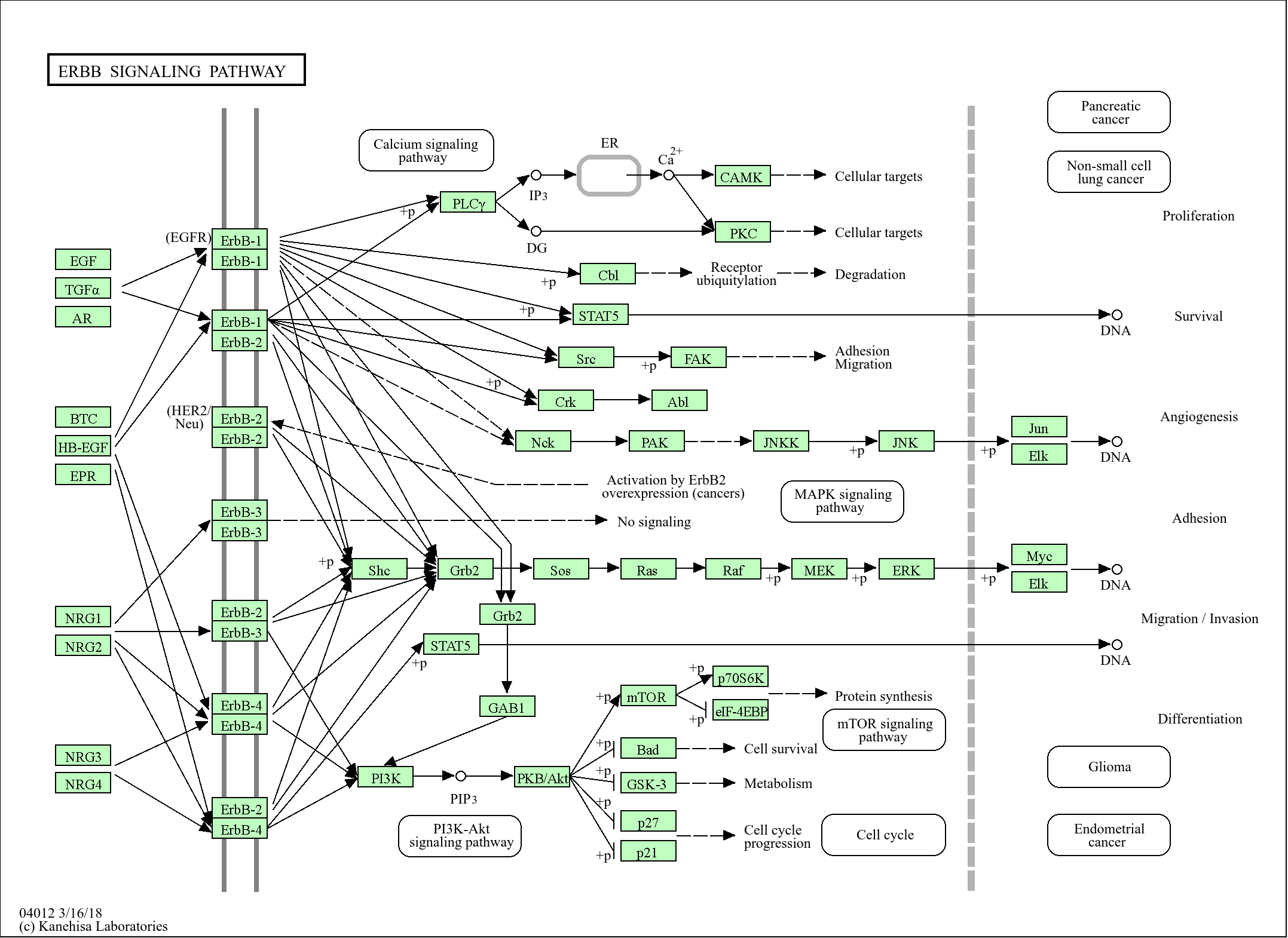
G3BP1 Phospho Ser232
Host Species
Rabbit
Reactivity
Human, Mouse
Applications
WB, IHC, IF, ELISA
MW
60kD (Observed)
Conjugate/Modification
phosphate
Detailed Information
Recommended Dilution Ratio
WB 1:500-1:2000; IHC 1:100-1:300; ELISA 1:5000; IF 1:50-200
Formulation
Liquid in PBS containing 50% glycerol, 0.5% BSA and 0.02% sodium azide.
Specificity
Phospho-G3BP1 (S232) Polyclonal Antibody detects endogenous levels of G3BP1 protein only when phosphorylated at S232.The name of modified sites may be influenced by many factors, such as species (the modified site was not originally found in human samples) and the change of protein sequence (the previous protein sequence is incomplete, and the protein sequence may be prolonged with the development of protein sequencing technology). When naming, we will use the "numbers" in historical reference to keep the sites consistent with the reports. The antibody binds to the following modification sequence (lowercase letters are modification sites):SSsPA
Purification
The antibody was affinity-purified from rabbit antiserum by affinity-chromatography using epitope-specific immunogen.
Storage
-15°C to -25°C/1 year (Do not lower than -25°C)
Concentration
1 mg/ml
MW(Observed)
60kD
Modification
phosphate
Clonality
Polyclonal
Isotype
IgG
Related Products
Secondary Antibodies
Goat Anti Mouse IgG(H+L) (HRP)
RS0001
More→
Secondary Antibodies
Goat Anti Rabbit IgG(H+L) (HRP)
RS0002
More→
Primary Antibodies
β-actin (PTR2364) Mouse mAb
YM3028
More→
Primary Antibodies
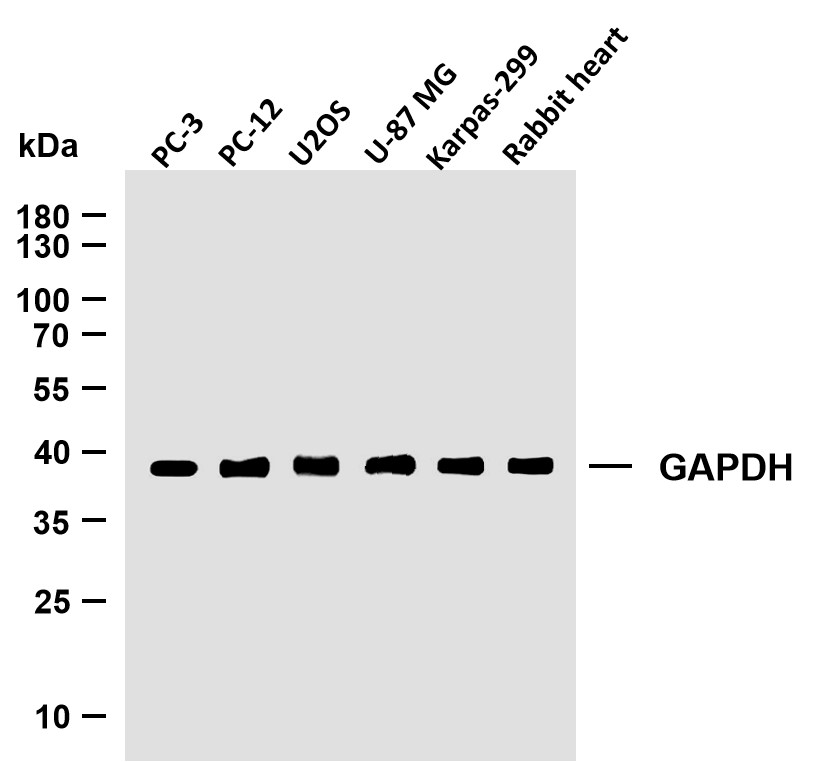
GAPDH (PTR2304) Mouse mAb
YM3029
More→
Antigen&Target Information
Immunogen:
The antiserum was produced against synthesized peptide derived from human G3BP-1 around the phosphorylation site of Ser232. AA range:216-248
show all
Specificity:
Phospho-G3BP1 (S232) Polyclonal Antibody detects endogenous levels of G3BP1 protein only when phosphorylated at S232.The name of modified sites may be influenced by many factors, such as species (the modified site was not originally found in human samples) and the change of protein sequence (the previous protein sequence is incomplete, and the protein sequence may be prolonged with the development of protein sequencing technology). When naming, we will use the "numbers" in historical reference to keep the sites consistent with the reports. The antibody binds to the following modification sequence (lowercase letters are modification sites):SSsPA
show all
Gene Name:
G3BP1 G3BP
show all
Protein Name:
Ras GTPase-activating protein-binding protein 1
show all
Other Name:
G3BP1 ;
G3BP ;
Ras GTPase-activating protein-binding protein 1 ;
G3BP-1 ;
ATP-dependent DNA helicase VIII ;
hDH VIII ;
GAP SH3 domain-binding protein 1
G3BP ;
Ras GTPase-activating protein-binding protein 1 ;
G3BP-1 ;
ATP-dependent DNA helicase VIII ;
hDH VIII ;
GAP SH3 domain-binding protein 1
show all
Background:
This gene encodes one of the DNA-unwinding enzymes which prefers partially unwound 3'-tailed substrates and can also unwind partial RNA/DNA and RNA/RNA duplexes in an ATP-dependent fashion. This enzyme is a member of the heterogeneous nuclear RNA-binding proteins and is also an element of the Ras signal transduction pathway. It binds specifically to the Ras-GTPase-activating protein by associating with its SH3 domain. Several alternatively spliced transcript variants of this gene have been described , but the full-length nature of some of these variants has not been determined. [provided by RefSeq , Jul 2008] ,
show all
Function:
cofactor:Magnesium. Required for helicase activity. ,Domain:The NTF2 domain mediates multimerization. ,Function:May be a regulated effector of stress granule assembly. Phosphorylation-dependent sequence-specific endoribonuclease in vitro. Cleaves exclusively between cytosine and adenine and cleaves MYC mRNA preferentially at the 3'-UTR. ATP- and magnesium-dependent helicase. Unwinds preferentially partial DNA and RNA duplexes having a 17 bp annealed portion and either a hanging 3' tail or hanging tails at both 5'- and 3'-ends. Unwinds DNA/DNA , RNA/DNA , and RNA/RNA substrates with comparable efficiency. Acts unidirectionally by moving in the 5' to 3' direction along the bound single-stranded DNA. ,PTM:Arg-435 is dimethylated , probably to asymmetric dimethylarginine. ,PTM:Phosphorylated exclusively on serine residues. Hyperphosphorylated in quiescent fibroblasts. Hypophosphorylation leads to a decrease in endoribonuclease activity (By similarity) . RASA1-dependent phosphorylation of Ser-149 induces a conformational change that prevents self-association. Dephosphorylation after HRAS activation is required for stress granule assembly. Ser-149 phosphorylation induces partial nuclear localization. ,similarity:Contains 1 NTF2 domain. ,similarity:Contains 1 RRM (RNA recognition motif) domain. ,subcellular location:Cytoplasmic in proliferating cells , can be recruited to the plasma membrane in exponentially growing cells (By similarity) . Cytosolic and partially nuclear in resting cells. Recruited to stress granules (SGs) upon either arsenite or high temperature treatment. Recruitment to SGs is influenced by HRAS. ,subunit:Binds to the SH3 domain of Ras GTPase-activating protein (RASA1) in proliferating cells. No interaction in quiescent cells Component of a TAU mRNP complex , at least composed of IGF2BP1 , ELAVL4 and G3BP (By similarity) . Interacts with USP10 , and may regulate it. Forms homodimers and oligomers. ,tissue specificity:Ubiquitous. ,
show all
Cellular Localization:
Cytoplasm , cytosol . Perikaryon . Cytoplasm , Stress granule . Nucleus . Cytoplasmic in proliferating cells (PubMed:11604510) . Cytosolic and partially nuclear in resting cells (PubMed:11604510) . Recruited to stress granules in response to arsenite treatment (PubMed:12642610 , PubMed:20180778) . The unphosphorylated form is recruited to stress granules (PubMed:12642610) . HRAS signaling contributes to this process by regulating G3BP dephosphorylation (PubMed:12642610) . .
show all
Tissue Expression:
show all
Signaling Pathway
Reference Citation({{totalcount}})
Catalog: YP0117
Size
Price
Status
Qty.
200μL
$600.00
3 weeks
0
100μL
$340.00
3 weeks
0
50μL
$190.00
3 weeks
0
Add to cart
Collected
Collect
Recently Viewed Products
Clear allPRODUCTS
CUSTOMIZED
ABOUT US



Toggle night Mode
{{pinfoXq.title || ''}}
Catalog: {{pinfoXq.catalog || ''}}
Filter:
All
{{item.name}}
{{pinfo.title}}
-{{pinfo.catalog}}
Main Information
Target
{{pinfo.target}}
Reactivity
{{pinfo.react}}
Applications
{{pinfo.applicat}}
Conjugate/Modification
{{pinfo.coupling}}/{{pinfo.modific}}
MW (kDa)
{{pinfo.mwcalc}}
Host Species
{{pinfo.hostspec}}
Isotype
{{pinfo.isotype}}
Product {{index}}/{{pcount}}
Prev
Next
{{pvTitle}}
Scroll wheel zooms the picture
{{pvDescr}}