

O

Cyclin D1 (Phospho Thr286) Rabbit pAb

-YP0297

Catalog: YP0297
Size
Price
Status
Qty.
200μL
$600.00
In stock

0

100μL
$340.00
In stock

0

50μL
$190.00
In stock

0

Add to cart

Collected

Collect

Customized Service
Main Information
Target

Cyclin D1 Phospho Thr286

Host Species

Rabbit

Reactivity

Human, Mouse, Rat

Applications

WB, IHC, IF, ELISA

MW

33kD (Observed)

Conjugate/Modification


Phospho

Detailed Information
Recommended Dilution Ratio
WB 1:500-1:2000; IHC 1:100-1:300; ELISA 1:10000; IF 1:50-200
Formulation
Liquid in PBS containing 50% glycerol, 0.5% BSA and 0.02% sodium azide.
Specificity
Phospho-Cyclin D1 (T286) Polyclonal Antibody detects endogenous levels of Cyclin D1 protein only when phosphorylated at T286.The name of modified sites may be influenced by many factors, such as species (the modified site was not originally found in human samples) and the change of protein sequence (the previous protein sequence is incomplete, and the protein sequence may be prolonged with the development of protein sequencing technology). When naming, we will use the "numbers" in historical reference to keep the sites consistent with the reports. The antibody binds to the following modification sequence (lowercase letters are modification sites):ACtPT
Purification
The antibody was affinity-purified from rabbit antiserum by affinity-chromatography using epitope-specific immunogen.
Storage
-15°C to -25°C/1 year(Do not lower than -25°C)
Concentration
1 mg/ml
MW(Observed)
33kD
Modification
Phospho
Clonality
Polyclonal
Isotype
IgG
Related Products
Secondary Antibodies
Goat Anti Mouse IgG(H+L) (HRP)
RS0001

More→

Secondary Antibodies
Goat Anti Rabbit IgG(H+L) (HRP)
RS0002

More→

Primary Antibodies
β-actin (PTR2364) Mouse mAb
YM3028

More→

Primary Antibodies
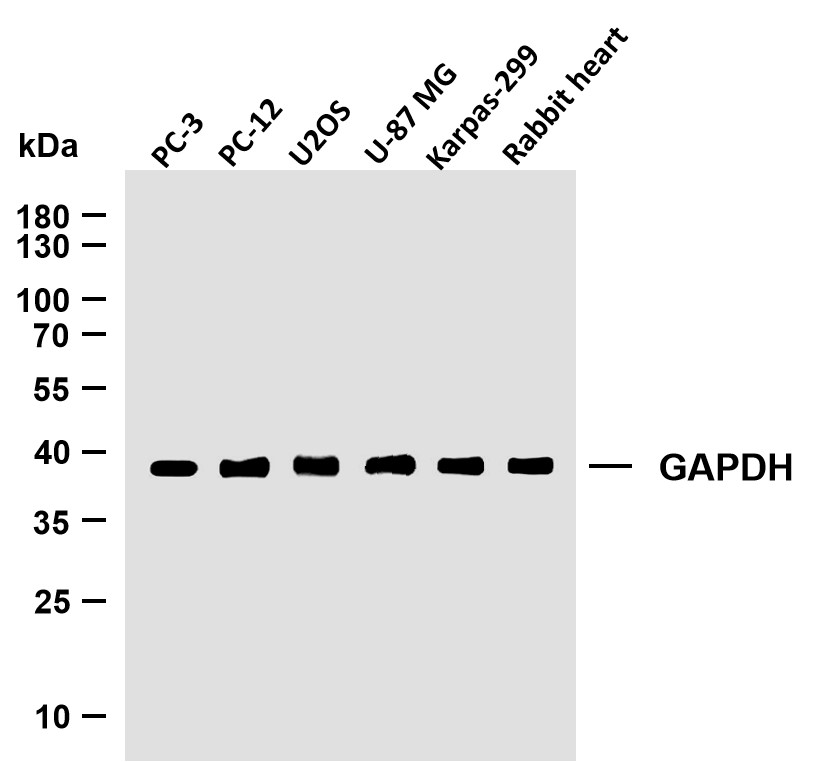
GAPDH (PTR2304) Mouse mAb
YM3029

More→

Antigen&Target Information
Immunogen:
The antiserum was produced against synthesized peptide derived from human Cyclin D1 around the phosphorylation site of Thr286. AA range:246-295
show all
Specificity:
Phospho-Cyclin D1 (T286) Polyclonal Antibody detects endogenous levels of Cyclin D1 protein only when phosphorylated at T286.The name of modified sites may be influenced by many factors, such as species (the modified site was not originally found in human samples) and the change of protein sequence (the previous protein sequence is incomplete, and the protein sequence may be prolonged with the development of protein sequencing technology). When naming, we will use the "numbers" in historical reference to keep the sites consistent with the reports. The antibody binds to the following modification sequence (lowercase letters are modification sites):ACtPT
show all
Gene Name:
CCND1
show all
Protein Name:
G1/S-specific cyclin-D1
show all
Other Name:
CCND1 ;
BCL1 ;
PRAD1 ;
G1/S-specific cyclin-D1 ;
B-cell lymphoma 1 protein ;
BCL-1 ;
BCL-1 oncogene ;
PRAD1 oncogene
show all
Database Link:
Organism Gene ID SwissProt
Human 595; P24385;
Mouse 12443; P25322;
Rat 58919; P39948;
Background:
The protein encoded by this gene belongs to the highly conserved cyclin family, whose members are characterized by a dramatic periodicity in protein abundance throughout the cell cycle. Cyclins function as regulators of CDK kinases. Different cyclins exhibit distinct expression and degradation patterns which contribute to the temporal coordination of each mitotic event. This cyclin forms a complex with and functions as a regulatory subunit of CDK4 or CDK6, whose activity is required for cell cycle G1/S transition. This protein has been shown to interact with tumor suppressor protein Rb and the expression of this gene is regulated positively by Rb. Mutations, amplification and overexpression of this gene, which alters cell cycle progression, are observed frequently in a variety of tumors and may contribute to tumorigenesis. [provided by RefSeq, Jul 2008],
show all
Function:
Disease:A chromosomal aberration involving CCND1 may be a cause of B-lymphocytic malignancy, particularly mantle-cell lymphoma (MCL). Translocation t(11;14)(q13;q32) with immunoglobulin gene regions. Activation of CCND1 may be oncogenic by directly altering progression through the cell cycle.,Disease:A chromosomal aberration involving CCND1 may be a cause of multiple myeloma [MIM:254500]. Translocation t(11;14)(q13;q32) with the IgH locus.,Disease:A chromosomal aberration involving CCND1 may be a cause of parathyroid adenomas [MIM:168461]. Translocation t(11;11)(q13;p15) with the parathyroid hormone (PTH) enhancer.,Function:Essential for the control of the cell cycle at the G1/S (start) transition.,online information:The Singapore human mutation and polymorphism database,PTM:Following DNA damage it is ubiquitinated by some SCF (SKP1-cullin-F-box) protein ligase complex containing FBXO31. Ubiquitination leads to its degradation and G1 arrest.,PTM:Phosphorylation at Thr-286 by MAP kinases is required for ubiquitination and degradation following DNA damage. It probably plays an essential role for recognition by the FBXO31 component of SCF (SKP1-cullin-F-box) protein ligase complex.,similarity:Belongs to the cyclin family.,similarity:Belongs to the cyclin family. Cyclin D subfamily.,subunit:Interacts with the CDK4 and CDK6 protein kinases to form a serine/threonine kinase holoenzyme complex. The cyclin subunit imparts substrate specificity to the complex.,
show all
Cellular Localization:
Nucleus . Cytoplasm . Nucleus membrane . Cyclin D-CDK4 complexes accumulate at the nuclear membrane and are then translocated to the nucleus through interaction with KIP/CIP family members. .
show all
Tissue Expression:
Research Areas:
>>Endocrine resistance ;
>>FoxO signaling pathway ;
>>Cell cycle ;
>>p53 signaling pathway ;
>>PI3K-Akt signaling pathway ;
>>AMPK signaling pathway ;
>>Cellular senescence ;
>>Wnt signaling pathway ;
>>Hedgehog signaling pathway ;
>>Apelin signaling pathway ;
>>Hippo signaling pathway ;
>>Focal adhesion ;
>>Tight junction ;
>>JAK-STAT signaling pathway ;
>>Prolactin signaling pathway ;
>>Thyroid hormone signaling pathway ;
>>Oxytocin signaling pathway ;
>>AGE-RAGE signaling pathway in diabetic complications ;
>>Cushing syndrome ;
>>Alcoholic liver disease ;
>>Hepatitis C ;
>>Measles ;
>>Human cytomegalovirus infection ;
>>Human papillomavirus infection ;
>>Human T-cell leukemia virus 1 infection ;
>>Kaposi sarcoma-associated herpesvirus infection ;
>>Epstein-Barr virus infection ;
>>Pathways in cancer ;
>>Viral carcinogenesis ;
>>Proteoglycans in cancer ;
>>MicroRNAs in cancer ;
>>Chemical carcinogenesis - receptor activation ;
>>Colorectal cancer ;
>>Pancreatic cancer ;
>>Endometrial cancer ;
>>Glioma ;
>>Prostate cancer ;
>>Thyroid cancer ;
>>Melanoma ;
>>Bladder cancer ;
>>Chronic myeloid leukemia ;
>>Acute myeloid leukemia ;
>>Small cell lung cancer ;
>>Non-small cell lung cancer ;
>>Breast cancer ;
>>Hepatocellular carcinoma ;
>>Gastric cancer ;
>>Viral myocarditis
show all
Signaling Pathway
Cellular Processes >> Cell growth and death >> Cell cycle Cellular Processes >> Cell growth and death >> p53 signaling pathway Cellular Processes >> Cell growth and death >> Cellular senescence Cellular Processes >> Cellular community - eukaryotes >> Focal adhesion Cellular Processes >> Cellular community - eukaryotes >> Tight junction Organismal Systems >> Endocrine system >> Prolactin signaling pathway Organismal Systems >> Endocrine system >> Oxytocin signaling pathway Organismal Systems >> Endocrine system >> Thyroid hormone signaling pathway Human Diseases >> Cancer: overview >> Pathways in cancer Human Diseases >> Cancer: overview >> MicroRNAs in cancer Human Diseases >> Cancer: specific types >> Colorectal cancer Human Diseases >> Cancer: specific types >> Pancreatic cancer Human Diseases >> Cancer: specific types >> Hepatocellular carcinoma Human Diseases >> Cancer: specific types >> Gastric cancer Human Diseases >> Cancer: specific types >> Glioma Human Diseases >> Cancer: specific types >> Thyroid cancer Human Diseases >> Cancer: specific types >> Acute myeloid leukemia Human Diseases >> Cancer: specific types >> Chronic myeloid leukemia Human Diseases >> Cancer: specific types >> Melanoma Human Diseases >> Cancer: specific types >> Bladder cancer Human Diseases >> Cancer: specific types >> Prostate cancer Human Diseases >> Cancer: specific types >> Endometrial cancer Human Diseases >> Cancer: specific types >> Breast cancer Human Diseases >> Cancer: specific types >> Small cell lung cancer Human Diseases >> Cancer: specific types >> Non-small cell lung cancer Environmental Information Processing >> Signal transduction >> Wnt signaling pathway Environmental Information Processing >> Signal transduction >> Hedgehog signaling pathway Environmental Information Processing >> Signal transduction >> Hippo signaling pathway Environmental Information Processing >> Signal transduction >> Apelin signaling pathway Environmental Information Processing >> Signal transduction >> JAK-STAT signaling pathway Environmental Information Processing >> Signal transduction >> FoxO signaling pathway Environmental Information Processing >> Signal transduction >> PI3K-Akt signaling pathway Environmental Information Processing >> Signal transduction >> AMPK signaling pathway
Catalog: YP0297
Size
Price
Status
Qty.
200μL
$600.00
In stock

0

100μL
$340.00
In stock

0

50μL
$190.00
In stock

0

Add to cart

Collected

Collect

Customized Service

Toggle night Mode

{{pinfoXq.title || ''}}

Catalog: {{pinfoXq.catalog || ''}}
Filter:

All

{{item.name}}

{{pinfo.title}}
-{{pinfo.catalog}}

Filter:

{{item.descr}}

Main Information
Target
{{pinfo.target}}
Reactivity
{{pinfo.react}}
Applications
{{pinfo.applicat}}
Conjugate/Modification
{{pinfo.coupling}}/{{pinfo.modific}}
MW (kDa)
{{pinfo.mwcalc}}
Host Species
{{pinfo.hostspec}}
Isotype
{{pinfo.isotype}}
Learn more
Product {{index}}/{{pcount}}
Prev
Next

{{pvTitle}}

Scroll wheel zooms the picture
{{pvDescr}}