






Catalog: YP1603
Size
Price
Status
Qty.
200μL
$600.00
3 weeks
0
100μL
$340.00
3 weeks
0
50μL
$190.00
3 weeks
0
Add to cart


Collected
Collect
Main Information
Target
MYLK Phospho Tyr471
Host Species
Rabbit
Reactivity
Human, Mouse, Rat
Applications
WB, IHC
MW
200kD (Observed)
Conjugate/Modification
phosphate
Detailed Information
Recommended Dilution Ratio
WB 1:500-2000; IHC 1:50-300
Formulation
Liquid in PBS containing 50% glycerol, 0.5% BSA and 0.02% sodium azide.
Specificity
This antibody detects endogenous levels of Human,Mouse,Rat MLCK (Phospho Tyr471).The name of modified sites may be influenced by many factors, such as species (the modified site was not originally found in human samples) and the change of protein sequence (the previous protein sequence is incomplete, and the protein sequence may be prolonged with the development of protein sequencing technology). When naming, we will use the "numbers" in historical reference to keep the sites consistent with the reports. The antibody binds to the following modification sequence (lowercase letters are modification sites):GSHyL
Purification
The antibody was affinity-purified from rabbit serum by affinity-chromatography using specific immunogen.
Storage
-15°C to -25°C/1 year (Do not lower than -25°C)
Concentration
1 mg/ml
MW(Observed)
200kD
Modification
phosphate
Clonality
Polyclonal
Isotype
IgG
Related Products
Secondary Antibodies
Goat Anti Mouse IgG(H+L) (HRP)
RS0001
More→
Secondary Antibodies
Goat Anti Rabbit IgG(H+L) (HRP)
RS0002
More→
Primary Antibodies
β-actin (PTR2364) Mouse mAb
YM3028
More→
Antigen&Target Information
Immunogen:
Synthesized peptide derived from human MLCK (Phospho Tyr471)
show all
Specificity:
This antibody detects endogenous levels of Human,Mouse,Rat MLCK (Phospho Tyr471).The name of modified sites may be influenced by many factors, such as species (the modified site was not originally found in human samples) and the change of protein sequence (the previous protein sequence is incomplete, and the protein sequence may be prolonged with the development of protein sequencing technology). When naming, we will use the "numbers" in historical reference to keep the sites consistent with the reports. The antibody binds to the following modification sequence (lowercase letters are modification sites):GSHyL
show all
Gene Name:
MYLK MLCK MLCK1 MYLK1
show all
Protein Name:
MLCK (Phospho Tyr471)
show all
Other Name:
MYLK ;
MLCK ;
MLCK1 ;
MYLK1 ;
Myosin light chain kinase,smooth muscle ;
MLCK ;
smMLCK ;
Kinase-related protein ;
KRP ;
Telokin ;
[Cleaved into: Myosin light chain kinase,smooth muscle,deglutamylated form]
MLCK ;
MLCK1 ;
MYLK1 ;
Myosin light chain kinase,smooth muscle ;
MLCK ;
smMLCK ;
Kinase-related protein ;
KRP ;
Telokin ;
[Cleaved into: Myosin light chain kinase,smooth muscle,deglutamylated form]
show all
Background:
myosin light chain kinase (MYLK) Homo sapiens This gene , a muscle member of the immunoglobulin gene superfamily , encodes myosin light chain kinase which is a calcium/calmodulin dependent enzyme. This kinase phosphorylates myosin regulatory light chains to facilitate myosin interaction with actin filaments to produce contractile activity. This gene encodes both smooth muscle and nonmuscle isoforms. In addition , using a separate promoter in an intron in the 3' region , it encodes telokin , a small protein identical in sequence to the C-terminus of myosin light chain kinase , that is independently expressed in smooth muscle and functions to stabilize unphosphorylated myosin filaments. A pseudogene is located on the p arm of chromosome 3. Four transcript variants that produce four isoforms of the calcium/calmodulin dependent enzyme have been identified as well as two transcripts that produce two isoforms of telokin. Additional variants have been
show all
Function:
Alternative products:Additional isoforms seem to exist ,Catalytic activity:ATP + [myosin light-chain] = ADP + [myosin light-chain] phosphate. ,cofactor:Calcium. ,cofactor:Magnesium. ,enzyme regulation:Isoform 1 is activated by phosphorylation on Tyr-464 and Tyr-471. Isoforms which lack these tyrosine residues are not regulated in this way. All catalytically active isoforms require binding to calcium and calmodulin for activation. ,Function:Calcium/calmodulin-dependent enzyme implicated in smooth muscle contraction via phosphorylation of myosin light chains (MLC) . Implicated in the regulation of endothelial as well as vascular permeability. In the nervous system it has been shown to control the growth initiation of astrocytic processes in culture and to participate in transmitter release at synapses formed between cultured sympathetic ganglion cells. Critical participant in signaling sequences that result in fibroblast apoptosis. ,online information:Myosin light-chain kinase entry ,PTM:MLCK is probably down-regulated by phosphorylation. ,similarity:Belongs to the protein kinase superfamily. CAMK Ser/Thr protein kinase family. ,similarity:Contains 1 fibronectin type-III domain. ,similarity:Contains 1 protein kinase domain. ,similarity:Contains 9 Ig-like C2-type (immunoglobulin-like) domains. ,subunit:All isoforms including Telokin bind calmodulin. ,tissue specificity:Smooth muscle and non-muscle isozymes are expressed in a wide variety of adult and fetal tissues and in cultured endothelium with qualitative expression appearing to be neither tissue- nor development-specific. Non-muscle isoform 2 is the dominant splice variant expressed in various tissues. Telokin has been found in a wide variety of adult and fetal tissues. ,
show all
Cellular Localization:
Cytoplasm . Cell projection , lamellipodium . Cleavage furrow . Cytoplasm , cytoskeleton , stress fiber . Localized to stress fibers during interphase and to the cleavage furrow during mitosis. .
show all
Research Areas:
>>Calcium signaling pathway ;
>>cGMP-PKG signaling pathway ;
>>Vascular smooth muscle contraction ;
>>Apelin signaling pathway ;
>>Focal adhesion ;
>>Platelet activation ;
>>Regulation of actin cytoskeleton ;
>>Oxytocin signaling pathway ;
>>Gastric acid secretion
>>cGMP-PKG signaling pathway ;
>>Vascular smooth muscle contraction ;
>>Apelin signaling pathway ;
>>Focal adhesion ;
>>Platelet activation ;
>>Regulation of actin cytoskeleton ;
>>Oxytocin signaling pathway ;
>>Gastric acid secretion
show all
Signaling Pathway
Cellular Processes >> Cellular community - eukaryotes >> Focal adhesion
Cellular Processes >> Cell motility >> Regulation of actin cytoskeleton
Organismal Systems >> Immune system >> Platelet activation
Organismal Systems >> Endocrine system >> Oxytocin signaling pathway
Organismal Systems >> Circulatory system >> Vascular smooth muscle contraction
Environmental Information Processing >> Signal transduction >> Apelin signaling pathway
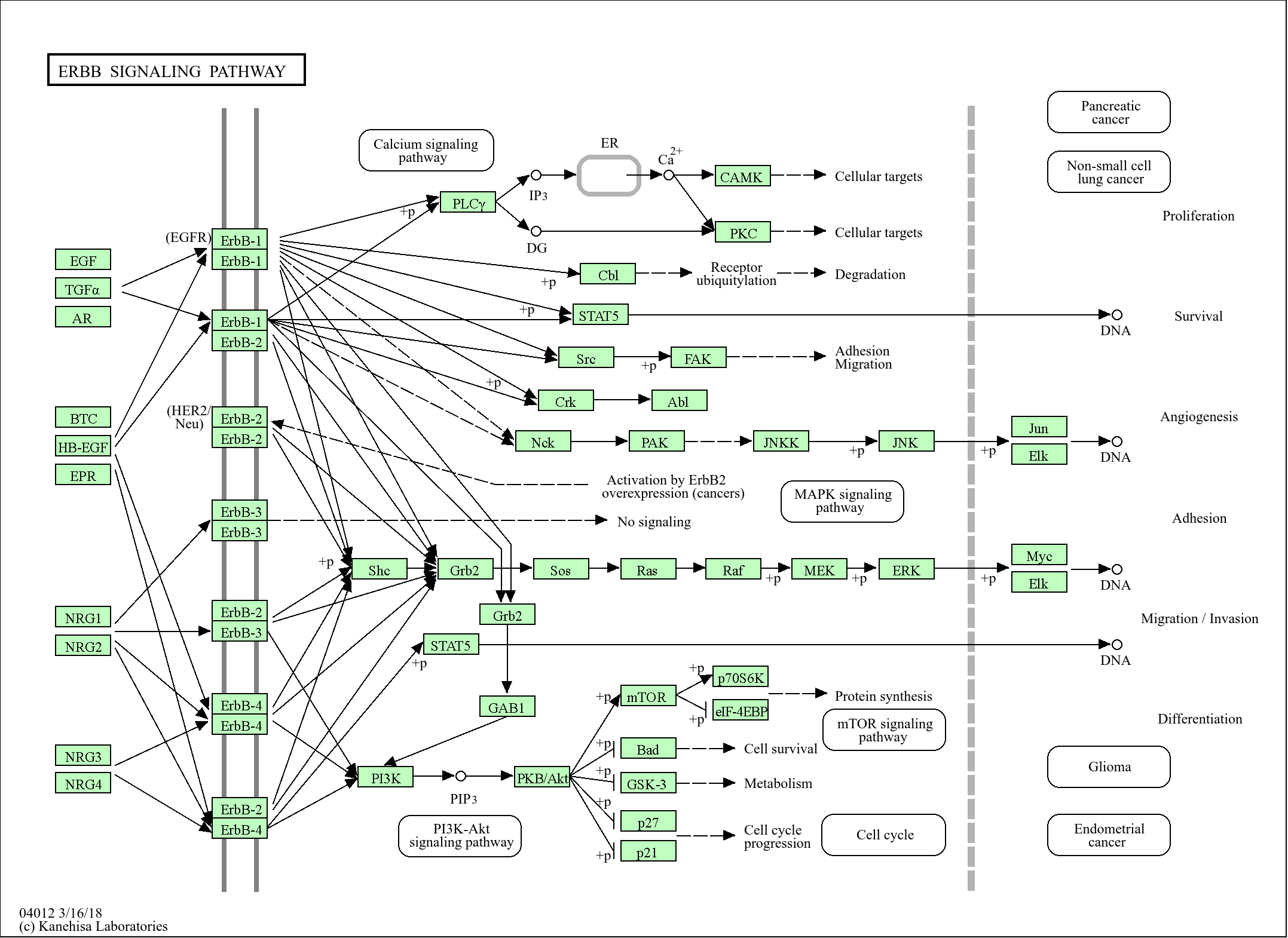
Environmental Information Processing >> Signal transduction >> Calcium signaling pathway
Environmental Information Processing >> Signal transduction >> cGMP-PKG signaling pathway
Reference Citation({{totalcount}})
Catalog: YP1603
Size
Price
Status
Qty.
200μL
$600.00
3 weeks
0
100μL
$340.00
3 weeks
0
50μL
$190.00
3 weeks
0
Add to cart
Collected
Collect
Recently Viewed Products
Clear allPRODUCTS
CUSTOMIZED
ABOUT US



Toggle night Mode
{{pinfoXq.title || ''}}
Catalog: {{pinfoXq.catalog || ''}}
Filter:
All
{{item.name}}
{{pinfo.title}}
-{{pinfo.catalog}}
Main Information
Target
{{pinfo.target}}
Reactivity
{{pinfo.react}}
Applications
{{pinfo.applicat}}
Conjugate/Modification
{{pinfo.coupling}}/{{pinfo.modific}}
MW (kDa)
{{pinfo.mwcalc}}
Host Species
{{pinfo.hostspec}}
Isotype
{{pinfo.isotype}}
Product {{index}}/{{pcount}}
Prev
Next
{{pvTitle}}
Scroll wheel zooms the picture
{{pvDescr}}