





Catalog: YC0077
Size
Price
Status
Qty.
200μL
$450.00
In stock
0
100μL
$280.00
In stock
0
40μL
$150.00
In stock
0
Add to cart


Collected
Collect
Main Information
Target
Thrombin APII
Host Species
Rabbit
Reactivity
Human, Mouse, Rat
Applications
WB, ELISA
MW
19kD (Observed)
Conjugate/Modification
Unmodified
Detailed Information
Recommended Dilution Ratio
WB 1:500-1:2000; ELISA 1:20000; Not yet tested in other applications.
Formulation
Liquid in PBS containing 50% glycerol, 0.5% BSA and 0.02% sodium azide.
Specificity
Cleaved-Thrombin APII (R327) Polyclonal Antibody detects endogenous levels of fragment of activated Thrombin APII protein resulting from cleavage adjacent to R327.
Purification
The antibody was affinity-purified from rabbit antiserum by affinity-chromatography using epitope-specific immunogen.
Storage
-15°C to -25°C/1 year(Do not lower than -25°C)
Concentration
1 mg/ml
MW(Observed)
19kD
Modification
Unmodified
Clonality
Polyclonal
Isotype
IgG
Related Products
Secondary Antibodies
Goat Anti Mouse IgG(H+L) (HRP)
RS0001
More→
Secondary Antibodies
Goat Anti Rabbit IgG(H+L) (HRP)
RS0002
More→
Primary Antibodies
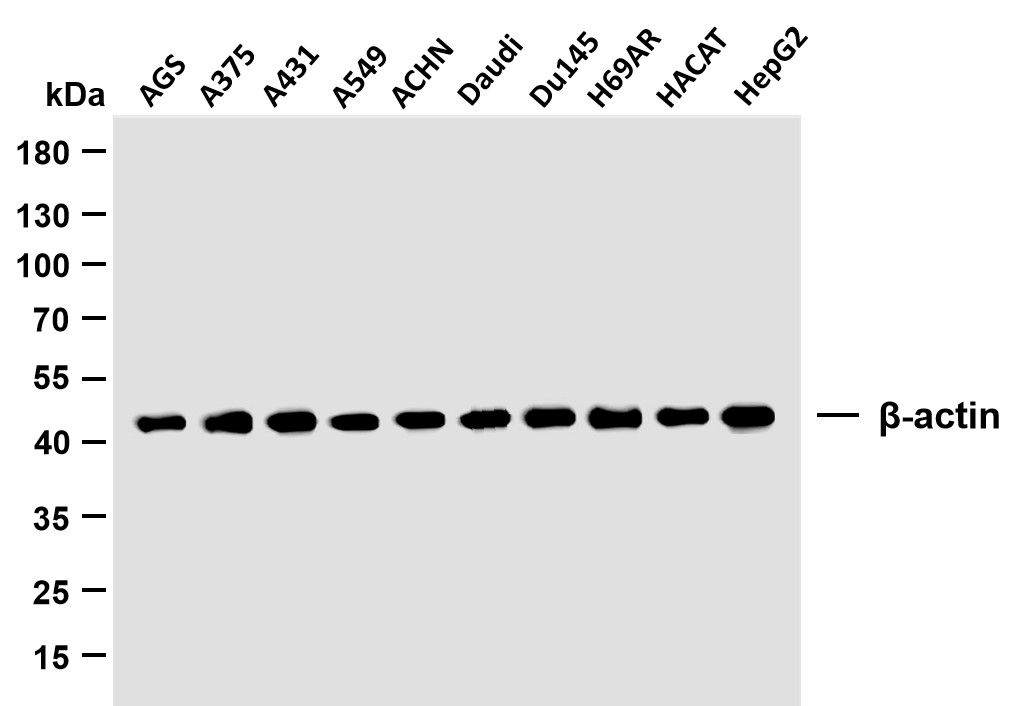
β-actin (PTR2364) Mouse mAb
YM3028
More→
Primary Antibodies
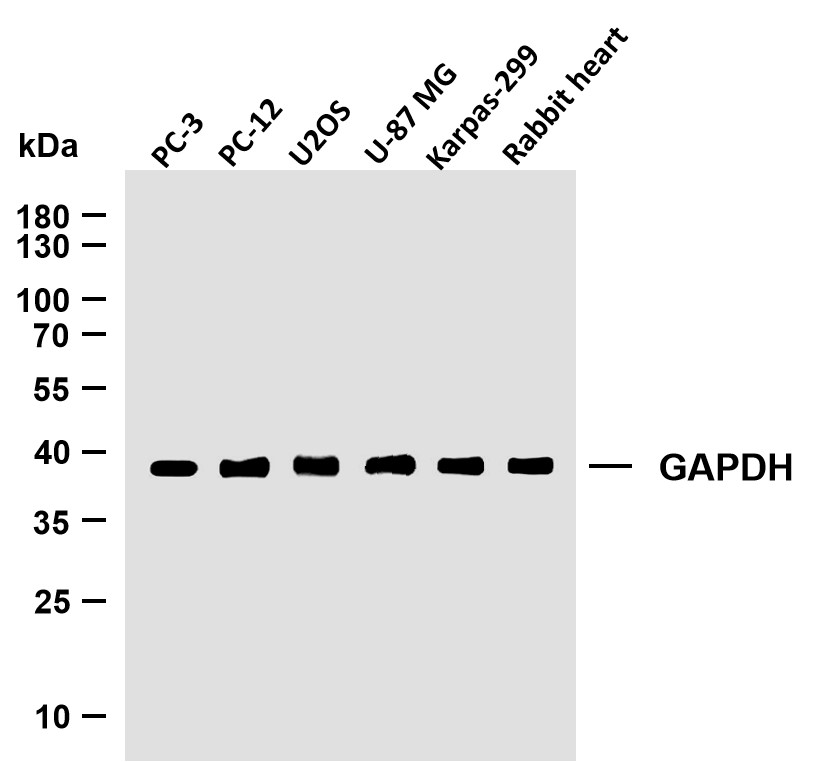
GAPDH (PTR2304) Mouse mAb
YM3029
More→
Antigen&Target Information
Immunogen:
The antiserum was produced against synthesized peptide derived from human THRB. AA range:278-327
show all
Specificity:
Cleaved-Thrombin APII (R327) Polyclonal Antibody detects endogenous levels of fragment of activated Thrombin APII protein resulting from cleavage adjacent to R327.
show all
Gene Name:
F2
show all
Protein Name:
Prothrombin
show all
Other Name:
F2 ;
Prothrombin ;
Coagulation factor II
Prothrombin ;
Coagulation factor II
show all
Background:
Coagulation factor II is proteolytically cleaved to form thrombin in the first step of the coagulation cascade which ultimately results in the stemming of blood loss. F2 also plays a role in maintaining vascular integrity during development and postnatal life. Peptides derived from the C-terminus of this protein have antimicrobial activity against E. coli and P. aeruginosa. Mutations in F2 lead to various forms of thrombosis and dysprothrombinemia. Alternative splicing results in multiple transcript variants. [provided by RefSeq, Aug 2015],
show all
Function:
Catalytic activity:Selective cleavage of Arg-|-Gly bonds in fibrinogen to form fibrin and release fibrinopeptides A and B.,Disease:Defects in F2 are the cause of various forms of dysprothrombinemia [MIM:176930].,Disease:Genetic variations in F2 may be a cause of susceptibility to ischemic stroke [MIM:601367]; also known as cerebrovascular accident or cerebral infarction. A stroke is an acute neurologic event leading to death of neural tissue of the brain and resulting in loss of motor, sensory and/or cognitive function. Ischemic strokes, resulting from vascular occlusion, is considered to be a highly complex disease consisting of a group of heterogeneous disorders with multiple genetic and environmental risk factors.,Function:Thrombin, which cleaves bonds after Arg and Lys, converts fibrinogen to fibrin and activates factors V, VII, VIII, XIII, and, in complex with thrombomodulin, protein C. Functions in blood homeostasis, inflammation and wound healing.,miscellaneous:It is not known whether 1 or 2 smaller activation peptides, with additional cleavage after Arg-314, are released in natural blood clotting.,miscellaneous:Prothrombin is activated on the surface of a phospholipid membrane that binds the amino end of prothrombin and factors Va and Xa in Ca-dependent interactions; factor Xa removes the activation peptide and cleaves the remaining part into light and heavy chains. The activation process starts slowly because factor V itself has to be activated by the initial, small amounts of thrombin.,miscellaneous:The cleavage after Arg-198, observed in vitro, does not occur in plasma.,miscellaneous:Thrombin can itself cleave the N-terminal fragment (fragment 1) of the prothrombin, prior to its activation by factor Xa.,online information:Thrombin entry,pharmaceutical:The peptide TP508 also known as Chrysalin (Orthologic) could be used to accelerate repair of both soft and hard tissues.,PTM:The gamma-carboxyglutamyl residues, which bind calcium ions, result from the carboxylation of glutamyl residues by a microsomal enzyme, the vitamin K-dependent carboxylase. The modified residues are necessary for the calcium-dependent interaction with a negatively charged phospholipid surface, which is essential for the conversion of prothrombin to thrombin.,similarity:Belongs to the peptidase S1 family.,similarity:Contains 1 Gla (gamma-carboxy-glutamate) domain.,similarity:Contains 1 peptidase S1 domain.,similarity:Contains 2 kringle domains.,tissue specificity:Expressed by the liver and secreted in plasma.,
show all
Cellular Localization:
Secreted, extracellular space.
show all
Tissue Expression:
Research Areas:
>>Phospholipase D signaling pathway ;
>>Neuroactive ligand-receptor interaction ;
>>Complement and coagulation cascades ;
>>Platelet activation ;
>>Regulation of actin cytoskeleton ;
>>Pathogenic Escherichia coli infection ;
>>Coronavirus disease - COVID-19 ;
>>Pathways in cancer
>>Neuroactive ligand-receptor interaction ;
>>Complement and coagulation cascades ;
>>Platelet activation ;
>>Regulation of actin cytoskeleton ;
>>Pathogenic Escherichia coli infection ;
>>Coronavirus disease - COVID-19 ;
>>Pathways in cancer
show all
Signaling Pathway
Cellular Processes >> Cell motility >> Regulation of actin cytoskeleton
Organismal Systems >> Immune system >> Complement and coagulation cascades
Organismal Systems >> Immune system >> Platelet activation
Human Diseases >> Cancer: overview >> Pathways in cancer
Environmental Information Processing >> Signal transduction >> Phospholipase D signaling pathway
Reference Citation({{totalcount}})
Catalog: YC0077
Size
Price
Status
Qty.
200μL
$450.00
In stock
0
100μL
$280.00
In stock
0
40μL
$150.00
In stock
0
Add to cart
Collected
Collect
Recently Viewed Products
Clear allPRODUCTS
CUSTOMIZED
ABOUT US



Toggle night Mode
{{pinfoXq.title || ''}}
Catalog: {{pinfoXq.catalog || ''}}
Filter:
All
{{item.name}}
{{pinfo.title}}
-{{pinfo.catalog}}
Main Information
Target
{{pinfo.target}}
Reactivity
{{pinfo.react}}
Applications
{{pinfo.applicat}}
Conjugate/Modification
{{pinfo.coupling}}/{{pinfo.modific}}
MW (kDa)
{{pinfo.mwcalc}}
Host Species
{{pinfo.hostspec}}
Isotype
{{pinfo.isotype}}
Product {{index}}/{{pcount}}
Prev
Next
{{pvTitle}}
Scroll wheel zooms the picture
{{pvDescr}}