





Catalog: YP0801
Size
Price
Status
Qty.
200μL
$600.00
In stock
0
100μL
$340.00
In stock
0
50μL
$190.00
In stock
0
Add to cart


Collected
Collect
Main Information
Target
SLP-76 Phospho Tyr128
Host Species
Rabbit
Reactivity
Human, Mouse, Rat
Applications
WB, IHC, IF, ELISA
MW
75kD (Observed)
Conjugate/Modification
Phospho
Detailed Information
Recommended Dilution Ratio
WB 1:500-1:2000; IHC 1:100-1:300; ELISA 1:5000; IF 1:50-200
Formulation
Liquid in PBS containing 50% glycerol, 0.5% BSA and 0.02% sodium azide.
Specificity
Phospho-SLP-76 (Y128) Polyclonal Antibody detects endogenous levels of SLP-76 protein only when phosphorylated at Y128.The name of modified sites may be influenced by many factors, such as species (the modified site was not originally found in human samples) and the change of protein sequence (the previous protein sequence is incomplete, and the protein sequence may be prolonged with the development of protein sequencing technology). When naming, we will use the "numbers" in historical reference to keep the sites consistent with the reports. The antibody binds to the following modification sequence (lowercase letters are modification sites):GDyES
Purification
The antibody was affinity-purified from rabbit antiserum by affinity-chromatography using epitope-specific immunogen.
Storage
-15°C to -25°C/1 year(Do not lower than -25°C)
Concentration
1 mg/ml
MW(Observed)
75kD
Modification
Phospho
Clonality
Polyclonal
Isotype
IgG
Related Products
Primary Antibodies
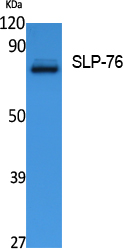
SLP-76 Rabbit pAb
YT5071
More→
Primary Antibodies
SLP-76 Rabbit pAb
YT4321
More→
Primary Antibodies
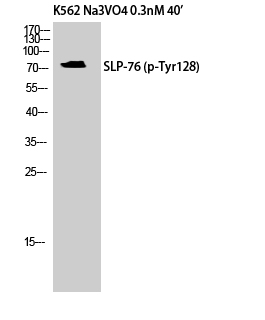
SLP-76 (Phospho Tyr128) Rabbit pAb
YP0801
More→
Secondary Antibodies
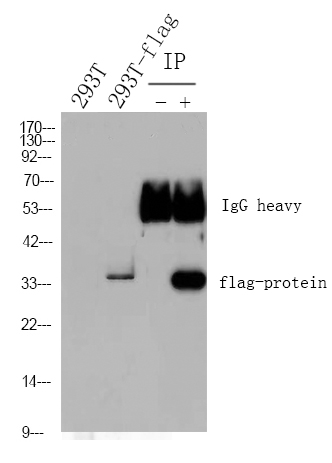
Goat Anti Mouse IgG(H+L) (HRP)
RS0001
More→
Secondary Antibodies
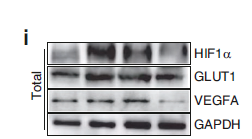
Goat Anti Rabbit IgG(H+L) (HRP)
RS0002
More→
Primary Antibodies
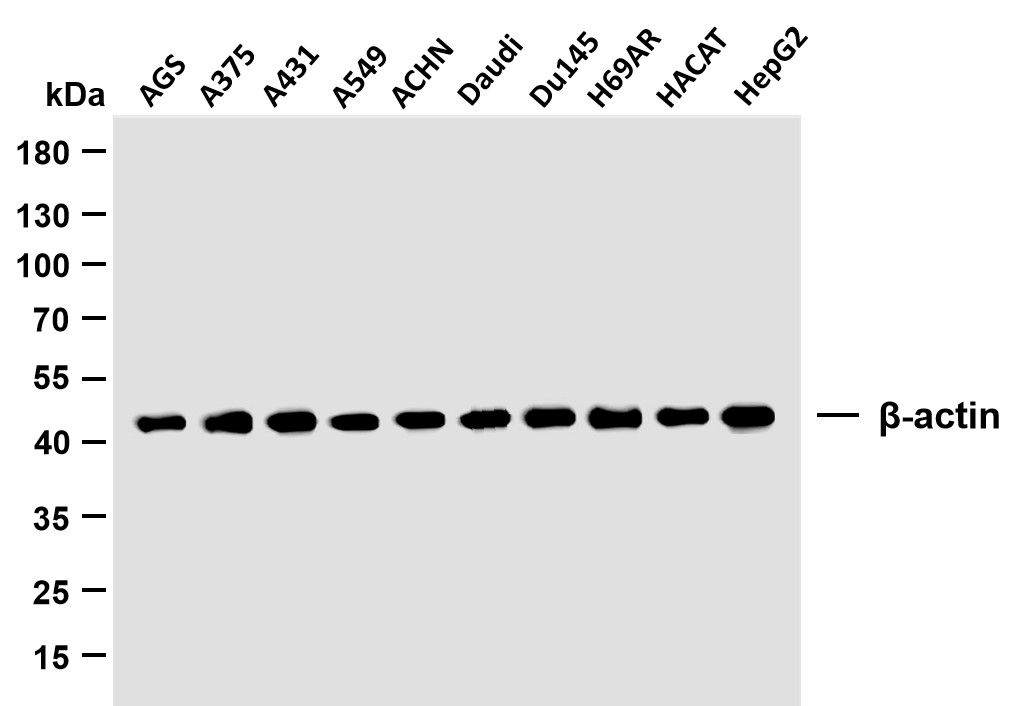
β-actin (PTR2364) Mouse mAb
YM3028
More→
Primary Antibodies
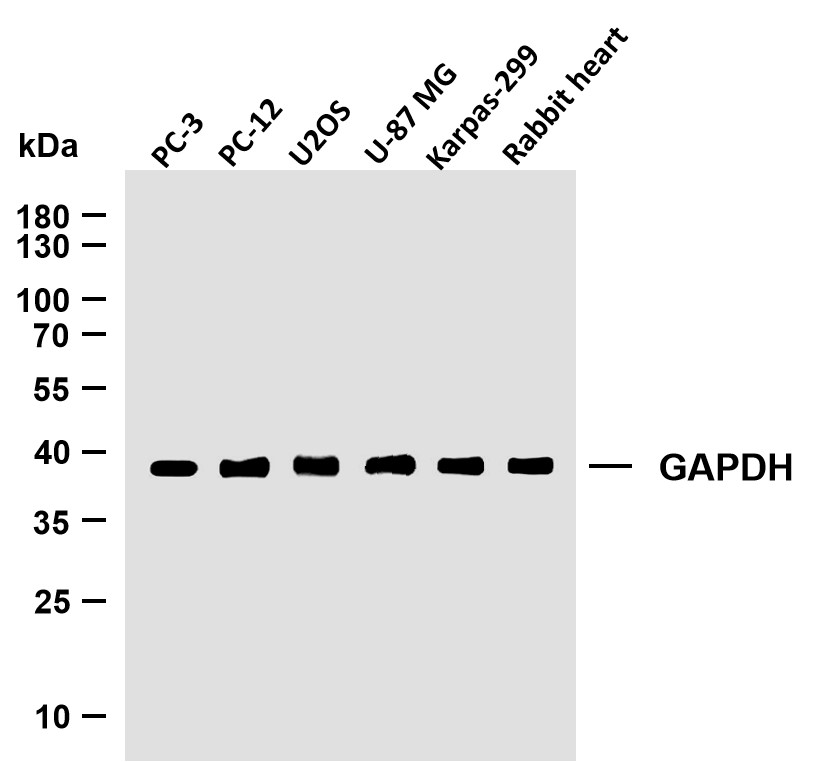
GAPDH (PTR2304) Mouse mAb
YM3029
More→
Antigen&Target Information
Immunogen:
The antiserum was produced against synthesized peptide derived from human SLP-76 around the phosphorylation site of Tyr128. AA range:94-143
show all
Specificity:
Phospho-SLP-76 (Y128) Polyclonal Antibody detects endogenous levels of SLP-76 protein only when phosphorylated at Y128.The name of modified sites may be influenced by many factors, such as species (the modified site was not originally found in human samples) and the change of protein sequence (the previous protein sequence is incomplete, and the protein sequence may be prolonged with the development of protein sequencing technology). When naming, we will use the "numbers" in historical reference to keep the sites consistent with the reports. The antibody binds to the following modification sequence (lowercase letters are modification sites):GDyES
show all
Gene Name:
LCP2
show all
Protein Name:
Lymphocyte cytosolic protein 2
show all
Other Name:
LCP2 ;
Lymphocyte cytosolic protein 2 ;
SH2 domain-containing leukocyte protein of 76 kDa ;
SLP-76 tyrosine phosphoprotein ;
SLP76
Lymphocyte cytosolic protein 2 ;
SH2 domain-containing leukocyte protein of 76 kDa ;
SLP-76 tyrosine phosphoprotein ;
SLP76
show all
Background:
SLP-76 was originally identified as a substrate of the ZAP-70 protein tyrosine kinase following T cell receptor (TCR) ligation in the leukemic T cell line Jurkat. The SLP-76 locus has been localized to human chromosome 5q33 and the gene structure has been partially characterized in mice. The human and murine cDNAs both encode 533 amino acid proteins that are 72% identical and comprised of three modular domains. The NH2-terminus contains an acidic region that includes a PEST domain and several tyrosine residues which are phosphorylated following TCR ligation. SLP-76 also contains a central proline-rich domain and a COOH-terminal SH2 domain. A number of additional proteins have been identified that associate with SLP-76 both constitutively and inducibly following receptor ligation, supporting the notion that SLP-76 functions as an adaptor or scaffold protein. Studies using SLP-76 deficient T c
show all
Function:
Domain:The SH2 domain mediates interaction with SHB.,Function:Involved in T-cell antigen receptor mediated signaling.,PTM:Phosphorylated after T-cell receptor activation by ZAP-70.,similarity:Contains 1 SAM (sterile alpha motif) domain.,similarity:Contains 1 SH2 domain.,subunit:Interacts with SLA. Interacts with CBLB (By similarity). Interacts with the adapter proteins GRB2 and FYB. Interacts with SHB. Interacts with PRAM1.,tissue specificity:Highly expressed in spleen, thymus, and peripheral blood leukocytes. Highly expressed also in T-cell and monocytic cell lines, expressed at lower level in B-cell lines. Not detected in fibroblast or neuroblasatoma cell lines.,
show all
Cellular Localization:
Cytoplasm .
show all
Tissue Expression:
Research Areas:
>>Rap1 signaling pathway ;
>>Osteoclast differentiation ;
>>Platelet activation ;
>>Natural killer cell mediated cytotoxicity ;
>>T cell receptor signaling pathway ;
>>Fc epsilon RI signaling pathway ;
>>Yersinia infection
>>Osteoclast differentiation ;
>>Platelet activation ;
>>Natural killer cell mediated cytotoxicity ;
>>T cell receptor signaling pathway ;
>>Fc epsilon RI signaling pathway ;
>>Yersinia infection
show all
Signaling Pathway
Organismal Systems >> Immune system >> Platelet activation
Organismal Systems >> Immune system >> Natural killer cell mediated cytotoxicity
Organismal Systems >> Immune system >> T cell receptor signaling pathway
Organismal Systems >> Immune system >> Fc epsilon RI signaling pathway
Organismal Systems >> Development and regeneration >> Osteoclast differentiation
Environmental Information Processing >> Signal transduction >> Rap1 signaling pathway
Reference Citation({{totalcount}})
Catalog: YP0801
Size
Price
Status
Qty.
200μL
$600.00
In stock
0
100μL
$340.00
In stock
0
50μL
$190.00
In stock
0
Add to cart
Collected
Collect
Recently Viewed Products
Clear allPRODUCTS
CUSTOMIZED
ABOUT US



Toggle night Mode
{{pinfoXq.title || ''}}
Catalog: {{pinfoXq.catalog || ''}}
Filter:
All
{{item.name}}
{{pinfo.title}}
-{{pinfo.catalog}}
Main Information
Target
{{pinfo.target}}
Reactivity
{{pinfo.react}}
Applications
{{pinfo.applicat}}
Conjugate/Modification
{{pinfo.coupling}}/{{pinfo.modific}}
MW (kDa)
{{pinfo.mwcalc}}
Host Species
{{pinfo.hostspec}}
Isotype
{{pinfo.isotype}}
Product {{index}}/{{pcount}}
Prev
Next
{{pvTitle}}
Scroll wheel zooms the picture
{{pvDescr}}