





Catalog: YT2473
Size
Price
Status
Qty.
200μL
$450.00
In stock
0
100μL
$280.00
In stock
0
40μL
$150.00
In stock
0
Add to cart


Collected
Collect
Main Information
Target
KIR2.1
Host Species
Rabbit
Reactivity
Human, Rat
Applications
WB, IHC, IF, ELISA
MW
48kD (Observed)
Conjugate/Modification
Unmodified
Detailed Information
Recommended Dilution Ratio
WB 1:500-1:2000; IHC 1:100-1:300; ELISA 1:10000; IF 1:50-200
Formulation
Liquid in PBS containing 50% glycerol, 0.5% BSA and 0.02% sodium azide.
Specificity
KIR2.1 Polyclonal Antibody detects endogenous levels of KIR2.1 protein.
Purification
The antibody was affinity-purified from rabbit antiserum by affinity-chromatography using epitope-specific immunogen.
Storage
-15°C to -25°C/1 year(Do not lower than -25°C)
Concentration
1 mg/ml
MW(Observed)
48kD
Modification
Unmodified
Clonality
Polyclonal
Isotype
IgG
Related Products
Secondary Antibodies
Goat Anti Mouse IgG(H+L) (HRP)
RS0001
More→
Secondary Antibodies
Goat Anti Rabbit IgG(H+L) (HRP)
RS0002
More→
Primary Antibodies
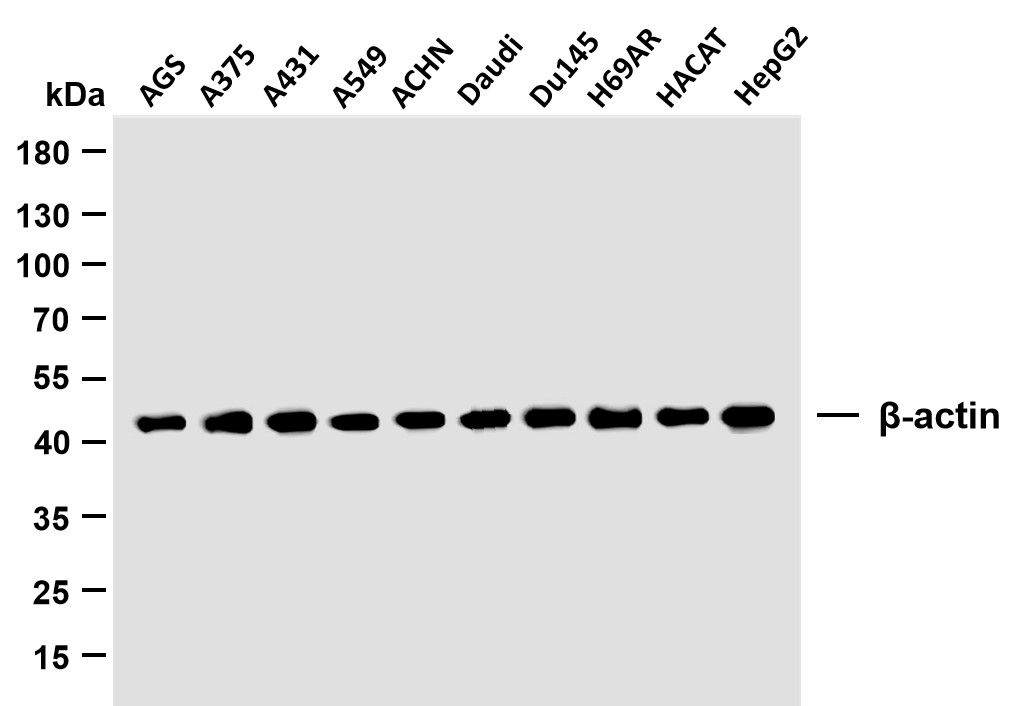
β-actin (PTR2364) Mouse mAb
YM3028
More→
Primary Antibodies
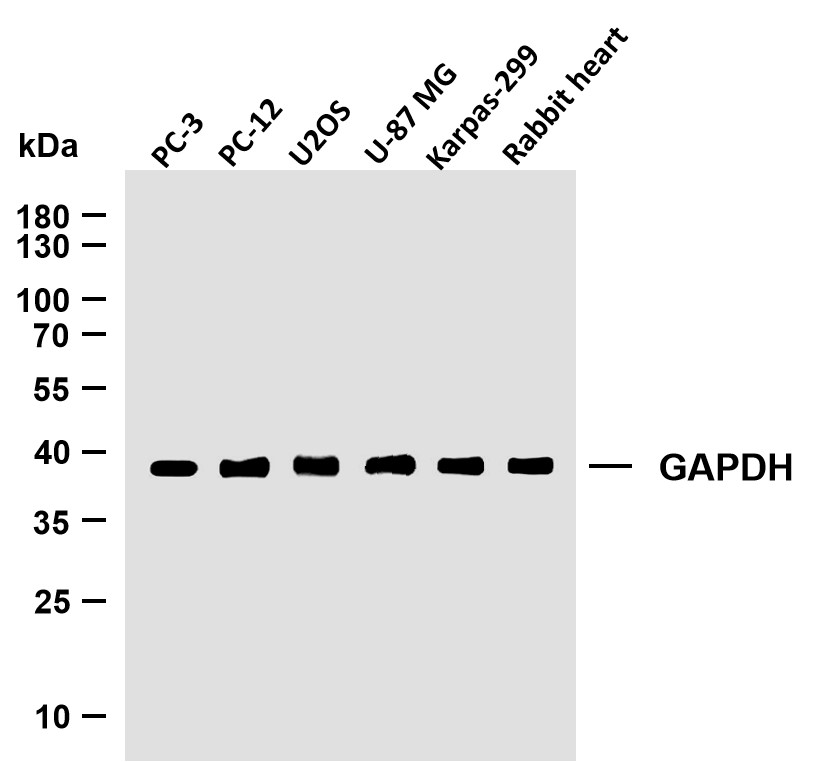
GAPDH (PTR2304) Mouse mAb
YM3029
More→
Antigen&Target Information
Immunogen:
The antiserum was produced against synthesized peptide derived from human KCNJ2. AA range:81-130
show all
Specificity:
KIR2.1 Polyclonal Antibody detects endogenous levels of KIR2.1 protein.
show all
Gene Name:
KCNJ2
show all
Protein Name:
Inward rectifier potassium channel 2
show all
Other Name:
KCNJ2 ;
IRK1 ;
Inward rectifier potassium channel 2 ;
Cardiac inward rectifier potassium channel ;
Inward rectifier K ;
+ ;
channel Kir2.1 ;
IRK-1 ;
hIRK1 ;
Potassium channel ;
inwardly rectifying subfamily J member 2
IRK1 ;
Inward rectifier potassium channel 2 ;
Cardiac inward rectifier potassium channel ;
Inward rectifier K ;
+ ;
channel Kir2.1 ;
IRK-1 ;
hIRK1 ;
Potassium channel ;
inwardly rectifying subfamily J member 2
show all
Background:
Potassium channels are present in most mammalian cells, where they participate in a wide range of physiologic responses. The protein encoded by this gene is an integral membrane protein and inward-rectifier type potassium channel. The encoded protein, which has a greater tendency to allow potassium to flow into a cell rather than out of a cell, probably participates in establishing action potential waveform and excitability of neuronal and muscle tissues. Mutations in this gene have been associated with Andersen syndrome, which is characterized by periodic paralysis, cardiac arrhythmias, and dysmorphic features. [provided by RefSeq, Jul 2008],
show all
Function:
Disease:Defects in KCNJ2 are the cause of long QT syndrome type 7 (LQT7) [MIM:170390]; also called Andersen syndrome or Andersen cardiodysrhythmic periodic paralysis. Long QT syndromes are heart disorders characterized by a prolonged QT interval on the ECG and polymorphic ventricular arrhythmias. They cause syncope and sudden death in response to excercise or emotional stress. LQT7 manifests itself as a clinical triad consisting of potassium-sensitive periodic paralysis, ventricular ectopy and dysmorphic features.,Disease:Defects in KCNJ2 are the cause of short QT syndrome type 3 (SQT3) [MIM:609622]. Short QT syndromes are heart disorders characterized by idiopathic persistently and uniformly short QT interval on ECG in the absence of structural heart disease in affected individuals. They cause syncope and sudden death. SQT3 has a unique ECG phenotype characterized by asymmetrical T waves.,Function:Probably participates in establishing action potential waveform and excitability of neuronal and muscle tissues. Inward rectifier potassium channels are characterized by a greater tendency to allow potassium to flow into the cell rather than out of it. Their voltage dependence is regulated by the concentration of extracellular potassium; as external potassium is raised, the voltage range of the channel opening shifts to more positive voltages. The inward rectification is mainly due to the blockage of outward current by internal magnesium. Can be blocked by extracellular barium or cesium.,similarity:Belongs to the inward rectifier-type potassium channel family.,subunit:Homomultimeric and heteromultimeric association with Kir2.3, resulting in an enhanced G-protein-induced current. Association, via its PDZ-recognition domain, with LIN7A, LIN7B, LIN7C, DLG1, CASK and APBA1 plays a key role in its localization and trafficking.,tissue specificity:Heart, brain, placenta, lung, skeletal muscle, and kidney. Diffusely distributed throughout the brain.,
show all
Cellular Localization:
Membrane; Multi-pass membrane protein. Membrane; Lipid-anchor .
show all
Tissue Expression:
Research Areas:
>>Cholinergic synapse ;
>>Oxytocin signaling pathway ;
>>Renin secretion ;
>>Gastric acid secretion
>>Oxytocin signaling pathway ;
>>Renin secretion ;
>>Gastric acid secretion
show all
Signaling Pathway
Reference Citation({{totalcount}})
Catalog: YT2473
Size
Price
Status
Qty.
200μL
$450.00
In stock
0
100μL
$280.00
In stock
0
40μL
$150.00
In stock
0
Add to cart
Collected
Collect
Recently Viewed Products
Clear allPRODUCTS
CUSTOMIZED
ABOUT US



Toggle night Mode
{{pinfoXq.title || ''}}
Catalog: {{pinfoXq.catalog || ''}}
Filter:
All
{{item.name}}
{{pinfo.title}}
-{{pinfo.catalog}}
Main Information
Target
{{pinfo.target}}
Reactivity
{{pinfo.react}}
Applications
{{pinfo.applicat}}
Conjugate/Modification
{{pinfo.coupling}}/{{pinfo.modific}}
MW (kDa)
{{pinfo.mwcalc}}
Host Species
{{pinfo.hostspec}}
Isotype
{{pinfo.isotype}}
Product {{index}}/{{pcount}}
Prev
Next
{{pvTitle}}
Scroll wheel zooms the picture
{{pvDescr}}