


Catalog: YT2977
Size
Price
Status
Qty.
200μL
$450.00
In stock
0
100μL
$280.00
In stock
0
40μL
$150.00
In stock
0
Add to cart


Collected
Collect
Main Information
Target
Nanog P8
Host Species
Rabbit
Reactivity
Human
Applications
WB, IF, ELISA, IHC
MW
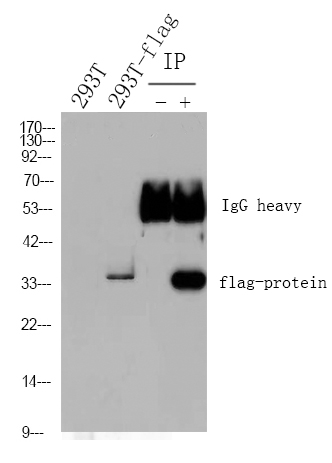
35kD (Observed)
Conjugate/Modification
Unmodified
Detailed Information
Recommended Dilution Ratio
WB 1:500-2000; IF/ICC1:50-200; ELISA 1:2000-20000; IHC 1:50-200
Formulation
Liquid in PBS containing 50% glycerol, 0.5% BSA and 0.02% sodium azide.
Specificity
Nanog P8 Polyclonal Antibody detects endogenous levels of Nanog P8 protein.
Purification
The antibody was affinity-purified from rabbit antiserum by affinity-chromatography using epitope-specific immunogen.
Storage
-15°C to -25°C/1 year(Do not lower than -25°C)
Concentration
1 mg/ml
MW(Observed)
35kD
Modification
Unmodified
Clonality
Polyclonal
Isotype
IgG
Related Products
Secondary Antibodies
Goat Anti Mouse IgG(H+L) (HRP)
RS0001
More→
Secondary Antibodies
Goat Anti Rabbit IgG(H+L) (HRP)
RS0002
More→
Primary Antibodies
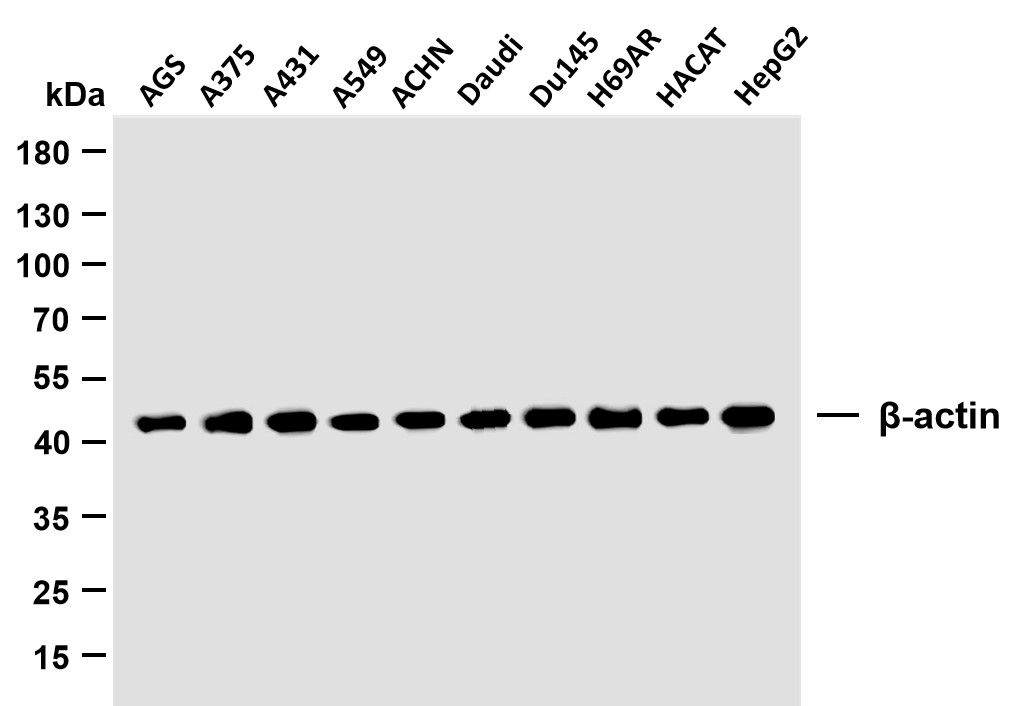
β-actin (PTR2364) Mouse mAb
YM3028
More→
Primary Antibodies
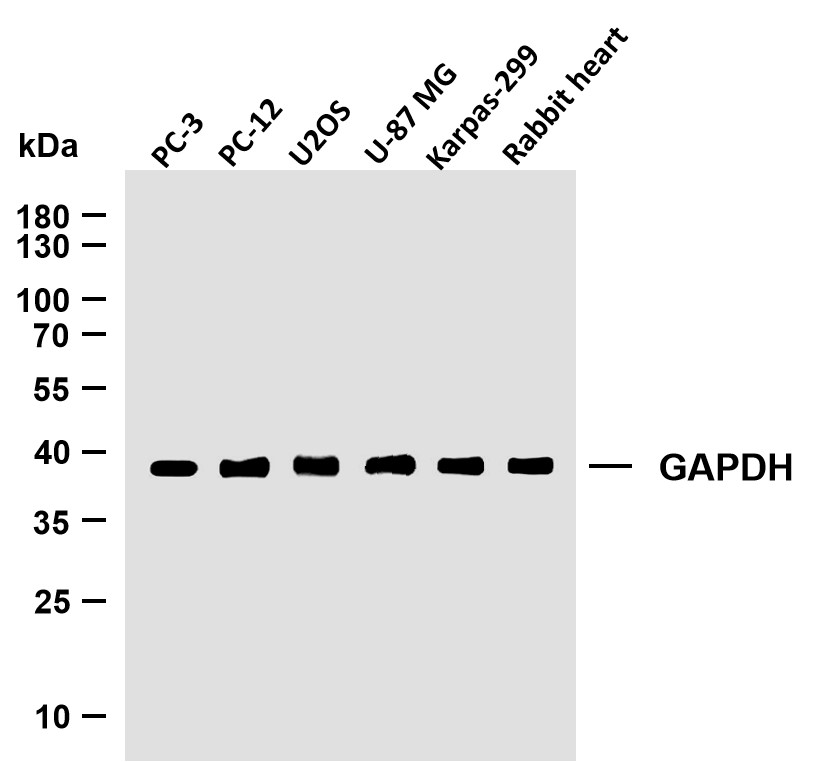
GAPDH (PTR2304) Mouse mAb
YM3029
More→
Antigen&Target Information
Immunogen:
The antiserum was produced against synthesized peptide derived from human NANOGP8. AA range:51-100
show all
Specificity:
Nanog P8 Polyclonal Antibody detects endogenous levels of Nanog P8 protein.
show all
Gene Name:
NANOGP8
show all
Protein Name:
Putative homeobox protein NANOGP8
show all
Other Name:
NANOGP8 ;
Putative homeobox protein NANOGP8
Putative homeobox protein NANOGP8
show all
Background:
This locus is a processed pseudogene of the transcription factor NANOG. NANOG plays a central role in regulating self-renewal in pluripotent stem cells and tumor cells. This pseudogene contains an intact open reading frame that could potentially encode a protein similar to NANOG. Although there is no evidence of transcription from this pseudogene, RT-PCR studies suggest that NANOGP8 may be expressed in some cancer cell lines. In vitro studies using a recombinant NANOGP8 protein have shown that the protein localizes to the nucleus and can promote cell proliferation, similar to NANOG. [provided by RefSeq, Sep 2009],
show all
Function:
developmental stage:Expressed in embryonic stem (ES) and carcinoma (EC) cells. Expressed in inner cell mass (ICM) of the blastocyst and gonocytes between 14 and 19 weeks of gestation (at protein level). Not expressed in oocytes, unfertilized oocytes, 2-16 cell embryos and early morula (at protein level). Expressed in embryonic stem cells (ES). Expression decreases with ES differentiation.,Function:May act as a transcription regulator (By similarity). When overexpressed, promotes cells to enter into S phase and proliferation.,Function:Transcription regulator involved in inner cell mass and embryonic stem (ES) cells proliferation and self-renewal. Imposes pluripotency on ES cells and prevents their differentiation towards extraembryonic endoderm and trophectoderm lineages. Blocks bone morphogenetic protein-induced mesoderm differentiation of ES cells by physically interacting with SMAD1 and interfering with the recruitment of coactivators to the active SMAD transcriptional complexes (By similarity). Acts as a transcriptional activator or repressor (By similarity). Binds optimally to the DNA consensus sequence 5'-TAAT[GT][GT]-3' or 5'-[CG][GA][CG]C[GC]ATTAN[GC]-3' (By similarity). When overexpressed, promotes cells to enter into S phase and proliferation.,miscellaneous:Almost identical to NANOG. There are only one change in the inferred amino acid sequence from 'Gln-253' in NANOG to His-253 in NANOGP8.,miscellaneous:Exists an other tandem duplicated non-processed pseudogene (NANOGP1) and 10 other NANOG-related nucleotide sequences located on different chromosomes, all of which are processed pseudogenes lacking introns (NANOGP2 to NANOGP11); except NANOGP8 which is a retrogene.,online information:Nanog entry,similarity:Belongs to the Nanog homeobox family.,similarity:Contains 1 homeobox DNA-binding domain.,subunit:Interacts with SMAD1 and SALL4.,tissue specificity:Expressed in osteosarcoma cancer cell line (at protein level) (Probable). Expressed in tumor uterine cervix, breast and urinary bladder tissues, and also osteosarcoma, hepatoma, and breast adenocarcinoma cancer cell lines.,tissue specificity:Expressed in testicular carcinoma and derived germ cell tumors (at protein level). Expressed in fetal gonads, ovary and testis. Also expressed in ovary teratocarcinoma cell line and testicular embryonic carcinoma. Not expressed in many somatic organs and oocytes.,
show all
Cellular Localization:
Nucleus .
show all
Tissue Expression:
Research Areas:
>>Signaling pathways regulating pluripotency of stem cells ;
>>Proteoglycans in cancer
>>Proteoglycans in cancer
show all
Signaling Pathway
Reference Citation({{totalcount}})
Catalog: YT2977
Size
Price
Status
Qty.
200μL
$450.00
In stock
0
100μL
$280.00
In stock
0
40μL
$150.00
In stock
0
Add to cart
Collected
Collect
Recently Viewed Products
Clear allPRODUCTS
CUSTOMIZED
ABOUT US



Toggle night Mode
{{pinfoXq.title || ''}}
Catalog: {{pinfoXq.catalog || ''}}
Filter:
All
{{item.name}}
{{pinfo.title}}
-{{pinfo.catalog}}
Main Information
Target
{{pinfo.target}}
Reactivity
{{pinfo.react}}
Applications
{{pinfo.applicat}}
Conjugate/Modification
{{pinfo.coupling}}/{{pinfo.modific}}
MW (kDa)
{{pinfo.mwcalc}}
Host Species
{{pinfo.hostspec}}
Isotype
{{pinfo.isotype}}
Product {{index}}/{{pcount}}
Prev
Next
{{pvTitle}}
Scroll wheel zooms the picture
{{pvDescr}}