






Catalog: YM960182
Size
Price
Status
Qty.
200μL
$600.00
3 weeks
0
100μL
$340.00
3 weeks
0
40μL
$190.00
3 weeks
0
Add to cart


Collected
Collect
Main Information
Target
CACNA1S
Host Species
Mouse
Reactivity
Human, Mouse, Rat
Applications
WB, IHC, IF, IP, ELISA
MW
212kD (Calculated)
180kD (Observed)
Conjugate/Modification
Unmodified
Detailed Information
Recommended Dilution Ratio
IHC 1:50-1:200; WB 1:2000-1:10000; IF 1:200-1:1000; ELISA 1:5000-1:20000; IP 1:50-1:200;
Formulation
PBS, 50% glycerol, 0.05% Proclin 300, 0.05%BSA
Specificity
Endogenous
Purification
Recombinant Antibody expressed in animal component-free (ACF) media, purified via Protein G affinity chromatography.
Storage
-15°C to -25°C/1 year(Do not lower than -25°C)
MW(Calculated)
212kD
MW(Observed)
180kD
Modification
Unmodified
Clonality
Monoclonal
Clone Number
PTR1443
Isotype
Mouse IgG1/Kappa
Related Products
Secondary Antibodies
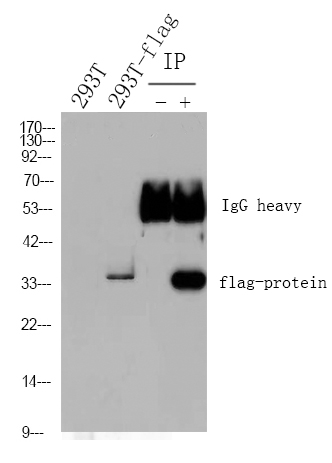
Goat Anti Mouse IgG(H+L) (HRP)
RS0001
More→
Secondary Antibodies
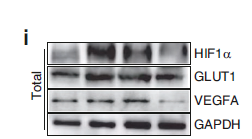
Goat Anti Rabbit IgG(H+L) (HRP)
RS0002
More→
Primary Antibodies
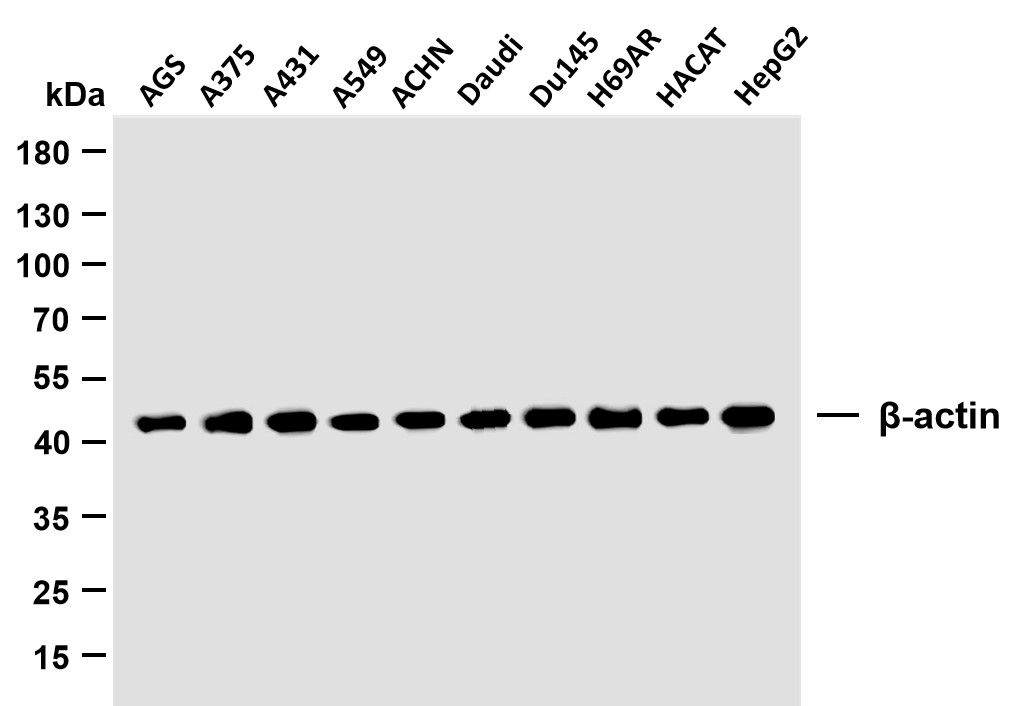
β-actin (PTR2364) Mouse mAb
YM3028
More→
Primary Antibodies
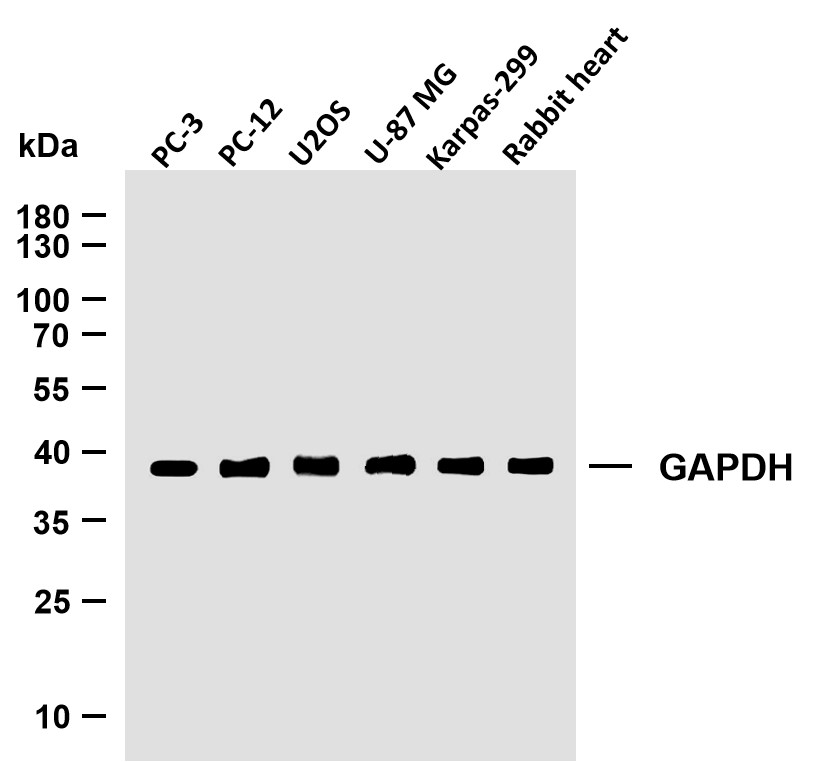
GAPDH (PTR2304) Mouse mAb
YM3029
More→
Antigen&Target Information
Specificity:
Endogenous
show all
Gene Name:
CACNA1S CACH1 CACN1 CACNL1A3
show all
Protein Name:
Voltage-dependent L-type calcium channel subunit alpha-1S (Calcium channel, L type, alpha-1 polypeptide, isoform 3, skeletal muscle) (Voltage-gated calcium channel subunit alpha Cav1.1)
show all
Background:
calcium voltage-gated channel subunit alpha1 S(CACNA1S) Homo sapiens This gene encodes one of the five subunits of the slowly inactivating L-type voltage-dependent calcium channel in skeletal muscle cells. Mutations in this gene have been associated with hypokalemic periodic paralysis, thyrotoxic periodic paralysis and malignant hyperthermia susceptibility. [provided by RefSeq, Jul 2008],
show all
Function:
Disease:Defects in CACNA1S are a cause of periodic paralysis hypokalemic (HOKPP) [MIM:170400]; also designated HYPOPP. HOKPP is an autosomal dominant disorder manifested by episodic flaccid generalized muscle weakness associated with falls of serum potassium levels.,Disease:Defects in CACNA1S are the cause of malignant hyperthermia susceptibility 5 (MHS5) [MIM:601887]; an autosomal dominant disorder that is potentially lethal in susceptible individuals on exposure to commonly used inhalational anesthetics and depolarizing muscle relaxants.,Domain:Each of the four internal repeats contains five hydrophobic transmembrane segments (S1, S2, S3, S5, S6) and one positively charged transmembrane segment (S4). S4 segments probably represent the voltage-sensor and are characterized by a series of positively charged amino acids at every third position.,Domain:The loop between repeats II and III interacts with the ryanodine receptor, and is therefore important for calcium release from the endoplasmic reticulum necessary for muscle contraction.,Function:Voltage-sensitive calcium channels (VSCC) mediate the entry of calcium ions into excitable cells and are also involved in a variety of calcium-dependent processes, including muscle contraction, hormone or neurotransmitter release, gene expression, cell motility, cell division and cell death. The isoform alpha-1S gives rise to L-type calcium currents. Long-lasting (L-type) calcium channels belong to the 'high-voltage activated' (HVA) group. They are blocked by dihydropyridines (DHP), phenylalkylamines, benzothiazepines, and by omega-agatoxin-IIIA (omega-Aga-IIIA). They are however insensitive to omega-conotoxin-GVIA (omega-CTx-GVIA) and omega-agatoxin-IVA (omega-Aga-IVA). Calcium channels containing the alpha-1S subunit play an important role in excitation-contraction coupling in skeletal muscle.,PTM:Phosphorylation by PKA activates the calcium channel.,similarity:Belongs to the calcium channel alpha-1 subunit (TC 1.A.1.11) family.,subunit:Multisubunit complex consisting of alpha-1, alpha-2, beta and delta subunits in a 1:1:1:1 ratio. The channel activity is directed by the pore-forming and voltage-sensitive alpha-1 subunit. In many cases, this subunit is sufficient to generate voltage-sensitive calcium channel activity. The auxiliary subunits beta and alpha-2/delta linked by a disulfide bridge regulate the channel activity. An additional gamma subunit is present only in skeletal muscle L-type channel. Interacts with DYSF and JSRP1.,tissue specificity:Skeletal muscle specific.,
show all
Cellular Localization:
Cell membrane, sarcolemma, T-tubule ; Multi-pass membrane protein .
show all
Tissue Expression:
show all
Research Areas:
>>MAPK signaling pathway ;
>>Calcium signaling pathway ;
>>cGMP-PKG signaling pathway ;
>>cAMP signaling pathway ;
>>Cardiac muscle contraction ;
>>Adrenergic signaling in cardiomyocytes ;
>>Vascular smooth muscle contraction ;
>>Retrograde endocannabinoid signaling ;
>>Cholinergic synapse ;
>>Serotonergic synapse ;
>>GABAergic synapse ;
>>Insulin secretion ;
>>GnRH signaling pathway ;
>>Oxytocin signaling pathway ;
>>Renin secretion ;
>>Aldosterone synthesis and secretion ;
>>Cortisol synthesis and secretion ;
>>GnRH secretion ;
>>Cushing syndrome ;
>>Growth hormone synthesis, secretion and action ;
>>Alzheimer disease ;
>>Prion disease ;
>>Pathways of neurodegeneration - multiple diseases ;
>>Chemical carcinogenesis - receptor activation ;
>>Hypertrophic cardiomyopathy ;
>>Arrhythmogenic right ventricular cardiomyopathy ;
>>Dilated cardiomyopathy
>>Calcium signaling pathway ;
>>cGMP-PKG signaling pathway ;
>>cAMP signaling pathway ;
>>Cardiac muscle contraction ;
>>Adrenergic signaling in cardiomyocytes ;
>>Vascular smooth muscle contraction ;
>>Retrograde endocannabinoid signaling ;
>>Cholinergic synapse ;
>>Serotonergic synapse ;
>>GABAergic synapse ;
>>Insulin secretion ;
>>GnRH signaling pathway ;
>>Oxytocin signaling pathway ;
>>Renin secretion ;
>>Aldosterone synthesis and secretion ;
>>Cortisol synthesis and secretion ;
>>GnRH secretion ;
>>Cushing syndrome ;
>>Growth hormone synthesis, secretion and action ;
>>Alzheimer disease ;
>>Prion disease ;
>>Pathways of neurodegeneration - multiple diseases ;
>>Chemical carcinogenesis - receptor activation ;
>>Hypertrophic cardiomyopathy ;
>>Arrhythmogenic right ventricular cardiomyopathy ;
>>Dilated cardiomyopathy
show all
Signaling Pathway
Organismal Systems >> Endocrine system >> Insulin secretion
Organismal Systems >> Endocrine system >> GnRH signaling pathway
Organismal Systems >> Endocrine system >> Oxytocin signaling pathway
Organismal Systems >> Endocrine system >> Growth hormone synthesis, secretion and action
Organismal Systems >> Endocrine system >> Aldosterone synthesis and secretion
Organismal Systems >> Circulatory system >> Cardiac muscle contraction
Organismal Systems >> Circulatory system >> Adrenergic signaling in cardiomyocytes
Organismal Systems >> Circulatory system >> Vascular smooth muscle contraction
Organismal Systems >> Nervous system >> Cholinergic synapse
Human Diseases >> Neurodegenerative disease >> Alzheimer disease
Human Diseases >> Neurodegenerative disease >> Prion disease
Human Diseases >> Neurodegenerative disease >> Pathways of neurodegeneration - multiple diseases
Environmental Information Processing >> Signal transduction >> MAPK signaling pathway
Environmental Information Processing >> Signal transduction >> Calcium signaling pathway
Environmental Information Processing >> Signal transduction >> cAMP signaling pathway
Environmental Information Processing >> Signal transduction >> cGMP-PKG signaling pathway
Reference Citation({{totalcount}})
Catalog: YM960182
Size
Price
Status
Qty.
200μL
$600.00
3 weeks
0
100μL
$340.00
3 weeks
0
40μL
$190.00
3 weeks
0
Add to cart
Collected
Collect
Recently Viewed Products
Clear allPRODUCTS
CUSTOMIZED
ABOUT US



Toggle night Mode
{{pinfoXq.title || ''}}
Catalog: {{pinfoXq.catalog || ''}}
Filter:
All
{{item.name}}
{{pinfo.title}}
-{{pinfo.catalog}}
Main Information
Target
{{pinfo.target}}
Reactivity
{{pinfo.react}}
Applications
{{pinfo.applicat}}
Conjugate/Modification
{{pinfo.coupling}}/{{pinfo.modific}}
MW (kDa)
{{pinfo.mwcalc}}
Host Species
{{pinfo.hostspec}}
Isotype
{{pinfo.isotype}}
Product {{index}}/{{pcount}}
Prev
Next
{{pvTitle}}
Scroll wheel zooms the picture
{{pvDescr}}