







Catalog: YM8296
Size
Price
Status
Qty.
200μL
$600.00
In stock
0
100μL
$340.00
In stock
0
40μL
$190.00
In stock
0
Add to cart


Collected
Collect
Main Information
Target
SDHB
Host Species
Rabbit
Reactivity
Human, Mouse, Rat, Fish
Applications
WB, IHC, IF, IP, ELISA
MW
31kD (Calculated)
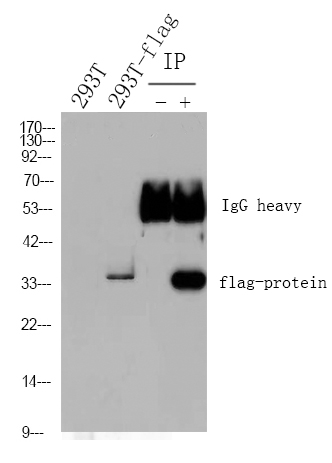
31kD (Observed)
Conjugate/Modification
Unmodified
Detailed Information
Recommended Dilution Ratio
IHC 1:200-1:1000; WB 1:2000-1:10000; IF 1:200-1:1000; ELISA 1:5000-1:20000; IP 1:50-1:200;
Formulation
PBS, 50% glycerol, 0.05% Proclin 300, 0.05%BSA
Specificity
Endogenous
Purification
Recombinant Antibody expressed in animal component-free (ACF) media, purified via Protein A affinity chromatography.
Storage
-15°C to -25°C/1 year(Do not lower than -25°C)
MW(Calculated)
31kD
MW(Observed)
31kD
Modification
Unmodified
Clonality
Monoclonal
Clone Number
PT0460R
Isotype
IgG,Kappa
Related Products
Secondary Antibodies
Goat Anti Mouse IgG(H+L) (HRP)
RS0001
More→
Secondary Antibodies
Goat Anti Rabbit IgG(H+L) (HRP)
RS0002
More→
Primary Antibodies
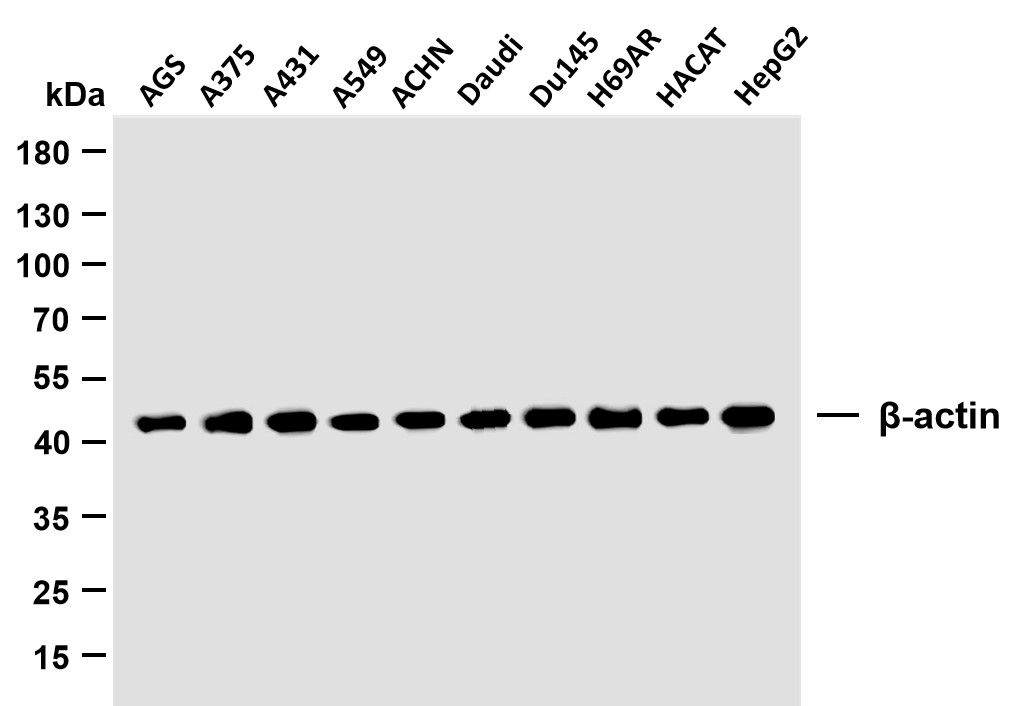
β-actin (PTR2364) Mouse mAb
YM3028
More→
Primary Antibodies
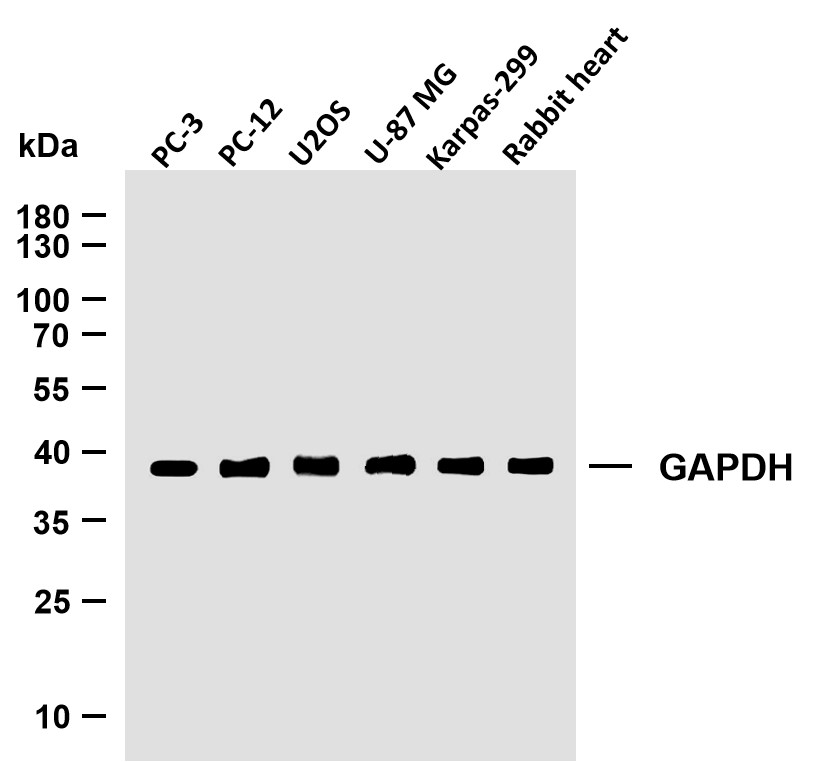
GAPDH (PTR2304) Mouse mAb
YM3029
More→
Antigen&Target Information
Immunogen:
The specific immunogen used to produce this antibody is proprietary information.
show all
Specificity:
Endogenous
show all
Gene Name:
SDHB
show all
Protein Name:
Succinate dehydrogenase [ubiquinone] iron-sulfur subunit mitochondrial
show all
Other Name:
SDHB ;
SDH ;
SDH1 ;
Succinate dehydrogenase [ubiquinone] iron-sulfur subunit, mitochondrial ;
Iron-sulfur subunit of complex II ;
Ip
SDH ;
SDH1 ;
Succinate dehydrogenase [ubiquinone] iron-sulfur subunit, mitochondrial ;
Iron-sulfur subunit of complex II ;
Ip
show all
Database Link:
Background:
Complex II of the respiratory chain, which is specifically involved in the oxidation of succinate, carries electrons from FADH to CoQ. The complex is composed of four nuclear-encoded subunits and is localized in the mitochondrial inner membrane. The iron-sulfur subunit is highly conserved and contains three cysteine-rich clusters which may comprise the iron-sulfur centers of the enzyme. Sporadic and familial mutations in this gene result in paragangliomas and pheochromocytoma, and support a link between mitochondrial dysfunction and tumorigenesis. [provided by RefSeq, Jul 2008],
show all
Function:
Catalytic activity:Succinate + ubiquinone = fumarate + ubiquinol.,cofactor:Binds 1 2Fe-2S cluster.,cofactor:Binds 1 3Fe-4S cluster.,cofactor:Binds 1 4Fe-4S cluster.,Disease:Defects in SDHB are a cause of Cowden-like syndrome [MIM:612359]. Cowden-like syndrome is a cancer predisposition syndrome associated with elevated risk for tumors of the breast, thyroid, kidney and uterus.,Disease:Defects in SDHB are a cause of paraganglioma and gastric stromal sarcoma [MIM:606864]; also called Carney-Stratakis syndrome. Gastrointestinal stromal tumors may be sporadic or inherited in an autosomal dominant manner, alone or as a component of a syndrome associated with other tumors, such as in the context of neurofibromatosis type 1 (NF1). Patients have both gastrointestinal stromal tumors and paragangliomas. Susceptibility to the tumors was inherited in an apparently autosomal dominant manner, with incomplete penetrance.,Disease:Defects in SDHB are a cause of pheochromocytoma [MIM:171300]. The pheochromocytomas are catecholamine-producing, chromaffin tumors that arise in the adrenal medulla in 90% of cases. In the remaining 10% of cases, they develop in extra-adrenal sympathetic ganglia and may be referred to as "paraganglioma." Pheochromocytoma usually presents with hypertension. Approximately 10% of pheochromocytoma is hereditary. Although pheochromocytoma susceptibility may be associated with germline mutations in the tumor-suppressor genes VHL and NF1 and in the proto-oncogene RET, the genetic basis for most cases of non-syndromic familial pheochromocytoma is unknown.,Disease:Defects in SDHB are the cause of hereditary paragangliomas type 4 (PLG4) [MIM:115310]; also known as familial non-chromaffin paragangliomas type 4. Paragangliomas refer to rare and mostly benign tumors that arise from any component of the neuroendocrine system. PLG4 is characterized by the development of mostly benign, highly vascular, slow growing tumors in the head and neck. In the head and neck region, the carotid body is the largest of all paraganglia and is also the most common site of the tumors.,Function:Iron-sulfur protein (IP) subunit of succinate dehydrogenase (SDH) that is involved in complex II of the mitochondrial electron transport chain and is responsible for transferring electrons from succinate to ubiquinone (coenzyme Q).,pathway:Carbohydrate metabolism; tricarboxylic acid cycle.,similarity:Belongs to the succinate dehydrogenase/fumarate reductase iron-sulfur protein family.,similarity:Contains 1 2Fe-2S ferredoxin-type domain.,similarity:Contains 1 4Fe-4S ferredoxin-type domain.,subunit:Component of complex II composed of four subunits: the flavoprotein (FP) sdha, iron-sulfur protein (IP) sdhb, and a cytochrome b560 composed of sdhc and sdhd.,
show all
Cellular Localization:
Mitochondrion inner membrane
show all
Tissue Expression:
show all
Research Areas:
>>Citrate cycle (TCA cycle) ;
>>Oxidative phosphorylation ;
>>Metabolic pathways ;
>>Carbon metabolism ;
>>Thermogenesis ;
>>Non-alcoholic fatty liver disease ;
>>Alzheimer disease ;
>>Parkinson disease ;
>>Amyotrophic lateral sclerosis ;
>>Huntington disease ;
>>Prion disease ;
>>Pathways of neurodegeneration - multiple diseases ;
>>Chemical carcinogenesis - reactive oxygen species ;
>>Diabetic cardiomyopathy
>>Oxidative phosphorylation ;
>>Metabolic pathways ;
>>Carbon metabolism ;
>>Thermogenesis ;
>>Non-alcoholic fatty liver disease ;
>>Alzheimer disease ;
>>Parkinson disease ;
>>Amyotrophic lateral sclerosis ;
>>Huntington disease ;
>>Prion disease ;
>>Pathways of neurodegeneration - multiple diseases ;
>>Chemical carcinogenesis - reactive oxygen species ;
>>Diabetic cardiomyopathy
show all
Signaling Pathway
Human Diseases >> Neurodegenerative disease >> Alzheimer disease
Human Diseases >> Neurodegenerative disease >> Parkinson disease
Human Diseases >> Neurodegenerative disease >> Amyotrophic lateral sclerosis
Human Diseases >> Neurodegenerative disease >> Huntington disease
Human Diseases >> Neurodegenerative disease >> Prion disease
Human Diseases >> Neurodegenerative disease >> Pathways of neurodegeneration - multiple diseases
Reference Citation({{totalcount}})
Catalog: YM8296
Size
Price
Status
Qty.
200μL
$600.00
In stock
0
100μL
$340.00
In stock
0
40μL
$190.00
In stock
0
Add to cart
Collected
Collect
Recently Viewed Products
Clear allPRODUCTS
CUSTOMIZED
ABOUT US



Toggle night Mode
{{pinfoXq.title || ''}}
Catalog: {{pinfoXq.catalog || ''}}
Filter:
All
{{item.name}}
{{pinfo.title}}
-{{pinfo.catalog}}
Main Information
Target
{{pinfo.target}}
Reactivity
{{pinfo.react}}
Applications
{{pinfo.applicat}}
Conjugate/Modification
{{pinfo.coupling}}/{{pinfo.modific}}
MW (kDa)
{{pinfo.mwcalc}}
Host Species
{{pinfo.hostspec}}
Isotype
{{pinfo.isotype}}
Product {{index}}/{{pcount}}
Prev
Next
{{pvTitle}}
Scroll wheel zooms the picture
{{pvDescr}}