



Catalog: YT5382
Size
Price
Status
Qty.
200μL
$450.00
In stock
0
100μL
$280.00
In stock
0
40μL
$150.00
In stock
0
Add to cart


Collected
Collect
Main Information
Target
NLRP3
Host Species
Rabbit
Reactivity
Human, Mouse, Rat
Applications
WB, IHC, IF, ELISA
MW
115kD (Observed)
Conjugate/Modification
Unmodified
Detailed Information
Recommended Dilution Ratio
WB 1:500-1:2000; IHC: 1:100-1:300; ELISA 1:20000; IF 1:50-200
Note: For IHC, we suggest antigen retrieval with TE buffer pH 9.0 (Cat#YS0004)
Note: For IHC, we suggest antigen retrieval with TE buffer pH 9.0 (Cat#YS0004)
Formulation
Liquid in PBS containing 50% glycerol, 0.5% BSA and 0.02% sodium azide.
Specificity
Cryopyrin Polyclonal Antibody detects endogenous levels of Cryopyrin protein.
Purification
The antibody was affinity-purified from rabbit antiserum by affinity-chromatography using epitope-specific immunogen.
Storage
-15°C to -25°C/1 year(Do not lower than -25°C)
Concentration
1 mg/ml
MW(Observed)
115kD
Modification
Unmodified
Clonality
Polyclonal
Isotype
IgG
RRID
AB_3095508
Related Products
Secondary Antibodies
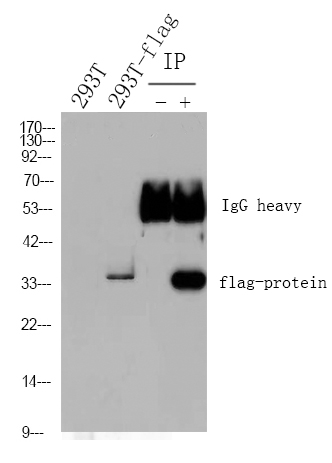
Goat Anti Mouse IgG(H+L) (HRP)
RS0001
More→
Secondary Antibodies
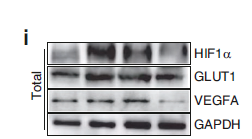
Goat Anti Rabbit IgG(H+L) (HRP)
RS0002
More→
Primary Antibodies
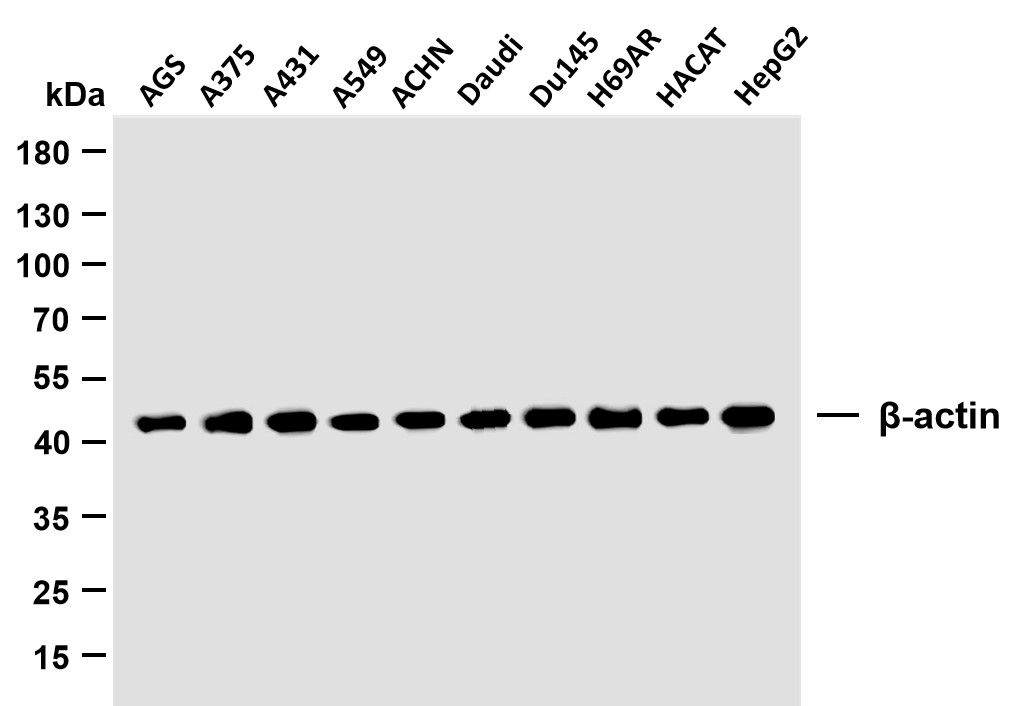
β-actin (PTR2364) Mouse mAb
YM3028
More→
Primary Antibodies
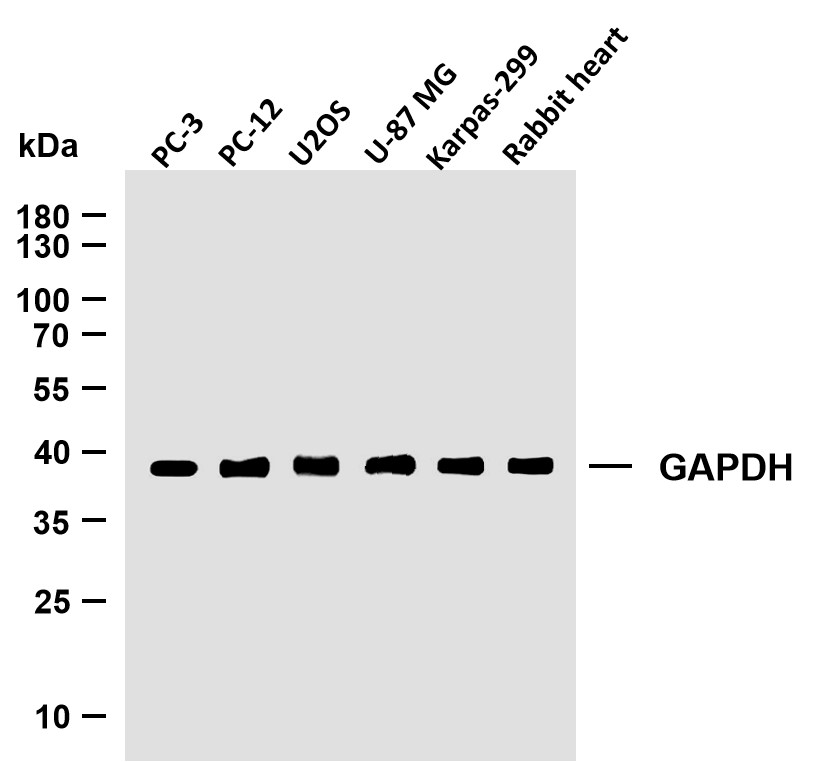
GAPDH (PTR2304) Mouse mAb
YM3029
More→
Antigen&Target Information
Immunogen:
The antiserum was produced against synthesized peptide derived from the Internal region of human NLRP3. AA range:511-560
show all
Specificity:
Cryopyrin Polyclonal Antibody detects endogenous levels of Cryopyrin protein.
show all
Gene Name:
NLRP3
show all
Protein Name:
NACHT LRR and PYD domains-containing protein 3
show all
Other Name:
NLRP3 ;
C1orf7 ;
CIAS1 ;
NALP3 ;
PYPAF1 ;
NACHT, LRR and PYD domains-containing protein 3 ;
Angiotensin/vasopressin receptor AII/AVP-like ;
Caterpiller protein 1.1CLR1.1 ;
Cold autoinflammatory syndrome 1 protein ;
Cryopyrin ;
PYRIN-containing APAF1-like protein 1
C1orf7 ;
CIAS1 ;
NALP3 ;
PYPAF1 ;
NACHT, LRR and PYD domains-containing protein 3 ;
Angiotensin/vasopressin receptor AII/AVP-like ;
Caterpiller protein 1.1CLR1.1 ;
Cold autoinflammatory syndrome 1 protein ;
Cryopyrin ;
PYRIN-containing APAF1-like protein 1
show all
Background:
This gene encodes a pyrin-like protein containing a pyrin domain, a nucleotide-binding site (NBS) domain, and a leucine-rich repeat (LRR) motif. This protein interacts with the apoptosis-associated speck-like protein PYCARD/ASC, which contains a caspase recruitment domain, and is a member of the NALP3 inflammasome complex. This complex functions as an upstream activator of NF-kappaB signaling, and it plays a role in the regulation of inflammation, the immune response, and apoptosis. Mutations in this gene are associated with familial cold autoinflammatory syndrome (FCAS), Muckle-Wells syndrome (MWS), chronic infantile neurological cutaneous and articular (CINCA) syndrome, and neonatal-onset multisystem inflammatory disease (NOMID). Multiple alternatively spliced transcript variants encoding distinct isoforms have been identified for this gene. Alternative 5' UTR structures are s
show all
Function:
Disease:Defects in NLRP3 are a cause of Muckle-Wells syndrome (MWS) [MIM:191900]; also known as urticaria-deafness-amyloidosis syndrome. MWS is a hereditary periodic fever syndrome characterized by fever, chronic recurrent urticaria, arthralgias, progressive sensorineural deafness, and reactive renal amyloidosis. The disease may be severe if generalized amyloidosis occurs.,Disease:Defects in NLRP3 are the cause of chronic infantile neurologic cutaneous and articular syndrome (CINCA) [MIM:607115]; also known as 'neonatal onset multisystem inflammatory disease,' or NOMID, a rare congenital inflammatory disorder characterized by a triad of neonatal onset of cutaneous symptoms, chronic meningitis, and joint manifestations with recurrent fever and inflammation.,Disease:Defects in NLRP3 are the cause of familial cold autoinflammatory syndrome type 1 (FCAS1) [MIM:120100]; commonly known as familial cold urticaria. FCAS are rare autosomal dominant systemic inflammatory diseases characterized by episodes of rash, arthralgia, fever and conjunctivitis after generalized exposure to cold.,Function:May function as an inducer of apoptosis. Interacts selectively with ASC and this complex may function as an upstream activator of NF-kappa-B signaling. Inhibits TNF-alpha induced activation and nuclear translocation of RELA/NF-KB p65. Also inhibits transcriptional activity of RELA. Activates caspase-1 in response to a number of triggers including bacterial or viral infection which leads to processing and release of IL1B and IL18.,induction:By TNF-alpha.,online information:Repertory of FMF and hereditary autoinflammatory disorders mutations,similarity:Belongs to the NLRP family.,similarity:Contains 1 DAPIN domain.,similarity:Contains 1 NACHT domain.,similarity:Contains 7 LRR (leucine-rich) repeats.,subunit:Interacts with PYCARD/ASC. Part of the NALP3 inflammasome complex which is involved in activation of caspase-1 and caspase-5, leading to processing of IL1B and IL18.,tissue specificity:Expressed in blood leukocytes. Strongly expressed in polymorphonuclear cells and osteoblasts. Undetectable or expressed at a lower magnitude in B- and T-lymphoblasts, respectively. High level of expression detected in chondrocytes. Detected in non-keratinizing epithelia of oropharynx, esophagus and ectocervix and in the urothelial layer of the bladder.,
show all
Cellular Localization:
Cytoplasm, cytosol . Inflammasome . Endoplasmic reticulum . Secreted . Nucleus . In macrophages, under resting conditions, mainly located in the cytosol, on the endoplasmic reticulum. After stimulation with inducers of the NLRP3 inflammasome, mitochondria redistribute in the vicinity of the endoplasmic reticulum in the perinuclear region, which results in colocalization of NLRP3 on the endoplasmic reticulum and PYCARD on mitochondria, allowing the activation of inflammasome assembly. After the induction of pyroptosis, inflammasome specks are released into the extracellular space where they can further promote IL1B processing and where they can be engulfed by macrophages. Phagocytosis induces lysosomal damage and inflammasome activation in the recipient cells (PubMed:24952504). In the Th2 subset of CD4(+) helper T-cells, mainly located in the nucleus. Nuclear localization depends upon KPNA2. In the Th1 subset of CD4(+) helper T-cells, mainly cytoplasmic (By similarity). .; Golgi apparatus membrane. (Microbial infection) Upon HRSV infection, the protein is mainly located in lipid rafts in the Golgi membrane. .
show all
Research Areas:
>>Necroptosis ;
>>NOD-like receptor signaling pathway ;
>>C-type lectin receptor signaling pathway ;
>>Pathogenic Escherichia coli infection ;
>>Shigellosis ;
>>Salmonella infection ;
>>Pertussis ;
>>Yersinia infection ;
>>Influenza A ;
>>Coronavirus disease - COVID-19 ;
>>Lipid and atherosclerosis
>>NOD-like receptor signaling pathway ;
>>C-type lectin receptor signaling pathway ;
>>Pathogenic Escherichia coli infection ;
>>Shigellosis ;
>>Salmonella infection ;
>>Pertussis ;
>>Yersinia infection ;
>>Influenza A ;
>>Coronavirus disease - COVID-19 ;
>>Lipid and atherosclerosis
show all
Signaling Pathway
Reference Citation({{totalcount}})
Catalog: YT5382
Size
Price
Status
Qty.
200μL
$450.00
In stock
0
100μL
$280.00
In stock
0
40μL
$150.00
In stock
0
Add to cart
Collected
Collect
Recently Viewed Products
Clear allPRODUCTS
CUSTOMIZED
ABOUT US



Toggle night Mode
{{pinfoXq.title || ''}}
Catalog: {{pinfoXq.catalog || ''}}
Filter:
All
{{item.name}}
{{pinfo.title}}
-{{pinfo.catalog}}
Main Information
Target
{{pinfo.target}}
Reactivity
{{pinfo.react}}
Applications
{{pinfo.applicat}}
Conjugate/Modification
{{pinfo.coupling}}/{{pinfo.modific}}
MW (kDa)
{{pinfo.mwcalc}}
Host Species
{{pinfo.hostspec}}
Isotype
{{pinfo.isotype}}
Product {{index}}/{{pcount}}
Prev
Next
{{pvTitle}}
Scroll wheel zooms the picture
{{pvDescr}}