





Catalog: YT5094
Size
Price
Status
Qty.
200μL
$450.00
In stock
0
100μL
$280.00
In stock
0
40μL
$150.00
In stock
0
Add to cart


Collected
Collect
Main Information
Target
Caspase-10
Host Species
Rabbit
Reactivity
Human
Applications
WB, ELISA
MW
58kD (Observed)
Conjugate/Modification
Unmodified
Detailed Information
Recommended Dilution Ratio
WB 1:500-1:2000; ELISA 1:40000; Not yet tested in other applications.
Formulation
Liquid in PBS containing 50% glycerol, 0.5% BSA and 0.02% sodium azide.
Specificity
Caspase-10 Polyclonal Antibody detects endogenous levels of Caspase-10 protein.
Purification
The antibody was affinity-purified from rabbit antiserum by affinity-chromatography using epitope-specific immunogen.
Storage
-15°C to -25°C/1 year(Do not lower than -25°C)
Concentration
1 mg/ml
MW(Observed)
58kD
Modification
Unmodified
Clonality
Polyclonal
Isotype
IgG
Related Products
Secondary Antibodies
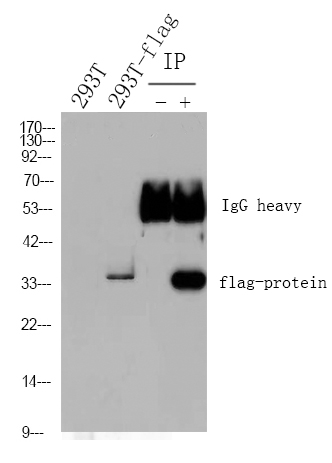
Goat Anti Mouse IgG(H+L) (HRP)
RS0001
More→
Secondary Antibodies
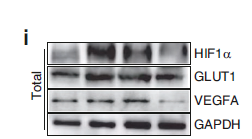
Goat Anti Rabbit IgG(H+L) (HRP)
RS0002
More→
Primary Antibodies
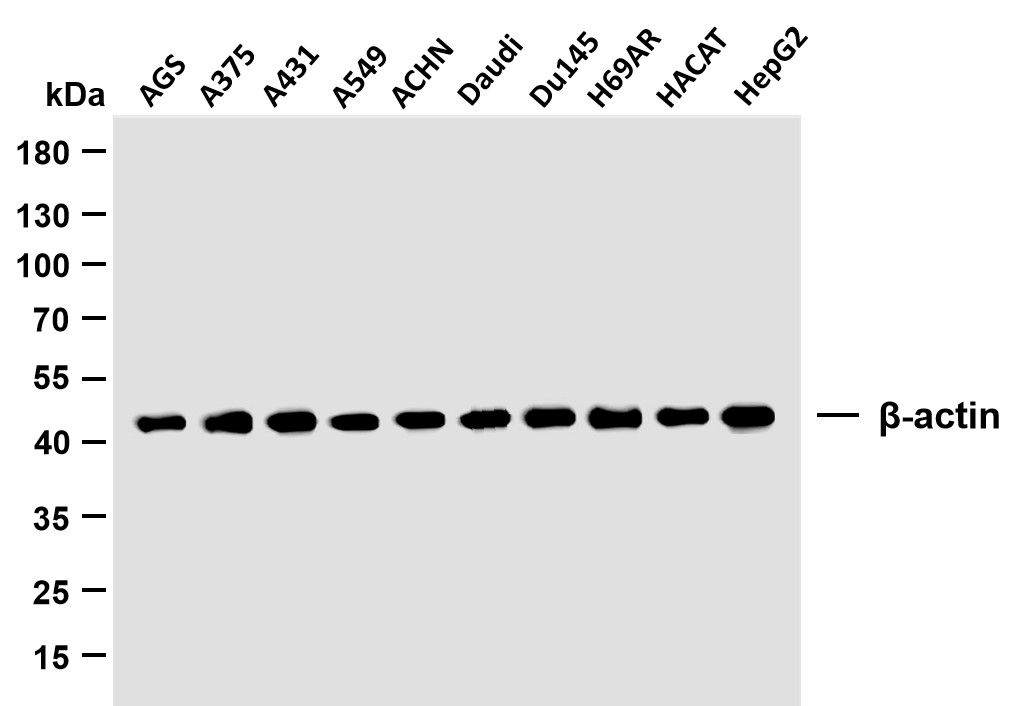
β-actin (PTR2364) Mouse mAb
YM3028
More→
Primary Antibodies
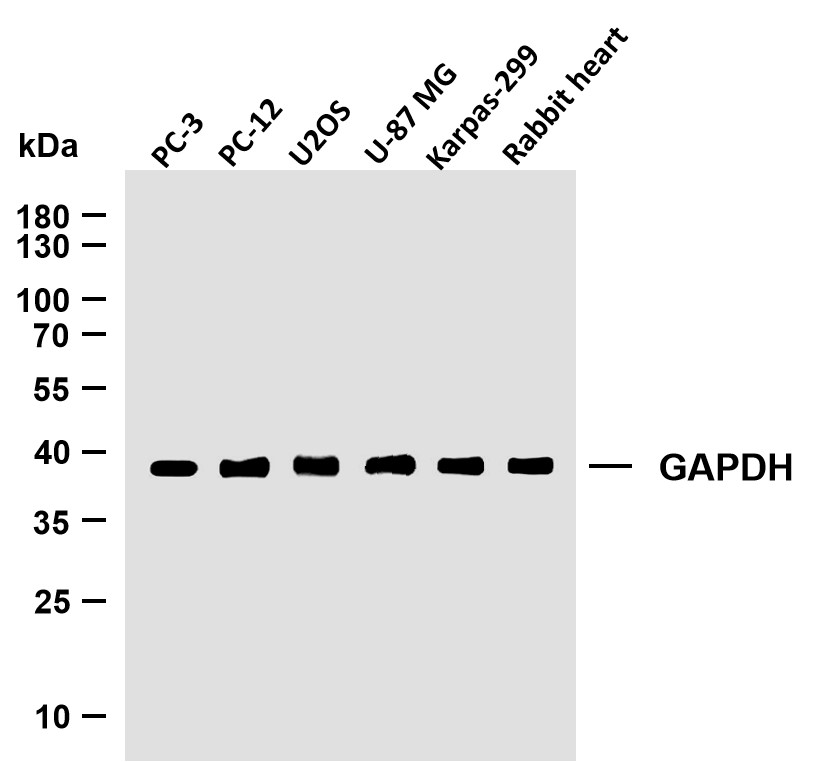
GAPDH (PTR2304) Mouse mAb
YM3029
More→
Antigen&Target Information
Immunogen:
Synthesized peptide derived from the Internal region of human Caspase-10.
show all
Specificity:
Caspase-10 Polyclonal Antibody detects endogenous levels of Caspase-10 protein.
show all
Gene Name:
CASP10
show all
Protein Name:
Caspase10
show all
Other Name:
CASP10 ;
MCH4 ;
Caspase-10 ;
CASP-10 ;
Apoptotic protease Mch-4 ;
FAS-associated death domain protein interleukin-1B-converting enzyme 2 ;
FLICE2 ;
ICE-like apoptotic protease 4
MCH4 ;
Caspase-10 ;
CASP-10 ;
Apoptotic protease Mch-4 ;
FAS-associated death domain protein interleukin-1B-converting enzyme 2 ;
FLICE2 ;
ICE-like apoptotic protease 4
show all
Background:
This gene encodes a protein which is a member of the cysteine-aspartic acid protease (caspase) family. Sequential activation of caspases plays a central role in the execution-phase of cell apoptosis. Caspases exist as inactive proenzymes which undergo proteolytic processing at conserved aspartic residues to produce two subunits, large and small, that dimerize to form the active enzyme. This protein cleaves and activates caspases 3 and 7, and the protein itself is processed by caspase 8. Mutations in this gene are associated with type IIA autoimmune lymphoproliferative syndrome, non-Hodgkin lymphoma and gastric cancer. Alternatively spliced transcript variants encoding different isoforms have been described for this gene. [provided by RefSeq, Apr 2011],
show all
Function:
Catalytic activity:Strict requirement for Asp at position P1 and has a preferred cleavage sequence of Leu-Gln-Thr-Asp-|-Gly.,Disease:Defects in CASP10 are a cause of familial non-Hodgkin lymphoma (NHL) [MIM:605027]. NHL is a cancer that starts in cells of the lymph system, which is part of the body's immune system. NHLs can occur at any age and are often marked by enlarged lymph nodes, fever and weight loss.,Disease:Defects in CASP10 are a cause of gastric cancers [MIM:137215].,Disease:Defects in CASP10 are the cause of autoimmune lymphoproliferative syndrome type 2A (ALPS2A) [MIM:603909]. ALPS2 is characterized by abnormal lymphocyte and dendritic cell homeostasis and immune regulatory defects.,Function:Involved in the activation cascade of caspases responsible for apoptosis execution. Recruited to both Fas- and TNFR-1 receptors in a FADD dependent manner. May participate in the granzyme B apoptotic pathways. Cleaves and activates caspase-3, -4, -6, -7, -8, and -9. Hydrolyzes the small- molecule substrates, Tyr-Val-Ala-Asp-|-AMC and Asp-Glu-Val-Asp-|-AMC.,Function:Isoform C is proteolytically inactive.,online information:CASP10 mutation db,online information:Caspase-10 mutations causing ALPS type II,PTM:Cleavage by granzyme B and autocatalytic activity generate the two active subunits.,PTM:Phosphorylated upon DNA damage, probably by ATM or ATR.,similarity:Belongs to the peptidase C14A family.,similarity:Contains 2 DED (death effector) domains.,subunit:Heterotetramer that consists of two anti-parallel arranged heterodimers, each one formed by a 23/17 kDa (p23/17) (depending on the splicing events) and a 12 kDa (p12) subunit (By similarity). Self-associates. Interacts with FADD and CASP8. Found in a Fas signaling complex consisting of FAS, FADD, CASP8 and CASP10.,tissue specificity:Detectable in most tissues. Lowest expression is seen in brain, kidney, prostate, testis and colon.,
show all
Cellular Localization:
cytosol,CD95 death-inducing signaling complex,ripoptosome,
show all
Tissue Expression:
Research Areas:
>>Apoptosis ;
>>RIG-I-like receptor signaling pathway ;
>>TNF signaling pathway ;
>>Tuberculosis ;
>>Hepatitis B
>>RIG-I-like receptor signaling pathway ;
>>TNF signaling pathway ;
>>Tuberculosis ;
>>Hepatitis B
show all
Signaling Pathway
Reference Citation({{totalcount}})
Catalog: YT5094
Size
Price
Status
Qty.
200μL
$450.00
In stock
0
100μL
$280.00
In stock
0
40μL
$150.00
In stock
0
Add to cart
Collected
Collect
Recently Viewed Products
Clear allPRODUCTS
CUSTOMIZED
ABOUT US



Toggle night Mode
{{pinfoXq.title || ''}}
Catalog: {{pinfoXq.catalog || ''}}
Filter:
All
{{item.name}}
{{pinfo.title}}
-{{pinfo.catalog}}
Main Information
Target
{{pinfo.target}}
Reactivity
{{pinfo.react}}
Applications
{{pinfo.applicat}}
Conjugate/Modification
{{pinfo.coupling}}/{{pinfo.modific}}
MW (kDa)
{{pinfo.mwcalc}}
Host Species
{{pinfo.hostspec}}
Isotype
{{pinfo.isotype}}
Product {{index}}/{{pcount}}
Prev
Next
{{pvTitle}}
Scroll wheel zooms the picture
{{pvDescr}}