






Catalog: YM9531
Size
Price
Status
Qty.
200μL
$600.00
3 weeks
0
100μL
$340.00
3 weeks
0
40μL
$190.00
3 weeks
0
Add to cart


Collected
Collect
Main Information
Target
ApoER2
Host Species
Rabbit
Reactivity
Human, Mouse, Rat
Applications
WB, IF, IP, ELISA
MW
106kD (Calculated)
106kD (Observed)
Conjugate/Modification
Unmodified
Detailed Information
Recommended Dilution Ratio
WB 1:2000-1:10000; IF 1:200-1:1000; ELISA 1:5000-1:20000; IP 1:50-1:200;
Formulation
PBS, 50% glycerol, 0.05% Proclin 300, 0.05%BSA
Specificity
Endogenous
Purification
Protein A
Storage
-15°C to -25°C/1 year(Do not lower than -25°C)
MW(Calculated)
106kD
MW(Observed)
106kD
Modification
Unmodified
Clonality
Monoclonal
Clone Number
PT1689R
Isotype
IgG,Kappa
Related Products
Secondary Antibodies
Goat Anti Mouse IgG(H+L) (HRP)
RS0001
More→
Secondary Antibodies
Goat Anti Rabbit IgG(H+L) (HRP)
RS0002
More→
Primary Antibodies
β-actin (PTR2364) Mouse mAb
YM3028
More→
Primary Antibodies
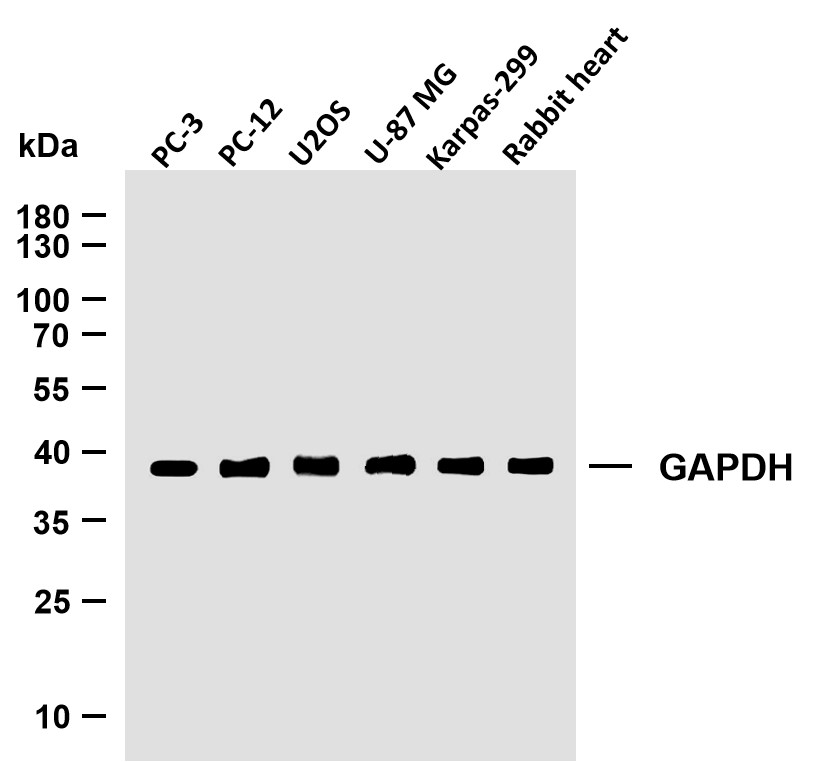
GAPDH (PTR2304) Mouse mAb
YM3029
More→
Antigen&Target Information
Specificity:
Endogenous
show all
Gene Name:
LRP8
show all
Protein Name:
Low-density lipoprotein receptor-related protein 8
show all
Other Name:
LRP8 ;
APOER2 ;
Low-density lipoprotein receptor-related protein 8 ;
LRP-8 ;
Apolipoprotein E receptor 2
APOER2 ;
Low-density lipoprotein receptor-related protein 8 ;
LRP-8 ;
Apolipoprotein E receptor 2
show all
Background:
This gene encodes a member of the low density lipoprotein receptor (LDLR) family. Low density lipoprotein receptors are cell surface proteins that play roles in both signal transduction and receptor-mediated endocytosis of specific ligands for lysosomal degradation. The encoded protein plays a critical role in the migration of neurons during development by mediating Reelin signaling, and also functions as a receptor for the cholesterol transport protein apolipoprotein E. Expression of this gene may be a marker for major depressive disorder. Alternatively spliced transcript variants encoding multiple isoforms have been observed for this gene. [provided by RefSeq, Jun 2011],
show all
Function:
Alternative products:Additional isoforms seem to exist. No differences were observed in the pattern splicing between control and Alzheimer brains,Disease:Genetic variation in LRP8 is associated with susceptibility to myocardial infarction type 1 [MIM:608446]. Atherosclerotic coronary artery disease (CAD) and myocardial infarction (MI) are complex traits that account for the leading cause of death in the Western world heart disease.,Domain:The cytoplasmic domain is involved in the binding of DAB1 and in the recruitment of JNK-interacting proteins. Isoforms, which lack part of the cytoplasmic domain, are unable to recruit members of the family of JNK interacting proteins (JIP) to the cytoplasmic tail.,Function:Cell surface receptor for Reelin (RELN) and apolipoprotein E (apoE)-containing ligands. LRP8 participates in transmitting the extracellular Reelin signal to intracellular signaling processes, by binding to DAB1 on its cytoplasmic tail. Reelin acts via both the VLDL receptor (VLDLR) and LRP8 to regulate DAB1 tyrosine phosphorylation and microtubule function in neurons. LRP8 has higher affinity for Reelin than VLDLR. LRP8 is thus a key component of the Reelin pathway which governs neuronal layering of the forebrain during embryonic brain development. Binds the endoplasmic reticulum resident receptor-associated protein (RAP). Binds dimers of beta 2-glycoprotein I and may be involved in the suppression of platelet aggregation in the vasculature. Highly expressed in the initial segment of the epididymis, where it affects the functional expression of clusterin and phospholipid hydroperoxide glutathione peroxidase (PHGPx), two proteins required for sperm maturation. May also function as an endocytic receptor.,miscellaneous:Natural isoforms of apoE (E2, E3, E4) have similar affinities for LRP8.,PTM:O-glycosylated. Some alternatively spliced isoforms lack the O-linked sugar domain.,PTM:Tyrosine phosphorylated upon apoE binding.,PTM:Undergoes sequential, furin and gamma-secretase dependent, proteolytic processing, resulting in the extracellular release of the entire ligand-binding domain as a soluble polypeptide and in the intracellular domain (ICD) release into the cytoplasm. The gamma-secretase-dependent proteolytical processing occurs after the bulk of the extracellular domain has been shed, in a furin-dependent manner, in alternatively spliced isoforms carrying the furin cleavage site. Hypoglycosylation (mainly hypo-O-glycosylation) leads to increased extracellular cleavage, which in turn results in accelerating release of the intracellular domain (ICD) by the gamma-secretase. The resulting receptor fragment is able to inhibit Reelin signaling and in particular the Reelin-induced DAB1 phosphorylation.,similarity:Belongs to the LDLR family.,similarity:Contains 2 EGF-like domains.,similarity:Contains 5 LDL-receptor class B repeats.,similarity:Contains 7 LDL-receptor class A domains.,subcellular location:Isoforms that contain the exon coding for a furin-type cleavage site are proteolytically processed, leading to a secreted receptor fragment.,subunit:Reelin associates with two or more receptor molecules. Interacts with DAB1 and JNK-interacting proteins. Interacts with SNX17.,tissue specificity:Expressed mainly in brain and placenta. Also expressed in platelets and megakaryocytic cells. Not expressed in the liver.,
show all
Cellular Localization:
Cell membrane ; Single-pass type I membrane protein . Secreted . Isoforms that contain the exon coding for a furin-type cleavage site are proteolytically processed, leading to a secreted receptor fragment. .
show all
Reference Citation({{totalcount}})
Catalog: YM9531
Size
Price
Status
Qty.
200μL
$600.00
3 weeks
0
100μL
$340.00
3 weeks
0
40μL
$190.00
3 weeks
0
Add to cart
Collected
Collect
Recently Viewed Products
Clear allPRODUCTS
CUSTOMIZED
ABOUT US



Toggle night Mode
{{pinfoXq.title || ''}}
Catalog: {{pinfoXq.catalog || ''}}
Filter:
All
{{item.name}}
{{pinfo.title}}
-{{pinfo.catalog}}
Main Information
Target
{{pinfo.target}}
Reactivity
{{pinfo.react}}
Applications
{{pinfo.applicat}}
Conjugate/Modification
{{pinfo.coupling}}/{{pinfo.modific}}
MW (kDa)
{{pinfo.mwcalc}}
Host Species
{{pinfo.hostspec}}
Isotype
{{pinfo.isotype}}
Product {{index}}/{{pcount}}
Prev
Next
{{pvTitle}}
Scroll wheel zooms the picture
{{pvDescr}}