






Catalog: YM9482
Size
Price
Status
Qty.
200μL
$600.00
3 weeks
0
100μL
$340.00
3 weeks
0
40μL
$190.00
3 weeks
0
Add to cart


Collected
Collect
Main Information
Target
CYLD
Host Species
Rabbit
Reactivity
Human, Mouse, Rat
Applications
WB, IHC, IF, IP, ELISA
MW
107kD (Calculated)
110kD (Observed)
Conjugate/Modification
Unmodified
Detailed Information
Recommended Dilution Ratio
IHC 1:200-1:1000; WB 1:2000-1:10000; IF 1:200-1:1000; ELISA 1:5000-1:20000; IP 1:50-1:200;
Formulation
PBS, 50% glycerol, 0.05% Proclin 300, 0.05%BSA
Specificity
Endogenous
Purification
Protein A
Storage
-15°C to -25°C/1 year(Do not lower than -25°C)
MW(Calculated)
107kD
MW(Observed)
110kD
Modification
Unmodified
Clonality
Monoclonal
Clone Number
PT1640R
Isotype
IgG,Kappa
Related Products
Secondary Antibodies
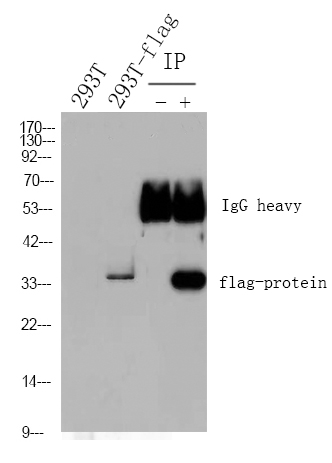
Goat Anti Mouse IgG(H+L) (HRP)
RS0001
More→
Secondary Antibodies
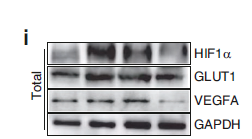
Goat Anti Rabbit IgG(H+L) (HRP)
RS0002
More→
Primary Antibodies
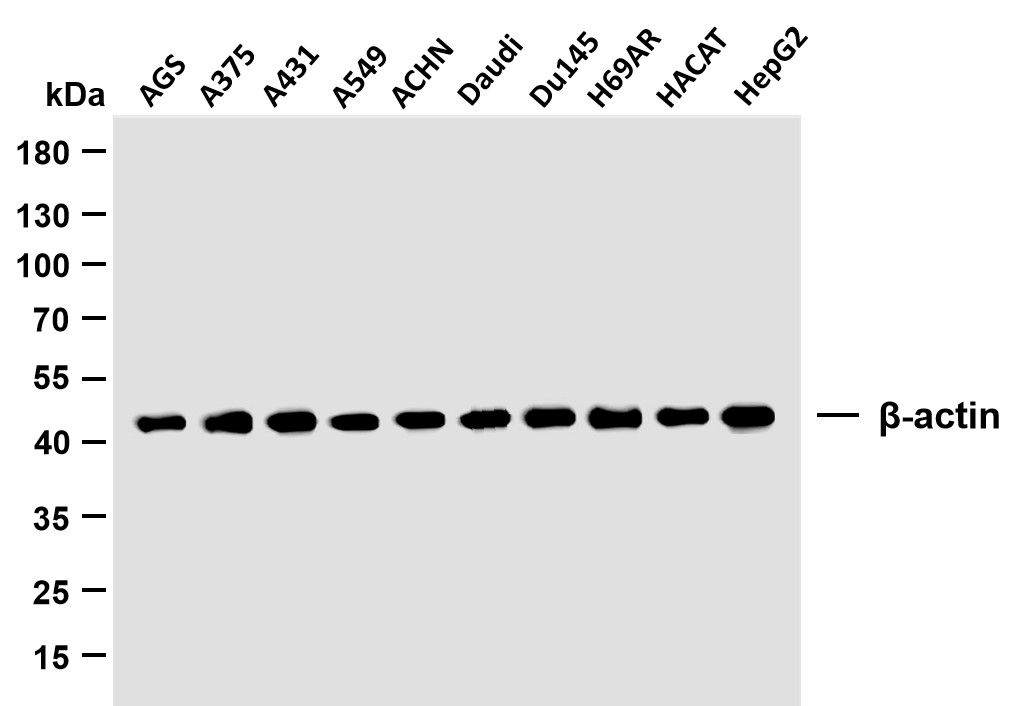
β-actin (PTR2364) Mouse mAb
YM3028
More→
Primary Antibodies
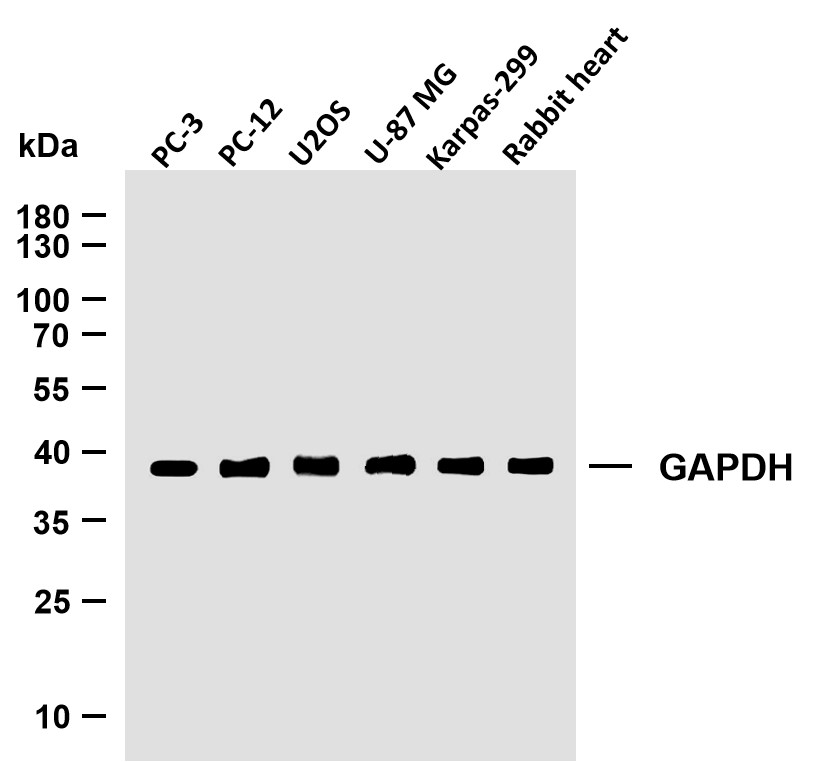
GAPDH (PTR2304) Mouse mAb
YM3029
More→
Antigen&Target Information
Specificity:
Endogenous
show all
Gene Name:
CYLD CYLD1 KIAA0849 HSPC057
show all
Protein Name:
Ubiquitin carboxyl-terminal hydrolase CYLD
show all
Other Name:
Ubiquitin carboxyl-terminal hydrolase CYLD ;
Deubiquitinating enzyme CYLD ;
Ubiquitin thioesterase CYLD ;
Ubiquitin-specific-processing protease CYLD ;
Deubiquitinating enzyme CYLD ;
Ubiquitin thioesterase CYLD ;
Ubiquitin-specific-processing protease CYLD ;
show all
Database Link:
Background:
This gene is encodes a cytoplasmic protein with three cytoskeletal-associated protein-glycine-conserved (CAP-GLY) domains that functions as a deubiquitinating enzyme. Mutations in this gene have been associated with cylindromatosis, multiple familial trichoepithelioma, and Brooke-Spiegler syndrome. Alternate transcriptional splice variants, encoding different isoforms, have been characterized. [provided by RefSeq, Jul 2008],
show all
Function:
Catalytic activity:Ubiquitin C-terminal thioester + H(2)O = ubiquitin + a thiol.,Disease:Defects in CYLD are the cause of Brooke-Spiegler syndrome (BRSS) [MIM:605041]. BRSS is an autosomal dominant disorder characterized by the appearance of multiple skin appendage tumors such as cylindroma, trichoepithelioma, and spiradenoma. These tumors are typically located in the head and neck region, appear in early adulthood, and gradually increase in size and number throughout life.,Disease:Defects in CYLD are the cause of familial cylindromatosis [MIM:132700]; also known as Ancell-Spiegler cylindromas or turban tumor syndrome or dermal eccrine cylindromatosis. CYLD is an autosomal dominant and highly tumor type-specific disorder. The tumors (known as cylindromas because of their characteristic microscopic architecture) are believed to arise from or recapitulate the appearance of the eccrine or apocrine cells of the skin that secrete sweat and scent respectively. Cylindromas arise predominantly in hairy parts of the body with approximately 90% on the head and neck. The development of a confluent mass which may ulcerate or become infected has led to the designation "turban tumor syndrome". The skin tumors show differentiation in the direction of hair structures, hence the synonym trichoepithelioma.,Disease:Defects in CYLD are the cause of multiple familial trichoepithelioma type 1 (MFT1) [MIM:601606]; also known as epithelioma adenoides cysticum of Brooke (EAC) or hereditary multiple benign cystic epithelioma or Brooke-Fordyce trichoepitheliomas. MFT1 is an autosomal dominant dermatosis characterized by the presence of many skin tumors predominantly on the face. Since histologic examination shows dermal aggregates of basaloid cells with connection to or differentiation toward hair follicles, this disorder has been thought to represent a benign hamartoma of the pilosebaceous apparatus. Trichoepitheliomas can degenerate into basal cell carcinoma.,Function:Negative regulator of TRAF2 and NF-kappa-B signaling pathway. Has deubiquitinating activity that is directed towards non-'Lys-48'-linked polyubiquitin chains. The inhibition of NF-kappa-B activation is mediated at least in part, by the deubiquitination and inactivation of TRAF2 and, to a lesser extent, TRAF6.,similarity:Belongs to the peptidase C67 family.,similarity:Contains 2 CAP-Gly domains.,subunit:Interacts with NEMO, TRAF2 and TRIP.,tissue specificity:Detected in fetal brain, testis, and skeletal muscle, and at a lower level in adult brain, leukocytes, liver, heart, kidney, spleen, ovary and lung. Isoform 2 is found in all tissues except kidney.,
show all
Cellular Localization:
Cytoplasm . Cytoplasm, perinuclear region. Cytoplasm, cytoskeleton. Cell membrane; Peripheral membrane protein; Cytoplasmic side. Cytoplasm, cytoskeleton, microtubule organizing center, centrosome . Cytoplasm, cytoskeleton, spindle . Cytoplasm, cytoskeleton, cilium basal body . Detected at the microtubule cytoskeleton during interphase. Detected at the midbody during telophase. During metaphase, it remains localized to the centrosome but is also present along the spindle (PubMed:25134987). .
show all
Tissue Expression:
Research Areas:
>>NF-kappa B signaling pathway ;
>>Necroptosis ;
>>Osteoclast differentiation ;
>>RIG-I-like receptor signaling pathway ;
>>C-type lectin receptor signaling pathway
>>Necroptosis ;
>>Osteoclast differentiation ;
>>RIG-I-like receptor signaling pathway ;
>>C-type lectin receptor signaling pathway
show all
Signaling Pathway
Cellular Processes >> Cell growth and death >> Necroptosis
Organismal Systems >> Immune system >> RIG-I-like receptor signaling pathway
Organismal Systems >> Development and regeneration >> Osteoclast differentiation
Environmental Information Processing >> Signal transduction >> NF-kappa B signaling pathway
Environmental Information Processing >> Signal transduction >> TNF signaling pathway
Reference Citation({{totalcount}})
Catalog: YM9482
Size
Price
Status
Qty.
200μL
$600.00
3 weeks
0
100μL
$340.00
3 weeks
0
40μL
$190.00
3 weeks
0
Add to cart
Collected
Collect
Recently Viewed Products
Clear allPRODUCTS
CUSTOMIZED
ABOUT US



Toggle night Mode
{{pinfoXq.title || ''}}
Catalog: {{pinfoXq.catalog || ''}}
Filter:
All
{{item.name}}
{{pinfo.title}}
-{{pinfo.catalog}}
Main Information
Target
{{pinfo.target}}
Reactivity
{{pinfo.react}}
Applications
{{pinfo.applicat}}
Conjugate/Modification
{{pinfo.coupling}}/{{pinfo.modific}}
MW (kDa)
{{pinfo.mwcalc}}
Host Species
{{pinfo.hostspec}}
Isotype
{{pinfo.isotype}}
Product {{index}}/{{pcount}}
Prev
Next
{{pvTitle}}
Scroll wheel zooms the picture
{{pvDescr}}