






Catalog: YM9068
Size
Price
Status
Qty.
200μL
$600.00
3 weeks
0
100μL
$340.00
3 weeks
0
40μL
$190.00
3 weeks
0
Add to cart


Collected
Collect
Main Information
Target
FMR1
Host Species
Rabbit
Reactivity
Human, Mouse, Rat
Applications
WB, IHC, IF, ELISA
MW
71kD (Calculated)
70-77kD (Observed)
Conjugate/Modification
Unmodified
Detailed Information
Recommended Dilution Ratio
IHC 1:200-1:1000; WB 1:2000-1:10000; IF 1:200-1:1000; ELISA 1:5000-1:20000;
Formulation
PBS, 50% glycerol, 0.05% Proclin 300, 0.05%BSA
Specificity
Endogenous
Purification
Protein A
Storage
-15°C to -25°C/1 year(Do not lower than -25°C)
MW(Calculated)
71kD
MW(Observed)
70-77kD
Modification
Unmodified
Clonality
Monoclonal
Clone Number
PT1226R
Isotype
IgG,Kappa
Related Products
Secondary Antibodies
Goat Anti Mouse IgG(H+L) (HRP)
RS0001
More→
Secondary Antibodies
Goat Anti Rabbit IgG(H+L) (HRP)
RS0002
More→
Primary Antibodies
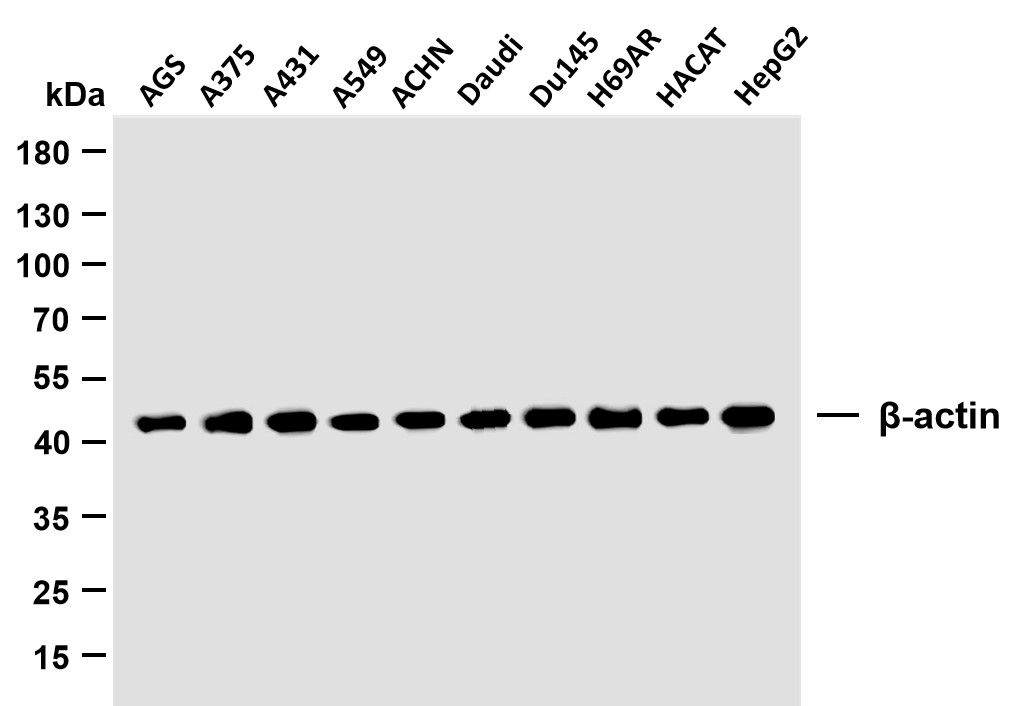
β-actin (PTR2364) Mouse mAb
YM3028
More→
Primary Antibodies
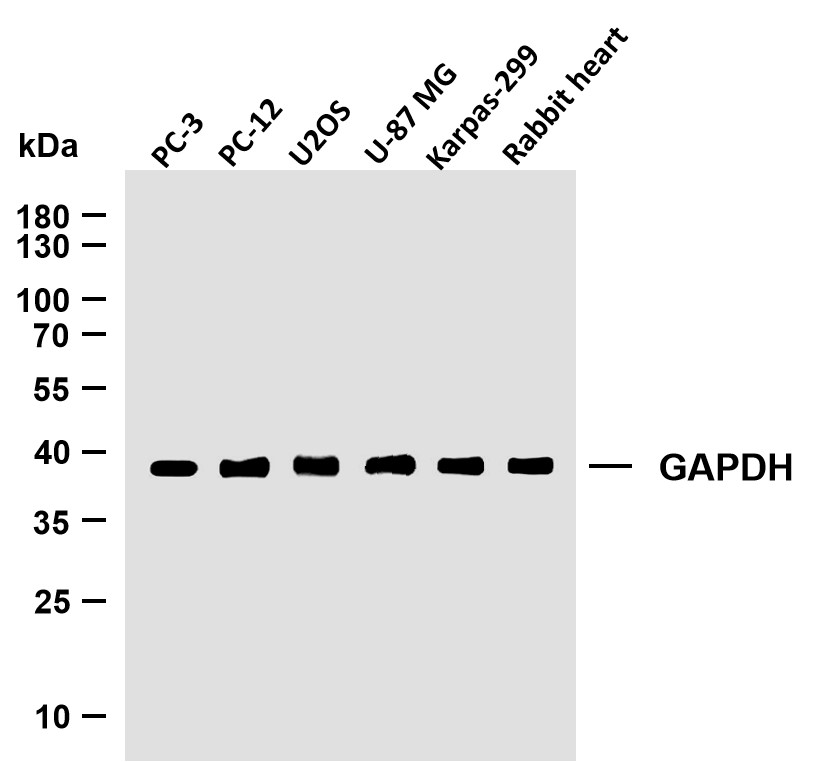
GAPDH (PTR2304) Mouse mAb
YM3029
More→
Antigen&Target Information
Specificity:
Endogenous
show all
Gene Name:
FMR1
show all
Protein Name:
Fragile X mental retardation 1 protein
show all
Other Name:
FMR1 ;
Fragile X mental retardation protein 1 ;
FMRP ;
Protein FMR-1
Fragile X mental retardation protein 1 ;
FMRP ;
Protein FMR-1
show all
Background:
The protein encoded by this gene binds RNA and is associated with polysomes. The encoded protein may be involved in mRNA trafficking from the nucleus to the cytoplasm. A trinucleotide repeat (CGG) in the 5' UTR is normally found at 6-53 copies, but an expansion to 55-230 repeats is the cause of fragile X syndrome. Expansion of the trinucleotide repeat may also cause one form of premature ovarian failure (POF1). Multiple alternatively spliced transcript variants that encode different protein isoforms and which are located in different cellular locations have been described for this gene. [provided by RefSeq, May 2010],
show all
Function:
Alternative products:At least 12 different isoforms are produced,Disease:Defects in FMR1 are the cause of fragile X syndrome. [MIM:300624]. It is a common genetic disease (has a prevalence of one in every 2000 children) which is characterized by moderate to severe mental retardation, macroorchidism (enlargement of the testicles), large ears, prominent jaw, and high-pitched, jocular speech. The defect in most fragile X syndrome patients results from an amplification of a CGG repeat region which is directly in front of the coding region.,Disease:Defects in FMR1 are the cause of fragile X tremor/ataxia syndrome (FXTAS) [MIM:300623]. In FXTAS, the expanded repeats range in size from 55 to 200 repeats and are referred to as 'premutations'. Full repeat expansions with greater than 200 repeats results in fragile X mental retardation syndrome [MIM:300624]. Carriers of the premutation typically do not show the full fragile X syndrome phenotype, but comprise a subgroup that may have some physical features of fragile X syndrome or mild cognitive and emotional problems.,Function:RNA-binding protein that plays a role in intracellular RNA transport and in the regulation of translation of target mRNAs. Associated with polysomes. May play a role in the transport of mRNA from the nucleus to the cytoplasm. Binds strongly to poly(G), binds moderately to poly(U) but shows very little binding to poly(A) or poly(C).,miscellaneous:RNA-binding activity is inhibited by RANBP9.,miscellaneous:The mechanism of the severe phenotype in the Asn-304 patient lies in the sequestration of bound mRNAs in nontranslatable mRNP particles. In the absence of FMRP, these same mRNAs may be partially translated via alternate mRNPs, although perhaps abnormally localized or regulated, resulting in typical fragile X syndrome. Asn-304 mutation maps to a position within the second KH domain of FMRP that is critical for stabilizing sequence-specific RNA-protein interactions. Asn-304 mutation abrogates the association of the FMRP KH 2 domain with its target, kissing complex RNA.,PTM:Phosphorylated on several serine residues.,similarity:Belongs to the FMR1 family.,similarity:Contains 1 KH domain.,similarity:Contains 2 KH domains.,subunit:Homooligomer. Found in a RNP granule complex with IGF2BP1. Directly interacts with SMN and TDRD3. Interacts with the SMN core complex that contains SMN1, SIP1/GEMIN2, DDX20/GEMIN3, GEMIN4, GEMIN5, GEMIN6, GEMIN7, GEMIN8 and STRAP/UNRIP. Interacts with FXR1, FXR2, IGF2BP1, NUFIP1, NUFIP2, MCRS1 and RANBP9. Interacts with CYFIP1 and CYFIP2.,tissue specificity:Highest levels found in neurons, brain, testis, placenta and lymphocytes. Also expressed in epithelial tissues and at very low levels in glial cells.,
show all
Cellular Localization:
Nucleus . Nucleus, nucleolus . Chromosome, centromere . Chromosome . Cytoplasm . Cytoplasm, perinuclear region . Cytoplasm, Cytoplasmic ribonucleoprotein granule . Perikaryon . Cell projection, neuron projection . Cell projection, axon . Cell projection, dendrite . Cell projection, dendritic spine . Cell junction, synapse, synaptosome . Cell projection, growth cone . Cell projection, filopodium tip . Cell junction, synapse . Cell junction, synapse, postsynaptic cell membrane . Cell junction, synapse, presynaptic cell membrane . Cell membrane . Cytoplasm, Stress granule . Colocalizes with H2AX/H2A.x in pericentromeric heterochromatin in response to DNA damaging agents (By similarity). Localizes on meiotic pachytene-stage chromosomes (By similarity). Forms nuclear foci representing sites of ongoing DNA replication in response to DNA damaging agents (By similarity). Shuttles between nucleus and cytoplasm in a XPO1/CRM1-dependent manner (PubMed:10196376). Localizes to cytoplasmic ribonucleoprotein granules, also referred to as messenger ribonucleoprotein particles or mRNPs, along dendrites and dendritic spines (PubMed:9659908, PubMed:14532325). FMR1-containing cytoplasmic granules colocalize to F-actin-rich structures, including filopodium, spines and growth cone during the development of hippocampal neurons (By similarity). FMR1-containing cytoplasmic granules are transported out of the soma along axon and dendrite to synaptic contacts in a microtubule- and kinesin-dependent manner (PubMed:12417734, PubMed:15380484). Colocalizes with CACNA1B in the cytoplasm and at the cell membrane of neurons (By similarity). Colocalizes with CYFIP1, CYFIP2, NXF2 and ribosomes in the perinuclear region (By similarity). Colocalizes with CYFIP1 and EIF4E in dendrites and probably at synapses (By similarity). Colocalizes with FXR1, kinesin, 60S acidic ribosomal protein RPLP0 and SMN in cytoplasmic granules in the soma and neurite cell processes (PubMed:12417734, PubMed:18093976, PubMed:16636078). Colocalizes with FXR1 and FXR2 in discrete granules, called fragile X granules (FXGs), along axon and presynaptic compartments (By similarity). Colocalizes with TDRD3 in cytoplasmic stress granules (SGs) in response to various cellular stress (PubMed:18632687, PubMed:18664458, PubMed:16636078). .; [Isoform 6]: Cytoplasm . Cytoplasm, perinuclear region .; [Isoform 9]: Cytoplasm .; [Isoform 10]: Nucleus . Nucleus, Cajal body . Colocalizes with Colin and SMN in Cajal bodies (PubMed:24204304).; [Isoform 11]: Nucleus . Nucleus, Cajal body .
show all
Reference Citation({{totalcount}})
Catalog: YM9068
Size
Price
Status
Qty.
200μL
$600.00
3 weeks
0
100μL
$340.00
3 weeks
0
40μL
$190.00
3 weeks
0
Add to cart
Collected
Collect
Recently Viewed Products
Clear allPRODUCTS
CUSTOMIZED
ABOUT US



Toggle night Mode
{{pinfoXq.title || ''}}
Catalog: {{pinfoXq.catalog || ''}}
Filter:
All
{{item.name}}
{{pinfo.title}}
-{{pinfo.catalog}}
Main Information
Target
{{pinfo.target}}
Reactivity
{{pinfo.react}}
Applications
{{pinfo.applicat}}
Conjugate/Modification
{{pinfo.coupling}}/{{pinfo.modific}}
MW (kDa)
{{pinfo.mwcalc}}
Host Species
{{pinfo.hostspec}}
Isotype
{{pinfo.isotype}}
Product {{index}}/{{pcount}}
Prev
Next
{{pvTitle}}
Scroll wheel zooms the picture
{{pvDescr}}