






Catalog: YM9017
Size
Price
Status
Qty.
200μL
$600.00
3 weeks
0
100μL
$340.00
3 weeks
0
40μL
$190.00
3 weeks
0
Add to cart


Collected
Collect
Main Information
Target
HSL Phospho Ser853
Host Species
Rabbit
Reactivity
Human, Mouse, Rat
Applications
WB, IF, ELISA
MW
117kD (Calculated)
83kD (Observed)
Conjugate/Modification
Phospho
Detailed Information
Recommended Dilution Ratio
WB 1:2000-1:10000; IF 1:200-1:1000; ELISA 1:5000-1:20000;
Formulation
PBS, 50% glycerol, 0.05% Proclin 300, 0.05%BSA
Specificity
HSL (Phospho Ser853)Antibody detects endogenous levels of HSL protein only when phosphorylated at S853.The name of modified sites may be influenced by many factors, such as species (the modified site was not originally found in human samples) and the change of protein sequence (the previous protein sequence is incomplete, and the protein sequence may be prolonged with the development of protein sequencing technology). When naming, we will use the "numbers" in historical reference to keep the sites consistent with the reports. The antibody binds to the following modification sequence (lowercase letters are modification sites):RRsVS
Purification
Recombinant Antibody expressed in animal component-free (ACF) media, purified via Protein A affinity chromatography.
Storage
-15°C to -25°C/1 year(Do not lower than -25°C)
MW(Calculated)
117kD
MW(Observed)
83kD
Modification
Phospho
Clonality
Monoclonal
Clone Number
PT1168R
Isotype
IgG,Kappa
Related Products
Secondary Antibodies
Goat Anti Mouse IgG(H+L) (HRP)
RS0001
More→
Secondary Antibodies
Goat Anti Rabbit IgG(H+L) (HRP)
RS0002
More→
Primary Antibodies
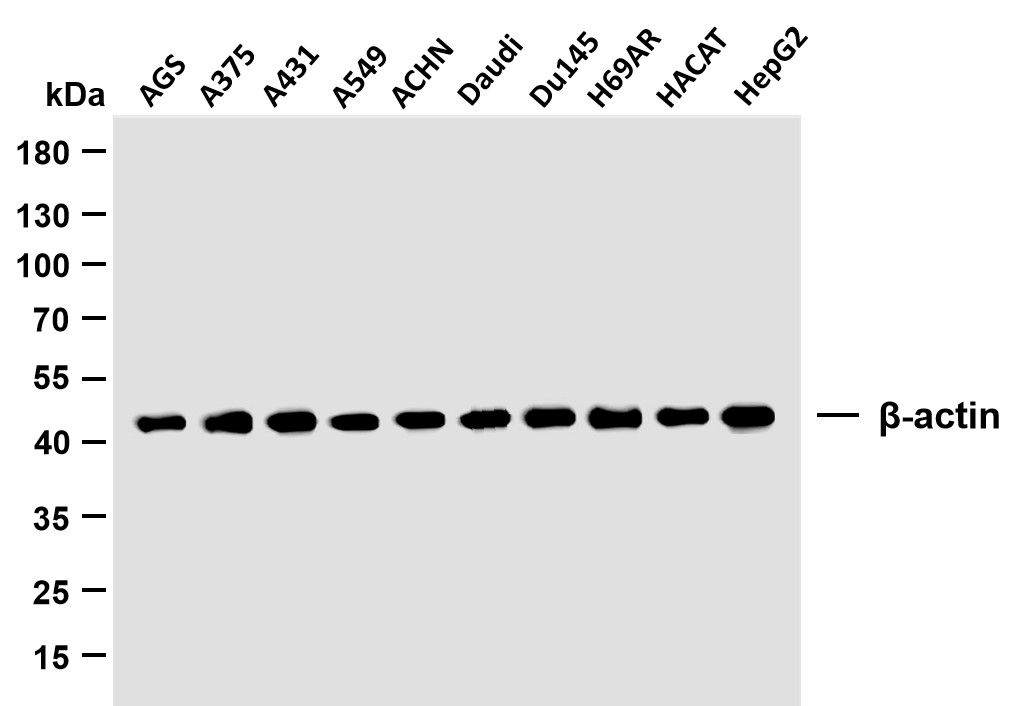
β-actin (PTR2364) Mouse mAb
YM3028
More→
Primary Antibodies
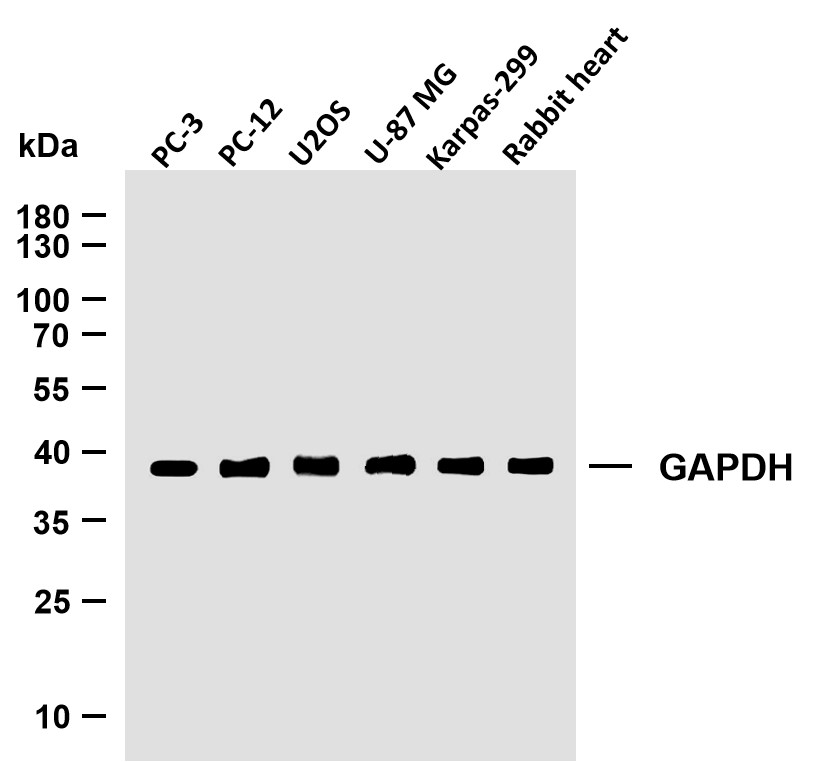
GAPDH (PTR2304) Mouse mAb
YM3029
More→
Antigen&Target Information
Specificity:
HSL (Phospho Ser853)Antibody detects endogenous levels of HSL protein only when phosphorylated at S853.The name of modified sites may be influenced by many factors, such as species (the modified site was not originally found in human samples) and the change of protein sequence (the previous protein sequence is incomplete, and the protein sequence may be prolonged with the development of protein sequencing technology). When naming, we will use the "numbers" in historical reference to keep the sites consistent with the reports. The antibody binds to the following modification sequence (lowercase letters are modification sites):RRsVS
show all
Gene Name:
LIPE
show all
Protein Name:
Hormone-sensitive lipase
show all
Other Name:
LIPE ;
Hormone-sensitive lipase ;
HSL
Hormone-sensitive lipase ;
HSL
show all
Database Link:
Background:
The protein encoded by this gene has a long and a short form, generated by use of alternative translational start codons. The long form is expressed in steroidogenic tissues such as testis, where it converts cholesteryl esters to free cholesterol for steroid hormone production. The short form is expressed in adipose tissue, among others, where it hydrolyzes stored triglycerides to free fatty acids. [provided by RefSeq, Jul 2008],
show all
Function:
Catalytic activity:Diacylglycerol + H(2)O = monoacylglycerol + a carboxylate.,Catalytic activity:Monoacylglycerol + H(2)O = glycerol + a carboxylate.,Catalytic activity:Triacylglycerol + H(2)O = diacylglycerol + a carboxylate.,enzyme regulation:Rapidly activated by cAMP-dependent phosphorylation under the influence of catecholamines. Dephosphorylation and inactivation are controlled by insulin.,Function:In adipose tissue and heart, it primarily hydrolyzes stored triglycerides to free fatty acids, while in steroidogenic tissues, it principally converts cholesteryl esters to free cholesterol for steroid hormone production.,pathway:Glycerolipid metabolism; triacylglycerol degradation.,similarity:Belongs to the 'GDXG' lipolytic enzyme family.,subcellular location:Found in the high-density caveolae. Translocates to the cytoplasm from the caveolae upon insulin stimulation.,subunit:Interacts with PTRF in the adipocyte cytoplasm.,
show all
Cellular Localization:
Cell membrane . Membrane, caveola . Cytoplasm, cytosol . Lipid droplet . Found in the high-density caveolae. Translocates to the cytoplasm from the caveolae upon insulin stimulation (PubMed:17026959). Phosphorylation by AMPK reduces its translocation towards the lipid droplets (By similarity). .
show all
Tissue Expression:
show all
Research Areas:
>>cAMP signaling pathway ;
>>AMPK signaling pathway ;
>>Apelin signaling pathway ;
>>Thermogenesis ;
>>Insulin signaling pathway ;
>>Regulation of lipolysis in adipocytes ;
>>Aldosterone synthesis and secretion
>>AMPK signaling pathway ;
>>Apelin signaling pathway ;
>>Thermogenesis ;
>>Insulin signaling pathway ;
>>Regulation of lipolysis in adipocytes ;
>>Aldosterone synthesis and secretion
show all
Signaling Pathway
Organismal Systems >> Endocrine system >> Insulin signaling pathway
Organismal Systems >> Endocrine system >> Aldosterone synthesis and secretion
Environmental Information Processing >> Signal transduction >> Apelin signaling pathway
Environmental Information Processing >> Signal transduction >> cAMP signaling pathway
Environmental Information Processing >> Signal transduction >> AMPK signaling pathway
Reference Citation({{totalcount}})
Catalog: YM9017
Size
Price
Status
Qty.
200μL
$600.00
3 weeks
0
100μL
$340.00
3 weeks
0
40μL
$190.00
3 weeks
0
Add to cart
Collected
Collect
Recently Viewed Products
Clear allPRODUCTS
CUSTOMIZED
ABOUT US



Toggle night Mode
{{pinfoXq.title || ''}}
Catalog: {{pinfoXq.catalog || ''}}
Filter:
All
{{item.name}}
{{pinfo.title}}
-{{pinfo.catalog}}
Main Information
Target
{{pinfo.target}}
Reactivity
{{pinfo.react}}
Applications
{{pinfo.applicat}}
Conjugate/Modification
{{pinfo.coupling}}/{{pinfo.modific}}
MW (kDa)
{{pinfo.mwcalc}}
Host Species
{{pinfo.hostspec}}
Isotype
{{pinfo.isotype}}
Product {{index}}/{{pcount}}
Prev
Next
{{pvTitle}}
Scroll wheel zooms the picture
{{pvDescr}}