






Catalog: YM8740
Size
Price
Status
Qty.
200μL
$600.00
3 weeks
0
100μL
$340.00
3 weeks
0
40μL
$190.00
3 weeks
0
Add to cart


Collected
Collect
Main Information
Target
RIP Phospho Ser166
Host Species
Rabbit
Reactivity
Human
Applications
WB, IF, ELISA
MW
76kD (Calculated)
80kD (Observed)
Conjugate/Modification
Phospho
Detailed Information
Recommended Dilution Ratio
WB 1:500-1:2000; IF 1:200-1:1000; ELISA 1:5000-1:20000;
Formulation
PBS, 50% glycerol, 0.05% Proclin 300, 0.05%BSA
Specificity
RIPK1 (Phospho Ser166) Antibody detects endogenous levels of RIPK1 protein only when phosphorylated at S166.The name of modified sites may be influenced by many factors, such as species (the modified site was not originally found in human samples) and the change of protein sequence (the previous protein sequence is incomplete, and the protein sequence may be prolonged with the development of protein sequencing technology). When naming, we will use the "numbers" in historical reference to keep the sites consistent with the reports. The antibody binds to the following modification sequence (lowercase letters are modification sites):MWsKL
Purification
Recombinant Antibody expressed in animal component-free (ACF) media, purified via Protein A affinity chromatography.
Storage
-15°C to -25°C/1 year(Do not lower than -25°C)
MW(Calculated)
76kD
MW(Observed)
80kD
Modification
Phospho
Clonality
Monoclonal
Clone Number
PT0757R
Isotype
IgG,Kappa
Related Products
Secondary Antibodies
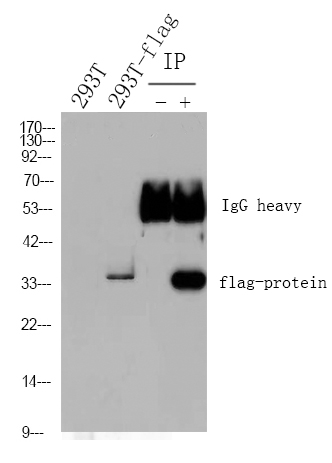
Goat Anti Mouse IgG(H+L) (HRP)
RS0001
More→
Secondary Antibodies
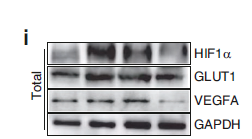
Goat Anti Rabbit IgG(H+L) (HRP)
RS0002
More→
Primary Antibodies
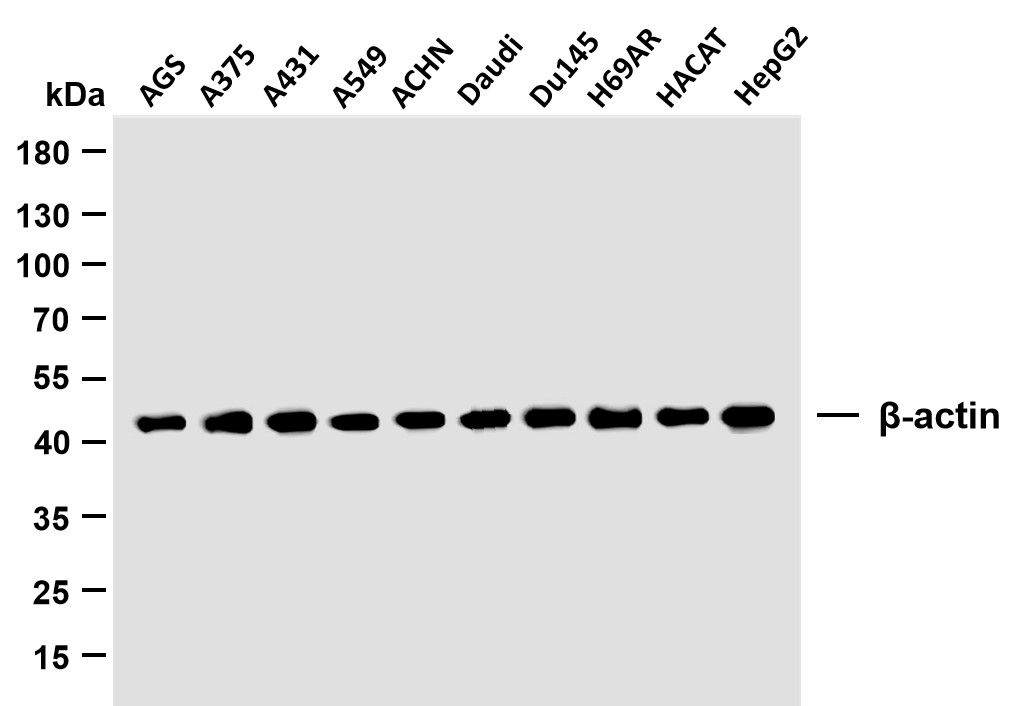
β-actin (PTR2364) Mouse mAb
YM3028
More→
Primary Antibodies
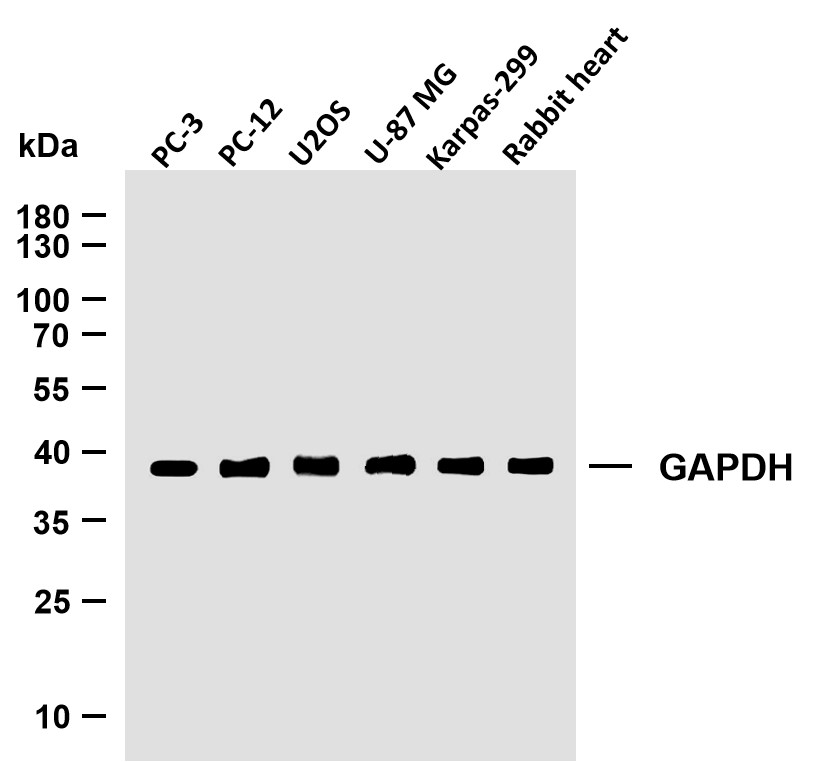
GAPDH (PTR2304) Mouse mAb
YM3029
More→
Antigen&Target Information
Immunogen:
The specific immunogen used to produce this antibody is proprietary information.
show all
Specificity:
RIPK1 (Phospho Ser166) Antibody detects endogenous levels of RIPK1 protein only when phosphorylated at S166.The name of modified sites may be influenced by many factors, such as species (the modified site was not originally found in human samples) and the change of protein sequence (the previous protein sequence is incomplete, and the protein sequence may be prolonged with the development of protein sequencing technology). When naming, we will use the "numbers" in historical reference to keep the sites consistent with the reports. The antibody binds to the following modification sequence (lowercase letters are modification sites):MWsKL
show all
Gene Name:
RIPK1 RIP RIP1
show all
Protein Name:
Receptor-interacting serine/threonine-protein kinase 1 (Cell death protein RIP) (Receptor-interacting protein 1) (RIP-1) (Serine/threonine-protein kinase RIP)
show all
Other Name:
Receptor-interacting serine/threonine-protein kinase 1 ;
Cell death protein RIP ;
Receptor-interacting protein 1 ;
RIP-1 ;
Serine/threonine-protein kinase RIP ;
Cell death protein RIP ;
Receptor-interacting protein 1 ;
RIP-1 ;
Serine/threonine-protein kinase RIP ;
show all
Background:
This gene encodes a member of the receptor-interacting protein (RIP) family of serine/threonine protein kinases. The encoded protein plays a role in inflammation and cell death in response to tissue damage, pathogen recognition, and as part of developmental regulation. RIPK1/RIPK3 kinase-mediated necrosis is referred to as necroptosis. Genetic disruption of this gene in mice results in death shortly after birth. [provided by RefSeq, Aug 2017]
show all
Function:
Catalytic activity:ATP + a protein = ADP + a phosphoprotein.,Function:Promotes apoptosis and activation of NF-kappa-B. Required for TNFRSF1A mediated activation of NF-kappa-B.,PTM:Autophosphorylated on serine and threonine residues.,PTM:Proteolytically cleaved by caspase-8 during TNF-induced apoptosis. Cleavage abolishes NF-kappa-B activation and enhances pro-apototic signaling through the TRADD-FADD interaction.,similarity:Belongs to the protein kinase superfamily. TKL Ser/Thr protein kinase family.,similarity:Contains 1 death domain.,similarity:Contains 1 protein kinase domain.,subunit:Binds to the death domain of TNFRSF6 and TRADD. Is recruited by TRADD to TNFRSF1A in a TNF-dependent process. Binds RIPK3, UBCE7IP1 isoform 3 (ZIN), EGFR, IKBKG, TRAF1, TRAF2 and TRAF3. Interacts with BNLF1. Interacts with SQSTM1 upon TNF-alpha stimulation. May interacts with MAVS/IPS1.,
show all
Cellular Localization:
Cytoplasm . Cell membrane .
show all
Tissue Expression:
Research Areas:
>>NF-kappa B signaling pathway ;
>>Apoptosis ;
>>Necroptosis ;
>>Toll-like receptor signaling pathway ;
>>NOD-like receptor signaling pathway ;
>>RIG-I-like receptor signaling pathway ;
>>Cytosolic DNA-sensing pathway ;
>>TNF signaling pathway ;
>>Alcoholic liver disease ;
>>Pathogenic Escherichia coli infection ;
>>Shigellosis ;
>>Salmonella infection ;
>>Hepatitis C ;
>>Human cytomegalovirus infection ;
>>Epstein-Barr virus infection ;
>>Human immunodeficiency virus 1 infection
>>Apoptosis ;
>>Necroptosis ;
>>Toll-like receptor signaling pathway ;
>>NOD-like receptor signaling pathway ;
>>RIG-I-like receptor signaling pathway ;
>>Cytosolic DNA-sensing pathway ;
>>TNF signaling pathway ;
>>Alcoholic liver disease ;
>>Pathogenic Escherichia coli infection ;
>>Shigellosis ;
>>Salmonella infection ;
>>Hepatitis C ;
>>Human cytomegalovirus infection ;
>>Epstein-Barr virus infection ;
>>Human immunodeficiency virus 1 infection
show all
Signaling Pathway
Cellular Processes >> Cell growth and death >> Apoptosis
Cellular Processes >> Cell growth and death >> Necroptosis
Organismal Systems >> Immune system >> Toll-like receptor signaling pathway
Organismal Systems >> Immune system >> NOD-like receptor signaling pathway
Organismal Systems >> Immune system >> RIG-I-like receptor signaling pathway
Organismal Systems >> Immune system >> Cytosolic DNA-sensing pathway
Environmental Information Processing >> Signal transduction >> NF-kappa B signaling pathway
Environmental Information Processing >> Signal transduction >> TNF signaling pathway
Reference Citation({{totalcount}})
Catalog: YM8740
Size
Price
Status
Qty.
200μL
$600.00
3 weeks
0
100μL
$340.00
3 weeks
0
40μL
$190.00
3 weeks
0
Add to cart
Collected
Collect
Recently Viewed Products
Clear allPRODUCTS
CUSTOMIZED
ABOUT US



Toggle night Mode
{{pinfoXq.title || ''}}
Catalog: {{pinfoXq.catalog || ''}}
Filter:
All
{{item.name}}
{{pinfo.title}}
-{{pinfo.catalog}}
Main Information
Target
{{pinfo.target}}
Reactivity
{{pinfo.react}}
Applications
{{pinfo.applicat}}
Conjugate/Modification
{{pinfo.coupling}}/{{pinfo.modific}}
MW (kDa)
{{pinfo.mwcalc}}
Host Species
{{pinfo.hostspec}}
Isotype
{{pinfo.isotype}}
Product {{index}}/{{pcount}}
Prev
Next
{{pvTitle}}
Scroll wheel zooms the picture
{{pvDescr}}