







Catalog: YM8025
Size
Price
Status
Qty.
200μL
$600.00
In stock
0
100μL
$340.00
In stock
0
40μL
$190.00
In stock
0
Add to cart


Collected
Collect
Main Information
Target
SQSTM1/p62
Host Species
Rabbit
Reactivity
Human, Mouse, Rat
Applications
WB, IHC, IF, IP, ELISA
MW
48kD (Calculated)
62kD (Observed)
Conjugate/Modification
Unmodified
Detailed Information
Recommended Dilution Ratio
IHC 1:200-1000; WB 1:500-5000; IF 1:200-1000; ELISA 1:5000-20000; IP 1:50-200
Note: For IHC, we suggest antigen retrieval with TE buffer pH 9.0 (Cat#YS0004)
Note: For IHC, we suggest antigen retrieval with TE buffer pH 9.0 (Cat#YS0004)
Formulation
PBS, 50% glycerol, 0.05% Proclin 300, 0.05%BSA
Specificity
Endogenous
Purification
Recombinant Antibody expressed in animal component-free (ACF) media, purified via Protein A affinity chromatography.
Storage
-15°C to -25°C/1 year(Do not lower than -25°C)
MW(Calculated)
48kD
MW(Observed)
62kD
Modification
Unmodified
Clonality
Monoclonal
Clone Number
PT0051R
Isotype
IgG,Kappa
Related Products
Secondary Antibodies
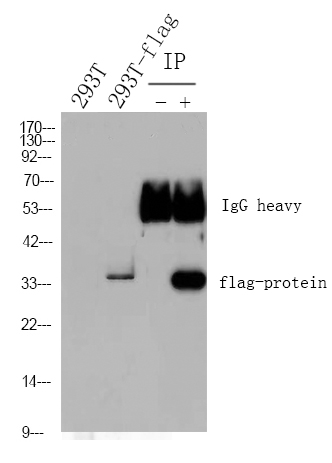
Goat Anti Mouse IgG(H+L) (HRP)
RS0001
More→
Secondary Antibodies
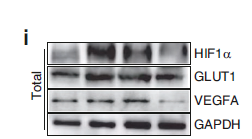
Goat Anti Rabbit IgG(H+L) (HRP)
RS0002
More→
Primary Antibodies
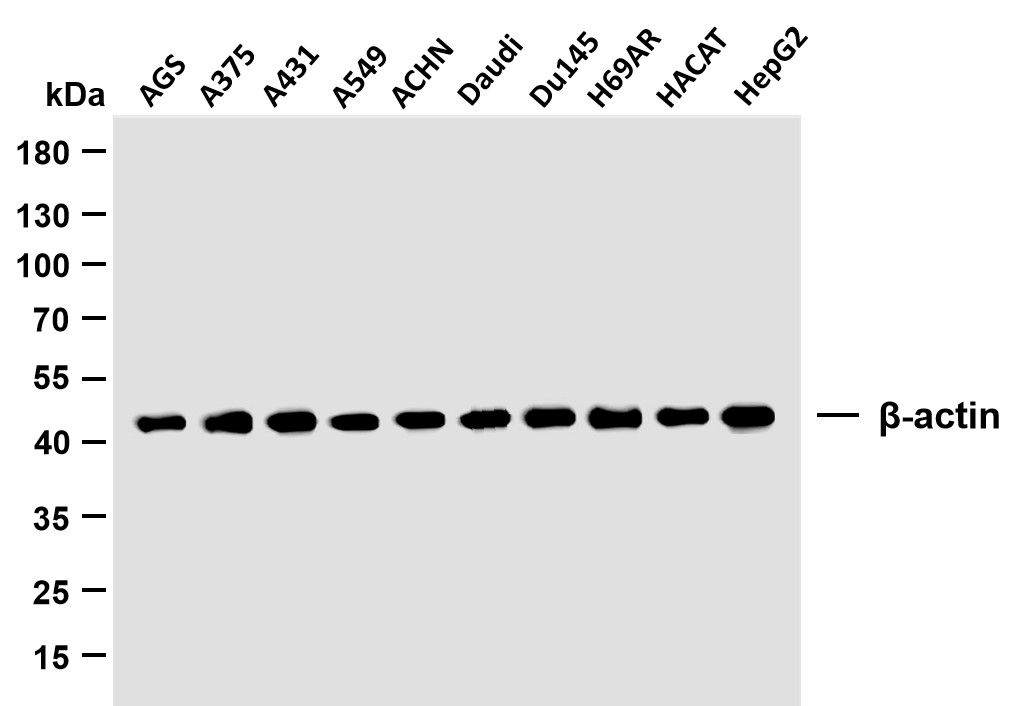
β-actin (PTR2364) Mouse mAb
YM3028
More→
Primary Antibodies
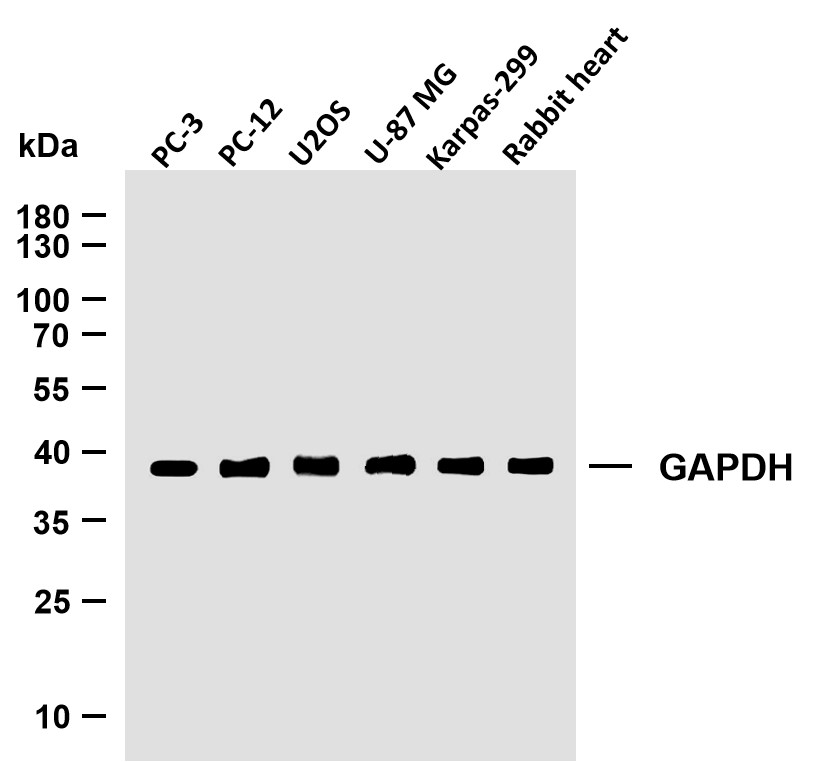
GAPDH (PTR2304) Mouse mAb
YM3029
More→
Antigen&Target Information
Immunogen:
The specific immunogen used to produce this antibody is proprietary information.
show all
Specificity:
Endogenous
show all
Gene Name:
SQSTM1 ORCA OSIL
show all
Protein Name:
SQSTM
show all
Database Link:
Background:
This gene encodes a multifunctional protein that binds ubiquitin and regulates activation of the nuclear factor kappa-B (NF-kB) signaling pathway. The protein functions as a scaffolding/adaptor protein in concert with TNF receptor-associated factor 6 to mediate activation of NF-kB in response to upstream signals. Alternatively spliced transcript variants encoding either the same or different isoforms have been identified for this gene. Mutations in this gene result in sporadic and familial Paget disease of bone. [provided by RefSeq, Mar 2009],
show all
Function:
Disease:Defects in SQSTM1 are a cause of sporadic and familial Paget disease of bone (PDB) [MIM:602080]. PDB is a metabolic bone disease affecting the axial skeleton and characterized by focal areas of increased and disorganized bone turn-over due to activated osteoclasts. Manifestations of the disease include bone pain, deformity, pathological fractures, deafness, neurological complications and increased risk of osteosarcoma. PDB is a chronic disease affecting 2 to 3% of the population above the age of 40 years.,Domain:The OPR domain mediates homooligomerization and interactions with PRKCZ, PRKCI, MAP2K5 and NBR1.,Domain:The UBA domain binds specifically 'Lys-63'-linked polyubiquitin chains of polyubiquitinated substrates. Mediates the interaction with TRIM55.,Domain:The ZZ-type zinc finger mediates the interaction with RIPK1.,Function:Adapter protein which binds ubiquitin and may regulate the activation of NFKB1 by TNF-alpha, nerve growth factor (NGF) and interleukin-1. May play a role in titin/TTN downstream signaling in muscle cells. May regulate signaling cascades through ubiquitination. May be involved in cell differentiation, apoptosis, immune response and regulation of K(+) channels.,induction:By proteasomal inhibitor PSI and prostaglandin J2 (PGJ2) (at protein level). By Phorbol 12-myristate 13-acetate (PMA).,PTM:Phosphorylated. May be phosphorylated by PRKCZ (By similarity). Phosphorylated in vitro by TTN.,similarity:Contains 1 OPR domain.,similarity:Contains 1 UBA domain.,similarity:Contains 1 ZZ-type zinc finger.,subcellular location:Sarcomere (By similarity). In cardiac muscles localizes to the sarcomeric band (By similarity). Localizes to late endosomes. May also localize to the nucleus. Accumulates in neurofibrillary tangles and in Lewy bodies of neurons from individuals with Alzheimer and Parkinson disease respectively. Enriched in Rosenthal fibers of pilocytic astrocytoma. In liver cells, accumulates in Mallory bodies associated with alcoholic hepatitis, Wilson disease, indian childhood cirrhosis and in hyaline bodies associated with hepatocellular carcinoma.,subunit:Homooligomer or heterooligomer; may form homotypic arrays. Interacts directly with PRKCI and PRKCZ (Probable). Forms ternary complexes with PRKCZ and KCNAB2 or PRKCZ and GABBR3. Also interacts with KCNAB1, GABRR1, GABRR2 and GABRR3. Forms an NGF-induced complex with IKBKB, PRKCI and TRAF6 (By similarity). Interacts with EBI3, LCK, RASA1, PRKCZ, PRKCI, NR2F2, NTRK1, NTRK2, NTRK3, NBR1, MAP2K5, TRIM55 and MAPKAPK5. Interacts with the proteasome subunits PSMD4 and PSMC2. Interacts with K63-polyubiquitinated MAPT/TAU. Interacts with IKBKB through PRKCZ and PRKCI. Interacts with NGFR through TRAF6 and bridges that complex to NTRK1. Forms a complex with MAP2K5 and PRKCZ or PRKCI. Component of a ternary complex with PAWR and PRKCZ. Upon TNF-alpha stimulation, interacts with RIPK1 problably bridging IKBKB to the TNF-R1 complex composed of TNF-R1/TNFRSF1A, TRADD and RIPK1. Forms a complex with JUB/Ajuba, PRKCZ and TRAF6.,tissue specificity:Ubiquitously expressed.,
show all
Cellular Localization:
Cytoplasm, Nuclear
show all
Research Areas:
>>Mitophagy - animal ;
>>Autophagy - animal ;
>>Necroptosis ;
>>Cellular senescence ;
>>Osteoclast differentiation ;
>>Amyotrophic lateral sclerosis ;
>>Pathways of neurodegeneration - multiple diseases ;
>>Shigellosis ;
>>Fluid shear stress and atherosclerosis
>>Autophagy - animal ;
>>Necroptosis ;
>>Cellular senescence ;
>>Osteoclast differentiation ;
>>Amyotrophic lateral sclerosis ;
>>Pathways of neurodegeneration - multiple diseases ;
>>Shigellosis ;
>>Fluid shear stress and atherosclerosis
show all
Signaling Pathway
Cellular Processes >> Transport and catabolism >> Autophagy - animal
Cellular Processes >> Transport and catabolism >> Mitophagy - animal
Cellular Processes >> Cell growth and death >> Necroptosis
Cellular Processes >> Cell growth and death >> Cellular senescence
Organismal Systems >> Development and regeneration >> Osteoclast differentiation
Human Diseases >> Neurodegenerative disease >> Amyotrophic lateral sclerosis
Human Diseases >> Neurodegenerative disease >> Pathways of neurodegeneration - multiple diseases
Reference Citation({{totalcount}})
Catalog: YM8025
Size
Price
Status
Qty.
200μL
$600.00
In stock
0
100μL
$340.00
In stock
0
40μL
$190.00
In stock
0
Add to cart
Collected
Collect
Recently Viewed Products
Clear allPRODUCTS
CUSTOMIZED
ABOUT US



Toggle night Mode
{{pinfoXq.title || ''}}
Catalog: {{pinfoXq.catalog || ''}}
Filter:
All
{{item.name}}
{{pinfo.title}}
-{{pinfo.catalog}}
Main Information
Target
{{pinfo.target}}
Reactivity
{{pinfo.react}}
Applications
{{pinfo.applicat}}
Conjugate/Modification
{{pinfo.coupling}}/{{pinfo.modific}}
MW (kDa)
{{pinfo.mwcalc}}
Host Species
{{pinfo.hostspec}}
Isotype
{{pinfo.isotype}}
Product {{index}}/{{pcount}}
Prev
Next
{{pvTitle}}
Scroll wheel zooms the picture
{{pvDescr}}