






Catalog: YM2215
Size
Price
Status
Qty.
200μL
$650.00
In stock
0
100μL
$380.00
In stock
0
Add to cart


Collected
Collect
Main Information
Target
CD45
Host Species
Rabbit
Reactivity
Human
Applications
IF
MW
147kD (Calculated)
240-200kD (Observed)
Conjugate/Modification
AbFluor 488
Unmodified
Detailed Information
Recommended Dilution Ratio
IF 1:50-200
Formulation
PBS, 50% glycerol, 0.05% Proclin 300, 0.05%BSA
Specificity
Endogenous
Purification
Protein A
Storage
-15°C to -25°C/1 year(Do not lower than -25°C)
MW(Calculated)
147kD
MW(Observed)
240-200kD
Modification
Unmodified
Conjugate
AbFluor 488
Clonality
Monoclonal
Clone Number
PT0471R
Isotype
IgG,Kappa
Related Products
Secondary Antibodies
Goat Anti Mouse IgG(H+L) (HRP)
RS0001
More→
Secondary Antibodies
Goat Anti Rabbit IgG(H+L) (HRP)
RS0002
More→
Primary Antibodies
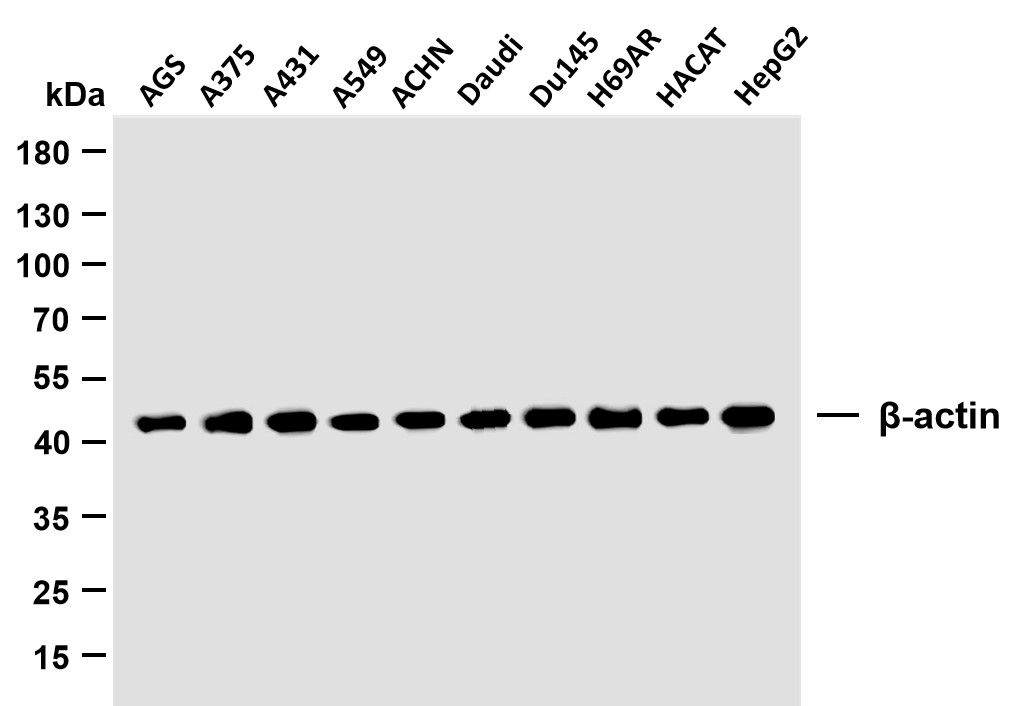
β-actin (PTR2364) Mouse mAb
YM3028
More→
Primary Antibodies
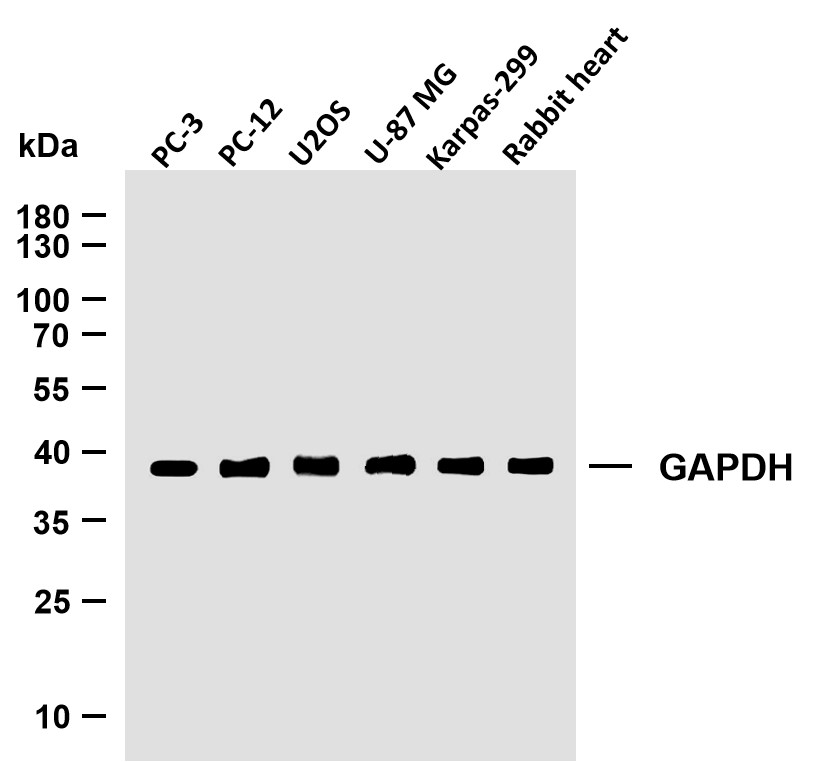
GAPDH (PTR2304) Mouse mAb
YM3029
More→
Antigen&Target Information
Specificity:
Endogenous
show all
Gene Name:
PTPRC
show all
Protein Name:
Receptor-type tyrosine-protein phosphatase C (Leukocyte common antigen) (L-CA) (T200) (CD antigen CD45)
show all
Other Name:
B220 ;
CD 45 ;
CD45 ;
CD45 antigen ;
CD45R ;
GP180 ;
L-CA ;
LCA ;
Leukocyte common antigen ;
loc ;
Ly-5 ;
LY5 ;
Ly5, homolog of ;
Lyt-4 ;
OTTHUMP00000033813 ;
OTTHUMP00000033816 ;
OTTHUMP00000033817 ;
OTTHUMP00000038574 ;
Protein tyrosine phosphatase receptor type c polypeptide ;
Protein tyrosine phosphatase, receptor type C ;
protein tyrosine phosphatase, receptor type, C ;
Protein tyrosine phosphatase, receptor type, c polypeptide ;
Ptprc ;
PTPRC_HUMAN ;
Receptor-type tyrosine-protein phosphatase C ;
T200 ;
T200 glycoprotein ;
T200 leukocyte common antigen
CD 45 ;
CD45 ;
CD45 antigen ;
CD45R ;
GP180 ;
L-CA ;
LCA ;
Leukocyte common antigen ;
loc ;
Ly-5 ;
LY5 ;
Ly5, homolog of ;
Lyt-4 ;
OTTHUMP00000033813 ;
OTTHUMP00000033816 ;
OTTHUMP00000033817 ;
OTTHUMP00000038574 ;
Protein tyrosine phosphatase receptor type c polypeptide ;
Protein tyrosine phosphatase, receptor type C ;
protein tyrosine phosphatase, receptor type, C ;
Protein tyrosine phosphatase, receptor type, c polypeptide ;
Ptprc ;
PTPRC_HUMAN ;
Receptor-type tyrosine-protein phosphatase C ;
T200 ;
T200 glycoprotein ;
T200 leukocyte common antigen
show all
Background:
The protein encoded by this gene is a member of the protein tyrosine phosphatase (PTP) family. PTPs are known to be signaling molecules that regulate a variety of cellular processes including cell growth, differentiation, mitosis, and oncogenic transformation. This PTP contains an extracellular domain, a single transmembrane segment and two tandem intracytoplasmic catalytic domains, and thus is classified as a receptor type PTP. This PTP has been shown to be an essential regulator of T- and B-cell antigen receptor signaling. It functions through either direct interaction with components of the antigen receptor complexes, or by activating various Src family kinases required for the antigen receptor signaling. This PTP also suppresses JAK kinases, and thus functions as a regulator of cytokine receptor signaling. Alternatively spliced transcripts variants of this gene, which enc
show all
Function:
Alternative products:At least 8 isoforms are produced,Catalytic activity:Protein tyrosine phosphate + H(2)O = protein tyrosine + phosphate.,Disease:Defects in PTPRC are a cause of severe combined immunodeficiency autosomal recessive T-cell-negative/B-cell-positive/NK-cell-positive (T(-)B(+)NK(+)SCID) [MIM:608971]. SCID refers to a genetically and clinically heterogeneous group of rare congenital disorders characterized by impairment of both humoral and cell-mediated immunity, leukopenia, and low or absent antibody levels. Patients with SCID present in infancy with recurrent, persistent infections by opportunistic organisms. The common characteristic of all types of SCID is absence of T-cell-mediated cellular immunity due to a defect in T-cell development.,Disease:Genetic variations in PTPRC are involved in multiple sclerosis susceptibility (MS) [MIM:126200]. MS is a neurodegenerative disorder characterized by the gradual accumulation of focal plaques of demyelination particularly in the periventricular areas of the brain. Peripheral nerves are not affected. Onset usually in third or fourth decade with intermittent progression over an extended period. The cause is still uncertain.,Domain:The first PTPase domain interacts with SKAP1.,Function:Required for T-cell activation through the antigen receptor. The first PTPase domain has enzymatic activity, while the second one seems to affect the substrate specificity of the first one. Upon T-cell activation, recruits an dephosphorylates SKAP1 and FYN.,online information:CD45 entry,online information:PTPRC mutation db,PTM:Heavily N- and O-glycosylated.,similarity:Belongs to the protein-tyrosine phosphatase family. Receptor class 1/6 subfamily.,similarity:Contains 2 fibronectin type-III domains.,similarity:Contains 2 tyrosine-protein phosphatase domains.,subunit:Binds GANAB and PRKCSH (By similarity). Interacts with SKAP1.,
show all
Cellular Localization:
Membrane
show all
Research Areas:
>>Cell adhesion molecules ;
>>T cell receptor signaling pathway ;
>>Fc gamma R-mediated phagocytosis ;
>>Salmonella infection ;
>>Primary immunodeficiency
>>T cell receptor signaling pathway ;
>>Fc gamma R-mediated phagocytosis ;
>>Salmonella infection ;
>>Primary immunodeficiency
show all
Signaling Pathway
Organismal Systems >> Immune system >> T cell receptor signaling pathway
Organismal Systems >> Immune system >> Fc gamma R-mediated phagocytosis
Human Diseases >> Immune disease >> Primary immunodeficiency
Environmental Information Processing >> Signaling molecules and interaction >> Cell adhesion molecules
Reference Citation({{totalcount}})
Catalog: YM2215
Size
Price
Status
Qty.
200μL
$650.00
In stock
0
100μL
$380.00
In stock
0
Add to cart
Collected
Collect
Recently Viewed Products
Clear allPRODUCTS
CUSTOMIZED
ABOUT US



Toggle night Mode
{{pinfoXq.title || ''}}
Catalog: {{pinfoXq.catalog || ''}}
Filter:
All
{{item.name}}
{{pinfo.title}}
-{{pinfo.catalog}}
Main Information
Target
{{pinfo.target}}
Reactivity
{{pinfo.react}}
Applications
{{pinfo.applicat}}
Conjugate/Modification
{{pinfo.coupling}}/{{pinfo.modific}}
MW (kDa)
{{pinfo.mwcalc}}
Host Species
{{pinfo.hostspec}}
Isotype
{{pinfo.isotype}}
Product {{index}}/{{pcount}}
Prev
Next
{{pvTitle}}
Scroll wheel zooms the picture
{{pvDescr}}