






Catalog: YC0011
Size
Price
Status
Qty.
200μL
$450.00
3 weeks
0
100μL
$280.00
3 weeks
0
40μL
$150.00
3 weeks
0
Add to cart


Collected
Collect
Main Information
Target
Caspase-8
Host Species
Rabbit
Reactivity
Human, Mouse, Rat
Applications
WB, IHC, IF, ELISA
MW
47kD,55kD (Observed)
Conjugate/Modification
Unmodified
Detailed Information
Recommended Dilution Ratio
WB 1:500-2000; IF 1:50-300; IHC 1:50-300; ELISA 1:5000-20000
Formulation
Liquid in PBS containing 50% glycerol, 0.5% BSA and 0.02% sodium azide.
Specificity
Cleaved-Caspase-8 (D384) Polyclonal Antibody detects endogenous levels of fragment of activated Caspase-8 protein resulting from cleavage adjacent to D384.
Purification
The antibody was affinity-purified from rabbit antiserum by affinity-chromatography using epitope-specific immunogen.
Storage
-15°C to -25°C/1 year (Do not lower than -25°C)
Concentration
1 mg/ml
MW(Observed)
47kD,55kD
Modification
Unmodified
Clonality
Polyclonal
Isotype
IgG
Related Products
Secondary Antibodies
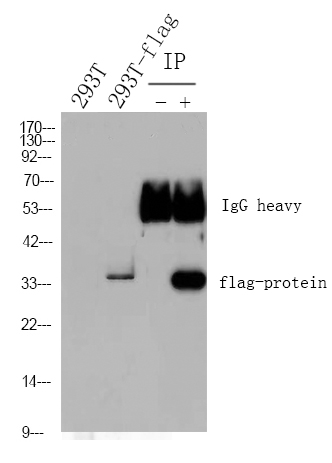
Goat Anti Mouse IgG(H+L) (HRP)
RS0001
More→
Secondary Antibodies
Goat Anti Rabbit IgG(H+L) (HRP)
RS0002
More→
Primary Antibodies
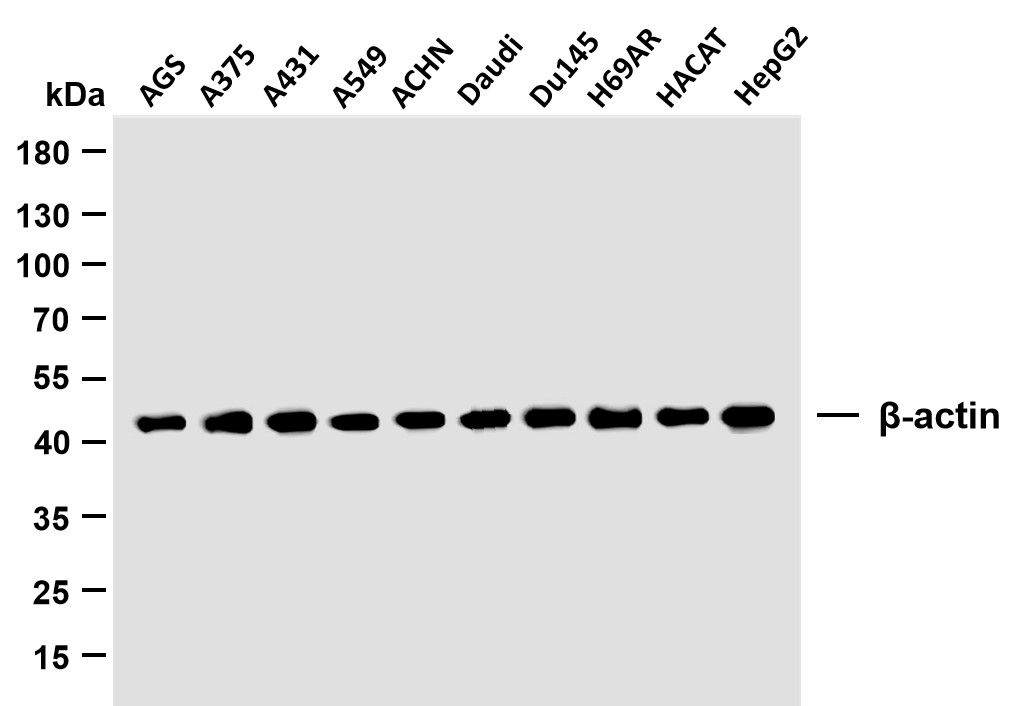
β-actin (PTR2364) Mouse mAb
YM3028
More→
Primary Antibodies
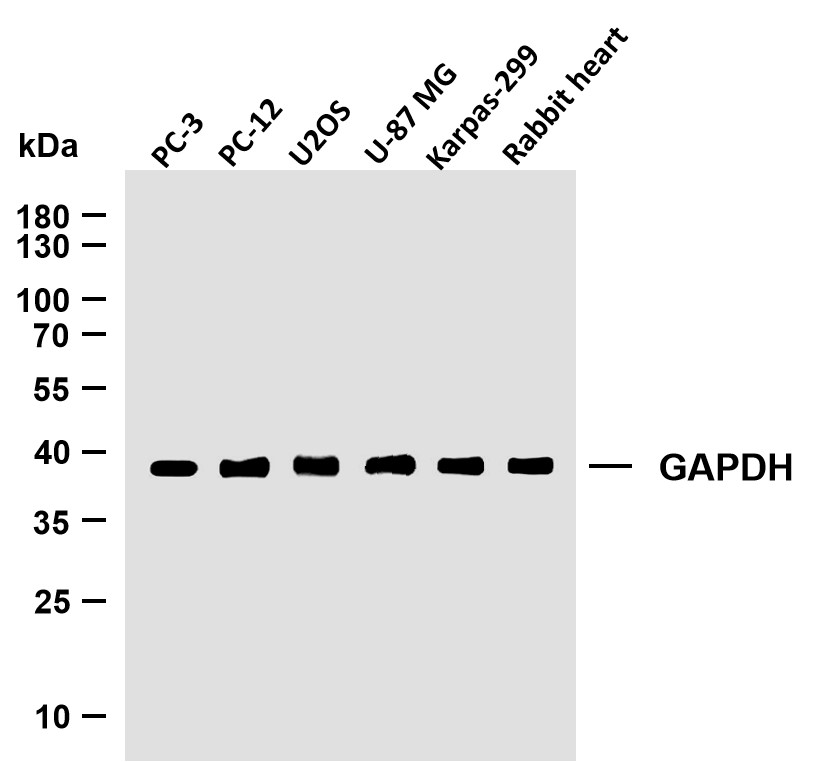
GAPDH (PTR2304) Mouse mAb
YM3029
More→
Antigen&Target Information
Immunogen:
The antiserum was produced against synthesized peptide derived from human Caspase 8. AA range:335-384
show all
Specificity:
Cleaved-Caspase-8 (D384) Polyclonal Antibody detects endogenous levels of fragment of activated Caspase-8 protein resulting from cleavage adjacent to D384.
show all
Gene Name:
CASP8 MCH5
show all
Protein Name:
Caspase8
show all
Other Name:
CASP8 ;
MCH5 ;
Caspase-8 ;
CASP-8 ;
Apoptotic cysteine protease ;
Apoptotic protease Mch-5 ;
CAP4 ;
FADD-homologous ICE/ced-3-like protease ;
FADD-like ICE ;
FLICE ;
ICE-like apoptotic protease 5 ;
MORT1-associated ced-3 homolog ;
MACH
MCH5 ;
Caspase-8 ;
CASP-8 ;
Apoptotic cysteine protease ;
Apoptotic protease Mch-5 ;
CAP4 ;
FADD-homologous ICE/ced-3-like protease ;
FADD-like ICE ;
FLICE ;
ICE-like apoptotic protease 5 ;
MORT1-associated ced-3 homolog ;
MACH
show all
Background:
This gene encodes a member of the cysteine-aspartic acid protease (caspase) family. Sequential activation of caspases plays a central role in the execution-phase of cell apoptosis. Caspases exist as inactive proenzymes composed of a prodomain , a large protease subunit , and a small protease subunit. Activation of caspases requires proteolytic processing at conserved internal aspartic residues to generate a heterodimeric enzyme consisting of the large and small subunits. This protein is involved in the programmed cell death induced by Fas and various apoptotic stimuli. The N-terminal FADD-like death effector domain of this protein suggests that it may interact with Fas-interacting protein FADD. This protein was detected in the insoluble fraction of the affected brain region from Huntington disease patients but not in those from normal controls , which implicated the role in neurodegenerative diseases. Many alt
show all
Function:
Catalytic activity:Strict requirement for Asp at position P1 and has a preferred cleavage sequence of (Leu/Asp/Val) -Glu-Thr-Asp-|- (Gly/Ser/Ala) . ,Disease:Defects in CASP8 are the cause of caspase-8 deficiency (CASP8D) [MIM:607271]. CASP8D is a disorder resembling autoimmune lymphoproliferative syndrome (ALPS) . It is characterized by lymphadenopathy , splenomegaly , and defective CD95-induced apoptosis of peripheral blood lymphocytes (PBLs) . It leads to defects in activation of T-lymphocytes , B-lymphocytes , and natural killer cells leading to immunodeficiency characterized by recurrent sinopulmonary and herpes simplex virus infections and poor responses to immunization. ,Domain:Isoform 9 contains a N-terminal extension that is required for interaction with the BCAP31 complex. ,Function:Most upstream protease of the activation cascade of caspases responsible for the TNFRSF6/FAS mediated and TNFRSF1A induced cell death. Binding to the adapter molecule FADD recruits it to either receptor. The resulting aggregate called death-inducing signaling complex (DISC) performs CASP8 proteolytic activation. The active dimeric enzyme is then liberated from the DISC and free to activate downstream apoptotic proteases. Proteolytic fragments of the N-terminal propeptide (termed CAP3 , CAP5 and CAP6) are likely retained in the DISC. Cleaves and activates CASP3 , CASP4 , CASP6 , CASP7 , CASP9 and CASP10. May participate in the GZMB apoptotic pathways. Cleaves ADPRT. Hydrolyzes the small-molecule substrate , Ac-Asp-Glu-Val-Asp-|-AMC. Likely target for the cowpox virus CRMA death inhibitory protein. Isoforms 5 , 6 , 7 and 8 lack the catalytic site and may interfere with the pro-apoptotic activity of the complex. ,online information:CASP8 mutation db ,polymorphism:Genetic vaiations in CASP8 are associated with reduced risk of lung cancer [MIM:211980] in a population of Han Chinese subjects. Genetic vaiations are also associated with decreased risk of cancer of various other forms including esophageal , gastric , colorectal , cervical , and breast , acting in an allele dose-dependent manner. ,PTM:Generation of the subunits requires association with the death-inducing signaling complex (DISC) , whereas additional processing is likely due to the autocatalytic activity of the activated protease. GZMB and CASP10 can be involved in these processing events. ,PTM:Phosphorylated upon DNA damage , probably by ATM or ATR. ,similarity:Belongs to the peptidase C14A family. ,similarity:Contains 2 DED (death effector) domains. ,subunit:Heterotetramer that consists of two anti-parallel arranged heterodimers , each one formed by a 18 kDa (p18) and a 10 kDa (p10) subunit. Interacts with FADD , CFLAR and PEA15. Isoform 9 interacts at the endoplasmic reticulum with a complex containing BCAP31 , BAP29 , BCL2 and/or BCL2L1. Interacts with TNFAIP8L2. ,tissue specificity:Isoforms 1 , 5 and 7 are expressed in a wide variety of tissues. Highest expression in peripheral blood leukocytes , spleen , thymus , and liver. Barely detectable in brain , testis , and skeletal muscle. ,
show all
Cellular Localization:
Cytoplasm . Nucleus .
show all
Tissue Expression:
Research Areas:
>>Platinum drug resistance ;
>>p53 signaling pathway ;
>>Apoptosis ;
>>Apoptosis - multiple species ;
>>Necroptosis ;
>>Toll-like receptor signaling pathway ;
>>NOD-like receptor signaling pathway ;
>>RIG-I-like receptor signaling pathway ;
>>C-type lectin receptor signaling pathway ;
>>IL-17 signaling pathway ;
>>TNF signaling pathway ;
>>Non-alcoholic fatty liver disease ;
>>Alcoholic liver disease ;
>>Alzheimer disease ;
>>Huntington disease ;
>>Pathways of neurodegeneration - multiple diseases ;
>>Pathogenic Escherichia coli infection ;
>>Salmonella infection ;
>>Legionellosis ;
>>Chagas disease ;
>>Toxoplasmosis ;
>>Tuberculosis ;
>>Hepatitis C ;
>>Hepatitis B ;
>>Measles ;
>>Human cytomegalovirus infection ;
>>Influenza A ;
>>Human papillomavirus infection ;
>>Kaposi sarcoma-associated herpesvirus infection ;
>>Herpes simplex virus 1 infection ;
>>Epstein-Barr virus infection ;
>>Human immunodeficiency virus 1 infection ;
>>Pathways in cancer ;
>>Viral carcinogenesis ;
>>Viral myocarditis ;
>>Lipid and atherosclerosis
>>p53 signaling pathway ;
>>Apoptosis ;
>>Apoptosis - multiple species ;
>>Necroptosis ;
>>Toll-like receptor signaling pathway ;
>>NOD-like receptor signaling pathway ;
>>RIG-I-like receptor signaling pathway ;
>>C-type lectin receptor signaling pathway ;
>>IL-17 signaling pathway ;
>>TNF signaling pathway ;
>>Non-alcoholic fatty liver disease ;
>>Alcoholic liver disease ;
>>Alzheimer disease ;
>>Huntington disease ;
>>Pathways of neurodegeneration - multiple diseases ;
>>Pathogenic Escherichia coli infection ;
>>Salmonella infection ;
>>Legionellosis ;
>>Chagas disease ;
>>Toxoplasmosis ;
>>Tuberculosis ;
>>Hepatitis C ;
>>Hepatitis B ;
>>Measles ;
>>Human cytomegalovirus infection ;
>>Influenza A ;
>>Human papillomavirus infection ;
>>Kaposi sarcoma-associated herpesvirus infection ;
>>Herpes simplex virus 1 infection ;
>>Epstein-Barr virus infection ;
>>Human immunodeficiency virus 1 infection ;
>>Pathways in cancer ;
>>Viral carcinogenesis ;
>>Viral myocarditis ;
>>Lipid and atherosclerosis
show all
Signaling Pathway
Cellular Processes >> Cell growth and death >> Apoptosis
Cellular Processes >> Cell growth and death >> Apoptosis - multiple species
Cellular Processes >> Cell growth and death >> Necroptosis
Cellular Processes >> Cell growth and death >> p53 signaling pathway
Organismal Systems >> Immune system >> Toll-like receptor signaling pathway
Organismal Systems >> Immune system >> NOD-like receptor signaling pathway
Organismal Systems >> Immune system >> RIG-I-like receptor signaling pathway
Organismal Systems >> Immune system >> Cytosolic DNA-sensing pathway
Organismal Systems >> Immune system >> IL-17 signaling pathway
Human Diseases >> Cancer: overview >> Pathways in cancer
Human Diseases >> Neurodegenerative disease >> Alzheimer disease
Human Diseases >> Neurodegenerative disease >> Huntington disease
Human Diseases >> Neurodegenerative disease >> Pathways of neurodegeneration - multiple diseases
Environmental Information Processing >> Signal transduction >> TNF signaling pathway
Reference Citation({{totalcount}})
Catalog: YC0011
Size
Price
Status
Qty.
200μL
$450.00
3 weeks
0
100μL
$280.00
3 weeks
0
40μL
$150.00
3 weeks
0
Add to cart
Collected
Collect
Recently Viewed Products
Clear allPRODUCTS
CUSTOMIZED
ABOUT US



Toggle night Mode
{{pinfoXq.title || ''}}
Catalog: {{pinfoXq.catalog || ''}}
Filter:
All
{{item.name}}
{{pinfo.title}}
-{{pinfo.catalog}}
Main Information
Target
{{pinfo.target}}
Reactivity
{{pinfo.react}}
Applications
{{pinfo.applicat}}
Conjugate/Modification
{{pinfo.coupling}}/{{pinfo.modific}}
MW (kDa)
{{pinfo.mwcalc}}
Host Species
{{pinfo.hostspec}}
Isotype
{{pinfo.isotype}}
Product {{index}}/{{pcount}}
Prev
Next
{{pvTitle}}
Scroll wheel zooms the picture
{{pvDescr}}